Coin Laundry vs Card Laundry: What Buyers Should Know
SudsList Editorial · Jun 6, 2026

Coin laundry and card laundry describe how customers pay, and that single choice ripples into pricing, costs, data, and resale value. A coin laundry takes quarters and tokens; a card laundry runs on a loadable card or app. Neither is automatically the better buy. Coin stores are simple and proven; card stores offer flexible pricing and usage data at the cost of processing fees. For a buyer, the payment system is one factor among several, and rarely the one that decides a deal. This guide covers what each means in practice and how to weigh it.
Key takeaways
- Coin and card describe the payment method, and the difference affects pricing flexibility, fees, data, and how easily you can run the store remotely.
- Coin stores are simple and fee-free but give you little data and make price changes clumsy.
- Card and app stores allow small, frequent price changes and provide usage data, but add processing fees and depend on a payment system that can fail.
- Many modern stores run hybrid coin-and-card systems to capture the strengths of both.
- The payment type rarely decides a purchase; location, lease, and verified cash flow matter far more.

In this guide
- What is the difference between a coin and card laundromat?
- How do coin and card laundromats compare at a glance?
- What are the advantages of a coin laundromat?
- What are the advantages of a card or app laundromat?
- What is a hybrid payment system?
- Does payment type change how much a store makes?
- Which is the safer buy?
What is the difference between a coin and card laundromat?
The difference is how customers pay and what the store can do with that payment data. In a coin laundry, customers feed quarters into machines, and the owner collects the coins. In a card or app laundry, customers load value onto a card or phone and tap to start a machine, and the system records every transaction.
That data gap is the heart of it. Coins are simple and anonymous; cards and apps generate a record of usage, pricing, and customer behavior. A deeper breakdown of the technology, including hybrid setups, is in our guide to coin, card, and app payment systems. Here the focus is what the choice means for a buyer.
How do coin and card laundromats compare at a glance?
Coin wins on simplicity and zero fees; card and app win on pricing control and data; hybrid captures most of both. The table below summarizes the trade-offs that actually affect a buyer.
| Factor | Coin | Card / app | Hybrid |
|---|---|---|---|
| Changing prices | Manual, clumsy 25-cent jumps | Instant, any increment, by machine | Both, set in software |
| Processing fees | None | A fee on each transaction | Only on the card share |
| Usage data | Almost none | Detailed by machine and time | Partial |
| Remote management | Limited | Strong | Moderate |
| Up-front / retrofit cost | Lowest | Reader hardware + system cost | Added readers on coin base |
| Outage risk | Minimal | Payment can stop if system fails | Cash still works |
| Best suited to | Simple, proven stores | Data-driven, hands-off operators | Most modernizing stores |
Use the table to frame the store in front of you, then judge it on its location, lease, and cash flow rather than the payment badge alone.
What are the advantages of a coin laundromat?
Coin stores win on simplicity, reliability, and zero processing fees. There is no payment technology to fail, no monthly system cost, and no percentage skimmed off each transaction. Customers understand exactly how to use the machines, and the model has worked for decades.
The trade-offs are real, though. Changing prices means physically reconfiguring machines, so coin stores tend to move in clumsy 25-cent jumps. You get almost no data on when machines are used or by whom, which makes it harder to optimize. And collections are cash-intensive, which raises both security considerations and the importance of verifying income from the store's actual records. For a buyer who values simplicity and a proven format, coin remains a perfectly sound choice.
What are the advantages of a card or app laundromat?
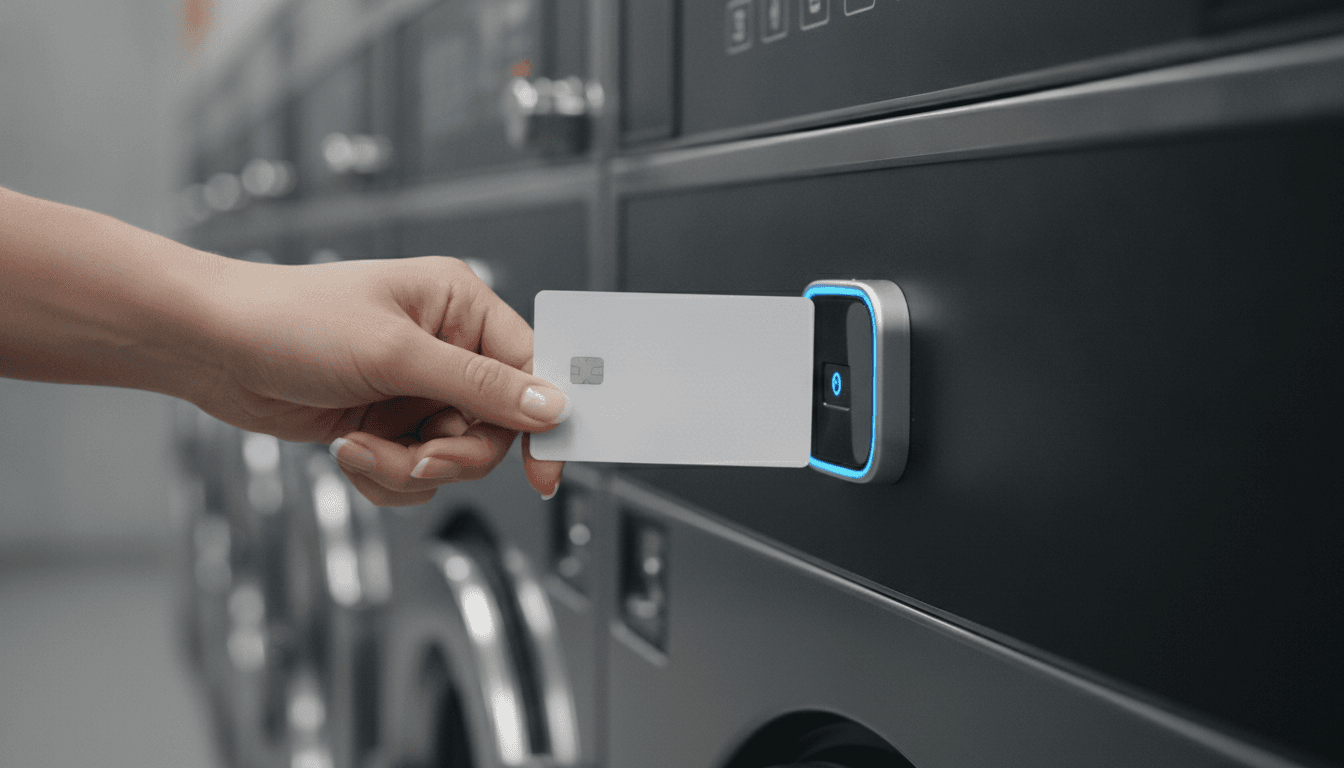
Card and app stores win on pricing flexibility, data, and remote management. Because prices are set in software, an owner can raise them by a few cents, run off-peak promotions, and adjust by machine, all without touching the equipment. The U.S. Federal Reserve's data on payments documents the broad, ongoing shift from cash to cards, and laundromats reflect it.
The advantages compound for an operator who uses them:
- Granular pricing. Small, frequent increases are easier to make and easier for customers to accept than a sudden quarter jump.
- Usage data. You see peak times, machine utilization, and revenue by service, which supports better decisions.
- Easier remote operation, which helps an absentee or lightly attended store.
- Unified payment across self-service, vending, and wash-dry-fold.
The costs are processing fees on each transaction, the system's own cost and maintenance, the risk of an outage stopping payments, and some customers, including unbanked ones in certain areas, who prefer cash. Hybrid systems exist precisely to soften that last point.
What is a hybrid payment system?
A hybrid system accepts both coins and cards or app payments on the same machines, so customers choose how to pay. It is the most common setup in modern stores because it captures the flexibility and data of cashless payment while keeping cash as a fallback for customers who prefer it or when the network goes down.
For a buyer, a hybrid store is often the lowest-risk version of "modern." You get software pricing and usage data on the cashless share, but a payment-system outage does not stop the store from taking money, because the coin mechanism still works. The trade-off is that you pay processing fees on the card share and maintain two payment paths. A coin store you plan to retrofit toward hybrid carries a known conversion cost you should price into the deal and your reserves.
Does payment type change how much a store makes?
It can move revenue, but it does not determine it. Card and app systems make it easier to capture incremental price increases and additional services, which can lift the top line. They also add fees that take a slice back. The net effect depends on how well the owner uses the tools.
What the payment type does not change is the fundamentals. A store's revenue is still driven by its location, customer base, and equipment, and its value is still a multiple of verified cash flow, as our valuation guide and the figures behind how much a laundromat makes explain. A weak store does not become strong by adding card readers, and a strong coin store is not weak for lacking them. The Coin Laundry Association's benchmarks are a useful reference for comparing performance regardless of payment method.
Which is the safer buy?
The safer buy is the store with the better location, lease, and verifiable cash flow, in whichever payment format that happens to be. Payment type is a feature to weigh, not the headline.
That said, two practical points favor a careful buyer. Card and app data can make a store's revenue easier to verify, which reduces the risk of paying for inflated income, a recurring concern in any due diligence process. And a coin store you plan to modernize carries a known conversion cost you should price into the deal and your reserves. Decide what kind of operation you want to run, then judge each store on its fundamentals first and its payment system second. You can browse both formats directly through the coin laundries and card laundries category pages, and test any store's numbers in the calculators.
Frequently asked questions
Is a coin or card laundromat better to buy?
Neither is universally better. Coin stores are simple, proven, and have no processing fees, but give you little data and are harder to adjust on price. Card and app stores offer flexible pricing, usage data, and easier remote management, at the cost of processing fees and reliance on a payment system. For most buyers the deciding factors are the store's location and cash flow, not the payment type alone.
Do card laundromats make more money than coin?
They can, mainly because card and app systems make it easier to raise prices in small increments, run promotions, and capture vending and wash-dry-fold on the same account. But they also carry processing fees and system costs. The payment method is a lever on revenue, not a guarantee; a strong coin store in a great location outperforms a weak card store anywhere.
Can you convert a coin laundromat to card?
Yes. Many owners retrofit coin machines with card or app readers, and it is a common way to modernize a store and gain pricing flexibility and data. The conversion is a capital cost to budget, and it pays off most where you can use the new pricing and data to lift revenue. Factor any planned conversion into your purchase price and reserves.
What are the downsides of a card-only laundromat?
Card and app systems add processing fees, depend on technology that can fail, and can deter customers who prefer cash, including some unbanked users in certain neighborhoods. A card outage can stop the store from taking payment entirely. These risks are manageable but real, which is why many stores run hybrid coin-and-card systems.
Does payment type affect a laundromat's value?
Indirectly. Value is based on verified cash flow, so the payment system matters only insofar as it affects revenue, costs, and the reliability of the numbers. Card and app data can make revenue easier to verify, which buyers value, while a coin store relies more on collection records and utility cross-checks to prove its income.