Minimum Wage in 2026 and Laundromat Labor Costs
SudsList Editorial · Sep 14, 2026
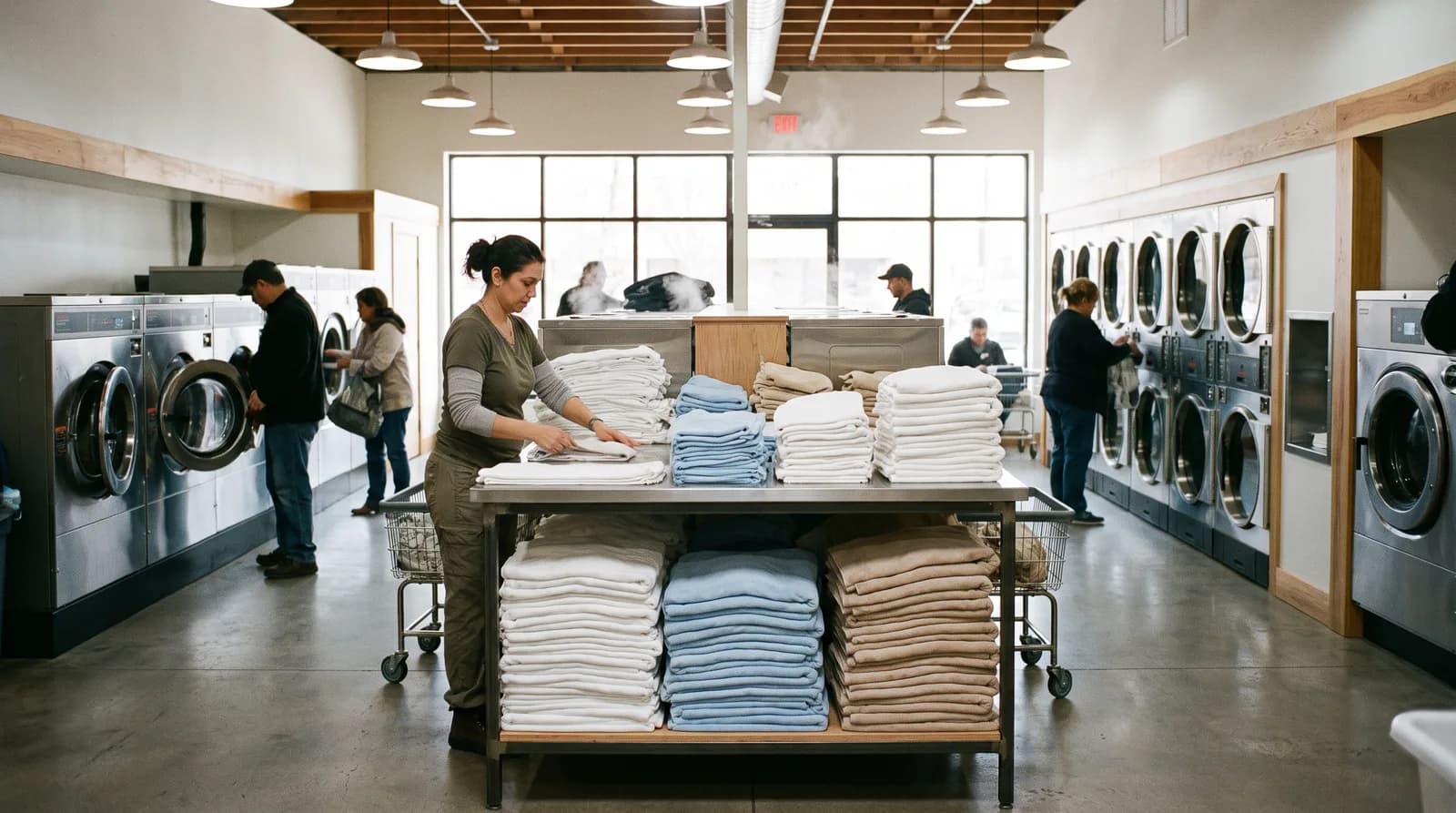
Rising minimum wages in 2026 raise labor costs most for attended and wash-and-fold laundromats, and the effective response is scheduling to demand, automating cash and payments, and adjusting prices where needed rather than gutting service. Self-service stores with light staffing feel it least; stores that lean on attendant hours or a folding team feel it directly in their margin. Wage rules vary widely by state and city and change over time, so plan around the trend of rising labor cost while confirming the specifics for your own location with official sources.
Key takeaways
- Minimum-wage increases hit attended and wash-and-fold stores hardest, since they carry the most labor hours.
- The loaded cost of an employee runs well above the hourly wage once payroll taxes and workers' comp are counted.
- The best defenses are scheduling to turns, automating cash and payments, and cross-training, not cutting service blindly.
- Wage and overtime rules vary by state and city, so confirm specifics with the U.S. Department of Labor rather than a national number.
- When labor costs rise materially, a measured vend or wash-and-fold price increase is a legitimate response.
Contents
- How do rising minimum wages affect laundromats?
- Which laundromats feel wage increases most?
- What does an attendant really cost per hour?
- How do you protect margin without cutting service?
- Can automation offset higher labor costs?
- Should you raise prices to cover higher wages?
- How do you stay compliant with wage rules?
How do rising minimum wages affect laundromats?
Rising minimum wages increase the cost of every staffed hour, which matters because attendant and wash-and-fold labor is one of a laundromat's few large variable costs. A store built around self-service and light staffing absorbs an increase easily; a heavily attended or wash-and-fold-driven store feels it on every shift.
The direction is the planning point. Many states and cities have been raising minimum wages, and the safe assumption is continued upward pressure rather than reversal. You do not need a specific 2026 figure to prepare; you need a store whose labor is matched to the revenue it generates. Plan around rising wages as a durable trend, not a one-time event.
Which laundromats feel wage increases most?
Wash-and-fold and fully attended stores feel it most, because their business models depend on staffed hours. A self-service coin or card store with a part-time cleaner feels it least, since labor is a small line to begin with.
Where the exposure sits:
- Wash-and-fold operations, which are labor-intensive per pound processed.
- Fully attended stores staffing open-to-close whether or not turns justify it.
- Pickup-and-delivery services carrying driver hours on top of processing labor.
- Stores in high-minimum-wage metros, where the base rate is already high.
Understanding your own labor share tells you how much a wage increase actually costs you. For the staffing framework behind this, see laundromat attendant pay and scheduling and when to hire an attendant for your laundromat.
What does an attendant really cost per hour?
An attendant costs meaningfully more than the stated wage once you add employer payroll taxes, unemployment, and workers' compensation. Budgeting only the base rate understates labor and makes a staffing decision look better than it is, which matters more as the base rate rises.
The loaded cost includes:
- Base hourly wage, now rising with the minimum.
- Employer payroll taxes and unemployment insurance.
- Workers' compensation coverage.
- Paid training time before a new hire is productive.
When the minimum wage goes up, every one of these scales with it, so the real increase per hour is larger than the headline change. Confirm employer payroll-tax obligations with the IRS and model the loaded figure, not the wage, in the laundromat cash flow calculator. Plan on the loaded number, always.
How do you protect margin without cutting service?
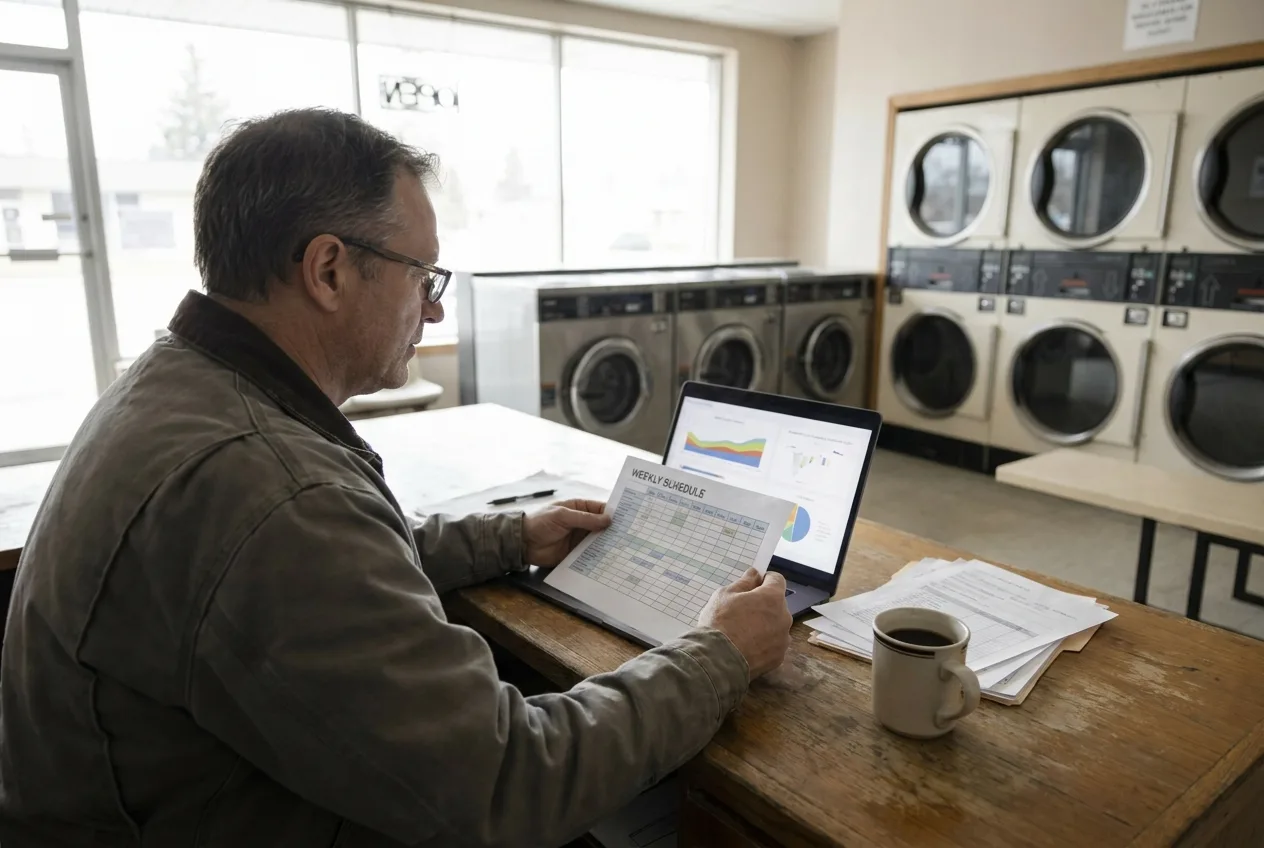
You protect margin mainly by scheduling labor to demand, so you pay for the hours that generate revenue and not the ones that do not. Cutting service blindly can cost you more in lost customers than it saves in wages, so precision beats slashing.
The levers that work:
- Schedule attendant hours across your busiest turn windows, not every open hour.
- Trim dead mid-shift slots that show low turns month after month.
- Cross-train staff so fewer people cover cleaning, wash-and-fold, and the counter.
- Use two part-time shifts instead of one overworked full-timer where it lowers cost and overtime.
| Response to higher wages | Effect on margin | Effect on service |
|---|---|---|
| Schedule to turns | Protects margin | Neutral to positive |
| Automate cash and payments | Cuts labor hours | Neutral, often better |
| Cross-train staff | Fewer hours needed | Neutral |
| Cut hours blindly | Saves wages short term | Risks losing customers |
| Measured price increase | Restores margin | Small if store is clean |
Start with scheduling, because it protects margin without touching the customer experience. For the details, see laundromat attendant pay and scheduling.
Can automation offset higher labor costs?
Yes, automation offsets a meaningful share of labor cost by reducing the hours a person has to be present. Card and app payments cut cash-collection and counting time, and remote monitoring lets you manage the store without standing in it.
The automation that pays off against wages:
- Card and app payment systems that reduce cash handling, covered in coin-to-card conversion for laundromats.
- Remote monitoring of machines, cameras, and revenue, so oversight does not require an on-site person.
- Management software that streamlines wash-and-fold ticketing and reporting, discussed in laundromat management software.
Automation is not free; it carries transaction fees and subscription costs. But when wages rise, the math for reducing staffed hours improves, and the same tools also cut cash risk. Weigh the ongoing fees against the hours saved before you commit.
Should you raise prices to cover higher wages?
A measured price increase is a legitimate response when labor costs rise materially, especially on wash-and-fold where labor is the main input. Per-pound and delivery pricing should reflect what it actually costs to process an order, and many stores underprice that labor.
Raise deliberately:
- Reprice wash-and-fold to cover the higher loaded labor per pound, using how to price wash-and-fold laundry.
- Adjust self-service vend prices in small steps if labor and utilities have both climbed, guided by when to raise laundromat prices.
- Watch turns and order volume for a few weeks after any change.
Absorbing every wage increase without ever adjusting price slowly turns a profitable service into a break-even one. Price the labor honestly.
How do you stay compliant with wage rules?
You stay compliant by tracking the correct minimum wage, overtime rules, and worker classification for your specific state and city, since these vary widely and change over time. Getting classification or overtime wrong can cost far more than the wage itself in back pay and penalties.
The safe approach is to treat wage and hour law as location-specific and verify it rather than assume. The U.S. Department of Labor publishes federal wage and hour guidance, and your state labor agency covers state and local minimums, which often exceed the federal floor. For the payroll and classification mechanics, see laundromat payroll and attendant taxes. This is an area to confirm with official sources, not to run from memory or assumption.
Frequently asked questions
How does a minimum-wage increase affect a laundromat?
It raises the cost of every staffed hour, which matters most for attended and wash-and-fold stores that carry the most labor. A self-service store with light staffing feels it least. The practical planning point is that labor cost is trending up, so match staffing to the revenue it generates and confirm the exact rate for your city.
Which laundromats are hurt most by rising wages?
Wash-and-fold operations and fully attended stores, because their models depend on staffed hours. Pickup-and-delivery services add driver hours on top of processing labor, and stores in high-minimum-wage metros start from a higher base. A self-service store with a part-time cleaner has the least exposure.
What is the real cost of an attendant beyond the wage?
The loaded cost runs well above the hourly wage once you add employer payroll taxes, unemployment, workers' compensation, and paid training time. When the minimum wage rises, these scale with it, so the true increase per hour is larger than the headline change. Always budget the loaded figure, not the base wage.
How can I cut laundromat labor costs without hurting service?
Start with scheduling, staffing your busiest turn windows instead of every open hour, and trim dead mid-shift slots. Cross-train staff so fewer people cover more tasks, and automate cash handling with card or app payments. Cutting hours blindly can cost more in lost customers than it saves, so precision beats slashing.
Should I raise prices because wages went up?
A measured increase is reasonable when labor costs rise materially, particularly on wash-and-fold where labor is the main input. Reprice per-pound and delivery to cover the higher loaded labor, and adjust vend prices in small steps if utilities have also climbed. Watch your volume for a few weeks after any change.
Where do I find the right minimum wage and overtime rules?
Wage and hour rules vary by state and city and change over time, so verify them for your specific location rather than assume. The U.S. Department of Labor publishes federal guidance, and your state labor agency covers state and local minimums, which often exceed the federal floor. Confirm worker classification and overtime with official sources.