How to Price Wash-and-Fold Laundry
SudsList Editorial · Jul 26, 2026
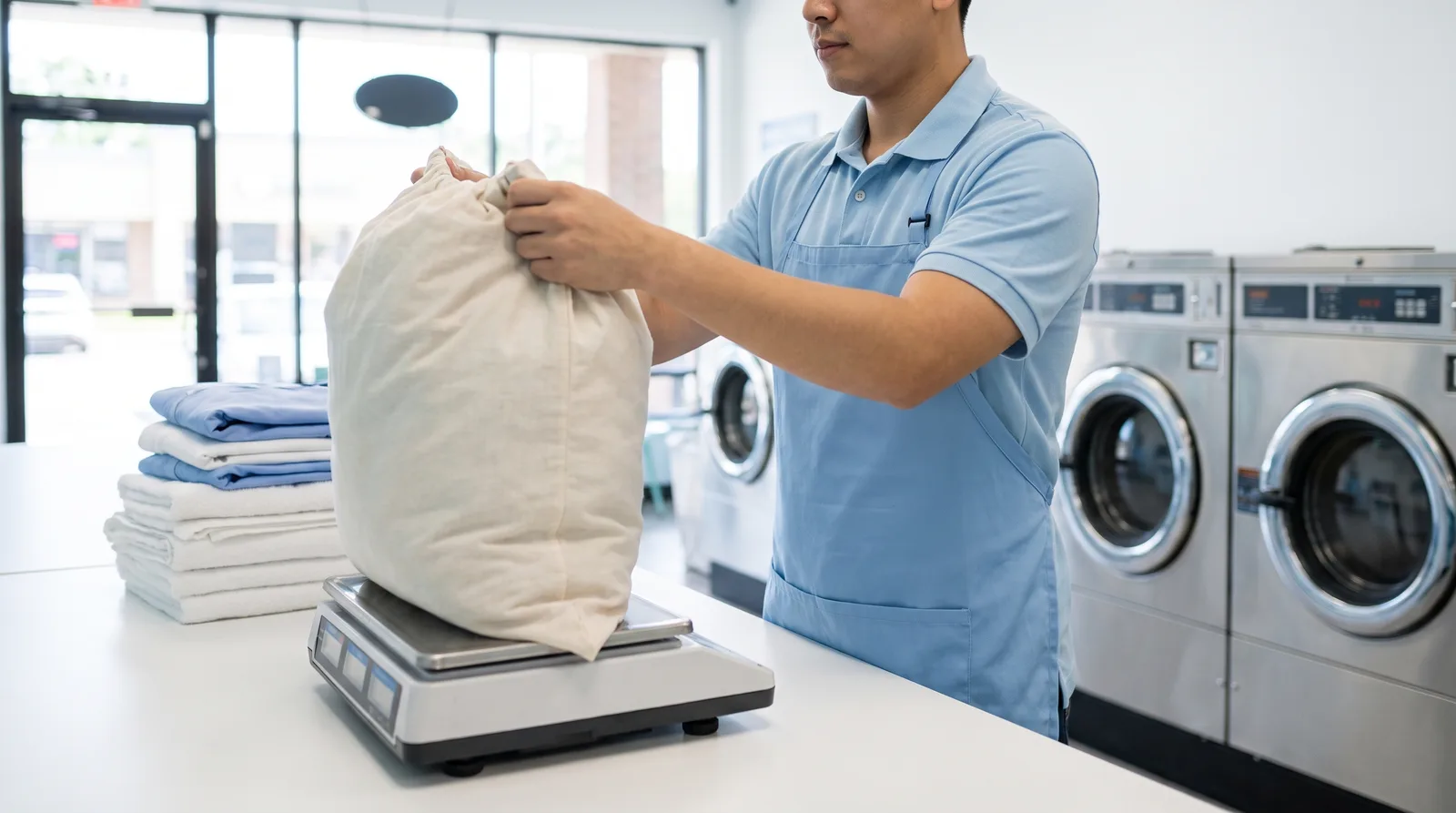
To price wash-and-fold laundry, start from your cost per pound (labor, machine time, utilities, detergent, and packaging), set a per-pound rate above that floor with margin, then add a minimum order and a rush fee. Wash-and-fold (a paid service billed by the pound where you wash, dry, and fold a customer's laundry) lives or dies on labor cost, so the single biggest pricing mistake is charging by machine time and forgetting the person doing the folding. This guide shows how to build the price from the ground up, where minimums and rush fees fit, and how to stay competitive without pricing below your own cost.
Key takeaways
- Price per pound above a floor that includes labor, machine time, utilities, detergent, and packaging, not just machine cost.
- Labor is the largest cost in wash-and-fold, so attendant throughput (pounds folded per hour) drives your real cost per pound.
- Set a minimum order so small jobs still cover the fixed handling time they take.
- Add a rush fee for same-day turnaround, because speed forces you to bump other orders and pay for it.
- Do not price below your labor floor to win volume, since more orders at a loss only lose money faster.
Contents
- How do you calculate your cost per pound?
- What is a competitive per-pound price?
- Should you charge a minimum order?
- When should you add a rush fee?
- How do you price delicates and special requests?
- Should you offer flat-rate or subscription pricing?
- How often should you raise wash-and-fold prices?
How do you calculate your cost per pound?
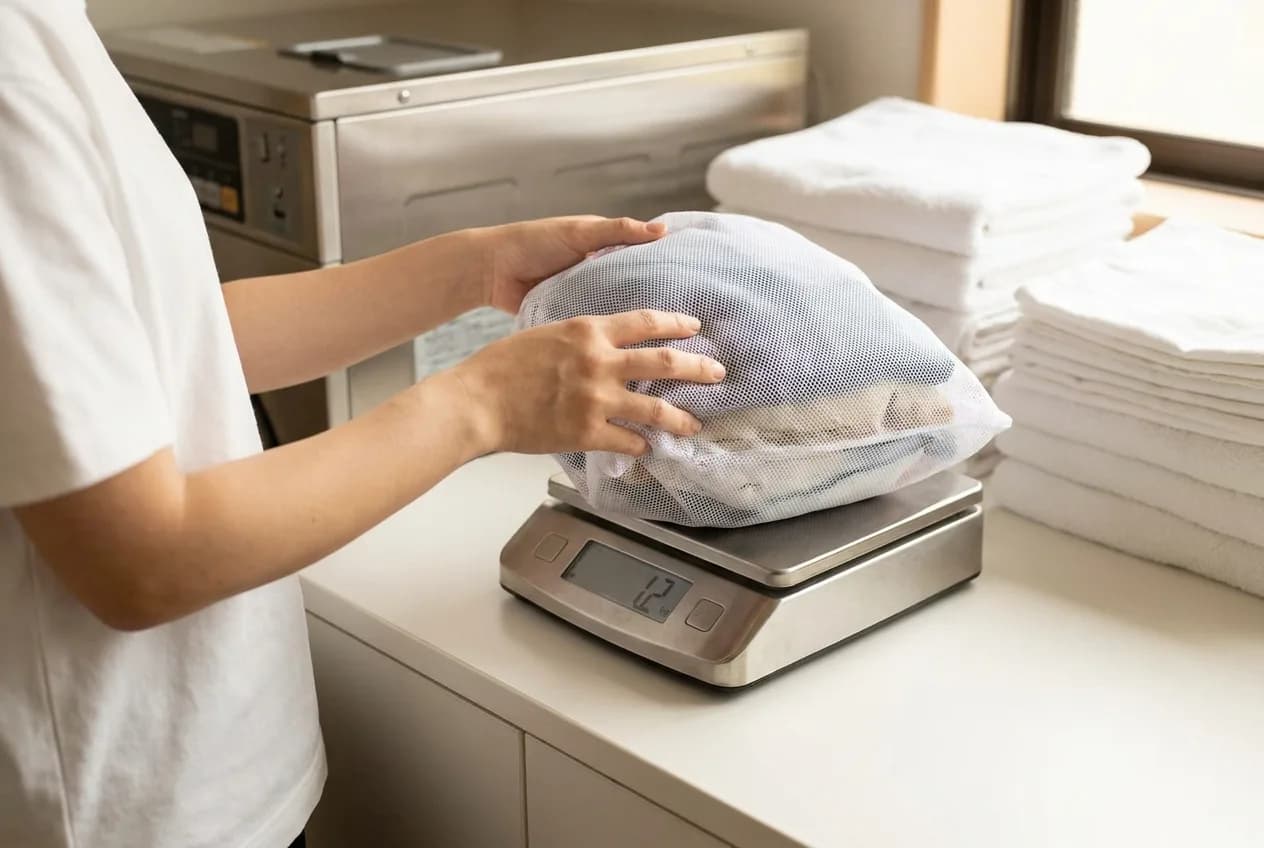
Your cost per pound is the fully loaded labor to process a pound plus machine, utility, detergent, and packaging cost for that pound. Get this number first, because every pricing decision after it is guesswork without it.
Work it out in steps:
- Estimate pounds an attendant processes per hour, including intake, washing, drying, folding, and packaging.
- Divide the attendant's fully loaded hourly cost (wage plus payroll taxes) by that throughput to get labor cost per pound, and check current wage and overtime rules with the U.S. Department of Labor since they feed this number.
- Add per-pound machine time, water, gas, and electric.
- Add detergent, bags, and labels per pound.
The result is your floor. As a rough scenario, if labor works out to the majority of your per-pound cost, then anything that speeds up folding, like batching orders or using larger washers, directly improves margin. Model the effect on your store with the laundromat cash flow calculator.
What is a competitive per-pound price?
A competitive price sits above your cost floor and roughly in line with nearby stores, adjusted for your service quality and turnaround. Per-pound wash-and-fold rates vary widely by region and market, so survey local competitors rather than copying a number from another city.
To set the rate:
- Call or check three to five nearby laundromats and wash-and-fold services for their per-pound price and minimum.
- Note who offers faster turnaround or delivery, since those command higher prices.
- Place your price above your floor and near the local range, leaning higher if your quality and speed are better.
Competing on price alone is a trap for wash-and-fold, because the lowest price usually means the thinnest margin and the least room for error. Compete on consistency and turnaround instead.
Should you charge a minimum order?
Yes. A minimum order protects you from tiny jobs that still take full intake, folding, and packaging time. Every order carries fixed handling regardless of weight, so a very small order at a straight per-pound rate loses money.
How minimums usually work:
- Set a minimum weight or a minimum dollar amount per order.
- Charge the minimum even when the actual weight is below it.
- Post the minimum clearly at the counter so there are no surprises.
A sensible minimum covers the labor of handling the smallest order you are willing to take. It also nudges customers toward bringing a full load, which is more efficient for you.

When should you add a rush fee?
Add a rush fee whenever a customer wants same-day or next-few-hours turnaround, because speed forces you to reprioritize other orders and often pay overtime. Standard turnaround (commonly next-day) should be your base price, with rush as a paid upgrade.
Structure rush pricing simply:
- Define standard turnaround clearly, such as ready by the next day.
- Offer a rush option (for example, same-day) at a set premium, either a flat fee or a higher per-pound rate.
- Cap how many rush orders you accept per day so you can actually deliver them.
Rush service is real value, so charge for it. Promising fast turnaround for free just trains customers to expect it and erodes your margin.
How do you price delicates and special requests?
Price delicates, hang-dry items, hypoallergenic detergent, and special folding as add-ons, because they take extra labor and attention beyond a standard load. A flat per-pound rate assumes standard handling, so anything outside that should carry a surcharge or a separate line.
Common special-handling charges:
| Request | Why it costs more | Typical pricing approach |
|---|---|---|
| Hang-dry items | Extra handling and space, slower turnaround | Per-item or small surcharge |
| Hypoallergenic or specific detergent | Separate product and load segregation | Small per-order add-on |
| Delicates and hand-wash | Extra care, slower processing | Per-item or higher rate |
| Heavy items (comforters, rugs) | More machine and dryer time | Per-item flat price |
| Special folding or packaging | Added labor per order | Per-order add-on |
Spell these out on your price list so customers know the base rate covers standard laundry and extras are priced fairly. Clear pricing prevents the awkward conversation when an order takes twice the expected work. Note too that some states tax laundry services and others do not, so confirm with the IRS and your state tax authority whether you must add tax on top of these prices.
Should you offer flat-rate or subscription pricing?
Flat-rate bags or monthly subscriptions can work, but only if you price them off the same per-pound floor and cap the volume they cover. Fixed pricing is attractive to customers and predictable for you, yet it is easy to lose money if a bag holds more than you assumed.
Options to consider:
- A flat-rate bag priced to the weight it realistically holds, with overflow charged per pound.
- A monthly plan for regular customers with a set pound allowance and per-pound overage.
- Bundled pricing when wash-and-fold pairs with pickup and delivery.
Whatever the format, back into it from your cost per pound so the flat price never dips below what the laundry actually costs you to process. For higher-volume recurring work, see how commercial laundry accounts are usually priced.
How often should you raise wash-and-fold prices?
Review wash-and-fold pricing at least once a year and whenever labor or utility costs rise, since both feed directly into your per-pound floor. Wages tend to climb, so a price set two years ago may now sit below cost without you noticing.
When you review:
- Recalculate your cost per pound with current wages and utility rates.
- Re-survey local competitors so you know where the market has moved.
- Raise gradually and post the new price in advance rather than surprising regulars.
Modest, regular adjustments are easier for customers to accept than a single large jump. For the broader pattern of when and how much to raise store prices, and how wash-and-fold fits your overall economics, see laundromat profit margins explained. Whatever the market does, protect the floor: never let the per-pound price drift below your loaded cost.
Frequently asked questions
How do I know if my wash-and-fold price is too low?
If you have not calculated cost per pound including labor, it probably is. Add up fully loaded attendant labor, machine and utility cost, detergent, and packaging per pound, then compare it to your price. If the gap is thin or negative, you are working for little or losing money. Labor is the cost owners most often forget.
What is a typical minimum order for wash-and-fold?
Most stores set either a minimum weight or a minimum dollar amount so small jobs still cover their fixed handling time. The right level covers the labor of the smallest order you are willing to take. Post it clearly at the counter so customers are not surprised when a tiny order is billed at the minimum.
Should I charge more for same-day wash-and-fold?
Yes. Same-day service forces you to bump other orders and sometimes pay overtime, so it should carry a rush fee above your standard next-day price. Set the premium as a flat fee or a higher per-pound rate, and cap how many rush orders you take per day so you can actually deliver on the promise.
How do I price delicates and hang-dry items?
Price them as add-ons, because they take extra labor beyond a standard load. Common approaches are a per-item charge for hang-dry and delicates, a small surcharge for hypoallergenic detergent, and a flat price for heavy items like comforters. Spell these out on your price list so the base per-pound rate stays tied to standard laundry.
Is flat-rate bag pricing a good idea for wash-and-fold?
It can be, if you price the bag to the weight it realistically holds and charge per pound for overflow. Flat pricing is easy for customers and predictable for you, but it loses money when a bag holds more than assumed. Always back the flat price into your cost per pound so it never falls below your floor.
How often should I raise wash-and-fold prices?
Review at least yearly and whenever wages or utility costs rise, since both feed your per-pound floor. Recalculate cost per pound, re-survey local competitors, and raise gradually with advance notice. Small regular adjustments are easier for regulars to accept than one large jump after years of holding the price flat.