How to Add Pickup and Delivery to a Laundromat
SudsList Editorial · Jul 26, 2026
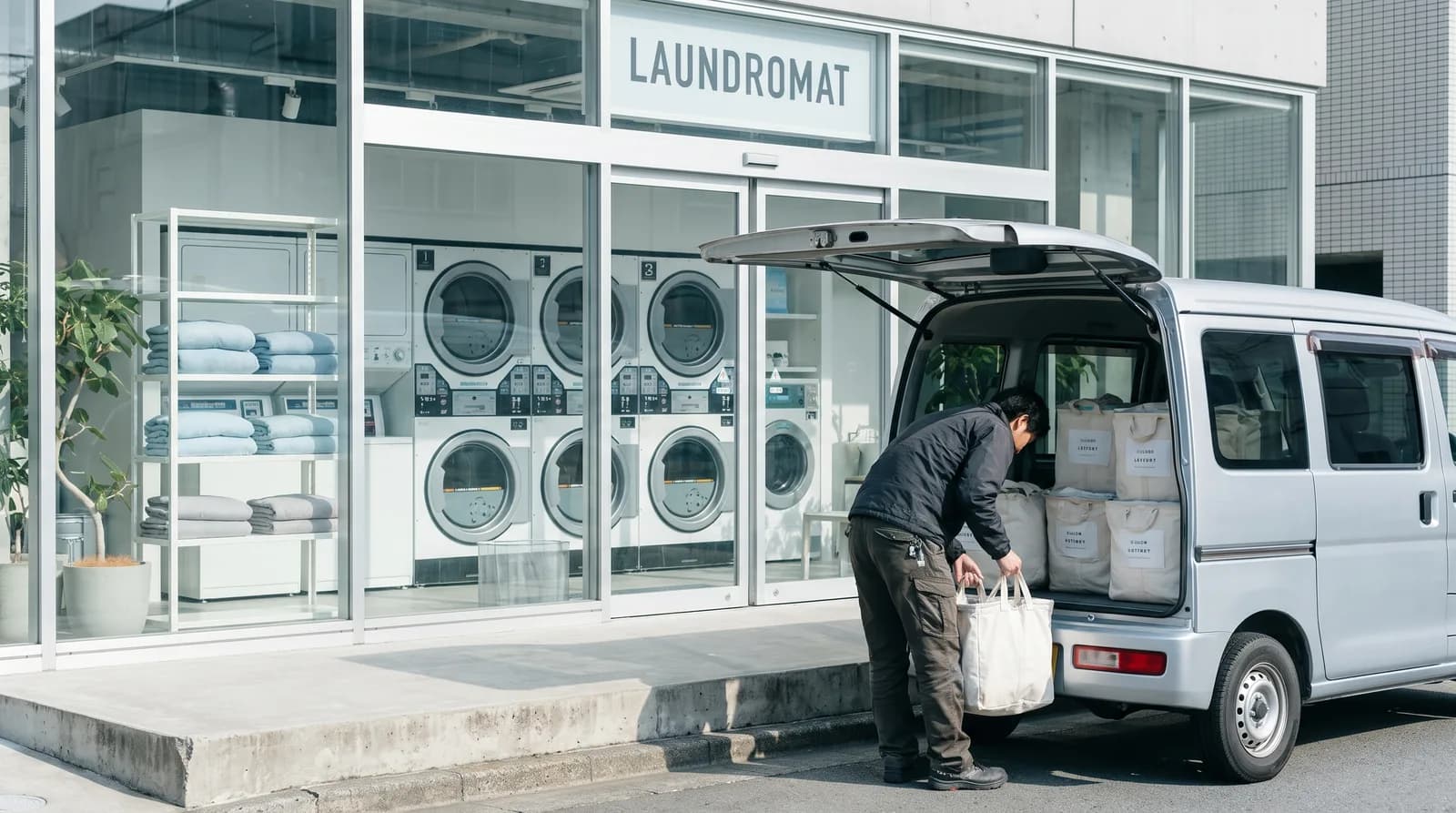
To add pickup and delivery to a laundromat, build it on top of a working wash-and-fold service, define a delivery zone and scheduling windows, choose a booking and payment app, and start with one driver on a tight route before scaling. Pickup and delivery (a service where you collect a customer's laundry, wash and fold it at the store, and return it) extends your highest-margin service to customers who cannot or will not visit. The math only works when routes are dense and pricing covers the extra labor and driving, so the goal is concentrated demand, not the widest possible coverage. This guide walks through readiness, zones, apps, drivers, pricing, and how to grow from one route to several.
Key takeaways
- Pickup and delivery is an extension of wash-and-fold, so get the in-store service consistent before you add driving.
- Route density (stops close together) is the single biggest driver of profit, so start with a tight zone, not a wide one.
- Price to cover the extra labor, driving, and app fees, usually as a delivery premium or higher per-pound rate.
- Scheduling windows and reliable turnaround matter more to delivery customers than to walk-ins, so promise only what you can hit.
- Start with one driver and a small zone, prove the economics per stop, then expand into adjacent areas.
Contents
- Is your store ready for pickup and delivery?
- How do you set a delivery zone?
- What scheduling windows should you offer?
- What app or software do you need?
- Who drives, and should you hire or contract?
- How should you price pickup and delivery?
- How do the per-stop economics work?
- How do you find delivery demand?
- How do you handle bags, labeling, and mix-ups?
- How do you scale from one route to several?
- What are the common mistakes to avoid?
Is your store ready for pickup and delivery?
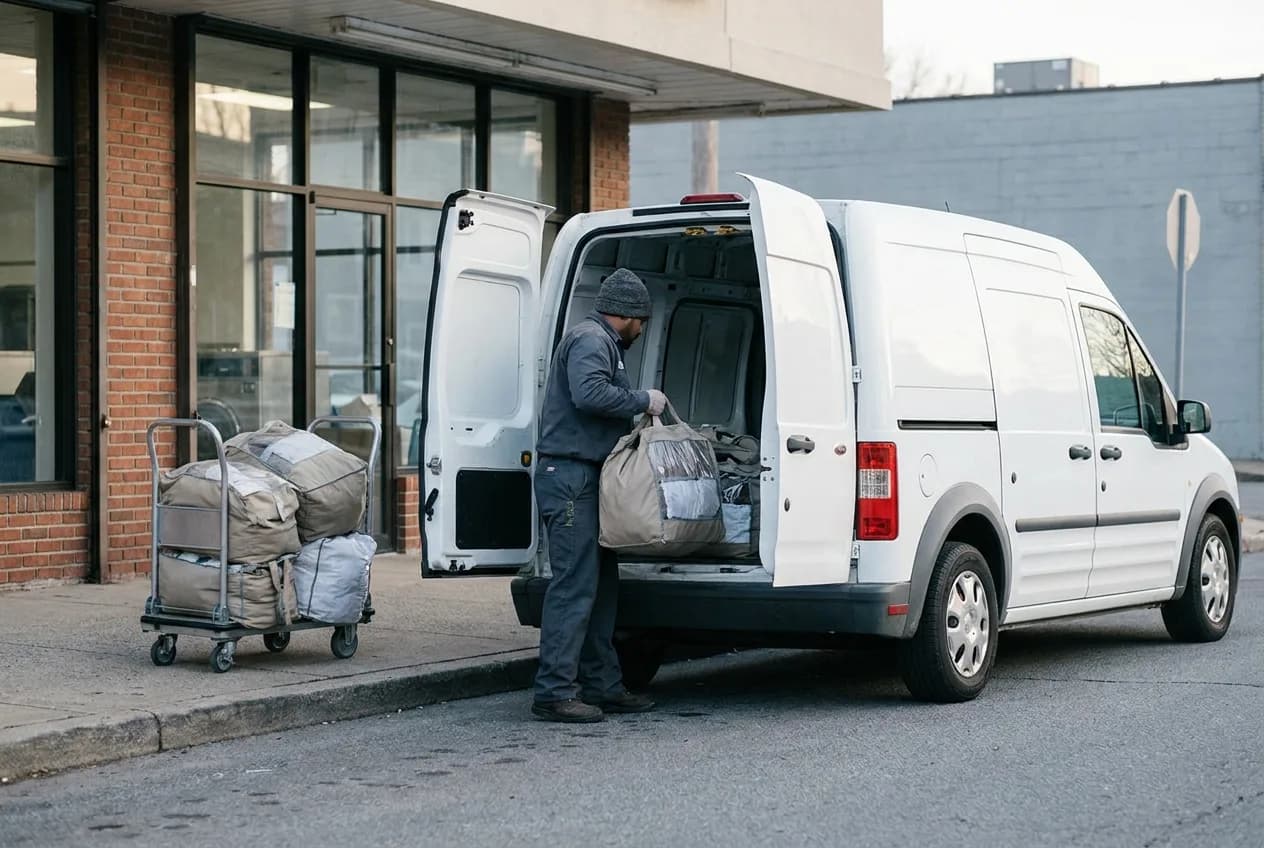
Your store is ready when wash-and-fold already runs on a consistent quality standard and you have machine capacity to absorb delivery volume during off-peak hours. Delivery adds driving and scheduling on top of the folding work, so a service that is already shaky in-store will not survive the added complexity.
Check three things first:
- Wash-and-fold is consistent, ticketed, and profitable as a walk-in service.
- You have off-peak machine time to process route orders without crowding self-service customers.
- You can staff or contract a driver without pulling your only attendant off the floor.
If you have not launched wash-and-fold yet, start there with how to add wash-and-fold to your laundromat. Delivery is a demand and logistics layer on a service that must already work.
How do you set a delivery zone?
Set a small, dense zone close to the store rather than the largest area you can reach, because tight routes are what make delivery profitable. Every mile between stops is unpaid driving time, so distance is the enemy of margin in a laundry route.
When drawing the zone:
- Center it on the store and keep the radius small at launch.
- Favor dense neighborhoods, apartment clusters, and areas with likely wash-and-fold demand.
- Exclude outlying pockets that would add long drives for a single stop.
- Expand only into areas adjacent to routes you already serve.
A compact zone lets one driver complete many stops per hour, which is the whole economic case for delivery. Resist the urge to promise service across the whole metro on day one.
What scheduling windows should you offer?
Offer a small number of fixed pickup and delivery windows rather than on-demand service, because batched stops keep routes dense and turnaround predictable. On-demand pickups scatter your driver across the map and destroy the per-stop economics.
A workable model:
- Set specific days or windows per neighborhood, so nearby stops cluster on the same run.
- Use a next-day or two-day turnaround as standard, with a rush option priced higher.
- Let customers book a window in the app rather than requesting any time.
Customers accept fixed windows when turnaround is reliable, and reliability is what earns repeat delivery orders. This scheduling discipline is the core of building a laundry delivery route.
What app or software do you need?
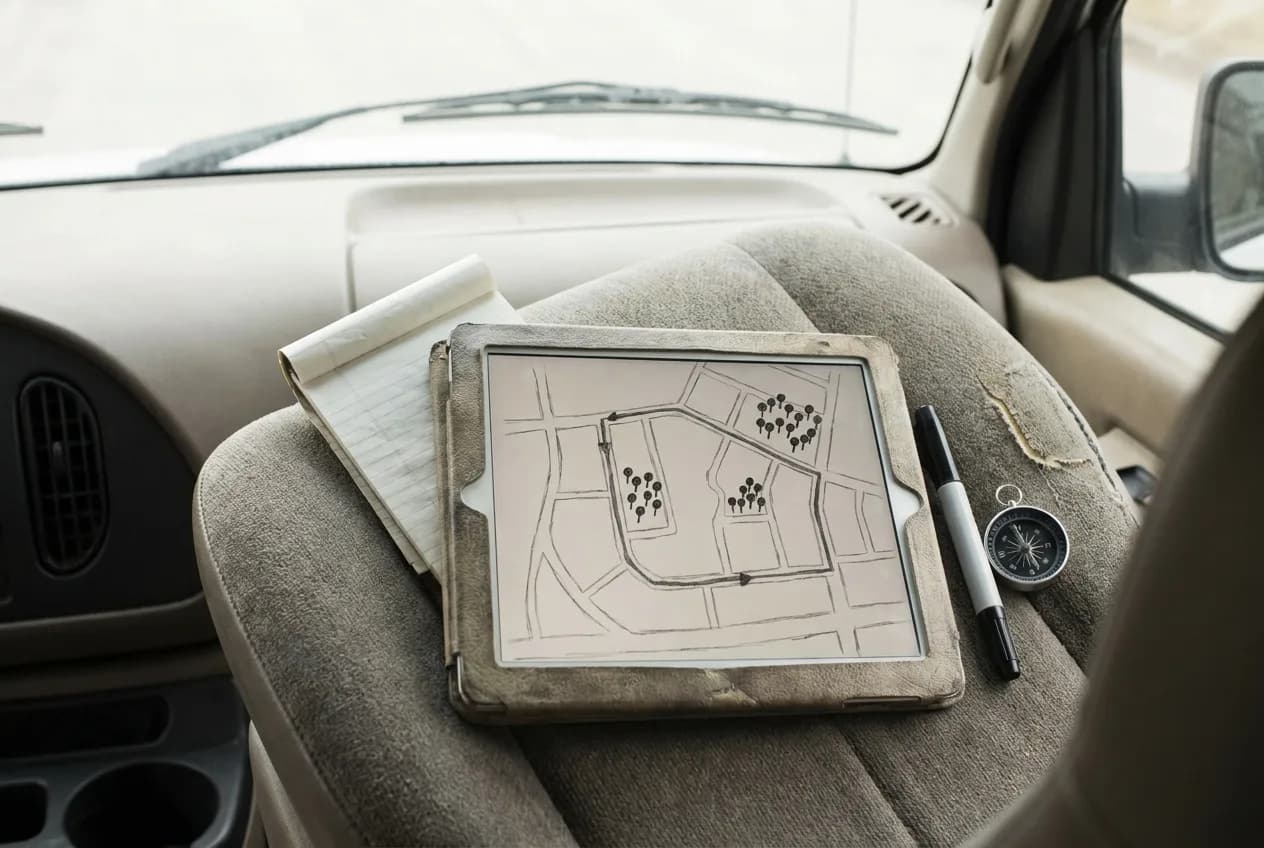
You need a way for customers to book, pay, and track orders, plus a way for you to build and sequence routes, which usually means laundry delivery software or a general delivery and scheduling tool. Trying to run delivery on paper and texts breaks down quickly once you have more than a handful of stops.
Look for software that handles:
- Customer booking, saved addresses, and stored payment.
- Per-pound or plan-based pricing with automatic charging.
- Route building and stop sequencing for the driver.
- Order status and notifications so customers know when to expect pickup and return.
Stay vendor-neutral and match the tool to your volume; a small route may only need lightweight scheduling, while multiple routes justify dedicated laundry delivery software. For how this fits a broader system, see remote monitoring for laundromats as part of running the store from anywhere.
Who drives, and should you hire or contract?
Most stores start with the owner or an existing attendant driving, then move to a part-time employee driver as volume grows. Whether a driver is an employee or a contractor has real payroll and insurance implications, so classify the role correctly rather than defaulting to 1099.
Options as you scale:
- Owner drives at launch to learn the route and real timing.
- An existing attendant covers pickups during slow store hours.
- A dedicated part-time driver once route volume is steady.
- Third-party delivery services for overflow, accepting their fees and less control.
Confirm worker classification, wage, and mileage or vehicle rules with the U.S. Department of Labor and the IRS, plus a qualified advisor, since a regularly scheduled driver is often an employee rather than a contractor. Vehicle use also affects your laundromat insurance, so review coverage before anyone drives for the business.
How should you price pickup and delivery?
Price delivery above your wash-and-fold rate, either as a per-pound premium, a flat delivery fee, or a subscription, so the price covers folding plus driving, fuel, and app fees. Delivery costs more to produce than walk-in wash-and-fold, so it should never be sold at the same price.
Common pricing structures:
- A higher per-pound rate for delivered orders than for walk-in.
- A flat pickup-and-delivery fee added to the standard per-pound wash-and-fold charge.
- A monthly subscription with a pound allowance for frequent customers.
- A minimum order that makes each stop worth the drive.
Whatever the format, start from your wash-and-fold cost per pound and add the marginal cost of the stop. The pricing fundamentals are in how to price wash-and-fold laundry; delivery just adds the driving cost on top.
How do the per-stop economics work?
The economics come down to revenue per stop against the labor and driving cost per stop, and dense routes are what tip that ratio into profit. A driver who completes many close stops per hour spreads fixed drive time across more paying orders.
Consider the levers side by side:
| Lever | Effect on route profit | How to improve it |
|---|---|---|
| Stops per hour | More stops spread driving cost | Tighten the zone, batch windows |
| Average order size | Bigger orders raise revenue per stop | Set a delivery minimum |
| Delivery premium | Covers driving and app fees | Price above walk-in wash-and-fold |
| Drive time between stops | Unpaid time that eats margin | Cluster stops, sequence the route |
| No-shows and re-attempts | Wasted trips destroy margin | Fixed windows, confirmations |
As a simple scenario, a route with tightly clustered stops and a sensible minimum can carry its driver cost, while the same driver crossing town for scattered single pickups will not. Model your own version with the laundromat cash flow calculator before committing to a driver hire.
How do you find delivery demand?
Delivery demand comes from time-pressed households and nearby businesses, so target dense residential areas, apartment complexes, and local B2B accounts rather than advertising broadly. The goal is concentrated repeat customers in your zone, not one-off orders scattered everywhere.
Where demand tends to sit:
- Busy professionals and families in apartment-heavy neighborhoods near the store.
- Short-term rentals and small businesses that need recurring laundry.
- Existing wash-and-fold customers who would convert to delivery for convenience.
Start by offering delivery to your current wash-and-fold regulars, then market within the zone using the tactics in how to attract wash-and-fold customers and your broader plan to market a laundromat. Recurring commercial laundry accounts are often the most valuable delivery demand because they fill a route with predictable volume.
How do you handle bags, labeling, and mix-ups?
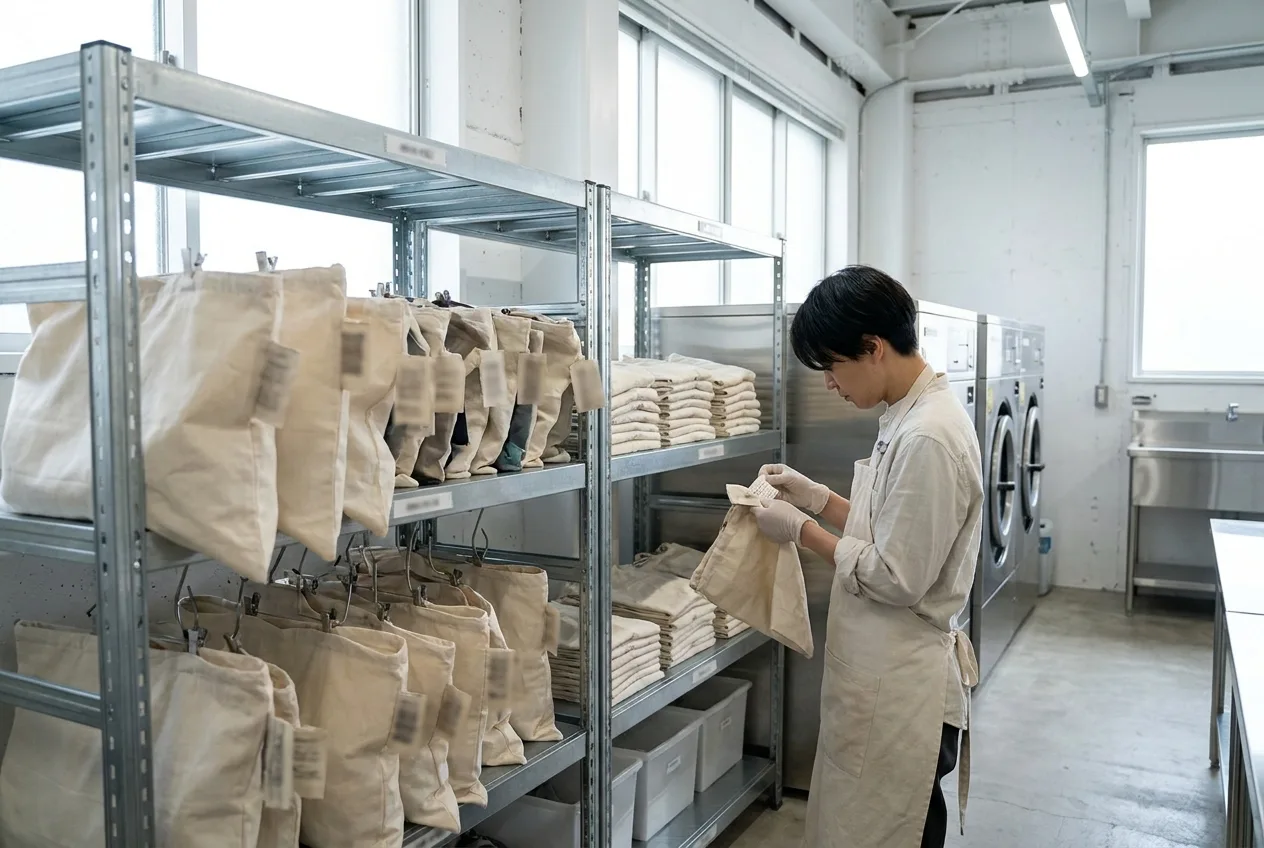
Handle delivery orders with a strict bag-and-label system tied to each customer, because a delivered order goes to a specific address and the wrong bag is a serious failure. In-store mix-ups are recoverable; delivering someone's laundry to the wrong home is not.
Build in safeguards:
- Assign each customer a reusable, labeled bag or a tag that follows the order.
- Scan or check the tag at pickup, at processing, and at delivery.
- Keep route orders staged separately from walk-in wash-and-fold.
- Confirm delivery with a photo or customer notification.
The same ticketing discipline that runs your in-store wash-and-fold extends to delivery, just with the added stakes of an address. Losing or misdelivering an order is the fastest way to lose a delivery customer permanently.
How do you scale from one route to several?
Scale by proving one route is profitable per stop, then adding an adjacent zone and a second driver only when the first route is full. Expanding before a route is dense just spreads drivers thin and drags down the economics you worked to build.
A measured path:
- Fill the first zone until the driver's route is consistently busy.
- Add a neighboring zone that shares processing capacity at the store.
- Bring on a second driver or route day once volume justifies it.
- Watch store capacity, since more routes mean more folding and machine time.
Growth is a demand-and-density problem, not a coverage-area problem. For the operational detail of sequencing stops and scaling routes, see how to build a laundry delivery route.
What are the common mistakes to avoid?
The biggest mistakes are launching delivery before wash-and-fold is solid, promising a huge coverage area, pricing delivery at the walk-in rate, and running routes on paper. Each one turns a promising service into a money loser.
Avoid these:
- Offering on-demand pickups that scatter the driver and kill route density.
- Setting no delivery minimum, so short-drive stops lose money.
- Underpricing delivery relative to its real cost of driving and app fees.
- Skipping the label-and-confirm system, which leads to misdeliveries.
- Expanding the zone before the first route is full and profitable.
Start small, keep routes dense, price for the driving, and grow only when the numbers hold. Delivery rewards concentration and discipline, not the widest map.
Frequently asked questions
Do I need wash-and-fold before adding delivery?
Effectively yes. Delivery is a logistics layer on top of wash-and-fold, so the folding service must already be consistent, ticketed, and profitable in-store. Adding driving and scheduling to a shaky service just multiplies the problems. Get the walk-in wash-and-fold right first, then extend it to customers who cannot visit.
How big should my delivery zone be?
Smaller than you think. Start with a tight radius around the store in dense neighborhoods, because route density is what makes delivery profitable. Every mile between stops is unpaid driving time that eats margin. Expand only into areas adjacent to routes you already serve once the first zone is full.
Should delivery drivers be employees or contractors?
A regularly scheduled driver is often an employee, not a contractor, because you control their route and hours. Misclassifying to save on payroll taxes carries real risk. Confirm classification, wage, and vehicle rules with the Department of Labor and a qualified advisor, and check how driving affects your business insurance before anyone starts.
How much more should I charge for pickup and delivery?
Enough to cover folding plus driving, fuel, and app fees, which usually means a per-pound premium, a flat delivery fee, or a subscription above your walk-in rate. Delivery costs more to produce, so it should never be sold at the walk-in price. Add a minimum order so each stop is worth the drive.
What software do I need to run laundry delivery?
You need customer booking, stored payment, and route sequencing, which usually means laundry delivery software or a general scheduling and delivery tool. A small route may only need lightweight scheduling, while multiple routes justify dedicated software. Running more than a handful of stops on paper and texts breaks down fast, so match the tool to your volume.
How do I avoid delivering laundry to the wrong customer?
Use a strict bag-and-label system tied to each customer and check the tag at pickup, processing, and delivery. Keep route orders staged separately from walk-in wash-and-fold, and confirm each delivery with a photo or notification. Misdelivering an order is one of the fastest ways to lose a delivery customer for good, so the safeguards are not optional.