How to Add Wash-and-Fold to Your Laundromat
SudsList Editorial · Jul 26, 2026
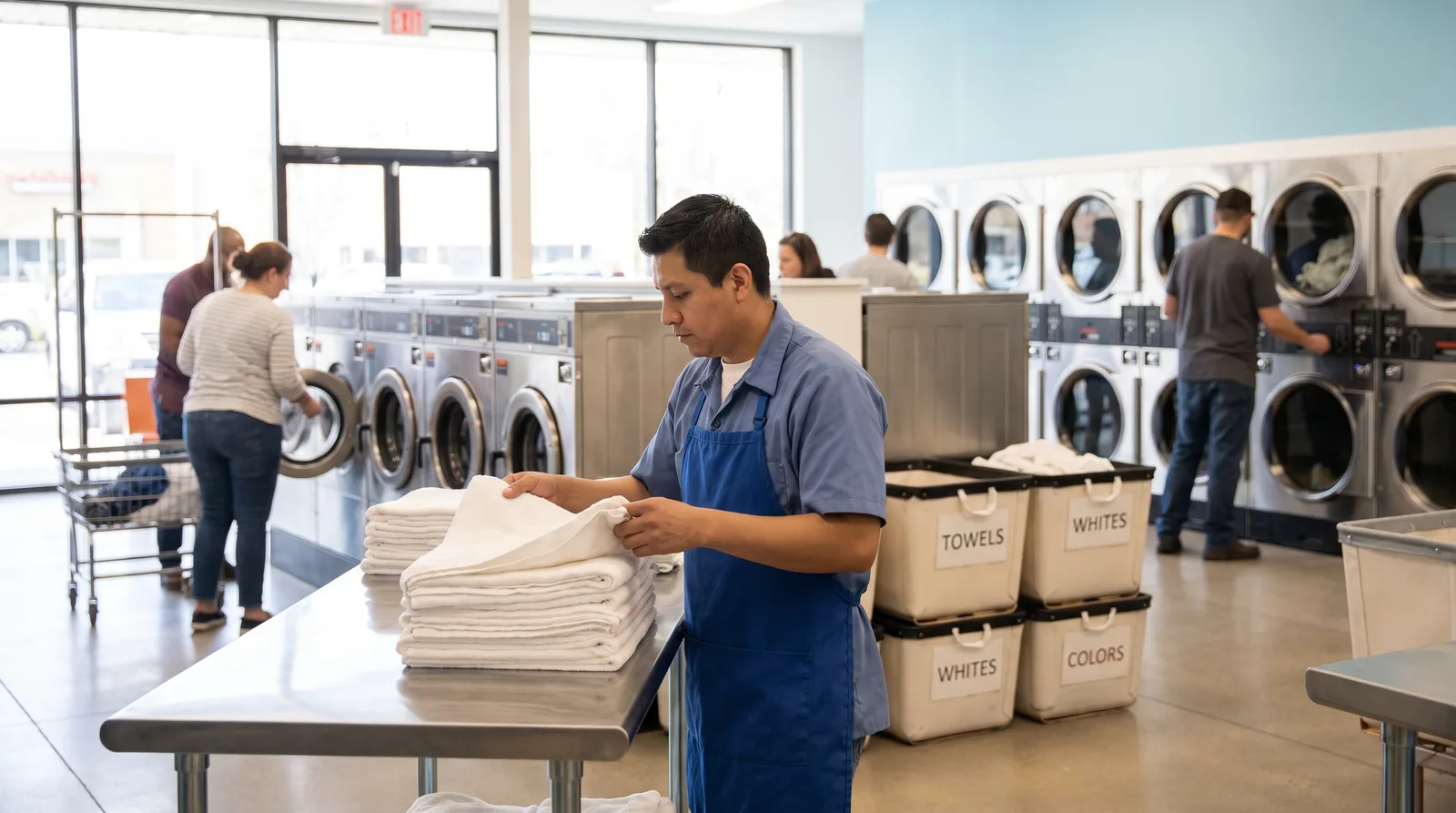
To add wash-and-fold to your laundromat, carve out folding and staging space, put one trained attendant on a written quality standard, set a per-pound price that covers labor, and start with a small daily order cap so quality holds before you promote it. Wash-and-fold (a paid service where you wash, dry, and fold a customer's laundry by the pound) is the most common way an existing store adds higher-margin revenue without new machines or a bigger lease. The service uses equipment you already own during slower hours, so the main new costs are labor, supplies, and space. This guide walks through each step, from deciding whether your store is ready to pricing and growing the service.
Key takeaways
- Wash-and-fold adds revenue from equipment you already own by putting idle machine hours and staffed time to work.
- The real new costs are labor, folding and staging space, packaging, and a point-of-sale way to weigh and ticket orders.
- Start with a small daily order cap and a single written quality standard, because inconsistent folding loses paying customers fast.
- Price per pound so the rate covers labor, supplies, and machine time, and set a minimum order and rush fee.
- Wash-and-fold is the foundation for pickup and delivery and commercial accounts, so build the workflow to scale later.
Contents
- Is your laundromat ready for wash-and-fold?
- How much space does wash-and-fold need?
- What equipment and supplies do you need?
- Who does the folding, and when?
- What does the wash-and-fold workflow look like?
- How should you price wash-and-fold?
- How much revenue can wash-and-fold add?
- How do you keep quality consistent?
- How do you get the first customers?
- How do you grow wash-and-fold into more revenue?
- What are the common mistakes to avoid?
Is your laundromat ready for wash-and-fold?
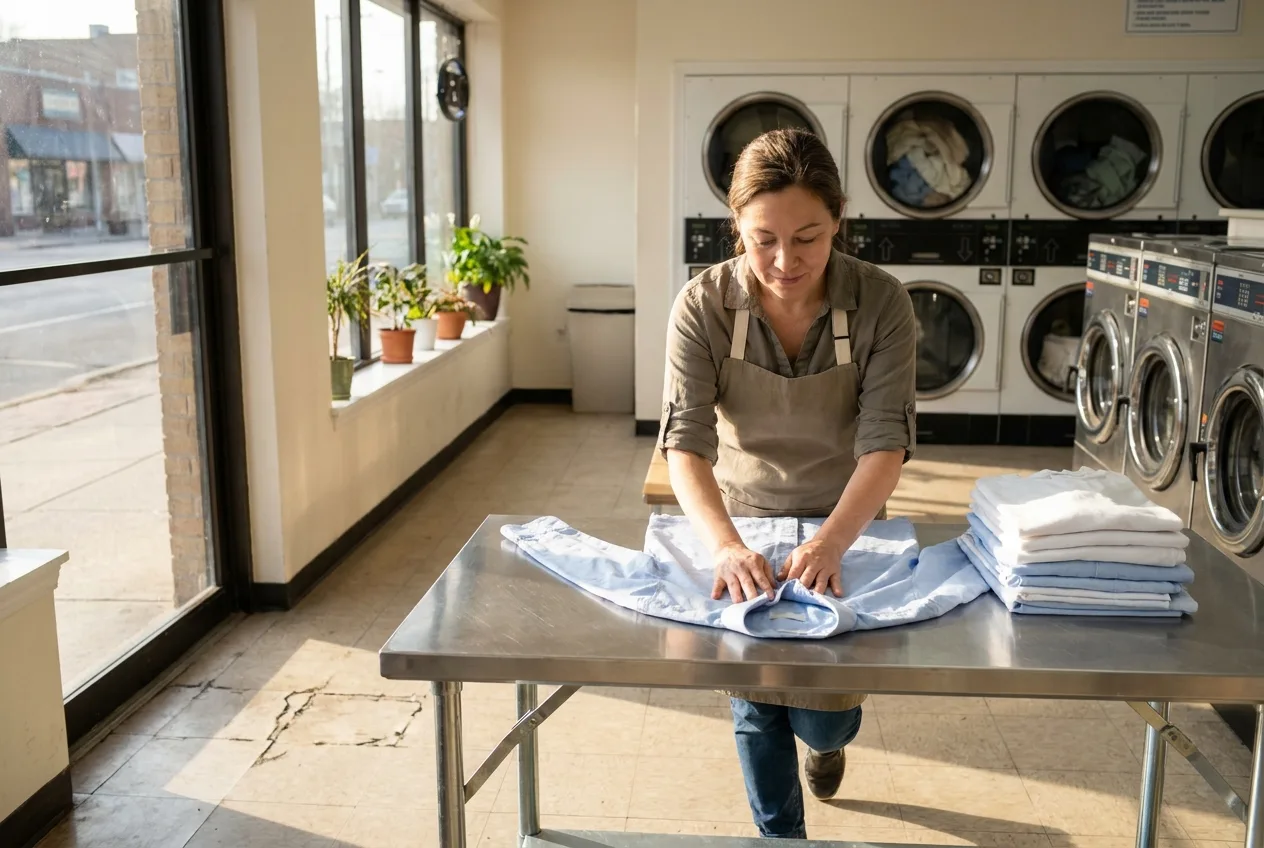
Your store is ready when you have machine capacity during off-peak hours, room for a folding and staging area, and either an attendant or a plan to hire one. Wash-and-fold does not require a remodel, but it does require that the three inputs (machines, space, and labor) all exist without cannibalizing your self-service customers.
Ask yourself:
- Do you have washers and dryers sitting idle during mid-morning and early-afternoon hours?
- Is there a spot for a folding table and shelving that does not block self-service?
- Can you staff the folding, or is the store currently unattended?
If your peak hours already run every machine and every table full, wash-and-fold will fight your self-service business rather than add to it. In that case, fix capacity or hours first. If you are still weighing whether to staff at all, the broader case for the service sits inside the wash and fold business guide.
How much space does wash-and-fold need?
Wash-and-fold needs a dedicated folding surface plus staging space for incoming and completed orders, which is usually a few linear feet of table and shelving rather than a separate room. The service fails when clean orders get mixed up or sit in a pile, so organized staging matters more than square footage.
A workable setup includes:
- A sturdy folding table used only for wash-and-fold during service hours.
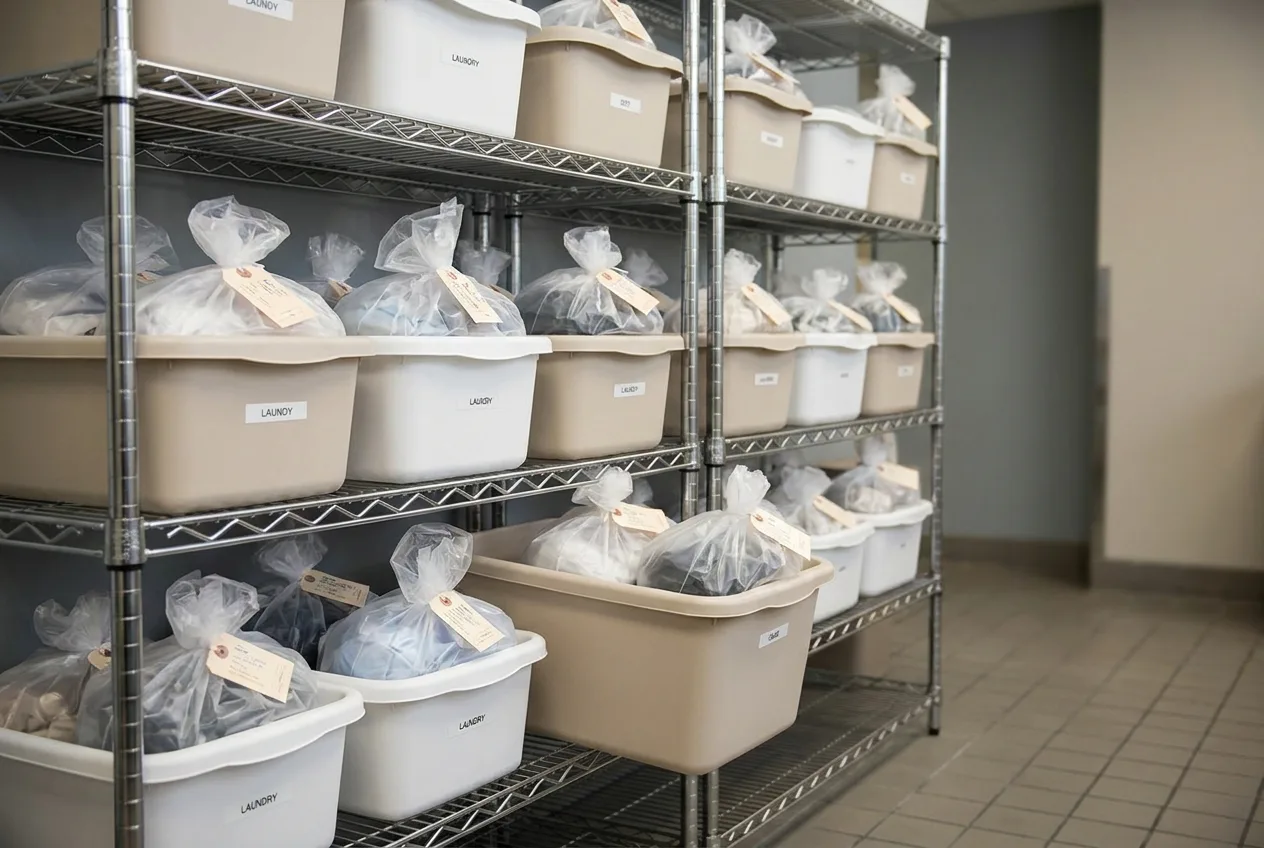
- Labeled shelving or bins for incoming, in-process, and finished orders.
- A holding area for completed orders awaiting pickup, ideally out of customer reach.
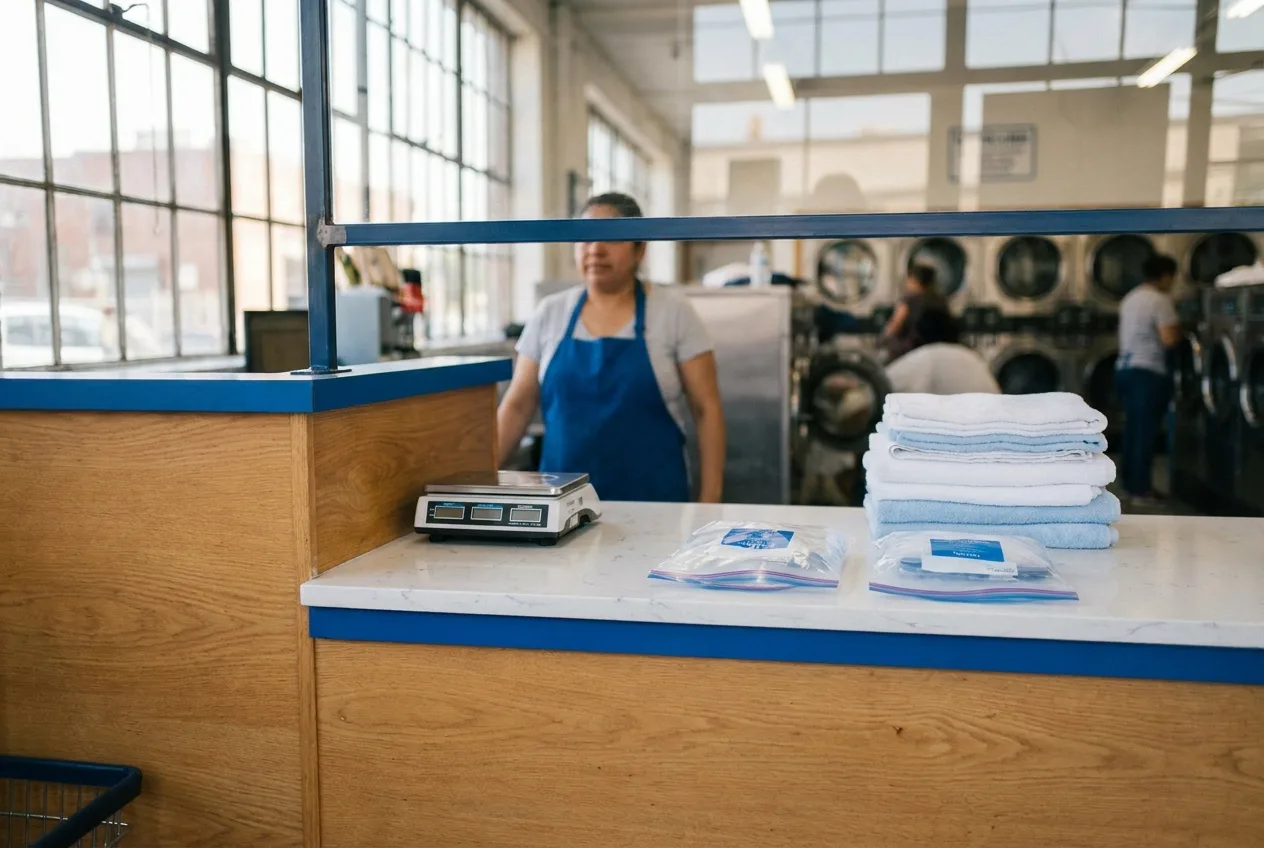
- A scale and ticketing spot near the counter.
Keep the staging area visible to the attendant but separate from the self-service folding tables customers use. Cross-contamination between a customer's own load and a paid order is one of the fastest ways to lose trust.
What equipment and supplies do you need?
Most stores can start with the washers and dryers they already own plus a scale, a way to ticket orders, packaging, and detergent, so the upfront cost is modest. You are adding a service on top of existing equipment, not buying a new line of machines.
The starter list:
- A reliable digital scale to weigh orders by the pound.
- A point-of-sale or ticketing system to record weight, price, and customer.
- Packaging: bags, ties, and a way to label each order clearly.
- Bulk detergent, and options for customers who want fragrance-free or specific products.
- Laundry carts or bins to move orders through the workflow.
Larger machines earn their keep here, since a single 40-pound washer processes a wash-and-fold order faster than several small ones. If you are re-equipping anyway, weigh capacity against your space using commercial washer sizes and capacity.
Who does the folding, and when?
Wash-and-fold is done by an attendant during your slower machine hours, which is when both machines and staff have spare capacity. The service works best scheduled into the mid-day lull rather than piled onto a busy attendant during peak self-service traffic.
Staffing options:
- Add wash-and-fold duties to an existing attendant's slow-hour shift.
- Hire a part-time attendant specifically for the daytime folding window.
- For a small launch, the owner processes orders while learning real demand.
Whoever folds needs training on a single quality standard, because consistency is what turns a one-time order into a repeat customer. For sourcing, interviewing, and training that person, see how to hire and train laundromat attendants, and for coverage and cost, laundromat attendant pay and scheduling. Because folding is paid staff time, confirm wage and worker-classification rules with the U.S. Department of Labor before you schedule anyone.
What does the wash-and-fold workflow look like?
A good workflow moves every order through the same fixed steps: intake and weigh, wash, dry, fold, package, and stage for pickup, each tied to a ticket. Writing it down as a routine is what keeps orders from getting lost or mixed up when the store is busy.
The standard flow:
- Intake: weigh the order, log weight and price, note special instructions, and tag it.
- Wash: sort per your standard, use the right temperature and detergent, keep the order together.
- Dry: dry to the correct setting, avoid over-drying that damages fabric.
- Fold: fold to your uniform standard so every order looks the same.
- Package: bag, label, and record the finished order.
- Stage and notify: place in the pickup area and tell the customer it is ready.
Tie every step to the ticket so any attendant can pick up a partially finished order. This same discipline is what your written laundromat standard operating procedures should capture for the whole store.
How should you price wash-and-fold?
Price wash-and-fold per pound at a rate that covers labor, machine time, detergent, and packaging, then add a minimum order and a rush fee. Underpricing is the most common mistake, because owners forget that labor, not machine time, is the real cost of the service.
A simple way to sanity-check a per-pound price:
- Estimate how many pounds an attendant can process per hour.
- Divide the attendant's fully loaded hourly cost by that throughput to get labor cost per pound.
- Add machine, utility, detergent, and packaging cost per pound.
- Set your price above that floor with margin, then compare to nearby stores.
Pricing has enough detail to deserve its own walkthrough, including minimums, rush fees, and delicate handling, in how to price wash-and-fold laundry. Whatever you charge, do not price below your labor floor to win volume, because higher volume at a loss only loses money faster. Also confirm whether wash-and-fold service is taxable in your state, since rules vary; the IRS and your state tax authority are the authorities, not assumption.
How much revenue can wash-and-fold add?
Wash-and-fold can add a meaningful revenue stream because it earns a per-pound margin on hours the store would otherwise sit idle, though the exact lift depends on local demand and pricing. It is best thought of as incremental income layered on top of self-service, not a replacement for it.
Consider a simple scenario. A store that processes, say, 300 paid pounds a week at a per-pound price above its labor floor adds weekly revenue from equipment it already owns. The margin depends heavily on how efficiently your attendant folds and how you priced the service.
| Factor | Effect on wash-and-fold profit | What to do about it |
|---|---|---|
| Attendant throughput | More pounds per labor hour raises margin | Train to a standard, batch orders |
| Per-pound price | Sets margin above your cost floor | Price above labor plus supplies |
| Off-peak machine use | Free capacity means low added utility cost | Schedule folding into slow hours |
| Order volume | Spreads fixed labor over more pounds | Market to nearby demand |
| Redo rate | Poor quality forces costly rewashes | Hold a single quality standard |
For how this stacks against your overall store economics, see laundromat profit margins explained and model the effect on your own numbers with the laundromat cash flow calculator.
How do you keep quality consistent?
Consistency comes from one written standard that every attendant follows for sorting, washing, folding, and packaging, so every order looks and feels the same. A single sloppy order can cost a weekly customer, so quality control is not optional for a paid service.
Build the standard around:
- Sorting rules by color and fabric, and how to handle delicates and stains.
- Water temperature and detergent amount for each load type.
- A defined fold style and packaging so orders are visually uniform.
- A check step before an order is staged for pickup.
Have new attendants shadow several orders before running one alone, and spot-check finished orders yourself during the first weeks. Consistency is what lets you eventually charge a premium and win referrals.
How do you get the first customers?
The first wash-and-fold customers usually come from your existing self-service traffic, so in-store signage and a staff mention convert people who already trust the store. You do not need a marketing budget to start, just visibility at the point where customers are already doing laundry.
Early tactics that work:
- Clear signage at the counter and near machines showing the service and price.
- Attendants mentioning wash-and-fold to regulars, especially those folding large loads.
- A first-order discount to get hesitant customers to try it once.
- A visible, tidy staging area so customers see finished orders and trust the quality.
Once the service is running smoothly, widen the net with the tactics in how to attract wash-and-fold customers and your broader plan to market a laundromat.
How do you grow wash-and-fold into more revenue?
Once wash-and-fold is consistent and profitable, it becomes the base for pickup and delivery and for commercial accounts, both of which sell the same service at higher volume. The workflow you built for walk-in orders is exactly what a route or a business client needs, so growth is mostly a matter of adding demand.
Natural next steps:
- Add pickup and delivery so customers who cannot visit still buy the service.
- Pursue recurring commercial laundry accounts from Airbnbs, salons, gyms, and clinics.
- Bundle wash-and-fold with other margin add-ons covered in laundromat vending and add-on revenue.
Each of these leans on the same folding standard and ticketing system, so getting the in-store service right first pays off later. Grow demand before you grow capacity, so you are not staffing for orders you do not have yet.
What are the common mistakes to avoid?
The biggest mistakes are underpricing the service, promoting it before quality is reliable, and letting orders mix with self-service laundry. Each one turns a profitable add-on into a source of complaints and rewashes.
Watch for these:
- Pricing below your labor floor to win volume, which scales losses.
- Marketing hard before the workflow and quality standard are proven.
- Skipping the scale and eyeballing weight, which erodes margin order by order.
- Storing finished orders where customers or other loads can reach them.
- Overloading a peak-hour attendant with folding they cannot finish.
Start small, prove the quality and the margin, then grow. Wash-and-fold rewards discipline, not a fast, sloppy launch.
Frequently asked questions
Do I need new machines to add wash-and-fold?
Usually not. Most stores start with the washers and dryers they already own, running paid orders during slower hours when machines sit idle. Larger-capacity washers do help throughput, so if you are re-equipping anyway, favor bigger machines. The real new costs are labor, a scale, packaging, and staging space, not new equipment.
How much should I charge per pound for wash-and-fold?
Charge a per-pound rate that covers your attendant's labor, machine and utility cost, detergent, and packaging, then add margin and a minimum order. Labor is the main cost, so price against how many pounds an attendant folds per hour, not just machine time. Compare the result to nearby stores, but never price below your labor floor to win volume.
How much space does wash-and-fold need?
Less than most owners expect. A dedicated folding table plus labeled shelving for incoming, in-process, and finished orders is usually enough. What matters is keeping paid orders organized and separate from the self-service folding tables so nothing gets mixed up. Staging discipline beats raw square footage.
Can one attendant handle wash-and-fold and the floor?
During slow hours, often yes, since folding fits the mid-day lull when self-service traffic is light. During peak hours it usually does not, because folding and helping customers compete for the same person. Many stores schedule wash-and-fold into off-peak windows or add a part-time daytime attendant as volume grows.
Is wash-and-fold worth it for a small laundromat?
It can be, because it earns margin on machine hours the store would otherwise waste. Start with a small daily order cap, prove the quality and the pricing, then decide whether to grow it. If your peak hours already run every machine and table full, fix capacity or hours before adding the service.
How do I keep wash-and-fold orders from getting mixed up?
Tie every order to a ticket at intake, keep it together through wash, dry, fold, and package, and stage finished orders in a labeled area away from self-service tables. A written workflow lets any attendant pick up a partially finished order. Losing or mixing a customer's clothes is the fastest way to lose that customer for good.