Laundromat Standard Operating Procedures (SOPs)
SudsList Editorial · Jul 26, 2026
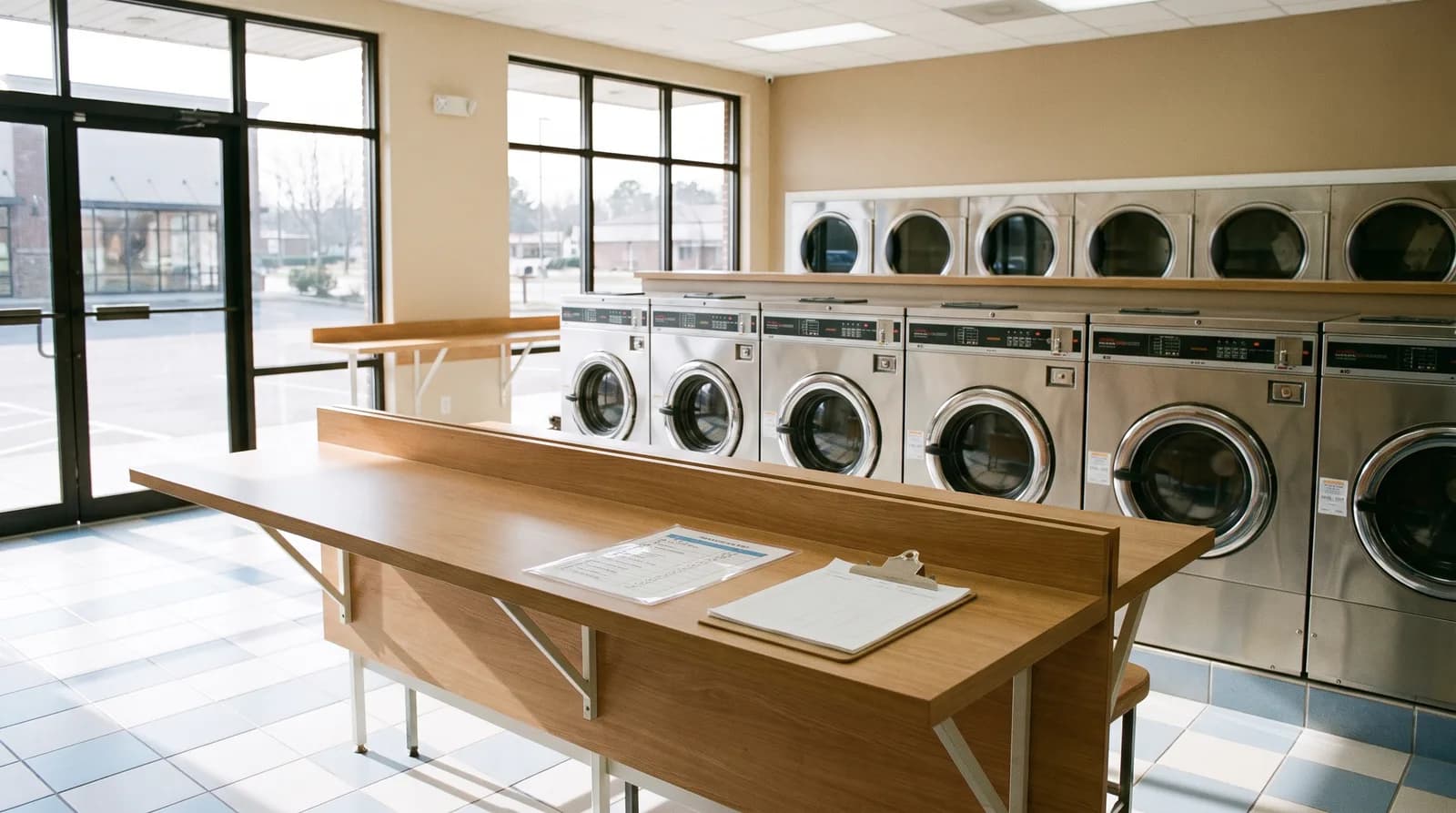
The core laundromat standard operating procedures (SOPs) every store needs are opening and closing, cleaning, cash pickup, machine-fault handling, customer-issue resolution, and emergencies. An SOP is simply a written, step-by-step routine so any attendant, cleaner, or fill-in runs the store the same way you would. Documenting these is what makes a store consistent, trainable, and eventually absentee, because the knowledge lives on paper instead of only in your head. Write the ones your store actually uses, keep them short, and store them where your people can reach them.
Key takeaways
- An SOP is a short written routine that lets anyone run a task the same way every time, without asking you.
- The essential SOPs are opening, closing, cleaning, cash pickup, machine faults, customer issues, and emergencies.
- Cash-pickup SOPs matter most, since dual control and reconciliation are what protect revenue when you are not there.
- Keep SOPs short and checklist-style; a procedure no one reads is not a procedure.
- Written SOPs are the foundation of training new attendants and of running a store absentee.
Contents
- What is a laundromat SOP and why bother?
- What goes in an opening and closing SOP?
- What does a cleaning SOP cover?
- How should a cash-pickup SOP work?
- What is the machine-fault SOP?
- How do you handle customer issues?
- What emergency procedures do you need?
- How do you write and store SOPs?
What is a laundromat SOP and why bother?
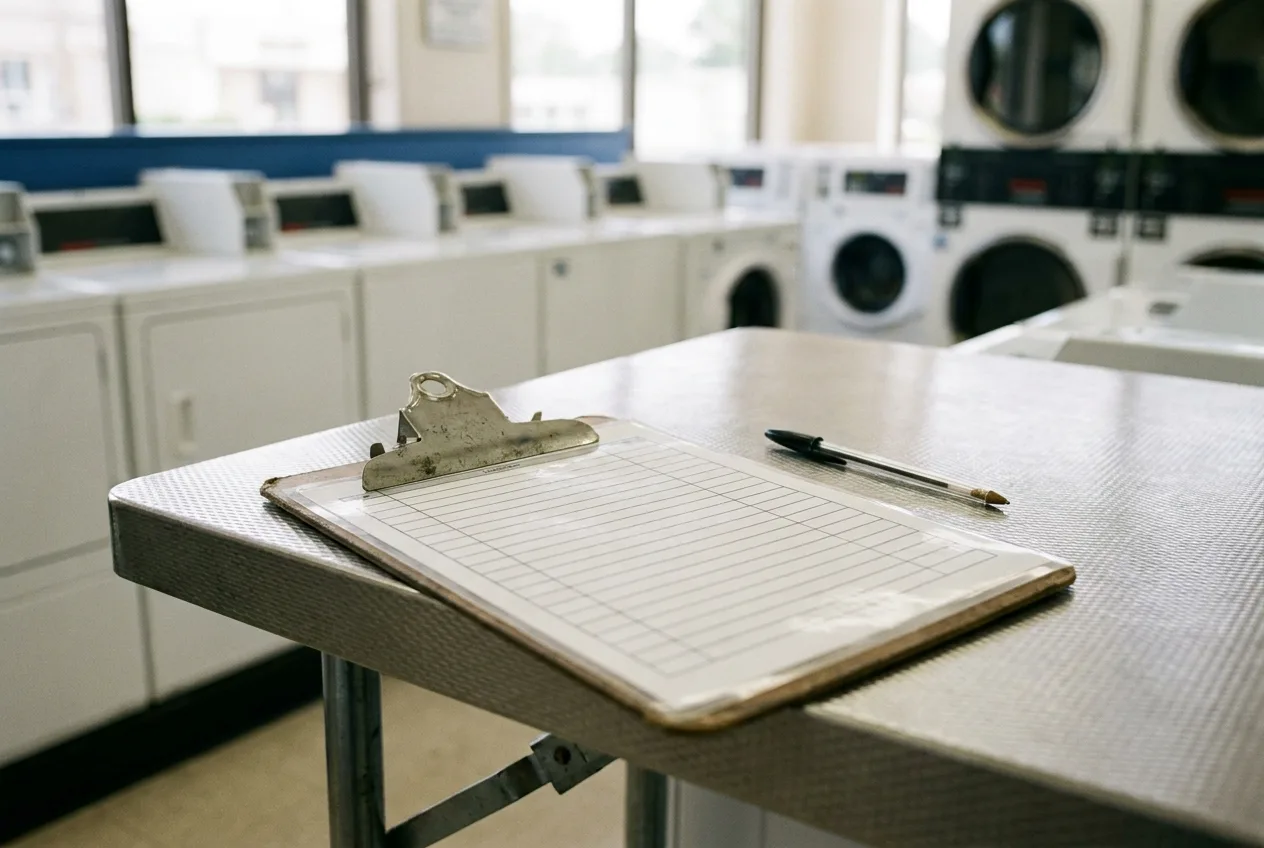
A standard operating procedure is a short written set of steps for a recurring task, written so anyone can follow it without asking you. The reason to bother is consistency: a store run from written routines behaves the same on every shift, which protects cleanliness, cash, and customer experience.
SOPs also make three things possible:
- Faster, cheaper training, since a new attendant follows the document instead of shadowing you for weeks.
- Absentee operation, because a cleaner or tech can act correctly without a call.
- A sellable store, since documented systems make the business easier for a buyer to run.
Industry groups such as the Coin Laundry Association offer operating resources and templates you can adapt rather than starting from a blank page. SOPs turn your habits into a system. For how they support running a store without you on site, see how to run an absentee laundromat.
What goes in an opening and closing SOP?
An opening and closing SOP lists the exact steps to start and end the day, so the store is ready for customers and secured at night. These are the routines most likely to be skipped under time pressure, so writing them down keeps standards from slipping.
An opening checklist typically covers:
- Open up, disarm the alarm, and turn on lights.
- Walk the floor for out-of-order machines and leaks.
- Check and stock soap, change, and restroom supplies.
- Confirm restrooms are clean and the folding area is tidy.
Closing reverses it:
- Final floor and machine sweep, lost-and-found collected.
- Trash out, folding tables wiped, floor cleaned.
- Cash secured per the pickup SOP.
- Lights, lock, and alarm set.
Stores that are 24-hour still need scheduled versions of these, just tied to shift changes rather than lock-up.
What does a cleaning SOP cover?
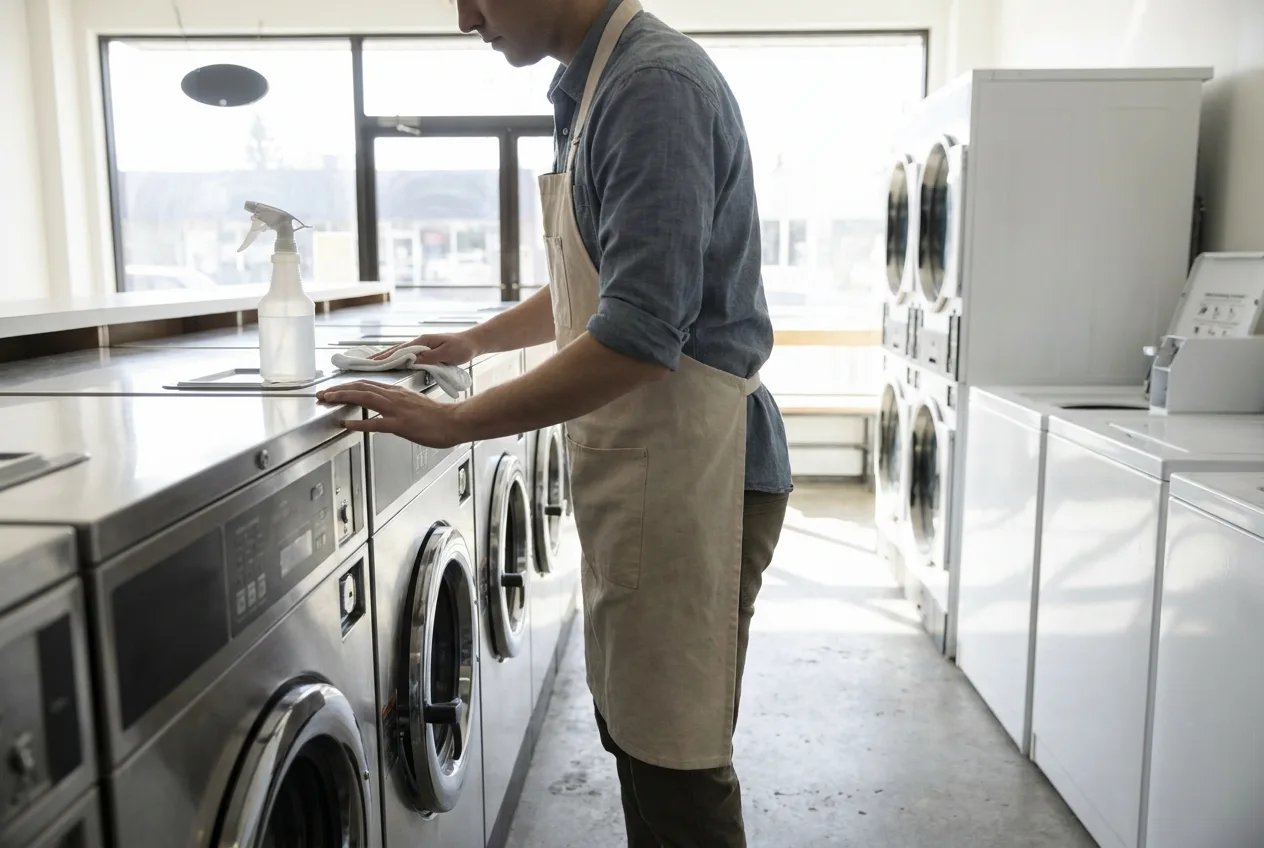
A cleaning SOP breaks the work into daily, weekly, and periodic tasks with a checklist, because cleanliness is the first thing customers notice and the first to slip without a routine. A clean store is a marketing asset, so this SOP directly drives repeat business.
| Frequency | Tasks |
|---|---|
| Daily | Wipe machines and tables, clean restrooms, sweep and mop floors, empty trash |
| Weekly | Clean lint traps and dryer areas, wipe glass and windows, detail change machine |
| Monthly | Deep-clean restrooms, dust vents and fixtures, check signage and lighting |
Lint and dryer areas deserve attention, since buildup is both a fire hazard and a performance drag. For the full routine, use the laundromat cleaning checklist, and verify the work with cameras if you are not on site.
How should a cash-pickup SOP work?
A cash-pickup SOP defines who collects, when, under dual control, and how the count is reconciled, because cash handling is the highest-risk task in the store. This is the SOP that most directly protects your revenue, so it deserves the most care.
A sound procedure includes:
- Dual control, so no one collects coin alone.
- A fixed schedule and route from machine to secured count area.
- A camera over every collection point and the change machine.
- Reconciliation of the count against water usage and turns each cycle.
Clean, reconciled cash records also matter at tax time, so keep them in a form your bookkeeper and the IRS would accept. Reconciling to water usage is the check that catches quiet shrink, since water consumed roughly tracks cycles run. Build this into the routine and see how to track laundromat cash and prevent skimming. Card and app payments reduce the cash to manage in the first place; compare systems in coin vs card vs app payment systems.
What is the machine-fault SOP?
A machine-fault SOP tells an attendant what to try, what to tag out of order, and who to call, so a broken machine is handled fast and safely. Downtime is lost revenue, so the goal is quick, correct action without waiting for you.
The procedure should spell out:
- Simple first checks, such as a stuck coin, tripped door, or reset.
- The rule for tagging a unit out of order rather than leaving it running.
- How to log the fault and issue any refund.
- The repair contact and expected response window.
Keep the boundary clear between what an attendant may safely try and what requires a tech, especially anything involving gas, water, or electrical. For the repair side, see how to handle laundromat repairs.
How do you handle customer issues?
A customer-issue SOP gives attendants clear rules for refunds, lost items, and complaints, so problems are resolved consistently and fairly without a call to you. Consistency here protects your reputation and keeps small issues from becoming bad reviews.
Document how to handle:
- Refunds for failed cycles, with a simple log and limit.
- Lost-and-found intake, storage, and disposal timing.
- Machine damage claims and how to escalate them.
- Difficult behavior, loitering, or safety concerns, and when to call for help.
A short, fair refund rule that an attendant can apply on the spot prevents both loss and arguments. Empower staff to solve small issues and to escalate genuine safety problems.
What emergency procedures do you need?
Every store needs emergency SOPs for water leaks, gas smells, fire, power loss, and injured customers, because these are rare, high-stakes moments where guessing is dangerous. Written steps and posted shutoff locations turn panic into action.
At minimum, document:
- Water shutoff location and steps for a major leak.
- What to do and who to call at the smell of gas.
- Fire response, extinguisher locations, and evacuation.
- Who to contact for an injured customer and how to record it.
Keep insurance and emergency contacts with these procedures, and review coverage in laundromat insurance and what you need. Post the shutoff and contact information where any attendant can find it quickly.
How do you write and store SOPs?
Write SOPs as short checklists in plain language, and store them where your people actually work, because a procedure no one reads or can find does not exist. The best SOP is the one an attendant follows without thinking about it.
Practical rules:
- One task per SOP, in numbered steps, on a single page where possible.
- Plain language, no jargon, written for a first-week hire.
- Kept both posted in the store and accessible digitally.
- Reviewed and updated whenever a process or piece of equipment changes.
Start with the handful of SOPs your store uses daily, then add the rarer ones. These documents are also the backbone of training; see how to hire and train laundromat attendants for turning them into onboarding.
Frequently asked questions
What SOPs does a laundromat absolutely need first?
Start with opening and closing, cleaning, cash pickup, and machine faults, since those cover the daily tasks that keep the store running and protect revenue. Add customer-issue and emergency procedures next. Write the handful your store uses every day before documenting the rare situations.
How long should a laundromat SOP be?
Short enough to fit on one page as a numbered checklist wherever possible. A first-week attendant should be able to follow it without asking questions or reading jargon. A long, dense procedure gets ignored, which defeats the purpose of writing it down.
Do I need SOPs if I run the laundromat myself?
Yes, because SOPs make the store trainable, consistent, and sellable even if you are on site daily. They protect you when you take a day off or hire a fill-in, and they document the cash and emergency steps you might otherwise handle from memory. They are also the foundation if you later go absentee.
Where should I keep laundromat SOPs?
Keep them both posted in the store near where each task happens and stored digitally so staff can reach them from a phone. Cash and emergency procedures especially should be visible to any attendant on shift. Update them whenever a process or piece of equipment changes so they stay accurate.
How do SOPs help when hiring attendants?
Written SOPs turn training from weeks of shadowing into following a checklist, so a new attendant reaches consistent performance faster. They also set a clear standard, which makes it easy to see when someone is off-process. That consistency is why documented stores are easier to staff and to run absentee.