Laundromat Insurance: What Coverage You Need
SudsList Editorial · Jun 27, 2026
A laundromat needs general liability, commercial property, and equipment coverage at a minimum, and most stores add business interruption and workers compensation once they have employees. Insurance is what protects the cash flow you are buying from a single fire, flood, or slip-and-fall, so it belongs in your operating numbers and your due diligence rather than as an afterthought.
Contents
- Do you actually need laundromat insurance
- What coverage a laundromat needs
- What laundromat insurance costs
- A worked example
- How insurance fits into buying
Do you actually need laundromat insurance
Yes, on every count that matters. Your landlord will require proof of coverage in the lease, and any lender financing the purchase will require it before funding. Beyond those requirements, a laundromat is a public space full of water, electricity, and heat, a combination that produces real claims. A customer slips on a wet floor, a washer hose fails overnight and floods the unit next door, or a dryer motor overheats. Insurance turns those events from business-ending surprises into manageable claims.
What coverage a laundromat needs
Most stores carry a bundle of policies, often packaged as a business owner's policy with add-ons.
General liability
This covers third-party injuries and property damage, such as a customer who falls or whose clothing is damaged. It is the coverage your lease almost certainly names.
Commercial property
This covers your build-out, fixtures, and contents against fire, water, and similar losses. Confirm whether it is written at replacement cost or actual cash value, because the difference is large after a total loss.
Equipment breakdown
Washers and dryers are the asset you are buying. Equipment breakdown coverage helps with sudden mechanical or electrical failure that ordinary property policies exclude, which matters because machines wear out on a schedule.
Business interruption
If a covered loss closes the store, this replaces lost income while you repair. For a business whose value is its cash flow, it is one of the most important and most overlooked coverages.
Workers compensation
Once you hire even one attendant, most states require workers compensation. If you plan an attended store or wash-and-fold, budget for it from day one.
| Coverage | What it protects |
|---|---|
| General liability | Customer injuries and property damage on the premises |
| Commercial property | Build-out, fixtures, and contents against fire, water, and similar losses |
| Equipment breakdown | Sudden mechanical or electrical machine failure |
| Business interruption | Lost income while the store is closed for a covered loss |
| Workers compensation | Employee injuries (required once you have staff) |
What laundromat insurance costs
Premiums vary widely with store size, location, equipment age, payroll, claims history, and the limits you choose, so any single average is misleading. The honest approach is to get real quotes for the specific store you are buying. As a rough planning placeholder before you have quotes, many small self-service stores fall somewhere in the low thousands of dollars per year for a packaged policy, with attended stores paying more once workers compensation is added. Treat that as a line to verify, not a number to rely on.
A worked example
Suppose you are buying a self-service store doing $180,000 a year in revenue. You get three quotes for a packaged policy with general liability, property, and equipment breakdown, and they land around $2,400 a year. That is $200 a month, a little over one percent of revenue. When you add it to rent, water, and the rest in the cash flow calculator, it barely moves the result, but skipping it would expose the entire business to a single bad event. Adequate coverage is cheap relative to what it protects.
How insurance fits into buying
During due diligence, ask the seller for the current policy and a loss-run report showing past claims. A string of water claims, for example, can flag an equipment or plumbing problem worth investigating, which is the kind of signal the red flags guide tells you to chase. Get your own quotes before closing so there is no gap in coverage the day you take over, and fold the confirmed premium into your expense numbers. For the full set of items to verify, work the due diligence checklist, and for the overall path see how to buy a laundromat. General coverage guidance is available from the Insurance Information Institute and the U.S. Small Business Administration.
How to lower your laundromat premium
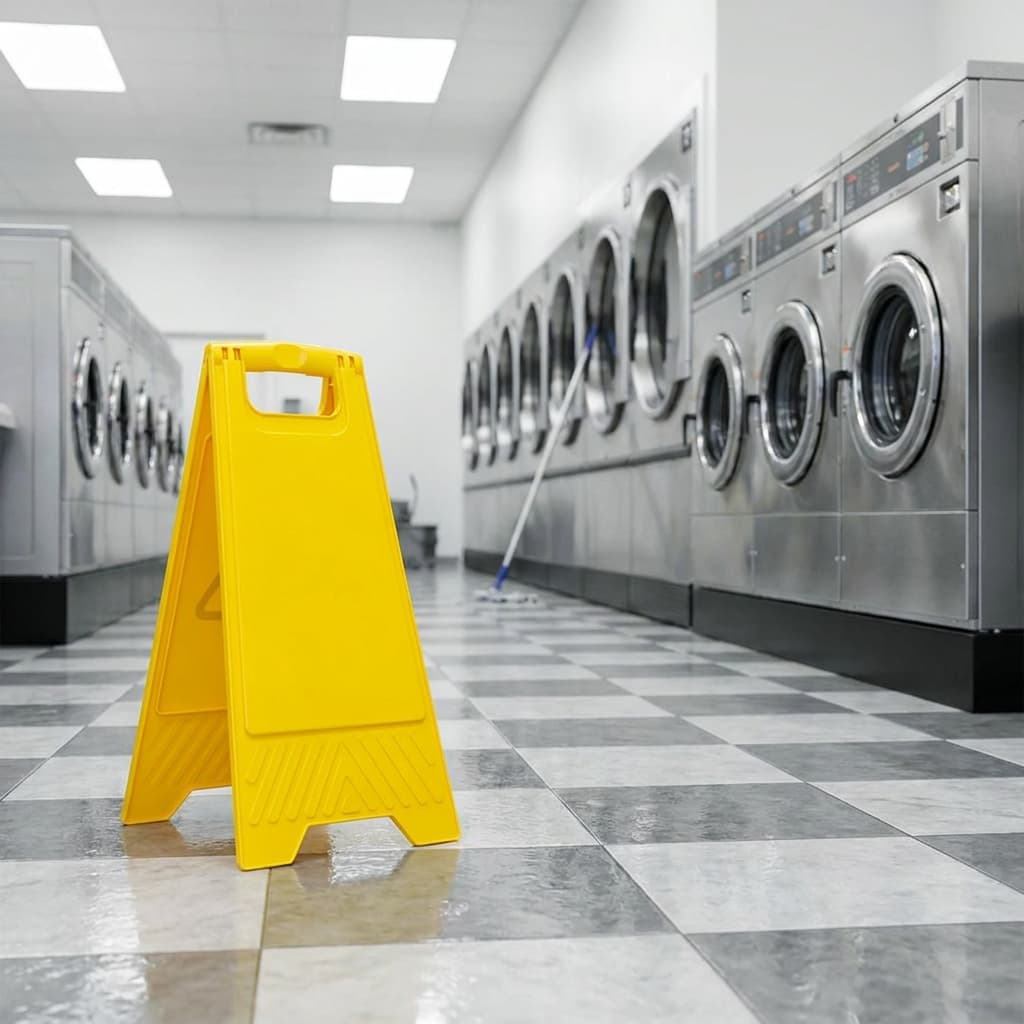
A few practical moves reduce the cost of coverage without cutting the protection you actually need. Because water claims are the most common and most premium-driving losses at a laundromat, anything that prevents them pays off at renewal. Replace aging supply hoses, install automatic shutoff or leak-detection valves, keep drains clear, and document a regular maintenance schedule for the equipment. Keeping floors dry with good mats, drainage, and caution signage cuts slip-and-fall claims, the other frequent driver. On the policy itself, bundling general liability, property, and equipment breakdown into one business owner's policy is usually cheaper than buying each line separately, and raising your deductible lowers the premium as long as you hold enough reserve to cover it. The single strongest lever, though, is a clean loss-run history, which means the way you operate the store directly shapes what you pay. The habits in how to run a laundromat double as good risk management.
Coverage to revisit as the business grows
Insurance is not a form you sign once at closing; it should track the business as it changes. If you add wash-and-fold or pickup and delivery, you take customers' garments into your care, which raises bailee coverage questions a self-service store never faces, and any delivery vehicle brings commercial auto needs. As revenue and equipment values rise, your property and business-interruption limits should rise with them, since a policy written for a smaller store can leave you underinsured after a total loss. An umbrella policy that sits on top of your general liability is inexpensive relative to the protection it adds, and a lender or a new landlord may require higher limits than you would otherwise choose. Build a quick annual review into your routine: confirm the replacement-cost basis still matches reality, update payroll figures for workers compensation, and re-quote the package every couple of years to stay competitive.
Put the number in your model
Whatever you settle on, the confirmed annual premium is an operating cost like rent or water, so it belongs in your projections from the start. Drop it into the cash flow calculator alongside the other expenses and confirm the store still clears the return you need. Buyers who treat insurance as a real line rather than a rounding error avoid the unpleasant surprise of a premium higher than expected, and they walk into ownership with the coverage already bound and the cost already accounted for.
Frequently asked questions
What insurance does a laundromat need?
At a minimum general liability, commercial property, and equipment breakdown coverage, plus business interruption and workers compensation once you have employees.
Is laundromat insurance required?
Effectively yes. Landlords require it in the lease and lenders require it to finance the purchase, and it protects you from costly slip-and-fall and water claims.
How much does laundromat insurance cost?
It varies with size, location, equipment age, payroll, and limits. Many small self-service stores pay in the low thousands of dollars a year, but get real quotes for the specific store rather than relying on an average.
What is business interruption coverage?
It replaces lost income while the store is closed for a covered loss. Because a laundromat's value is its cash flow, it is one of the most important coverages to carry.
Do I need workers compensation for a laundromat?
If you have employees, most states require it. A fully self-service store with no staff may not, but confirm your state's rules.