Should Your Laundromat Go Cashless?
SudsList Editorial · Aug 14, 2026
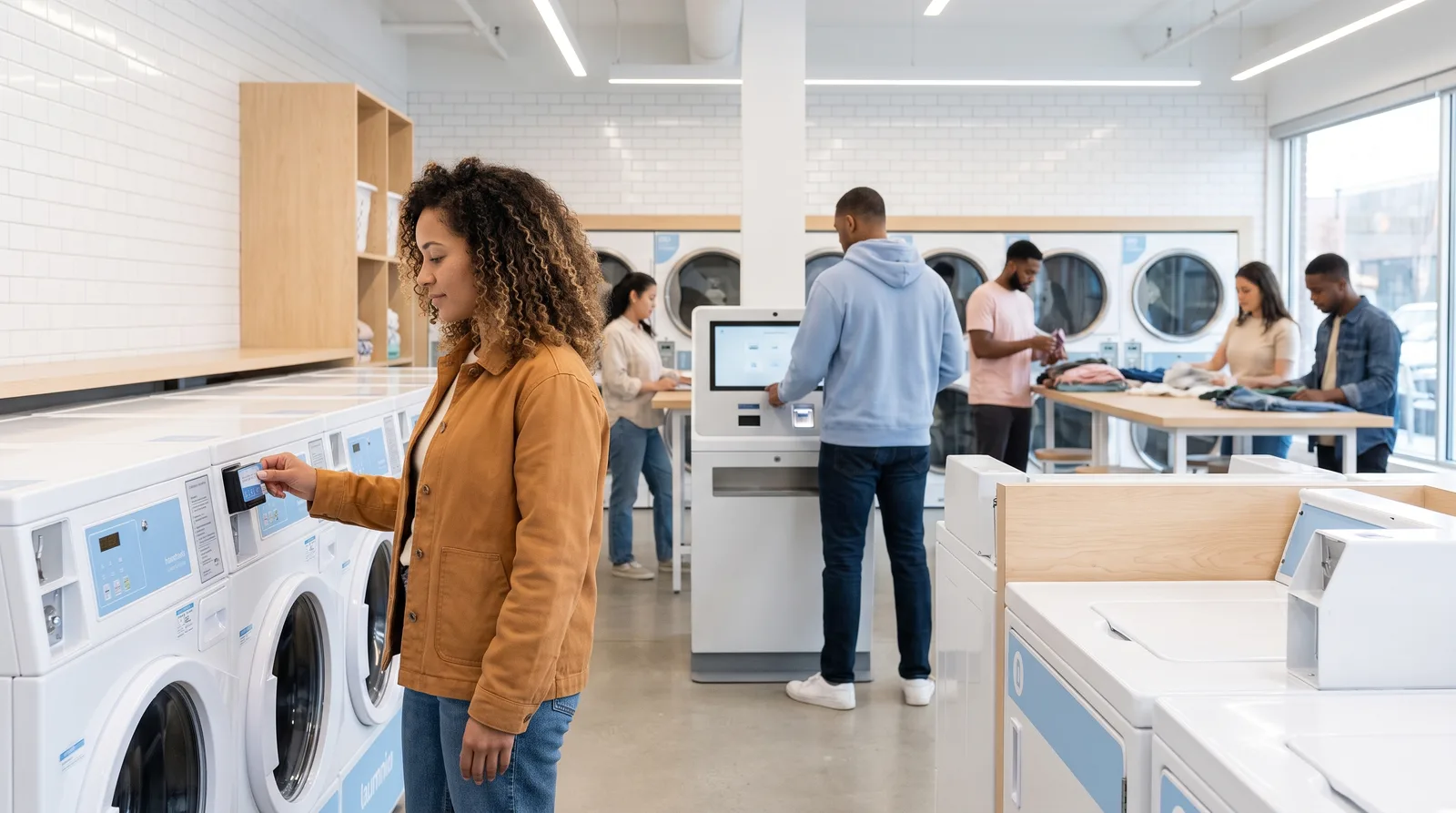
Going fully cashless makes sense for a laundromat when card and app adoption in your neighborhood is high and you want vend-price flexibility, remote pricing, and less cash to handle, but many stores are better served by a hybrid that keeps coin alongside readers. The retrofit trades coin collection, jams, and theft for transaction fees and a payment system to maintain. Base the decision on your own customers and your cash-handling pain, not on a trend.
Key takeaways
- Going cashless removes coin handling, coin theft, and coin jams, and it lets you change vend prices remotely instead of re-pegging machines by hand.
- The trade-off is per-transaction processing fees and a payment platform you must maintain and support.
- In many neighborhoods a share of customers still prefer cash, so a hybrid that keeps coin usually beats going fully cashless overnight.
- Vend-price flexibility is the underrated win: you can price by machine size, time of day, or promotion without touching hardware.
- Decide from your own payment mix and cash-handling cost, and pilot card and app on some machines before converting the whole store.
Contents
- Should your laundromat go cashless?
- What does going cashless mean for a store?
- What are the benefits of going cashless?
- What does a cashless retrofit cost?
- What are the fees and downsides?
- Who still needs coin?
- How do you decide for your store?
Should your laundromat go cashless?
Go cashless when your customers already pay by card or phone elsewhere and cash handling is costing you real time or losses, and stay hybrid when a meaningful share of your traffic still arrives with quarters. There is no single right answer, because the payment mix that works in one neighborhood fails in another.
The question is really two questions: do your customers want it, and does it save you more than it costs? A store bleeding hours on coin runs and fighting break-ins has a stronger case than one where the coin boxes fill quietly. For the buyer's framing of the same choice, see coin vs card vs app payment systems.
What does going cashless mean for a store?
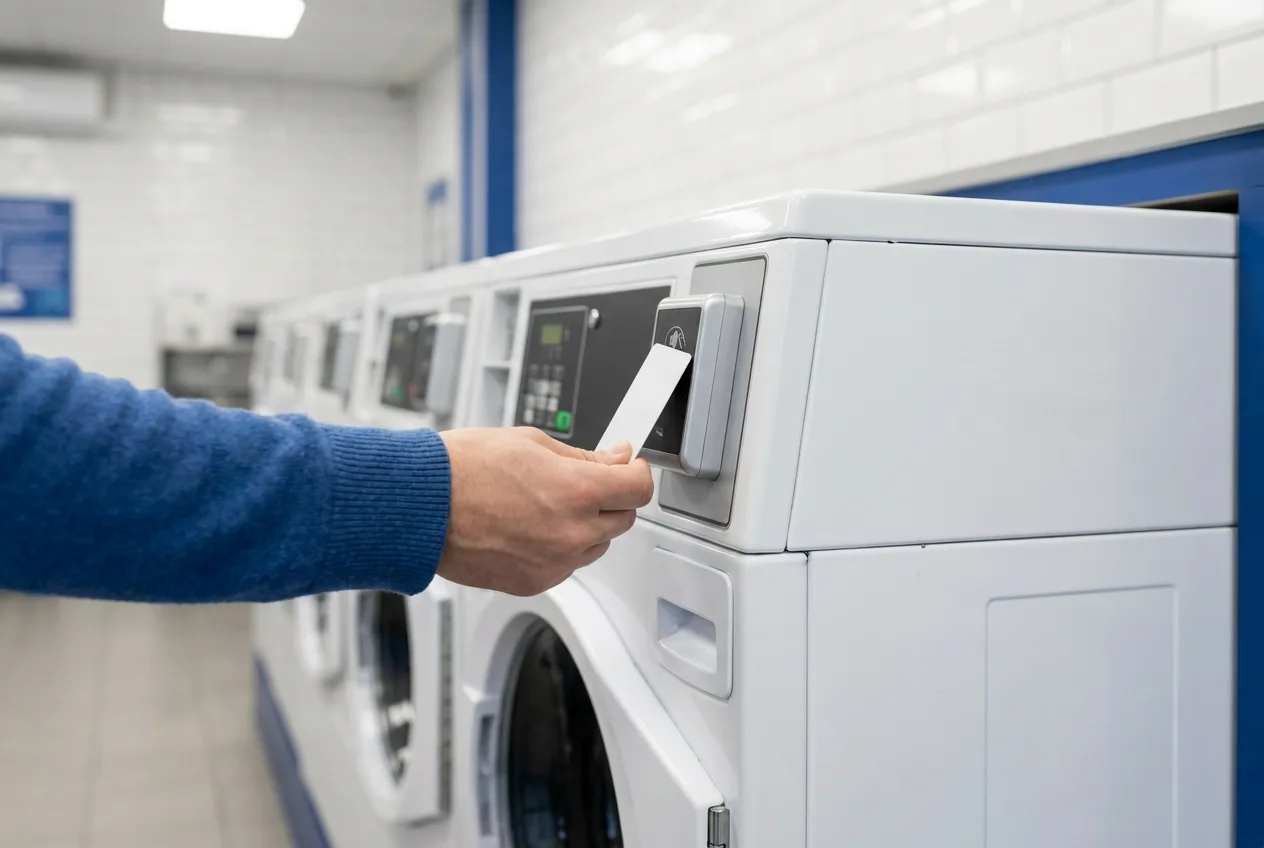
Going cashless means customers pay with a credit or debit card, a tap, or a store app instead of coins, using readers installed on each machine or a central kiosk. Fully cashless removes coin entirely; a hybrid keeps coin acceptors alongside the readers.
The practical shift is that value moves through a payment processor to your bank rather than into a coin box you empty by hand. That changes how you collect revenue, how you price, and how you reconcile the till. It also ties your store to a payment platform, which is a relationship you now depend on. The deeper mechanics of the switch are covered in coin-to-card conversion for laundromats.
What are the benefits of going cashless?
The biggest benefits are vend-price flexibility and far less cash to handle, followed by cleaner data and lower theft risk. Removing coin removes an entire category of daily work and a common target for break-ins.
What operators gain:
- Remote vend pricing, so you can adjust prices by machine, size, or time of day without re-pegging hardware.
- No coin runs to the bank and no coin jams to clear.
- Fewer coin-box break-ins, since there is little cash on site.
- Transaction-level data on when and how much customers spend.
- A natural base for app rewards and loyalty.
Vend-price flexibility alone can pay for the system, because it lets you run off-peak pricing and raise prices in small, targeted steps. That ties directly into how to increase laundromat revenue.
What does a cashless retrofit cost?
A cashless retrofit costs the price of a reader or control per machine plus installation and any network or kiosk hardware, and the total scales with your machine count. Costing it honestly means counting hardware, install labor, and the ongoing platform and processing fees, not just the readers.
| Cost component | What it covers | Note |
|---|---|---|
| Reader or control per machine | The device that accepts card or app | Scales with machine count |
| Kiosk or reload station | Central add-value or account setup | Optional on some systems |
| Installation | Wiring, mounting, network setup | Often the hidden line |
| Platform and processing fees | Monthly software plus per-transaction | Recurring, not one-time |

Estimate the hardware and install side with the equipment replacement cost calculator, then run the recurring fees through the laundromat cash flow calculator so the monthly cost is visible next to the labor it saves.
What are the fees and downsides?
The main downside is per-transaction processing fees, which apply to every wash and can add up on a low-ticket item like a single cycle. On top of that you take on platform dependence and the risk that a network or hardware outage stops payments.
The honest downsides:
- Processing fees on every transaction, which matter more at low vend prices.
- Monthly software or platform fees regardless of volume.
- An outage or connectivity failure can halt payments across the store.
- Some customers dislike or distrust card-only laundry and may leave.
Because card and app revenue is reported differently than coin, keep clean records and confirm reporting rules with the IRS. Do not assume cashless eliminates all shrink; it shifts risk from coin theft to chargebacks and system errors, which is a fair trade for many but not a free one.
Who still needs coin?
Stores that serve cash-preferring customers still need coin, and forcing those customers out can cost more turns than the retrofit saves. That includes many neighborhoods where a share of laundry customers are unbanked or simply prefer paying with quarters.
Keep coin, at least in a hybrid, when:
- A meaningful part of your traffic pays cash today.
- Your customer base skews toward unbanked or cash-only households.
- You want to convert gradually and watch adoption before removing coin.
The comparison of these two store types is worth reading in full in coin laundry vs card laundry. A hybrid captures the card users without turning away the coin users, which is why most operators land there first.
How do you decide for your store?
Decide by looking at your actual payment mix and your cash-handling cost, then pilot before you commit the whole store. If you do not know what share of customers would happily pay by card, you are not ready to remove coin.
A practical path:
- Estimate how much time and loss coin handling costs you each month.
- Add card or app readers to a block of machines and watch adoption.
- Compare the fees against the labor and theft you remove.
- Expand toward fully cashless only if adoption is strong and coin volume fades.
The Coin Laundry Association publishes operator guidance on payment systems worth reviewing; see the Coin Laundry Association. If you are buying rather than retrofitting, the card laundries for sale listings show what fully converted stores look like in practice.
Frequently asked questions
Is going cashless right for every laundromat?
No. It fits stores where customers already pay by card or phone and where cash handling costs real time or losses. In neighborhoods with many cash-preferring or unbanked customers, going fully cashless can cost more turns than it saves. Most operators start with a hybrid that keeps coin alongside card and app readers.
What is the biggest advantage of a cashless laundromat?
Vend-price flexibility. With readers on each machine you can change prices by machine size, time of day, or promotion remotely, without re-pegging hardware by hand. That alone can justify the system because it makes off-peak pricing and small, targeted increases easy. Less cash handling and lower theft risk come on top of that.
What fees come with a cashless system?
You pay a per-transaction processing fee on every wash plus a monthly platform or software fee, and those apply regardless of a machine's low ticket price. Because processing is a percentage or flat fee per transaction, it weighs more on cheap cycles than expensive ones. Weigh those recurring costs against the coin handling and theft you remove.
Should I keep coin if I add card and app payments?
Usually yes, at least at first. A hybrid captures card and app users without turning away customers who prefer or rely on cash. Keeping coin lets you convert gradually and watch adoption before deciding whether to go fully cashless. Remove coin only once its volume has clearly faded.
How do I test cashless before converting my whole store?
Add card or app readers to a block of machines and watch how many customers use them over a month or two. Compare the processing and platform fees against the labor and theft you remove from coin handling. Expand toward fully cashless only if adoption is strong and coin volume is shrinking on its own.