Coin-to-Card Conversion for Laundromats
SudsList Editorial · Aug 17, 2026
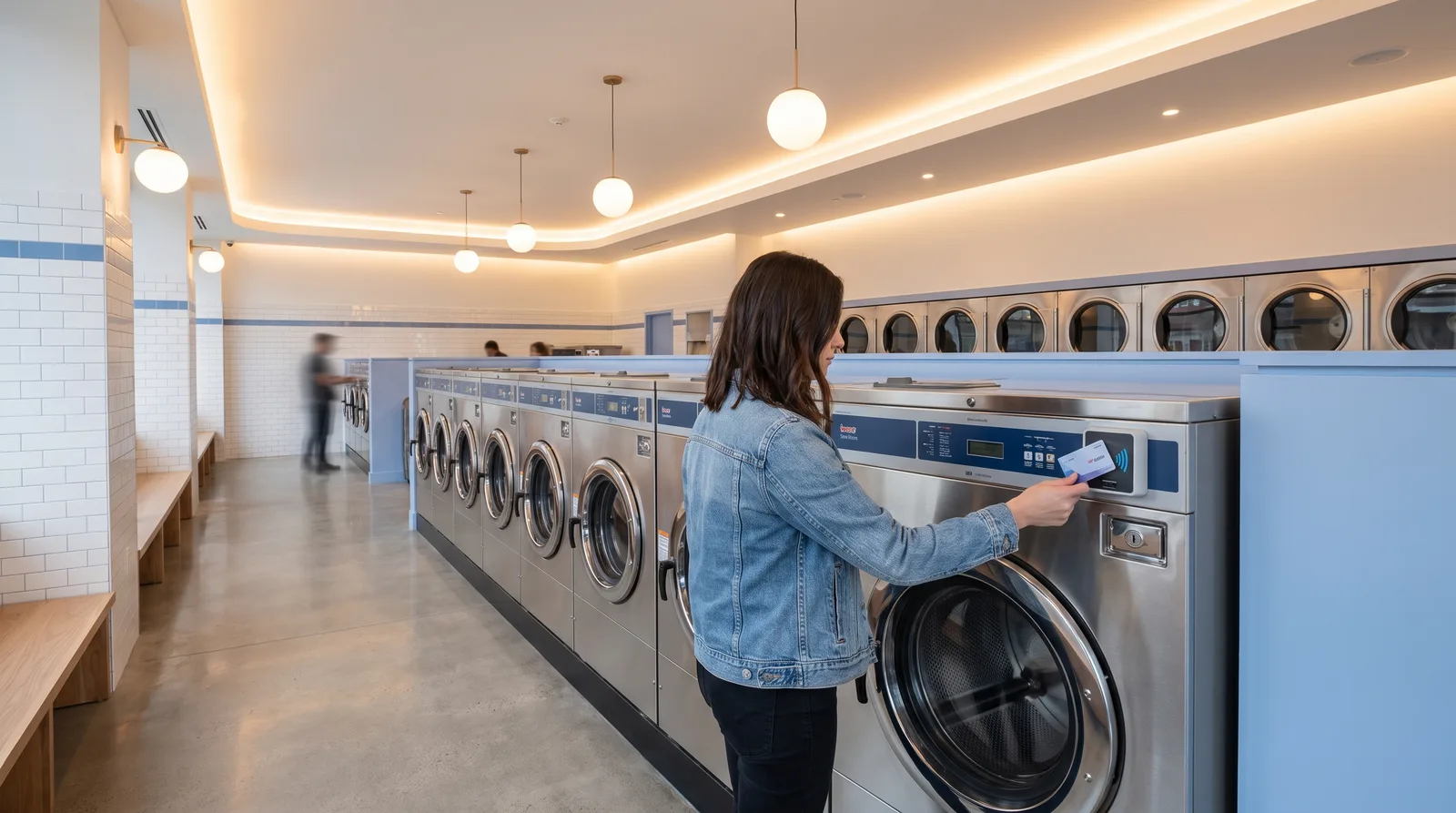
Converting a laundromat from coin to card usually costs a few hundred dollars per machine in hardware plus a monthly platform fee and per-transaction card fees, and it pays off mainly through vend-price flexibility, lower cash-handling risk, and add-on revenue rather than a jump in wash volume. Coin-to-card conversion means replacing or supplementing each machine's coin mechanism with a reader that accepts a loyalty card, a tap card, or a phone app, all tracked by a central management system. The reason operators do it is rarely that customers demand cards; it is that fixed coin denominations trap your pricing, cash is costly and risky to handle, and a card or app system lets you change prices instantly, run promotions, and see real revenue data. Whether it pays for your store depends on machine count, current cash losses, and how much pricing power you are leaving on the table. This guide walks through the systems, the real costs, and the payback math.
Key takeaways
- Coin-to-card conversion typically costs a few hundred dollars per machine in hardware, plus a monthly platform fee and per-transaction card fees.
- The biggest benefit is vend-price flexibility: you can price in any increment and change prices remotely instead of being stuck on quarter denominations.
- Cards and apps cut cash handling, shrink, and collection labor, which is often the quiet source of most of the payback.
- Card fees are a real ongoing cost, so a full cashless switch is not free even after the hardware is paid off.
- Many stores land on a hybrid, keeping some coin acceptance while adding card and app payment, rather than going fully cashless.
Contents
- What does coin-to-card conversion actually mean?
- How do card and app payment systems work?
- Why convert from coin at all?
- How much does coin-to-card conversion cost?
- What are the ongoing fees?
- How does vend-price flexibility change your revenue?
- Should you go fully cashless or hybrid?
- How do you calculate the payback?
- What can go wrong with a conversion?
- Is coin-to-card conversion worth it for your store?
What does coin-to-card conversion actually mean?
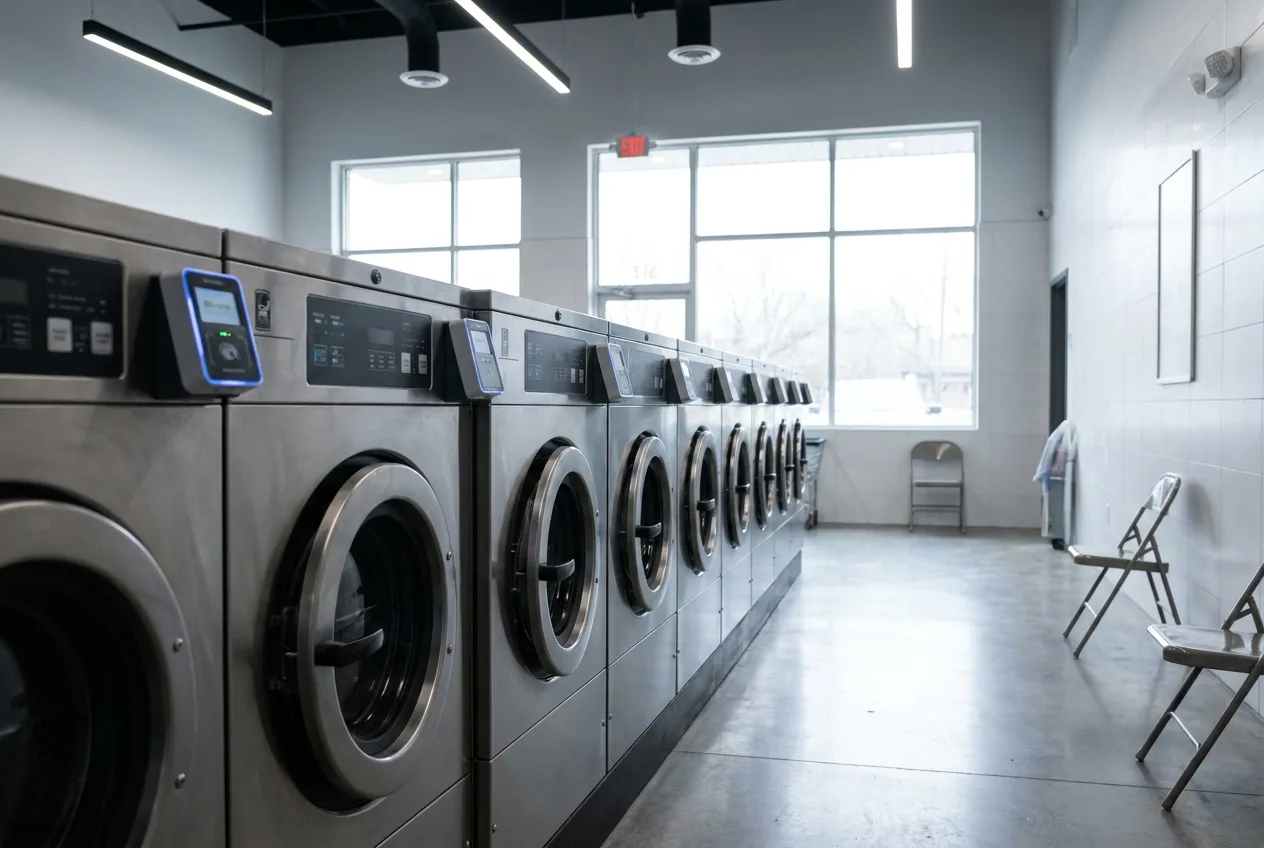
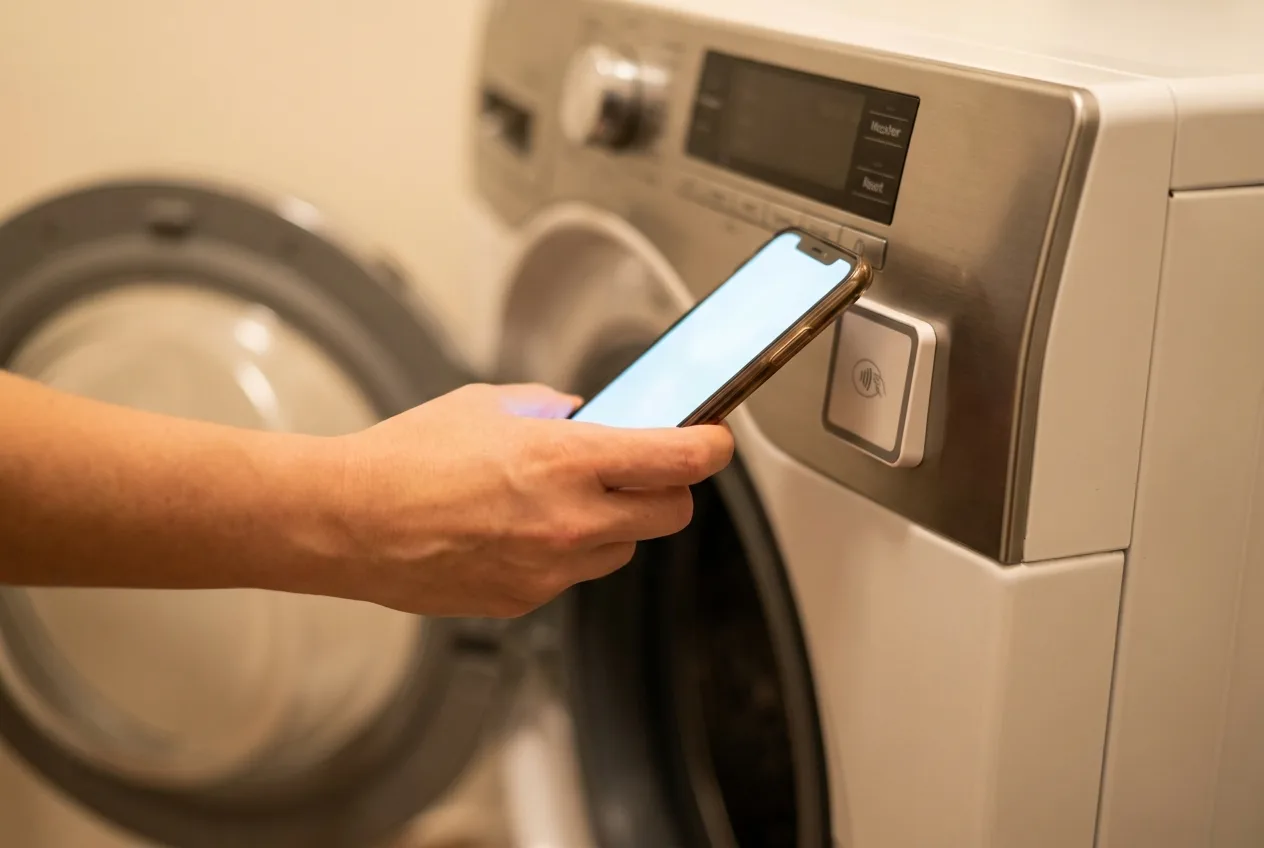
Coin-to-card conversion means adding electronic payment acceptance to your machines, so customers pay with a loyalty card, a contactless card, or a phone app instead of feeding coins. In practice you either retrofit a reader onto each existing machine or replace the coin drop, and connect everything to a management system that handles pricing and reporting.
There are two broad approaches. A closed-loop system uses a store-branded value card that customers load with cash or a credit card at a kiosk, and machines read that card. An open-loop or app system lets customers pay directly with a bank card tap or a phone, which removes the kiosk step but adds card-network fees on every wash. Many platforms now combine both. For the buyer-side comparison of payment types, see coin vs card vs app payment systems.
How do card and app payment systems work?
A card or app payment system connects each machine's reader to a central controller that stores prices, authorizes payment, and logs every transaction. When a customer taps a card or starts a wash in the app, the system checks funds, releases the machine, and records the sale, which is what gives you remote pricing and real revenue data.
The typical pieces are:
- A reader on each washer and dryer that accepts the card or app.
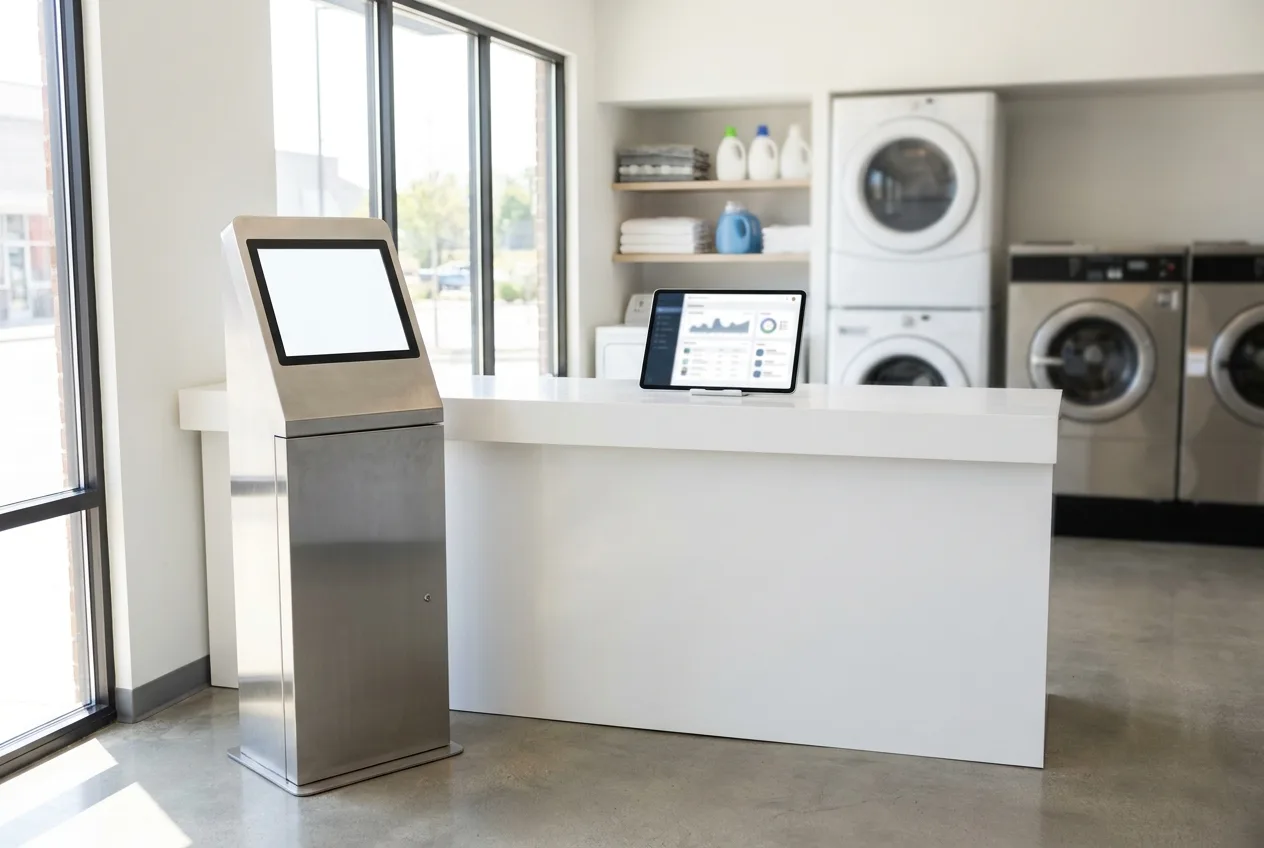
- A value-loading kiosk, if you use a closed-loop store card.
- A network connection (cellular or the store's internet) linking machines to the platform.
- A management dashboard where you set prices, run promotions, and pull reports.
Because everything reports to one place, you gain visibility you never had with coin: which machines earn most, when your peak turns happen, and whether collections reconcile. That data ties directly into decisions covered in how to increase turns per day at a laundromat.
Why convert from coin at all?
The main reasons to convert are pricing flexibility, reduced cash handling, and better data, not customer demand for cards, though younger and card-first customers do appreciate the option. Coin machines lock you into quarter-based pricing and force you to collect, count, and secure cash, both of which quietly cost money.
The practical drivers:
- Pricing power: coin forces prices in 25-cent jumps, so a needed increase from a coin store often means jumping a full quarter when a dime would have covered rising utilities.
- Cash handling: collecting, counting, transporting, and banking coin takes labor and creates shrink and theft risk.
- Data and control: remote price changes, promotions, and revenue reporting replace guesswork.
- Add-on revenue: cards and apps make loyalty programs, top-ups, and wash-and-fold payments easier.
If rising water, gas, and electric costs are squeezing you and coin denominations are blocking a sensible price adjustment, that pricing rigidity alone can justify a look at conversion. See the cost pressure side in laundromat water and sewer costs, and note that efficiency programs and rebates tracked by Energy Star can offset those utilities alongside a pricing fix.
How much does coin-to-card conversion cost?
Expect hardware costs commonly in the low hundreds of dollars per machine for readers, plus kiosks and installation, so a full store conversion often runs into the thousands to low tens of thousands depending on machine count. The exact figure depends on how many machines you have, whether you retrofit or replace, and which platform you choose.
| Cost component | What it covers | Rough scale |
|---|---|---|
| Reader per machine | Card/app acceptance hardware | Commonly a few hundred dollars each |
| Value-loading kiosk | Closed-loop card top-ups | One or more units, higher per-unit cost |
| Installation | Wiring, mounting, setup | Varies; some operators DIY simpler retrofits |
| Network setup | Cellular or store internet | Setup plus ongoing connectivity |
| Platform onboarding | Account, configuration, cards | Sometimes bundled with hardware |
A store with a couple dozen machines is a meaningfully different project from one with sixty. Because it is an equipment upgrade, conversion is often financed rather than paid in cash; see equipment financing for laundromats and, for a bigger re-equip, financing a laundromat with an SBA loan, backed by the government-guaranteed SBA 7(a) program. Model the up-front number against returns with the equipment replacement cost calculator.
What are the ongoing fees?
The ongoing costs are a monthly platform or software fee and per-transaction card-processing fees, which together mean a card system is not free even after the hardware is paid off. These recurring fees are the trade-off for the flexibility and reduced cash handling.
Budget for:
- A monthly platform or SaaS fee for the management dashboard and support.
- Per-transaction processing fees on open-loop card and app payments, charged by the card networks.
- Connectivity costs if machines use cellular data.
- Occasional card stock and kiosk maintenance for closed-loop systems.
Card fees scale with sales, so a small percentage on every wash adds up over a year. Closed-loop store cards blunt this, because customers load value in larger amounts and you pay the processing fee once at the kiosk rather than on every turn. Weigh those fees against the cash-handling costs they replace rather than viewing them in isolation.
How does vend-price flexibility change your revenue?
Vend-price flexibility is often the largest financial benefit, because it lets you price in any increment and adjust remotely, so you can raise prices in small steps that track costs instead of being forced into full-quarter jumps. On coin, a 25-cent minimum increase on a base wash can be a large percentage move that risks losing price-sensitive customers; card systems let you add a dime.
Consider a store where a wash needs a modest increase to cover rising utilities. On coin, the smallest move is a full quarter, which may overshoot what the market bears. On card, you can raise by a smaller increment, apply it to specific machine sizes, or vary price by time of day. That precision protects margin without a jarring jump. For how and when to move prices, see when to raise laundromat prices.
Flexibility also enables off-peak pricing and targeted promotions that add turns rather than just discounting, the approach in laundromat promotions that protect your margin.
Should you go fully cashless or hybrid?
Many operators land on a hybrid model, keeping coin acceptance on some machines while adding card and app payment, because a fully cashless store can turn away cash-preferring customers in some neighborhoods. The right choice depends on your customer base, not on the technology.
The trade-off:
- Fully cashless removes all coin handling and shrink but risks losing unbanked or cash-first customers, and puts card fees on every transaction.
- Hybrid keeps a cash option for customers who need it while capturing card and app benefits, at the cost of still handling some coin.
In a location with many unbanked or older cash-preferring customers, going fully cashless can cost real volume, so a hybrid is safer. In a card-first area, fully cashless may be fine and maximizes the labor savings. Read your own customer base before deciding, and lean hybrid when in doubt.
How do you calculate the payback?
Calculate payback by dividing the total conversion cost by the annual net benefit, where the benefit is added pricing margin plus cash-handling savings plus reduced shrink, minus the new platform and card fees. The honest version of this math often shows the savings and pricing gains, not a volume jump, carry the payback.
Work through, per year:
- Added margin from price adjustments coin denominations previously blocked.
- Labor saved on collecting, counting, transporting, and banking coin.
- Shrink and theft reduced by removing or shrinking the cash in machines.
- Any lift from loyalty, top-ups, and easier wash-and-fold payments.
- Minus the monthly platform fee and per-transaction card fees.
A store losing meaningful hours to coin collection and unable to price correctly can see a reasonable payback period; a small store with tight cash controls and flexible pricing already may not. Run your own numbers in the laundromat cash flow calculator and the ROI calculator before committing, and be skeptical of any pitch that promises a large revenue jump from conversion alone.
What can go wrong with a conversion?
The common problems are network outages that stop machines, customer confusion during the switch, underestimating card fees, and choosing a proprietary system that locks you in. Each is manageable with planning but can sour a conversion if ignored.
Watch for:
- Connectivity failures, since a machine that cannot authorize a card is a machine earning nothing; ask about offline behavior.
- A rough transition, where regulars accustomed to coin need clear signage and attendant help for the first weeks.
- Fee surprise, where per-transaction costs on a fully cashless store come in higher than expected.
- Vendor lock-in, where proprietary hardware ties you to one provider's pricing and support for years.
- Resale considerations, since a buyer will assess the system's condition and contract; keep documentation clean and in a form the IRS and a buyer would accept, as covered in how to verify a laundromat's revenue.
Ask any vendor how machines behave offline, what the total fee load looks like at your volume, and whether hardware works with other platforms.
Is coin-to-card conversion worth it for your store?
Coin-to-card conversion is worth it when coin denominations are blocking correct pricing, cash handling is costing you real labor and shrink, or you want the data and promotion tools a modern system provides, and it is harder to justify for a small, tightly run store that already prices flexibly. The decision is store-specific, so run the numbers rather than following a trend.
A quick self-check:
- Are rising utilities forcing price moves that quarter denominations make too blunt?
- Do you lose meaningful labor and some cash to coin collection each week?
- Would remote pricing, promotions, and revenue data change how you run the store?
- Can your customer base handle card and app payment, or do you need a hybrid?
If several answers are yes, conversion likely earns its keep, most of it through savings and pricing power. If not, keeping coin, or adding a limited card option, may be the smarter spend. Either way, decide on payback math, not on the assumption that cards automatically mean more customers.
Frequently asked questions
How much does it cost to convert a laundromat from coin to card?
Hardware is commonly in the low hundreds of dollars per machine for readers, plus any value-loading kiosks and installation, so a full store often runs into the thousands to low tens of thousands depending on machine count. There are also ongoing monthly platform fees and per-transaction card fees. The exact figure depends on machine count and whether you retrofit or replace.
What is the biggest benefit of switching from coin to card?
Vend-price flexibility is usually the biggest benefit, because you can price in any increment and change prices remotely instead of being stuck on 25-cent jumps. That lets you raise prices in small steps that track rising utilities without overshooting the market. Reduced cash handling and better revenue data are close behind.
Do card systems have ongoing fees?
Yes, typically a monthly platform or software fee plus per-transaction processing fees on open-loop card and app payments. That means a card system is not free even after the hardware is paid off. Closed-loop store cards reduce per-transaction fees because customers load larger amounts at a kiosk rather than paying a fee on every wash.
Should I go fully cashless or keep some coin?
It depends on your customer base. In a neighborhood with many unbanked or cash-preferring customers, going fully cashless can cost real volume, so a hybrid that keeps a coin option is safer. In a card-first area, fully cashless may be fine and maximizes the labor savings. When in doubt, lean hybrid.
Will converting to card increase my wash volume?
Usually not by much on its own, so be skeptical of any pitch promising a large revenue jump from conversion alone. The payback comes mainly from pricing flexibility, lower cash-handling costs, reduced shrink, and easier add-on and loyalty revenue. Run the numbers on those savings rather than expecting more customers just because you accept cards.
What should I ask a conversion vendor before buying?
Ask how machines behave during a network outage, what the total fee load looks like at your transaction volume, and whether the hardware works with other platforms or locks you to one provider. Also ask about installation, support, and how the value-loading kiosk is maintained. These questions surface the ongoing costs and risks a hardware quote alone can hide.