What Hours Should a Laundromat Be Open?
SudsList Editorial · Aug 13, 2026
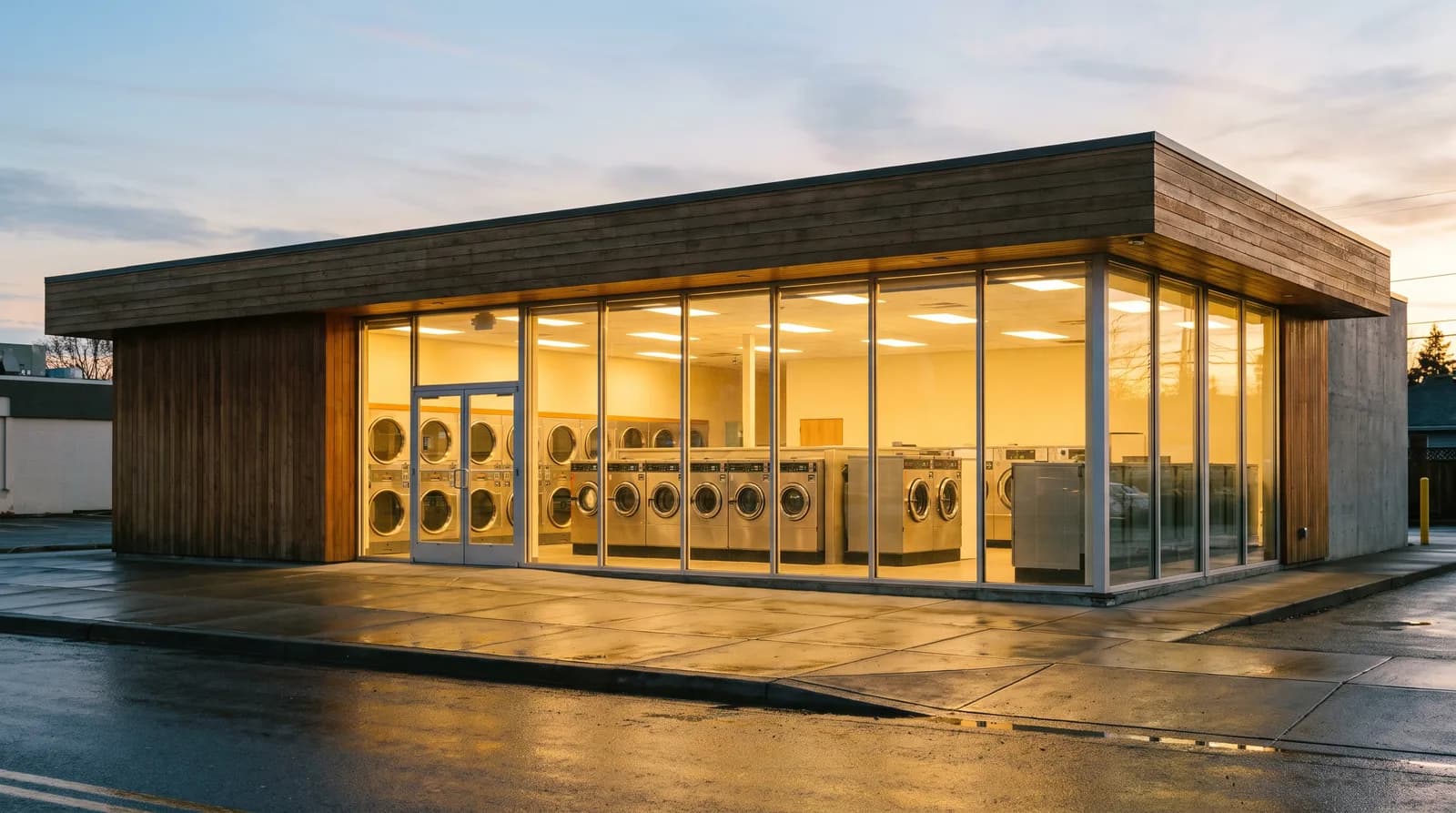
Most laundromats do well opening early and closing late, commonly around 6 a.m. to 10 or 11 p.m., with 24-hour operation reserved for stores with real overnight demand and solid security. The right hours are the ones your usage data supports, not a copied template, because every hour you stay open carries utility and security cost that only pays off if enough turns happen in it. Read your own machine data, weigh the trade-offs, and set hours that capture demand without funding an empty, risky store overnight.
Key takeaways
- Base your hours on your own turn-by-hour usage data, not on what a nearby store does or a default schedule.
- Long early-morning-to-late-evening hours capture most laundromat demand without the overnight risk of full 24-hour operation.
- Every open hour costs lighting, climate, and often security; an hour with almost no turns usually loses money.
- 24-hour operation makes sense only with genuine overnight demand plus cameras, hardened cash handling, and ideally an attendant.
- You can stay physically accessible late while attending only the peak window, splitting the difference on cost and risk.
Contents
- What hours do most laundromats keep?
- How do you read your own usage data?
- Is a 24-hour laundromat worth it?
- What do extra hours cost you?
- How do hours affect security?
- Should attended hours match open hours?
- How do you change hours without losing customers?

What hours do most laundromats keep?
Most neighborhood laundromats open early and close late, often somewhere in the range of 6 a.m. to 10 or 11 p.m., which captures before-work, after-work, and weekend demand while closing the low-value overnight hours. This range works because laundry demand concentrates around when people are not at work, and the deep overnight hours usually see too few turns to justify the cost and risk.
Common patterns you will see:
- Early open (around 6 a.m.) to catch before-work and shift-worker laundry.
- Late close (10 to 11 p.m.) to serve evening and post-dinner customers.
- Full 24-hour operation in dense urban areas or near shift-heavy employers.
- Attended peak hours layered on top of longer self-service access.
Treat these as starting points, not rules. Your location, customer base, and competition decide whether you push earlier, later, or all the way to 24 hours.
How do you read your own usage data?
Read your hours from turn data: pull vend or turn counts by hour and day of week for a full month, and find where machine use rises, peaks, and drops to almost nothing. Turns per day (TPD) is how many wash cycles each machine runs in a day, and turns by hour tells you which hours actually earn their keep.
How to do it:
- Export or record turn or vend counts by hour and weekday for at least a month.
- Mark the hours where machines are near full and customers may be waiting.
- Mark the hours where turns fall to near zero; those are candidates to cut.
- Compare weekdays to weekends, since patterns often differ sharply.
- Watch for demand pressed against your current open and close times, which signals unmet demand you could capture.
If turns are still high at closing, you are likely leaving money on the table; if the last two hours are near dead, you are paying to stay open for almost nothing. A card or app system or remote monitoring for laundromats makes this data far easier to pull.
Is a 24-hour laundromat worth it?
A 24-hour laundromat is worth it only when genuine overnight demand exists and you can secure the store, because overnight hours carry the highest security risk and the lowest average turns. In the right location, near hospitals, shift-work employers, or dense housing, the overnight window can be profitable and convenient. In the wrong one, it funds an empty, vulnerable store.
| Factor | 24-hour operation | Early-to-late (for example 6 a.m. to 11 p.m.) |
|---|---|---|
| Revenue potential | Higher if real overnight demand exists | Captures the bulk of normal demand |
| Security risk | Highest, needs cameras and hardening | Lower, closes the riskiest window |
| Utility cost | Highest, lighting and climate all night | Moderate |
| Attendant need | Ideally staffed overnight | Peak-hour staffing only |
| Best fit | Dense, shift-heavy, well-secured areas | Most neighborhood stores |
The honest answer for many stores is that the last overnight hours do not pay, and closing them improves both margin and safety. Prove it with your own turn data before committing either way.
What do extra hours cost you?
Every additional open hour costs lighting, heating or cooling, water heating readiness, and often security, so an hour needs enough turns to cover that overhead before it adds profit. Utilities are among the largest laundromat expenses, and staying open through dead hours quietly erodes margin.
The costs that ride along with open hours:
- Lighting and climate control for the full space, running whether or not customers come.
- Water-heating standby and any base equipment draw.
- Security exposure and, for staffed hours, wages and payroll taxes.
- Wear and cleaning load that scales with hours open.
A worked example. If your last two open hours generate only a handful of turns but you pay for full lighting, climate, and heightened overnight risk, those hours likely run at a loss. Cutting them can lift margin without meaningfully cutting revenue. Utilities are the pressure point, so pair hours decisions with how to reduce laundromat utility bills, and model the impact in the laundromat cash flow calculator.
How do hours affect security?
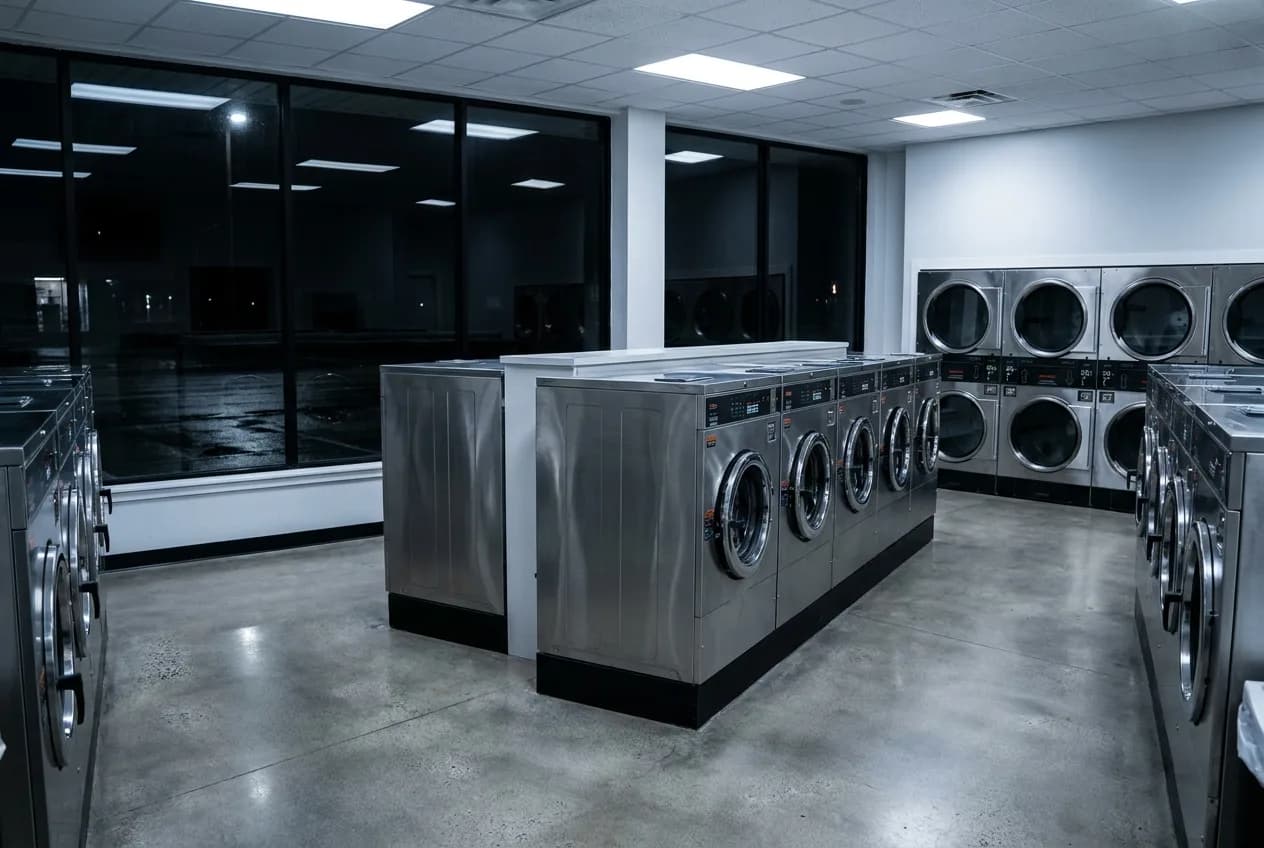
Hours are a direct security lever, because most theft, vandalism, and loitering cluster in the late-night unattended window. Extending into or through the overnight hours raises exposure, while closing or attending that window lowers it. This is why security and hours have to be decided together.
Ways to keep late or overnight hours safer:
- Cameras on entrances, aisles, and cash points, with monitored signage.
- Frequent cash collection so little is on site overnight.
- Bright interior and exterior lighting through all open hours.
- Automatic door locks and lighting timers for a secured overnight self-service model.
The full playbook is in how to prevent laundromat theft and vandalism and laundromat security cameras and loss prevention. If late-hour problems persist, shortening hours is often the cleaner fix than adding more hardware.
Should attended hours match open hours?
No. Attended hours rarely need to match open hours; most stores staff only the peak window and let self-service cover the rest, because staffing dead hours burns wages without adding turns. The store can be open and accessible longer than it is attended.
How operators usually split it:
- Attend the proven peak window where an attendant adds turns and runs wash-and-fold.
- Leave earlier and later hours as self-service with cameras and remote monitoring.
- Extend attended coverage into risky hours only if security problems justify the labor.
When a store is ready for its first attendant, and which hours to staff first, is covered in when to hire an attendant for your laundromat. Wage and hour rules for any staffed time are federal and state specific; confirm them with the U.S. Department of Labor rather than assuming.
How do you change hours without losing customers?
Change hours gradually and with notice, using your usage data so you cut hours that are nearly empty and keep the ones customers rely on. The risk is trimming an hour that quietly serves a loyal segment, so verify with data before you cut, and communicate the change clearly.
A safe approach:
- Confirm the target hours are genuinely low-turn across several weeks, not just slow one week.
- Post the new hours prominently in-store and update your online listings and Google Business Profile.
- Give notice before the change so regulars can adjust.
- Watch turn data for a few weeks after and reverse the change if you lost meaningful demand.
Compare your patterns against operator benchmarks from the Coin Laundry Association. The goal is hours that match real demand: open enough to capture it, closed enough to protect margin and safety.
Frequently asked questions
Do 24-hour laundromats make more money?
Only when there is real overnight demand to fill the added hours. Otherwise the overnight window adds utility cost and security risk without enough turns to cover them. Pull your turn data by hour before assuming 24-hour operation pays, since for many neighborhood stores it does not.
What are the busiest hours for a laundromat?
For most neighborhood stores, evenings and weekend mornings are busiest, along with a smaller before-work push. Exact peaks vary by customer base, so read your own turn-by-hour data rather than assuming. Shift-work and urban areas can shift peaks later or spread demand across more hours.
Can I run a self-service laundromat overnight without an attendant?
Yes, many stores do, but only with strong security: cameras, monitored signage, frequent cash collection, bright lighting, and often automatic locks. Unattended overnight hours carry the most risk, so harden the store before extending into them. If problems persist, shortening hours is usually cheaper than more hardware.
How do I know if I should cut my late hours?
Check turn counts for those hours across several weeks. If the last one or two open hours generate only a handful of turns while you pay full lighting, climate, and security cost, they likely run at a loss. Cut gradually with notice and watch the data afterward.
Should my hours match nearby competitors?
Use competitors as context, not a template. Your customer base and location decide your demand, so your own turn data matters more than matching a neighbor. Sometimes staying open when a competitor closes captures their overflow, and sometimes their closed hours simply reflect dead demand you would also lose money serving.