Laundromat Security Cameras and Loss Prevention
SudsList Editorial · Aug 10, 2026
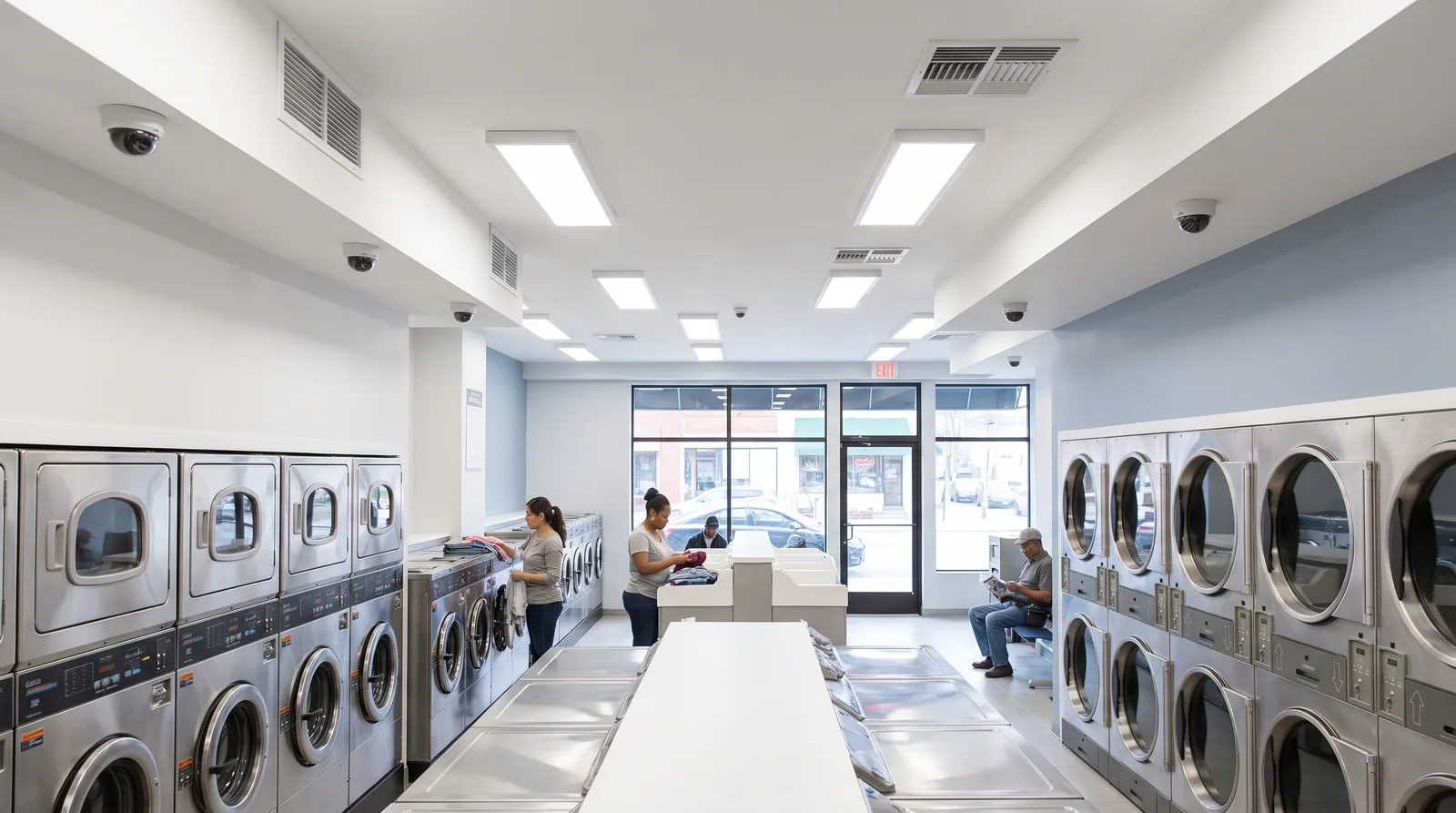
A laundromat needs cameras covering the entrances, every machine bank, the change and payment stations, and the cash-collection point, because those angles do the most to cut theft, settle liability disputes, and deter after-hours vandalism. The goal of loss prevention is not to film crime after it happens, it is to make your store an unattractive target and to have clear footage when you need it. Cameras are the anchor, but lighting, signage, and where you place cash matter just as much.
Key takeaways
- Cover entrances, machine banks, change and payment stations, and the cash-collection point first; those angles prevent and resolve the most incidents.
- Visible cameras plus bright lighting and clear signage deter far more than hidden cameras, because deterrence beats evidence.
- Aim for footage retention of roughly 30 to 90 days so you can respond to slip claims and coin-box tampering that surface late.
- Remote viewing from your phone is what makes an unattended or absentee store manageable and safe.
- Cameras cut liability, not just theft; clear video of a wet floor or a customer fall protects you from inflated claims.
Contents
- Where should laundromat cameras be placed?
- How many cameras does a laundromat need?
- Do visible cameras and signage actually deter crime?
- How long should you keep laundromat footage?
- How do cameras reduce liability claims?
- What does a laundromat camera system cost?
- What else beyond cameras cuts loss?
Where should laundromat cameras be placed?
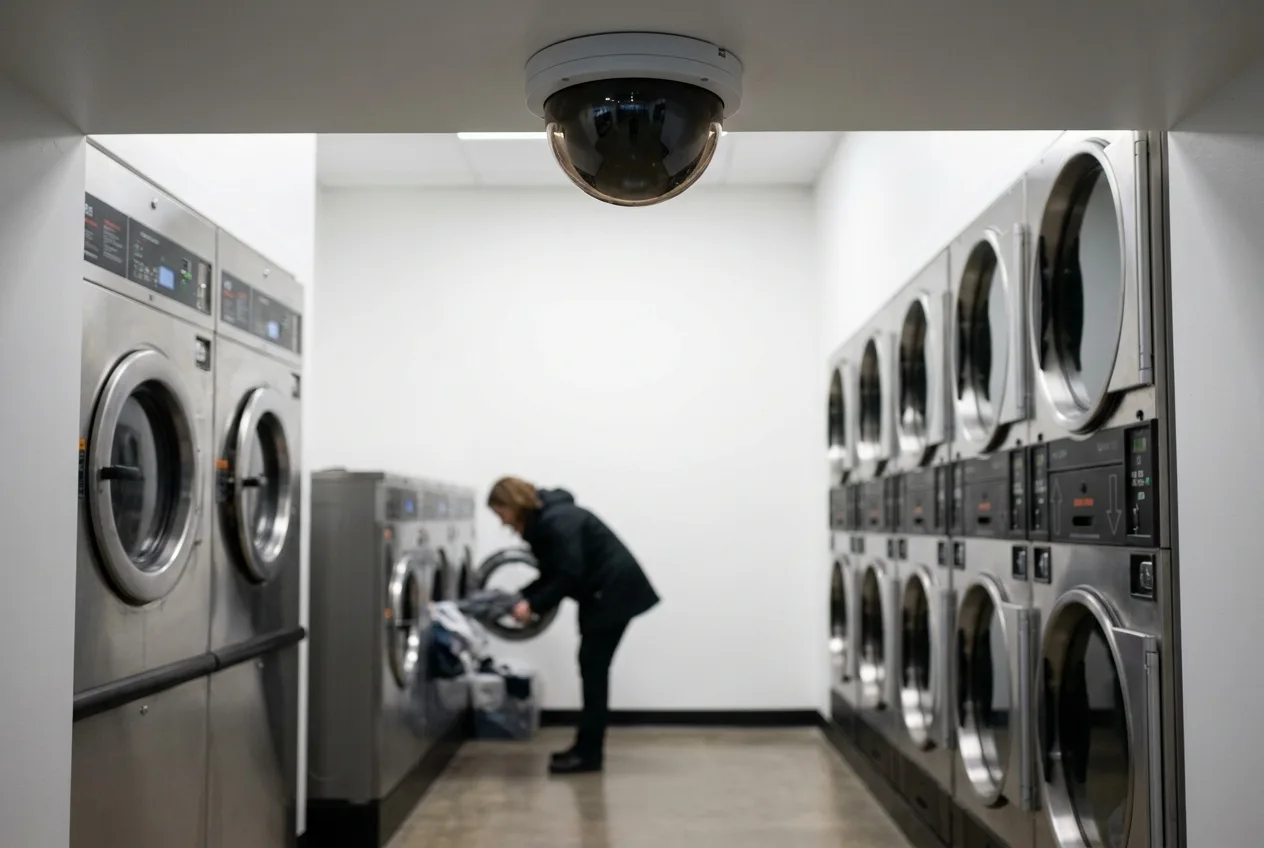
Place cameras so every dollar and every dispute is on video: the front door for faces coming and going, wide angles down each machine aisle, tight shots on the change machine and card kiosk, and one camera fixed on wherever you collect coins. Those are the points where money moves and where incidents happen.
Priority coverage, in order:
- Entrances and exits, positioned to capture faces at eye level, not just the tops of heads.
- Each machine bank, so overloaded units, tampering, and misuse are visible.
- Change machines, card kiosks, and any bill-to-coin dispenser.
- The coin-collection point and back office or utility area.
- Restroom entrances (never inside), parking, and any rear door.
Avoid the classic mistake of one camera aimed at the whole room. Wide shots look reassuring but rarely give you a usable face or a clear view of a specific machine.
How many cameras does a laundromat need?
Most neighborhood laundromats land between four and twelve cameras depending on square footage and machine count, with small stores near the low end and large or 24-hour stores near the high end. Count coverage zones rather than cameras: every entrance, every aisle, and every cash point is a zone that needs an angle.
| Store size | Typical cameras | Coverage focus |
|---|---|---|
| Small (under 1,500 sq ft) | 4 to 6 | Door, two aisles, change and cash point |
| Medium (1,500 to 3,000 sq ft) | 6 to 10 | Multiple aisles, kiosks, restroom entry, rear door |
| Large or 24-hour | 10 to 16 | Full aisle coverage, parking, dual entrance angles |
If your store runs unattended, weight coverage toward the payment and cash areas and toward the entrances, since there is no attendant to witness anything.
Do visible cameras and signage actually deter crime?
Yes. Visible cameras, bright interior and exterior lighting, and clear signage do more to prevent loss than any hidden setup, because most laundromat theft and vandalism is opportunistic and avoids stores that look watched. Deterrence keeps the incident from happening at all, which is always cheaper than filing a claim.
The deterrence stack that works:
- Cameras mounted in plain sight, with a recording indicator light where possible.
- Signage stating the premises are monitored and recorded, posted at the entrance.
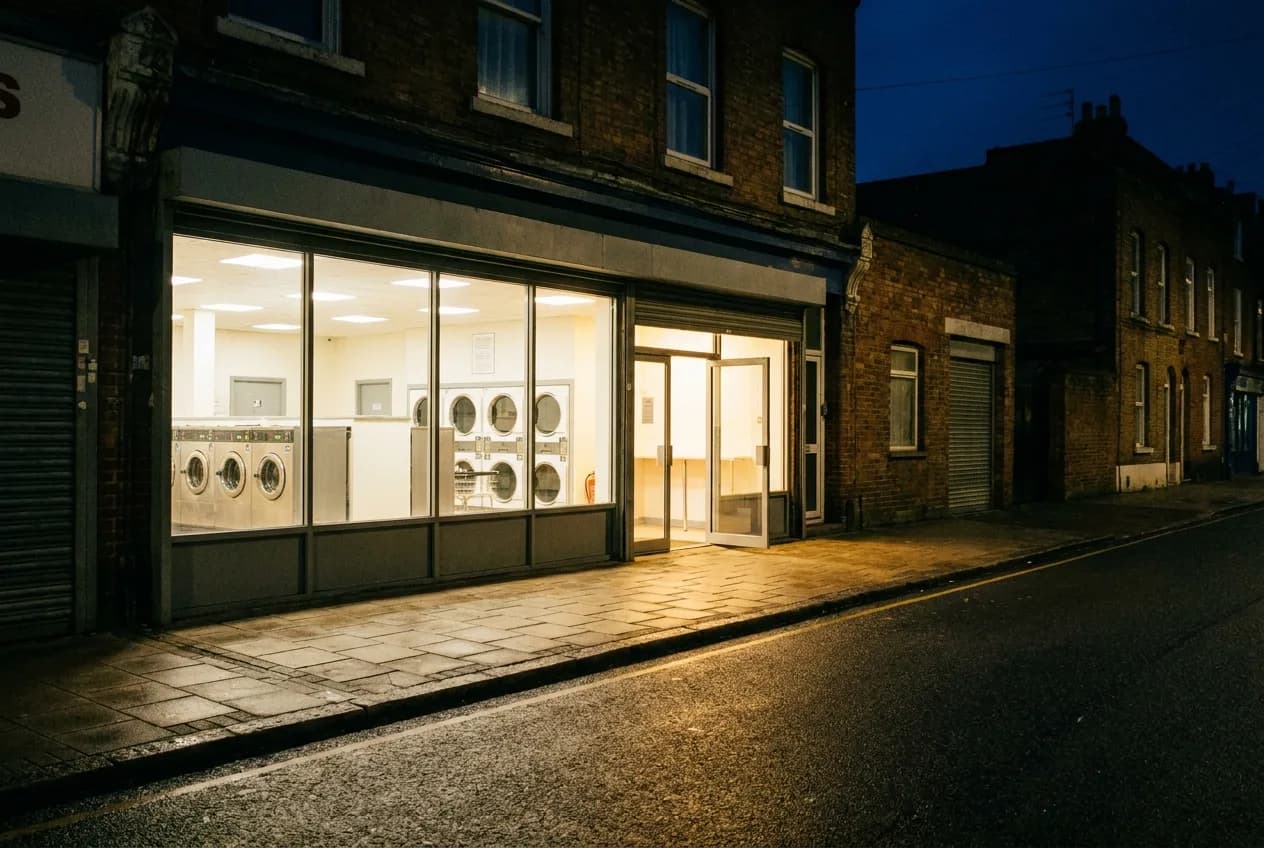
- Interior lighting kept bright into the corners and after hours, since dim stores invite trouble.
- Exterior and parking lighting that removes dark approaches to the door.
Lighting and signage are low-cost levers with a large payoff. See laundromat lighting and signage for how bright, well-placed lighting also lifts perception and walk-in traffic.
How long should you keep laundromat footage?
Keep footage for roughly 30 to 90 days, because many issues you will care about, such as a coin-box tamper you notice at the next collection or a slip-and-fall claim filed weeks later, surface well after the event. Retention depends on how many cameras you run, their resolution, and your recorder's storage.
Practical guidance:
- A store with several high-resolution cameras usually needs a network video recorder with several terabytes for a month or more of continuous recording.
- Motion-triggered recording stretches storage but can miss context, so many operators run continuous on cash and entrance cameras.
- Cloud backup of key cameras protects footage if the on-site recorder is stolen or vandalized.
Check any state or local rules on notice and monitoring, and confirm insurer expectations for retention when you buy coverage. Your policy in laundromat insurance and what you need may reference security measures.
How do cameras reduce liability claims?
Cameras cut liability by turning a he-said-she-said dispute into a fact. A clear recording of a dry floor, a customer overloading a machine, or the actual sequence of a fall is often what defeats an inflated or fraudulent claim, and laundromats see slip, burn, and property-damage claims regularly.
A worked example. A customer claims they fell on a wet floor and files a claim. Without video you are negotiating in the dark and your insurer may settle to avoid cost. With a camera on that aisle showing the floor was dry and marked, you have grounds to dispute it, which protects your premium and your record. That single avoided claim can pay for the camera system.
Security equipment is generally a capital asset you depreciate rather than expense all at once, so confirm treatment with a qualified professional and the IRS guidance for your situation.
What does a laundromat camera system cost?
A competent laundromat camera system commonly runs from a low four-figure installed cost for a small store to a higher four-figure or low five-figure cost for a large, multi-angle setup, plus modest ongoing cost for cloud storage or monitoring. The spread depends on camera count, resolution, and whether you self-install or hire a low-voltage installer.
What drives the number:
- Camera count and resolution; higher resolution helps you actually read a face or a machine.
- Recorder and storage capacity for your target retention window.
- Wired versus wireless; wired is more reliable for a store that runs unattended.
- Professional installation versus DIY, and any ongoing cloud or monitoring subscription.
Compare this against what a single major theft or liability claim costs you. For most stores, cameras are one of the cheaper protections per dollar of risk they cover. Model the operating impact in the laundromat cash flow calculator.
What else beyond cameras cuts loss?
Cameras are one layer. The rest of loss prevention is cash handling, hardened equipment, sensible hours, and either an attendant or remote monitoring watching the store. A camera records a coin-box break-in, but a hardened coin vault and frequent collections keep the cash from being there to steal.
The layers that pair with cameras:
- Frequent cash collection and reconciling coin counts to water usage, covered in how to track laundromat cash and prevent skimming.
- Hardened coin boxes, card or app payment that removes cash, and tamper-resistant machine locks.
- Reasonable hours and presence, weighed in what hours should a laundromat be open.
- Remote monitoring and alerts so you see problems live, covered in remote monitoring for laundromats.
- A broader plan for tampering and after-hours damage in how to prevent laundromat theft and vandalism.
Industry groups like the Coin Laundry Association share operator security practices worth comparing against your own. Treat cameras as the record and the deterrent, and let cash handling, hardware, and lighting do the rest of the work.
Frequently asked questions
Should laundromat cameras record audio?
Be careful. Audio recording is regulated more tightly than video in many states, and some require consent from the people being recorded. Many operators run video only to avoid the compliance question. Confirm your state and local rules before enabling audio, and post clear notice if you do.
Do I need cameras if my laundromat has an attendant?
Yes. An attendant cannot watch every aisle, the cash point, and the door at once, and cameras protect you during unattended hours and after closing. They also protect the attendant by documenting cash handling and any customer disputes. Cameras and staffing cover different gaps.
Will insurance require security cameras?
It varies by insurer and policy, but many will ask about your security measures and some may adjust terms based on them. Cameras can also help you win or dispute claims, which affects your record over time. Ask your carrier what they expect and confirm details rather than assuming.
Are cameras enough to stop coin-box theft?
Not by themselves. Cameras deter and document a break-in, but frequent cash collection, hardened coin vaults, and card or app payment do more to remove the target. The strongest setup pairs a camera over the cash point with hardware that makes the cash hard to reach and quick to remove.
Can I watch my laundromat cameras from my phone?
Most modern network camera systems offer remote viewing from a phone or laptop, which is what makes an unattended or absentee store manageable. You can check on the store, verify a customer report, and review an alert without driving in. Confirm the system supports secure remote access before buying.