How to Prevent Laundromat Theft and Vandalism
SudsList Editorial · Aug 11, 2026
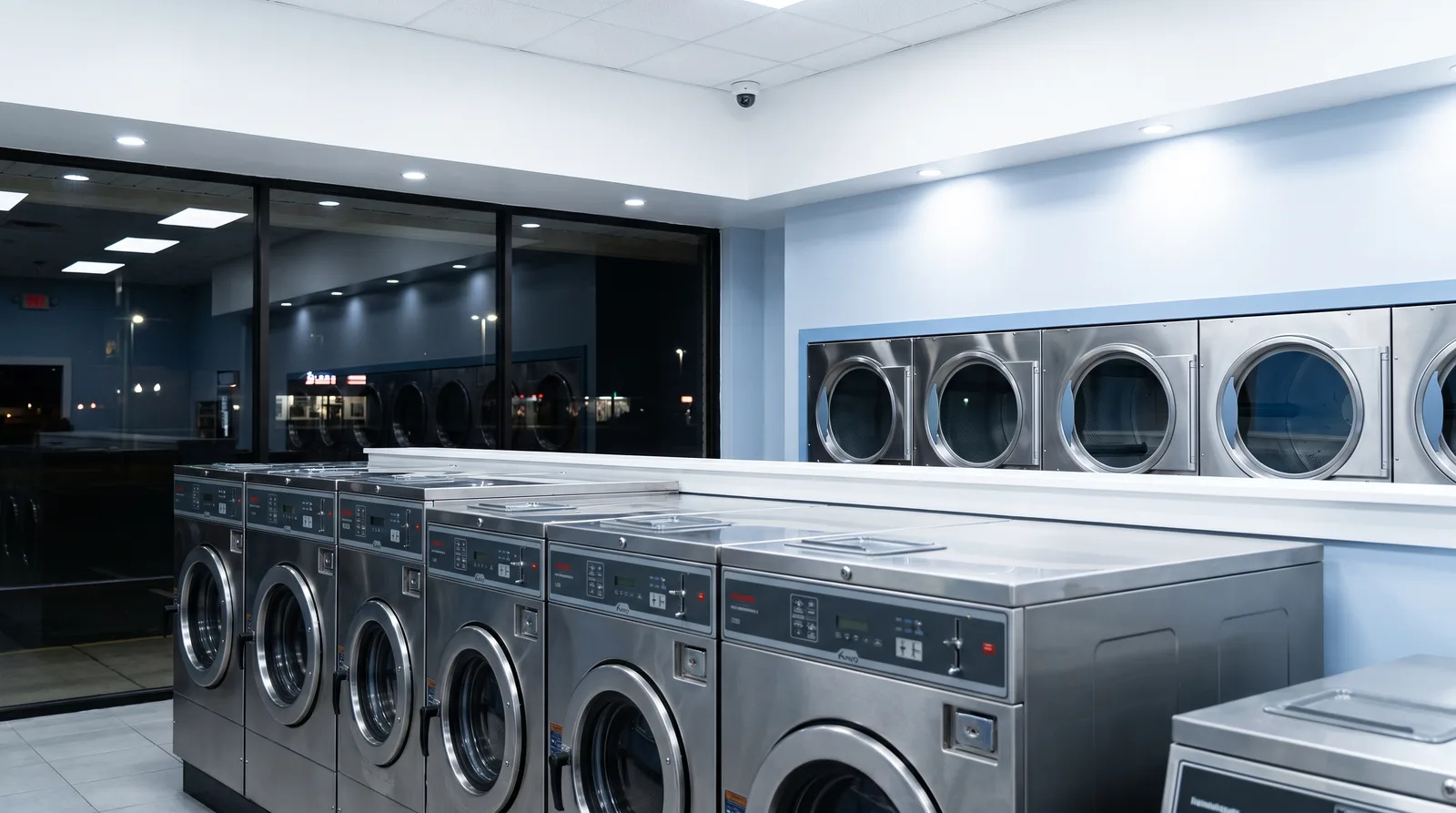
The most effective way to prevent laundromat theft and vandalism is to remove the cash and reward before anyone tries: collect coins often, harden coin boxes and vend doors, cover the store with visible cameras and bright lighting, and limit or attend the late-night hours when most incidents happen. Theft at a laundromat is usually opportunistic, aimed at coin boxes, change machines, and unattended cash, so the fix is layered deterrence rather than any single device. A store that looks watched and holds little cash is rarely worth a thief's time.
Key takeaways
- Frequent cash collection is the single biggest deterrent, because a coin box that is nearly empty is not worth breaking into.
- Harden the physical targets: reinforced coin vaults, tamper-resistant vend doors, and secured change machines stop most opportunistic attempts.
- Visible cameras, bright lighting, and monitored signage prevent far more than they catch, since most laundromat crime is opportunistic.
- Late-night unattended hours carry the most risk, so attend, restrict, or lock down those hours if incidents cluster there.
- Card and app payment removes the cash target entirely and is often the most durable theft fix.
Contents
- What gets stolen or vandalized at a laundromat?
- How do you stop coin-box break-ins?
- What hardware hardens a store?
- Do cameras and lighting really prevent vandalism?
- How do hours affect theft risk?
- Does going cashless reduce theft?
- What is the lowest-cost prevention plan?
What gets stolen or vandalized at a laundromat?
The common targets are coin boxes, change and bill-to-coin machines, unattended customer property, vending stock, and the machines themselves through forced vend doors or coin-slot jamming. Vandalism tends to show up as damaged machines, graffiti, broken glass, and tampered locks, usually after hours in stores that look unwatched.
Where the losses actually come from:
- Coin vaults and change machines broken into for cash.
- Coin slots jammed or slugged so machines run free or trap coins for later collection.
- Vend doors pried to steal detergent or vending stock.
- After-hours vandalism to glass, machines, and restrooms.
- Customer theft of unattended laundry, which drives away repeat business even though it is not your cash.
Each target has a specific fix, so match the defense to the point of loss rather than buying one gadget and hoping.
How do you stop coin-box break-ins?
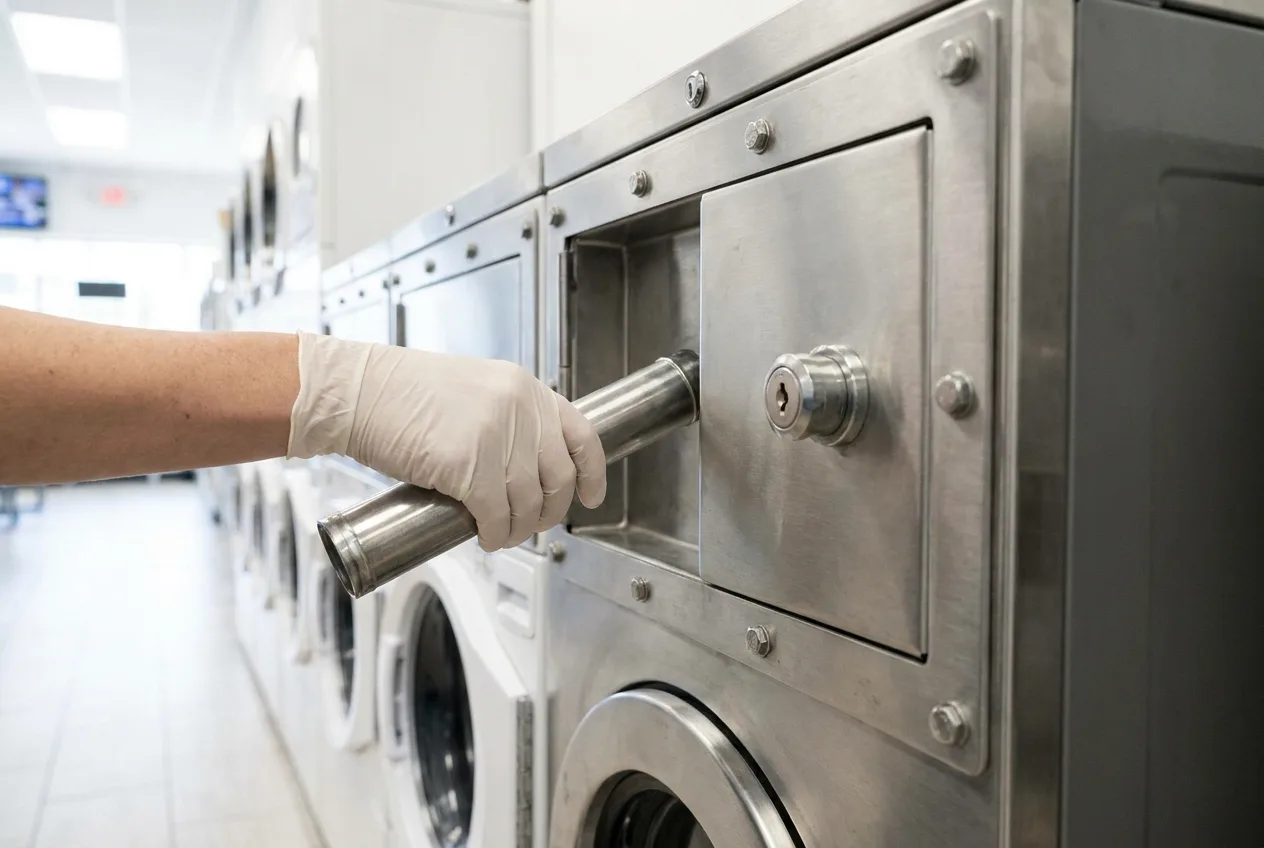
Stop coin-box break-ins by keeping the boxes nearly empty and making them hard to open. Frequent collection is the core move, because the reward has to be worth the risk, and a box emptied on a tight schedule rarely holds enough to justify a break-in.
The layered approach:
- Collect coins on a frequent, slightly irregular schedule so the amount and timing are unpredictable.
- Use reinforced coin vaults and high-security locks rather than the factory basics.
- Put a camera directly over the collection point and the change machine.
- Reconcile every coin collection against water usage and turns so shrink shows up fast.
Reconciling cash to water usage is how you catch both outside theft and internal skimming. Build that habit with how to track laundromat cash and prevent skimming.
What hardware hardens a store?
The hardware that matters most protects the cash points and the vend doors, then the entrances and glass. You do not need everything at once; you need the pieces that cover your actual weak spots.
| Hardware | Protects against | Notes |
|---|---|---|
| Reinforced coin vaults and high-security locks | Coin-box break-ins | Highest priority for coin stores |
| Tamper-resistant vend doors and coin slots | Machine tampering, slugging | Reduces free-vend and jam losses |
| Secured or anchored change machines | Cash and machine theft | Anchor so the unit cannot be carted off |
| Reinforced entry doors and glass film | After-hours break-ins | Slows forced entry, buys camera time |
| Bright interior and exterior lighting | Vandalism, loitering | Low cost, high deterrence |
Weigh the cost of hardening against the losses it prevents. Upgrading vaults and locks on a store with repeat break-ins usually pays back quickly, while a store with no history may only need the basics. Security hardware is generally a capital asset you depreciate rather than expense at once, so confirm treatment with a qualified professional and the IRS guidance for your situation.
Do cameras and lighting really prevent vandalism?
Yes. Visible cameras and bright, well-maintained lighting are among the strongest deterrents because most laundromat vandalism is opportunistic and avoids stores that clearly record and expose everything happening inside and out. A dim store with a broken light and no visible camera reads as an easy target.
What to prioritize:
- Cameras mounted in plain sight over entrances, cash points, and each machine aisle.
- Signage at the door stating the premises are monitored and recorded.
- Interior lighting kept bright into the corners, replaced the moment a fixture fails.
- Exterior and parking lighting that removes dark approaches and hiding spots.
Coverage planning, retention, and cost are covered in laundromat security cameras and loss prevention, and lighting as a low-cost safety lever is in laundromat lighting and signage.

How do hours affect theft risk?
Most theft and vandalism cluster in late-night unattended hours, so your open hours are a direct security lever. A store that runs 24 hours with no attendant and weak cameras is exposing its highest-risk window; attending, restricting, or locking down those hours often cuts incidents sharply.
Options when late-night incidents pile up:
- Add an attendant during the risky window if volume supports it.
- Shorten hours to close the unattended late-night period.
- Use automatic door locks and lighting timers to secure the store overnight while machines finish.
- Keep cameras and remote alerts running so you see problems live.
This is a revenue-versus-risk trade, since some real business happens late. Work through it in what hours should a laundromat be open before you cut hours that customers rely on.
Does going cashless reduce theft?
Going cashless, or partly cashless with card and app payment, removes the coin box and change machine as targets, which eliminates the most common theft entirely. There is no cash to break in for, and no coin slot to slug. It does not stop vandalism to machines or glass, but it takes the biggest reward off the table.
The trade-offs are real: card and app systems carry transaction fees, some customers still prefer coin, and there is upfront retrofit cost. Weigh the security benefit alongside the operating change in should your laundromat go cashless and coin vs card vs app payment systems.
What is the lowest-cost prevention plan?
The cheapest effective plan is behavioral and physical before it is high-tech: collect cash often, keep every light working, post monitored signage, and add a few visible cameras on the cash points and doors. Those steps cost little and remove most of the opportunity.
A practical starter sequence:
- Set a frequent, unpredictable cash-collection schedule and reconcile to water usage.
- Replace any dead lighting and keep the store bright inside and out.
- Post monitored-premises signage and mount visible cameras on entrances and cash points.
- Harden coin vaults and secure the change machine.
- Review your late-night hours and your coverage in laundromat insurance and what you need.
Compare your practices against operator guidance from the Coin Laundry Association. Prevention is cumulative: no single step stops everything, but a store that collects often, stays bright, and looks watched rarely becomes a repeat target.
Frequently asked questions
How often should I collect coins to prevent break-ins?
Collect often enough that the box is rarely worth breaking into, which for busy stores can mean several times a week. Vary the timing so the schedule is not predictable. Frequent, irregular collection paired with a camera over the cash point is the core defense against coin-box theft.
Are laundromat machines a target for scrap or parts theft?
It happens, though cash is the more common target. Machines can be damaged for coins inside or, rarely, stripped for parts or metal after a break-in. Reinforced doors, glass film, and cameras that slow and document forced entry are the main protections against this.
Should I prosecute or just deter?
Deterrence prevents the loss in the first place and is almost always the better investment, since prosecution is costly and slow. Focus your money on removing the reward and making the store look watched. Keep clear footage so you can pursue serious or repeat incidents if you choose.
Does insurance cover theft and vandalism?
Many commercial policies cover theft and vandalism, but coverage, deductibles, and requirements vary, and cash is often limited or excluded. Confirm exactly what your policy covers and what security measures it expects. Reducing incidents in the first place also protects your premium over time.
Will card payment stop all theft?
It removes the cash target, which stops most coin-box and change-machine theft, but it does not stop vandalism to machines, glass, or restrooms. Treat cashless as one strong layer, not a complete solution, and keep cameras, lighting, and sensible hours in place alongside it.