How to Track Laundromat Cash and Prevent Skimming
SudsList Editorial · Aug 31, 2026

To track laundromat cash and prevent skimming, reconcile every coin collection against water usage and turn counts, collect under dual control, record collection points on camera, and deposit each count intact. Skimming is money removed from the coin before it is ever recorded, so the defense is not catching a thief in the act but building a trail tight enough that missing money shows up as a gap. Water consumed roughly tracks wash cycles run, which gives you an independent yardstick the person collecting cannot easily fake. Card and app payments cut the risk further by reducing the cash that passes through hands at all.
Key takeaways
- Skimming is cash taken before it is recorded, so the control is a reconciliation that makes missing money visible, not surveillance alone.
- Reconcile coin counts to water usage and turn counts, because water consumed is an independent measure the collector cannot easily manipulate.
- Collect under dual control and deposit the full count intact, so no single person handles cash unwatched from machine to bank.
- Cameras over every collection point and change machine deter theft and give you a record if a count comes up short.
- Card and app systems cut cash risk at the source by moving revenue onto reports that reconcile themselves.
Contents
- What is laundromat skimming and why is it a risk?
- How do you reconcile coin to water and turns?
- What is dual control and why does it matter?
- How do cameras help prevent skimming?
- Does going cashless reduce the risk?
- How do buyers check for skimming during due diligence?
- What cash controls should every store have?
What is laundromat skimming and why is it a risk?
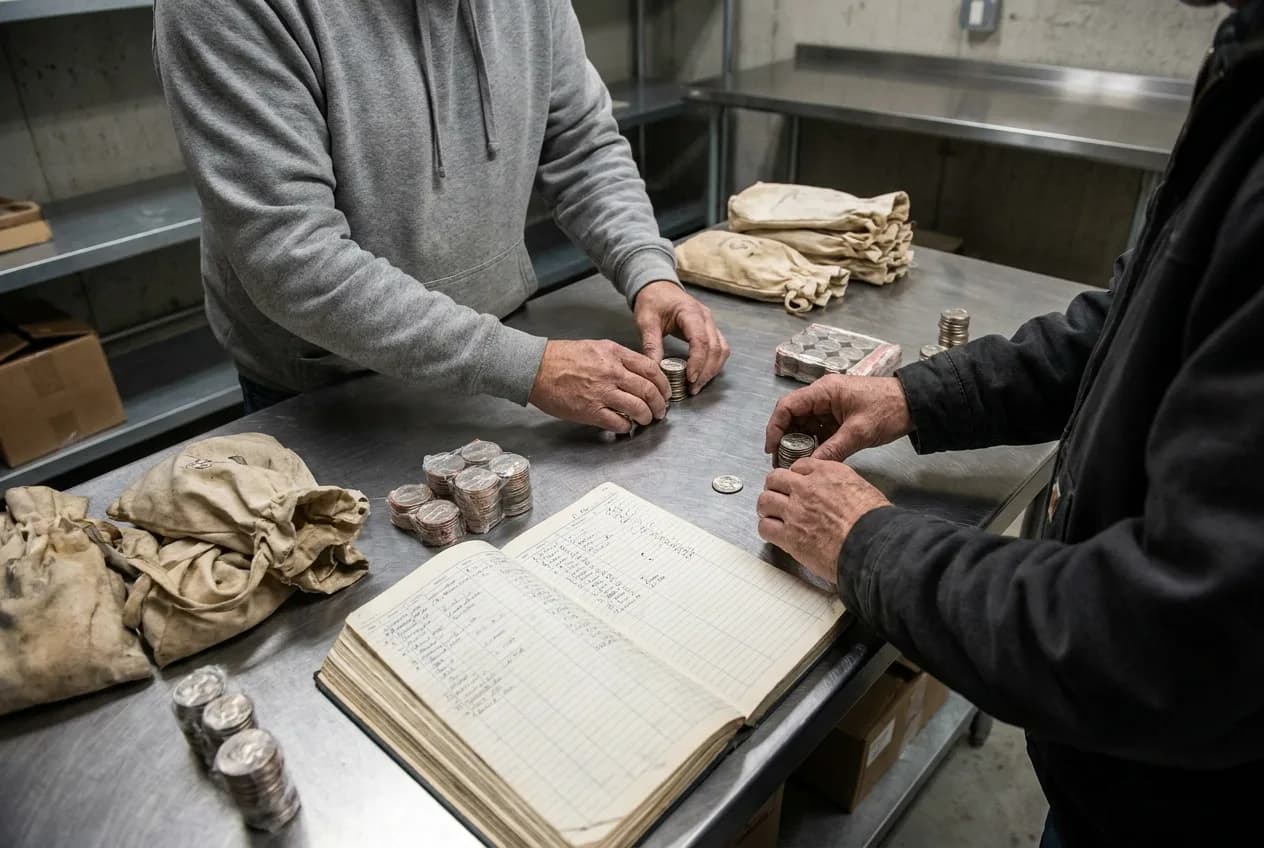
Skimming is cash removed from the coin before it is ever recorded in the books, whether by an attendant, a collector, or an owner understating income. It is the signature risk of a laundromat because the coin side has no automatic record: quarters accumulate with no receipt, so money can leave the trail before the trail begins.
The risk cuts two ways. An owner who lets cash walk loses real income and cannot prove revenue to a lender or buyer later. And an owner who is not on site relies on whoever collects to record honestly, which is a lot of trust to place without a check.
The fix is a system where missing money reveals itself, not a hope that everyone is honest. Clean cash handling is also the foundation of accurate books; see laundromat bookkeeping basics.
How do you reconcile coin to water and turns?
Reconciling coin to water and turns means comparing each collection against how much water the store used and how many cycles it ran in the same period, then investigating any collection that does not fit. This works because water usage is billed by the utility and hard to fake, so it is an independent check on the cash that the collector does not control.
The logic is straightforward: each wash cycle uses a roughly known amount of water and earns a roughly known vend price, so water consumed implies a rough expected revenue. If water says the store ran many cycles but the coin count is low, that gap is the flag.
A basic monthly reconciliation:
- Pull water usage from the utility bill for the period.
- Note the counted coin and card revenue for the same period.
- Compare actual revenue against what the water usage implies.
- Investigate any period where cash falls well below the water-implied range.
This is not precise to the penny, since dryers, vending, and pricing vary, but a persistent gap is meaningful. For how utility usage behaves, see laundromat water and sewer costs, and model the store's totals with the laundromat cash flow calculator.
What is dual control and why does it matter?
Dual control means two people are present for every coin collection and count, so cash is never handled alone from machine to secured count. It matters because most skimming happens in the private moment between pulling coin and recording it, and a second set of eyes removes that moment.
Under dual control:
- Two people collect together and travel together to the count area.
- Both are present while the coin is counted and the total logged.
- The full amount is deposited intact, with the deposit tied to the log.
Dual control is inconvenient for a small store with one attendant, and that is exactly why the reconciliation and cameras matter more there. Where you cannot always have two people, the camera record and the water check carry the load. Build these steps into written routines; see laundromat standard operating procedures.
How do cameras help prevent skimming?
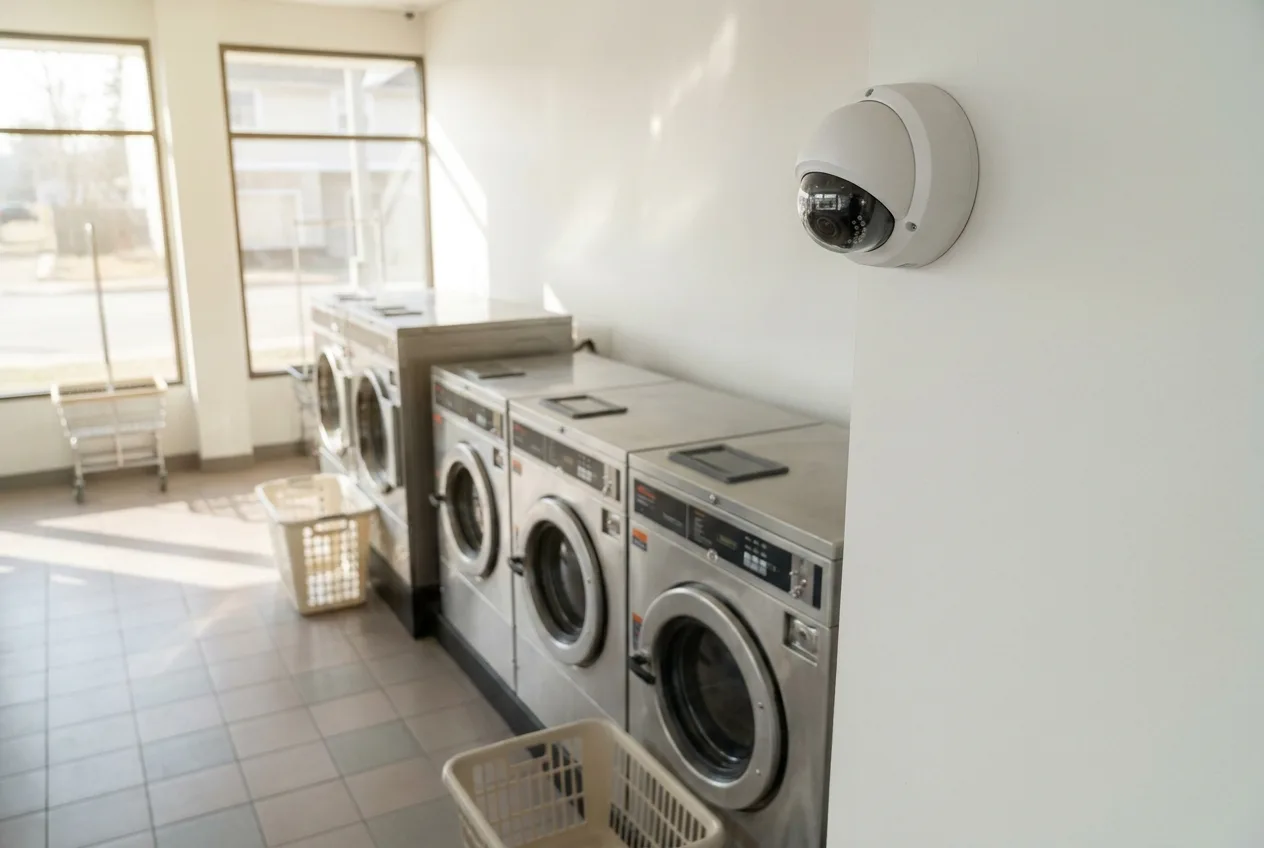
Cameras help by recording every collection point and change machine, which deters theft and gives you a record to review if a count comes up short. A visible camera over the coin vaults and counting area changes behavior, and the footage is your evidence if the water reconciliation flags a gap.
Effective camera coverage for cash includes:
- A clear angle on each machine's coin collection point.
- Coverage of the change machine and any bill acceptor.
- A view of the counting area where totals are recorded.
- Retention long enough to review a suspicious period after the fact.
Cameras also serve loss prevention beyond cash, from vandalism to liability claims. For the full camera and coverage plan, see laundromat security cameras and loss prevention. Pair the footage with the reconciliation; cameras deter, the water check detects.
Does going cashless reduce the risk?
Moving revenue onto card and app payments reduces skimming risk at the source, because those transactions land on a processor report that reconciles itself and never passes through anyone's hands as loose cash. The less coin the store collects, the less there is to skim before it is recorded.
Card and app systems are not free of risk or cost, and they carry transaction fees, but they trade a hard-to-track cash problem for an automatically documented one. Many operators run a hybrid, keeping some coin for customers who prefer it while shifting the bulk to card and app.
The payment-system choice has broader trade-offs than just cash control, including fees, vend-price flexibility, and customer preference. Weigh them in coin vs card vs app payment systems.
How do buyers check for skimming during due diligence?
Buyers check for skimming by comparing the seller's reported revenue against water bills, bank deposits, and tax returns, looking for the same gap you would look for internally. If reported income sits well below what water usage implies, a buyer suspects either skimming or an owner who understated income to lower taxes, and either one makes the revenue hard to trust.
This cuts both ways for a seller. An owner who skimmed or understated income for years cannot suddenly prove the higher real number at sale, so the hidden cash effectively lowers the sale price. Clean, reconciled records are worth more at exit than the tax they might have saved.
This is the exact analysis a buyer runs, so keeping your trail tight now protects your future sale. See the buyer's playbook in how to verify a laundromat's revenue, and note that income you cannot document is also income you cannot defend to the IRS.
What cash controls should every store have?
Every laundromat should collect on a fixed schedule, count and deposit intact, reconcile to water and turns, and record collection points on camera, with dual control wherever staffing allows. These few controls together make skimming visible without requiring you to be on site for every collection.
| Control | What it does | Deters or detects |
|---|---|---|
| Fixed collection log | Records each count with a date | Detects, by creating the trail |
| Full intact deposit | Ties every count to a bank deposit | Detects, closes the gap to cash |
| Water reconciliation | Compares revenue to usage | Detects a shortfall independently |
| Cameras on vaults | Records every collection point | Deters, and gives review footage |
| Dual control | Two people on every collection | Deters, removes the private moment |
A minimum control set:
- Fixed collection schedule with a written log of each count.
- Full deposit of every count, tied to the deposit slip.
- Monthly reconciliation of revenue against water usage.
- Cameras over vaults, change machine, and counting area.
- Dual control on collections where you have the staff.
Operator groups such as the Coin Laundry Association offer guidance on cash handling you can adapt. The point is not distrust; it is building a store whose numbers hold up to you, to a lender, and to a buyer. When you are ready to see how documented stores are presented, browse coin laundries for sale.
Frequently asked questions
How does reconciling coin to water usage catch skimming?
Each wash cycle uses a roughly known amount of water and earns a roughly known vend price, so the water bill implies a rough expected revenue that the person collecting cannot easily fake. If water shows heavy usage but the coin count is low, that gap is a flag. It is not precise to the penny, but a persistent shortfall against water usage is meaningful.
What is dual control in laundromat cash handling?
Dual control means two people are present for every collection and count, so cash is never handled alone from machine to deposit. It removes the private moment where most skimming happens. Small stores with one attendant cannot always do this, which is why cameras and the water reconciliation matter even more there.
Do security cameras stop coin theft?
Cameras deter theft when they visibly cover the coin vaults, change machine, and counting area, and they give you a record to review if a count comes up short. They work best paired with the water reconciliation: cameras deter, and the water check detects a gap you can then review on footage. Keep enough retention to review a suspicious period after the fact.
Does switching to card payments prevent skimming?
Card and app payments cut skimming risk at the source because the money lands on a processor report that reconciles itself and never becomes loose cash in someone's hands. They carry transaction fees and are not risk-free, but they trade a hard-to-track cash problem for an automatically documented one. Many stores run a hybrid, keeping some coin while shifting the bulk to card.
Why does skimming lower a laundromat's sale price?
Buyers compare reported revenue against water bills, deposits, and tax returns, and cash that was skimmed or income that was understated cannot suddenly be proven at sale. The hidden money effectively lowers the price because the buyer will only pay for revenue they can verify. Clean, reconciled records are usually worth more at exit than any tax the understatement saved.