How to Reduce Laundromat Utility Bills
SudsList Editorial · Jul 26, 2026
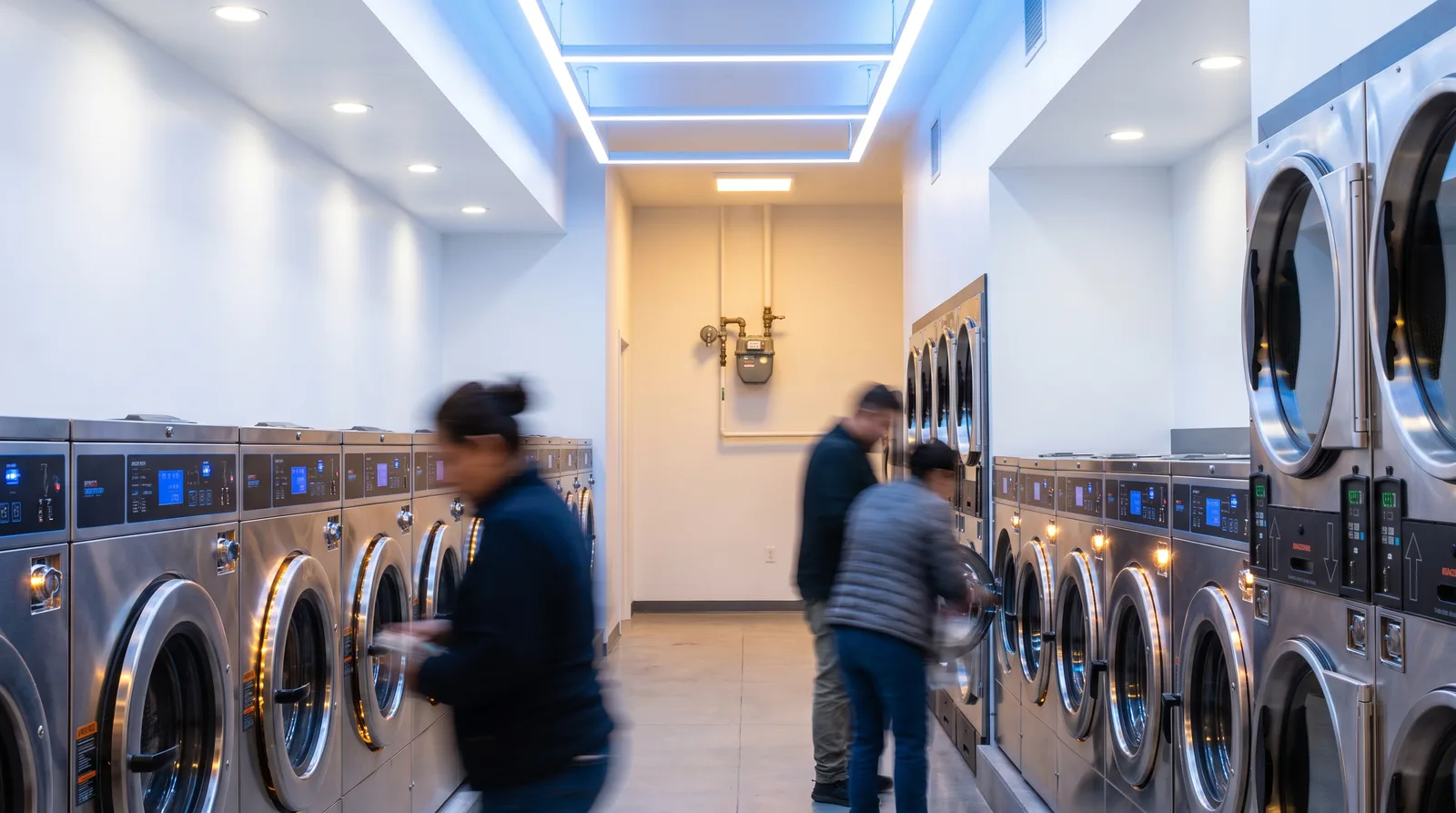
You reduce laundromat utility bills by attacking the three biggest costs in order: water and sewer, then gas, then electric. The largest, fastest wins usually come from high-efficiency washers that use less water per turn, well-maintained water heaters, and finding leaks, followed by LED lighting, smarter utility rate plans, and available rebates. Utilities are commonly the second-largest expense after rent, so even small per-turn savings compound into real money across thousands of cycles a month. The goal is lower cost per turn without hurting the customer experience that fills your machines.
Key takeaways
- Water and sewer is usually the single largest utility line, so it is where the biggest savings live.
- High-efficiency front-load washers cut water and the gas used to heat that water, attacking two bills at once.
- Gas is driven mostly by water heating and dryers, so heater maintenance and clean venting matter directly.
- Rate plans, LED lighting, and leak detection are lower-cost moves that add up across a full year.
- Rebates and efficiency incentives can shorten the payback on upgrades, so check before you buy.
Contents
- Where does a laundromat's utility money go?
- How do you cut water and sewer costs?
- How do you lower the gas bill?
- How do you reduce the electric bill?
- Can you get a better utility rate plan?
- What rebates and incentives are available?
- Do high-efficiency machines pay for themselves?
- How do you find leaks and phantom losses?
- What is the payback on each upgrade?
- How do you track utility costs going forward?
Where does a laundromat's utility money go?
A laundromat's utility spending goes mostly to water and sewer, then natural gas, then electricity, with water and sewer commonly the largest single line. Sewer often costs as much as or more than the water itself, since many municipalities bill sewer based on water consumed.
Understanding the split matters because it tells you where effort pays off. Chasing a small electric saving while ignoring water is backwards. For the detail behind the biggest line, see laundromat water and sewer costs, and to see how utilities fit into overall profitability, laundromat profit margins explained puts them in context.
How do you cut water and sewer costs?
Cut water and sewer by using less water per turn, which you do with high-efficiency machines, proper machine settings, and eliminating leaks. Because sewer is usually billed on water used, every gallon you save is often billed twice, so water is the highest-impact utility to attack.
High-efficiency washers
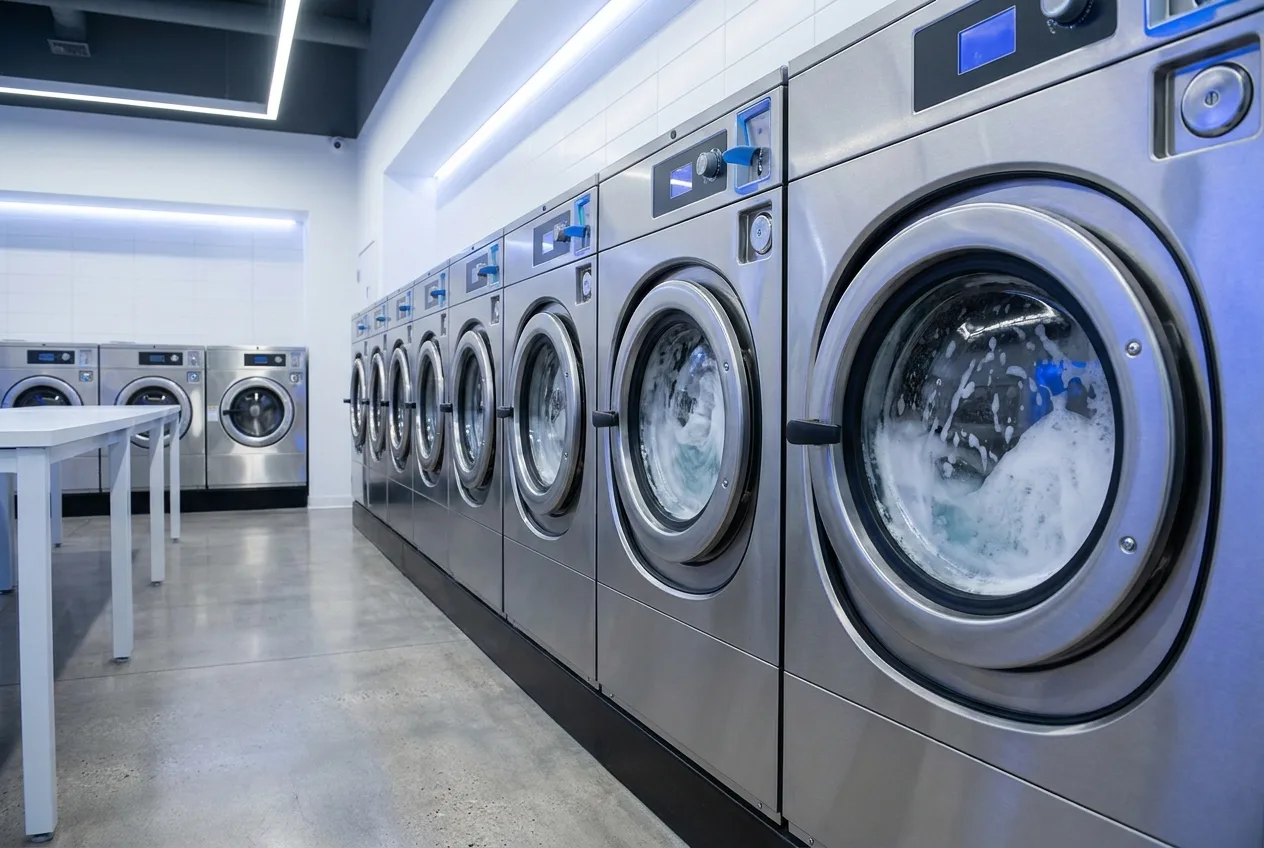
High-efficiency (HE) front-load washers use notably less water per cycle than older top-load machines. Over thousands of turns a month, that lower per-turn water use is where the largest recurring savings come from, and it drags down the gas bill too by heating less water. The trade-off is upfront cost, covered below and in high-efficiency washers and your water bill.
Leaks and water recycling
- Find and fix leaks quickly, since a running toilet or dripping valve wastes water around the clock.
- Consider water-reclamation or ozone systems for high-volume stores, which reuse or reduce water; see water recycling systems for laundromats.
- Check that machines are not overfilling or stuck in extra rinse cycles.
How do you lower the gas bill?
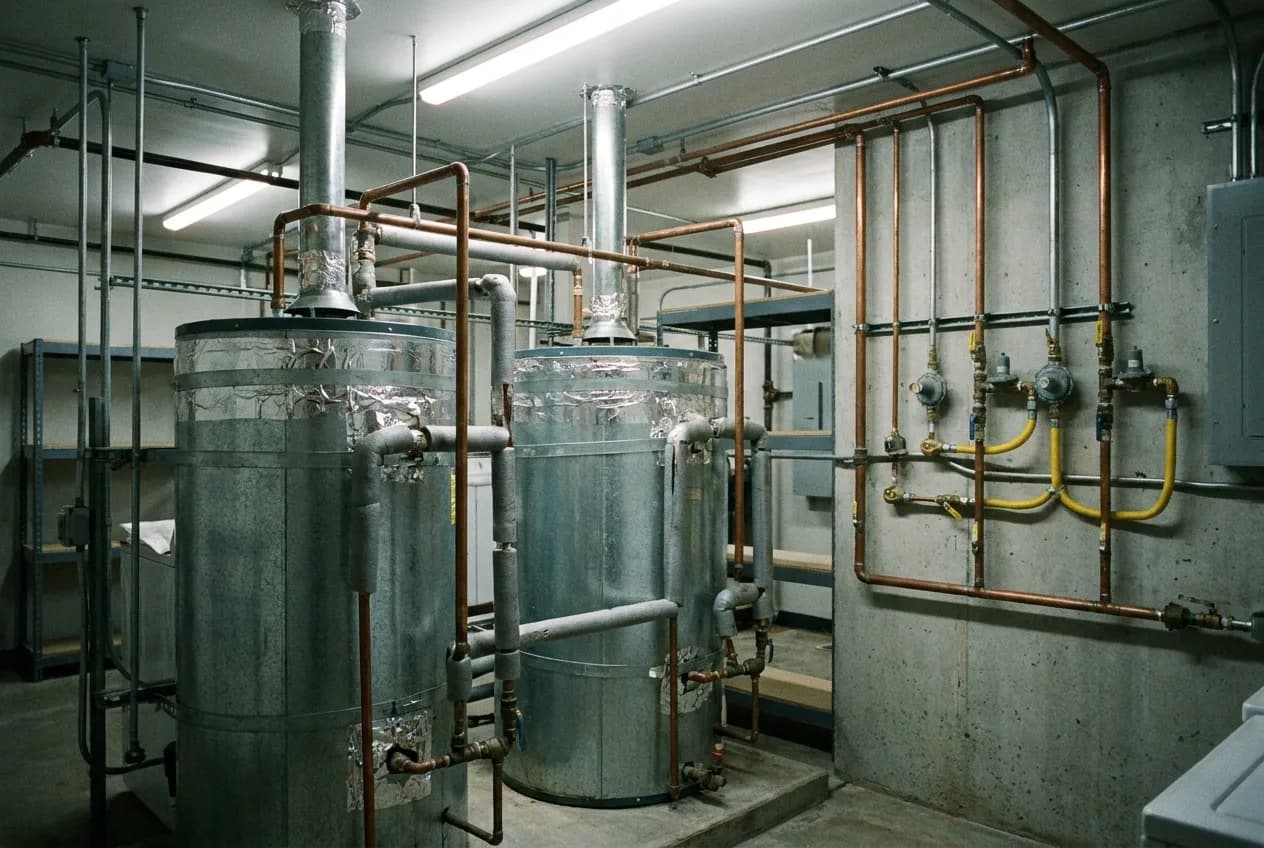
Lower the gas bill by maintaining your water heaters and dryer venting, since most gas goes to heating water and drying clothes. A neglected heater or a lint-clogged vent burns more gas for the same result, so maintenance is the cheapest gas saving you have.
- Service water heaters and clear sediment so they heat efficiently; details in commercial laundry water heaters.
- Keep dryer vents clean, because restricted airflow lengthens drying and wastes gas.
- Use HE washers, which spin more water out and reduce the drying, and heating, load.
- Set water temperatures sensibly, since needlessly hot water is a pure gas cost.
The Energy Star program notes that efficient commercial laundry equipment and well-maintained systems use meaningfully less energy per load, which shows up directly on the gas bill.
How do you reduce the electric bill?
Reduce electricity by switching to LED lighting, using efficient motors, and running high-draw equipment thoughtfully. Electric is usually the smallest of the three utilities in a gas-heated store, but LED lighting is a cheap, fast win worth doing early.
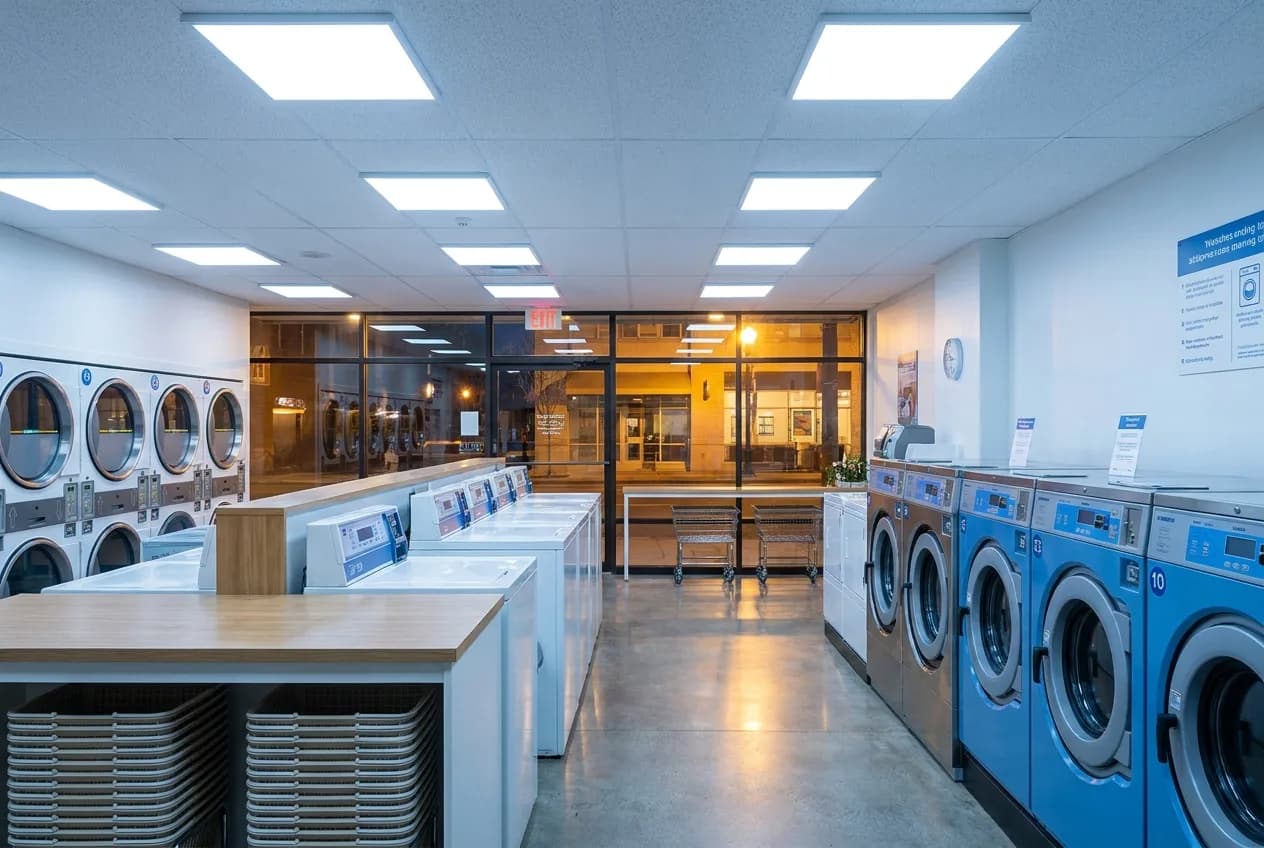
- Replace fluorescent and older fixtures with LED, which cut lighting energy substantially and last longer.
- Add occupancy or timer controls in back areas so lights are not on needlessly.
- Favor efficient motors and modern machines, which draw less than older equipment.
- Keep an eye on any electric water heating or HVAC, which can spike the bill.
Bright LED lighting has a side benefit: a store that looks bright reads as cleaner and safer, which supports traffic while lowering the bill.
Can you get a better utility rate plan?
Often yes: many utilities offer rate schedules that can lower cost if your usage pattern fits, so it is worth asking your providers directly. Commercial customers sometimes have options around time-of-use pricing or demand charges that a quick account review can surface.
- Ask your water, gas, and electric providers what commercial rate options exist.
- Understand demand charges on electric, which penalize short high-draw spikes.
- If you have flexibility, shifting some load to off-peak hours can help under time-of-use plans.
- Review your bills for errors or outdated rate classes, which are more common than owners expect.
This is a low-cost move: a phone call and a bill review, with no capital outlay. It will not transform your economics, but it can trim a recurring line for free.
What rebates and incentives are available?
Utilities and efficiency programs frequently offer rebates for high-efficiency washers, water heaters, and LED lighting, which can shorten payback on an upgrade. Because these change by region and year, check current offers before you buy rather than assuming.
- Ask your water and energy utilities about commercial efficiency rebates.
- Check the Energy Star program for qualifying equipment and links to incentives.
- Confirm eligibility rules before purchasing, since many rebates require pre-approval or specific models.
- Keep documentation, as some incentives affect how equipment is treated at tax time; the IRS is the authority on depreciation and any related treatment.
A rebate does not change whether an upgrade is right, but it can move a borderline payback into clearly worthwhile territory.
Do high-efficiency machines pay for themselves?
High-efficiency machines usually pay for themselves over time in a busy store through lower water, sewer, and gas per turn, but the payback depends on your volume and local utility rates. The higher your turns and the higher your water and sewer rates, the faster HE machines earn back their premium.
Consider a simplified scenario: a store running thousands of turns a month on older top-load washers replaces them with HE front-loaders. The water and gas saved per turn is modest on its own, but multiplied across the monthly volume it becomes a real recurring saving that offsets the higher purchase price over a number of years. In a low-volume store, that same premium takes much longer to recover, and the honest answer may be to wait until the machines need replacing anyway. Run your own numbers with the equipment replacement cost calculator and see how the savings flow through the laundromat cash flow calculator.
How do you find leaks and phantom losses?
Find leaks by monitoring your water meter and machines for use that has no matching turns, since water flowing when the store is idle is money down the drain. A single running toilet or stuck valve can waste a surprising amount around the clock without anyone noticing.
- Read your water meter when the store is closed or idle; movement means a leak.
- Inspect valves, hoses, and toilets regularly for drips and running water.
- Reconcile water use against turns, since a rising ratio signals waste or a fault.
- Fix stuck-open valves and overfilling machines promptly.
Reconciling water to turns also doubles as a check on cash, since water use roughly tracks cycles run. That overlap makes it a useful routine well beyond the utility bill.
What is the payback on each upgrade?
Payback varies by store, but the general pattern is that cheap fixes pay back fastest and big equipment slowest, so sequence your spending accordingly. Start with the moves that cost little and return quickly, then work up to capital upgrades.
| Move | Upfront cost | Typical payback |
|---|---|---|
| Fix leaks, rate-plan review | Very low | Immediate to short |
| LED lighting | Low | Short |
| Water-heater and vent maintenance | Low | Short |
| High-efficiency washers | High | Medium to long, faster at high volume |
| Water-recycling / reclamation | High | Long, best for high-volume stores |
Do the cheap, fast-payback items first regardless, then decide on capital upgrades based on your volume and utility rates. The rising utility costs in 2026 guide covers why acting on these is more pressing as rates climb.
How do you track utility costs going forward?
Track utilities by logging cost per turn each month, not just the raw bills, because per-turn cost tells you whether your efficiency is actually improving. A bill can rise simply because you did more business; cost per turn strips that out.
- Record water, gas, and electric monthly and divide by turns for a per-turn figure.
- Watch the water-to-turns ratio as an early warning for leaks.
- Compare before and after any upgrade to confirm the saving is real.
- Fold utilities into your regular financial review so trends surface early.
Financing a larger efficiency retrofit is its own question, and financing a laundromat with an SBA loan covers one common path when the upgrade is big enough to borrow for. Tracked well, utilities move from an uncontrollable bill to a line you actively manage.
Frequently asked questions
What is the biggest utility cost for a laundromat?
Water and sewer is usually the largest single utility line, and sewer is often billed based on the water you consume. That is why reducing water use per turn gives the biggest savings, since every gallon saved is frequently billed twice. Gas comes next, driven by water heating and dryers, with electric usually the smallest in a gas-heated store.
Do high-efficiency washers really lower utility bills?
Yes, in a busy store. High-efficiency front-load washers use less water per cycle and spin out more water, which also cuts the gas used to heat and dry. The savings per turn are modest but compound across thousands of monthly cycles. In a low-volume store the payback is much slower, so it may make sense to wait until the machines need replacing anyway.
How do I lower my laundromat's gas bill?
Focus on water heating and dryers, since that is where most gas goes. Service water heaters and clear sediment, keep dryer vents clean so drying stays fast, set water temperatures sensibly, and use high-efficiency washers that reduce the heating and drying load. A neglected heater or clogged vent burns more gas for the same result.
Are there rebates for laundromat efficiency upgrades?
Frequently, yes. Utilities and efficiency programs often offer rebates for high-efficiency washers, water heaters, and LED lighting, and the Energy Star program lists qualifying equipment and incentives. Offers change by region and year and many require pre-approval, so check current programs and eligibility before you buy rather than after.
How can I tell if my laundromat has a water leak?
Read your water meter when the store is closed or idle; if it is moving, water is flowing somewhere it should not be. Reconcile water use against turns each month, since a rising ratio points to a leak or a faulty machine. Common culprits are running toilets, stuck-open valves, and overfilling machines, all of which waste water around the clock.
Should I switch to LED lighting in my laundromat?
Usually yes, because LED is a low-cost upgrade with a short payback that also lasts longer than fluorescent. It cuts the electric bill and makes the store look brighter, which reads as cleaner and safer to customers. It is one of the first efficiency moves worth doing while you plan larger upgrades.