High-Efficiency Washers and Your Water Bill
SudsList Editorial · Aug 21, 2026
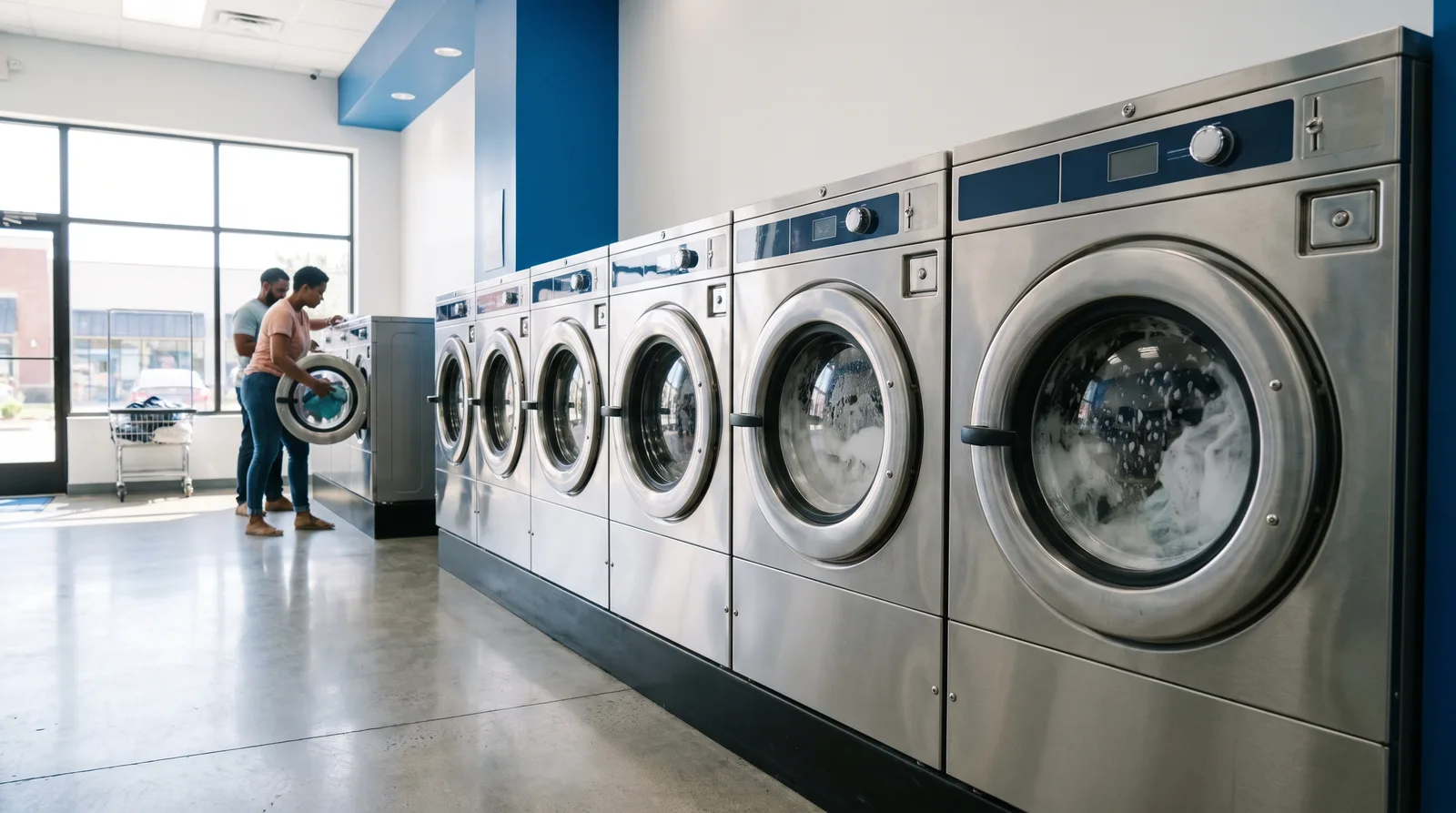
High-efficiency (HE) front-load washers cut your water bill because they use noticeably less water per wash cycle than older top-loaders, and less water also means less gas to heat it. The savings compound: every turn on an HE machine costs less in water, sewer, and heating than the same turn on a high-consumption top-loader. Whether re-equipping pays depends on your water and gas rates, how many turns your machines run, and what you pay for the new equipment. This guide covers where the savings come from, how to run the payback math, and what to check before you commit.
Key takeaways
- HE front-loaders use meaningfully less water per turn than older top-loaders, and lower water use also lowers the gas needed to heat it.
- Savings scale with turns per day, so a busy store recovers the cost of new machines far faster than a slow one.
- Sewer charges usually track water use, so cutting water often cuts a second line item at the same time.
- Payback depends on your local utility rates, your turn volume, and the equipment price, not on a national average.
- New machines will not rescue a store with weak traffic; efficiency reduces cost per turn but cannot create turns.
Contents
- How do HE washers cut your water bill?
- Why does using less water also cut gas?
- How much can re-equipping save?
- How do you run the payback math?
- What should you check before re-equipping?
- Are rebates available for efficient machines?
- When is re-equipping not worth it?
How do HE washers cut your water bill?
HE front-loaders cut your water bill by using far less water per cycle than older top-load machines, which fill a full tub around the clothes. Front-loaders tumble laundry through a smaller pool of water, so each turn draws fewer gallons while still cleaning effectively.
The water savings show up in two places on your bill:
- The water supply charge, based on gallons consumed.
- The sewer charge, which in most areas is billed on metered water use.
Because sewer often tracks water, cutting gallons per turn can shrink two lines at once. Water and sewer are typically among a laundromat's largest variable costs, so this is a direct hit to your biggest expense; see laundromat water and sewer costs for how those charges are structured.
Why does using less water also cut gas?
Using less water cuts gas because most of a laundromat's gas goes to heating water, so fewer heated gallons means a smaller heating load. A front-loader that draws less water per warm or hot wash asks your water heater to produce less hot water for the same clean load.
This is why efficiency compounds. One HE cycle saves water, sewer, and the gas to heat that water at the same time. The size and recovery rate of your commercial laundry water heater determine how much of that heating cost you can trim, so evaluate machines and heating together rather than in isolation.
How much can re-equipping save?
Re-equipping can produce real per-turn savings, but the total dollars depend entirely on your turn volume and utility rates, so treat any single figure with caution. The savings are per cycle, which means a high-turn store multiplies them across far more cycles than a slow store.
A simplified way to see how volume drives the return:
| Store activity | Turns per machine per day | How savings accumulate |
|---|---|---|
| Slow store | Low TPD | Per-turn savings are real but add up slowly |
| Average store | Moderate TPD | Steady monthly reduction in water, sewer, and gas |
| Busy store | High TPD | Savings compound quickly and shorten payback |
Turns per day (TPD) is how many wash cycles each machine runs in a day. The higher your TPD, the more each efficient machine earns back, which is why the same equipment upgrade can be an easy yes in a busy store and a marginal call in a quiet one.
How do you run the payback math?
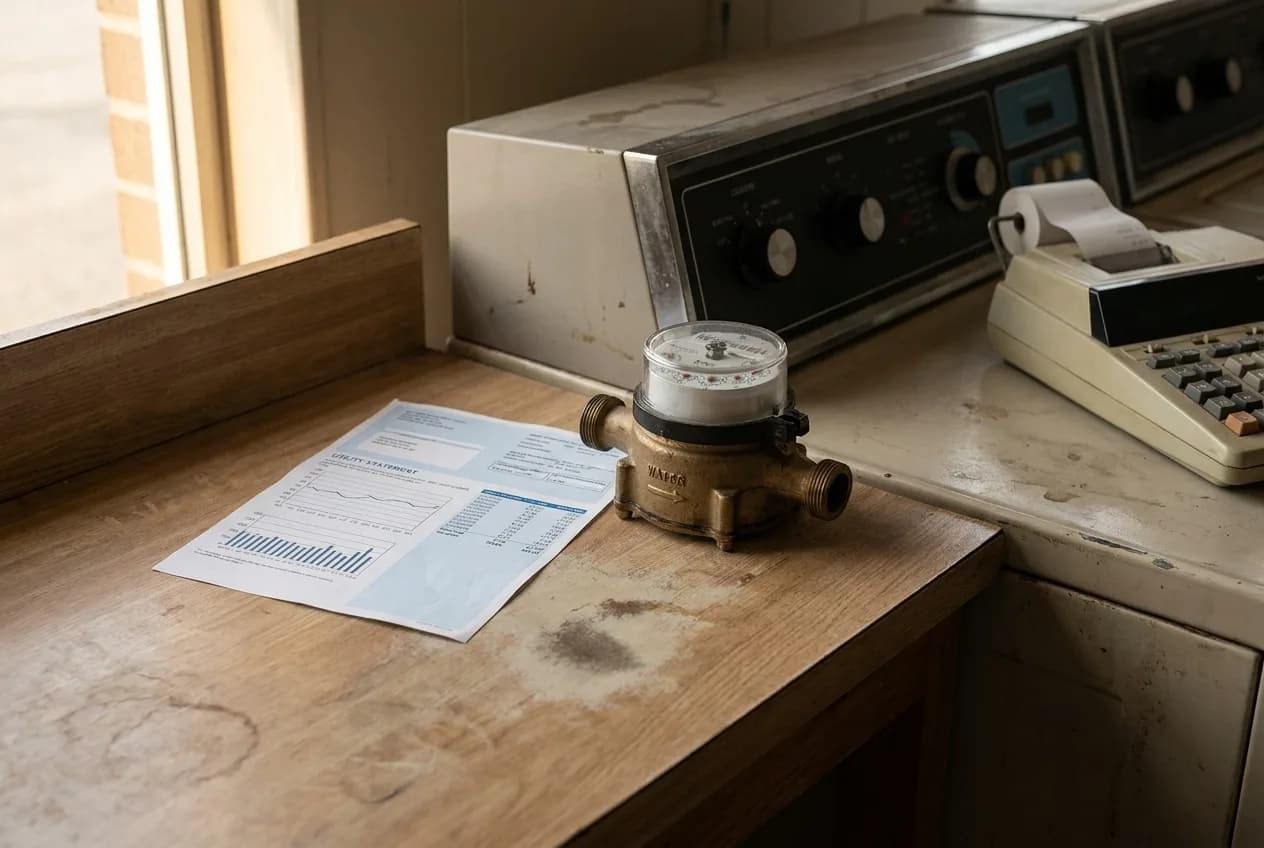
Run the payback math by estimating the water, sewer, and gas saved per turn, multiplying by your monthly turns, then dividing the equipment cost by that monthly saving to get months to break even. The inputs matter more than any rule of thumb.
Work it in this order:
- Find your water and sewer rate per gallon or per unit from a recent bill.
- Estimate gallons saved per turn between the old and new machines.
- Add the gas saved from heating fewer gallons.
- Multiply the per-turn saving by your monthly turns to get monthly savings.
- Divide the installed equipment cost by monthly savings for a rough payback period.
Use the laundromat cash flow calculator to fold the new utility line and any financing payment into the full picture, and the equipment replacement cost calculator to pressure-test the purchase price. New equipment is usually a depreciable asset, so the after-tax cost can differ from the sticker price; confirm how depreciation applies with the IRS or your accountant. Payback is a range, not a promise, so run a conservative and an optimistic case.
What should you check before re-equipping?
Before re-equipping, check that your building can support the new machines and that your traffic justifies the spend. New HE washers help most when the rest of the store is ready for them.
Things to verify:
- Electrical, plumbing, and drainage can handle the new machine spec.
- Floor loading and space fit the equipment footprint.
- Your water heater can keep up with the wash mix at peak.
- Whether new or quality used equipment is the better value for your situation.
Weigh the new-versus-used trade-off honestly; a well-maintained used HE machine can beat a new one on payback in some stores. See new vs used laundromat equipment and, if you are also rethinking machine style, top-load vs front-load commercial washers.
Are rebates available for efficient machines?
Rebates for water- and energy-efficient commercial laundry equipment are sometimes available through utilities and efficiency programs, and they can shorten payback, but availability varies by location and changes over time. Never assume a rebate exists; confirm it before you build it into the math.
Start with your water and gas utilities, then check the commercial-laundry efficiency resources from Energy Star, which point to program information for qualifying equipment. Because programs shift, treat any rebate as a bonus that improves an already-sound purchase rather than the reason to buy.
When is re-equipping not worth it?
Re-equipping is not worth it when the store lacks the turns to recover the cost or when a weak location is the real problem. Efficiency lowers cost per turn; it cannot manufacture turns that customer demand is not creating.
Signs to slow down:
- Low, flat traffic that no equipment change will lift.
- Machines that are still relatively efficient and have years of life left.
- A lease too short to recover the investment before it might end.
If your machines are near the end of their service life anyway, the efficiency gain is a strong tiebreaker toward replacing them. If they are healthy and your turns are thin, fix demand and the lease first, then revisit equipment once the store can carry the payback.
Frequently asked questions
How much less water do HE front-loaders use than top-loaders?
HE front-load washers use meaningfully less water per cycle than older top-loaders because they tumble laundry through a smaller pool instead of filling a full tub. The exact gallons vary by machine size and model, so pull the water-use spec for the specific machines you are comparing rather than relying on a general figure. Multiply the per-turn difference by your monthly turns to see the real impact.
Does saving water really lower my gas bill too?
Yes, because most of a laundromat's gas is used to heat water, and heating fewer gallons per warm or hot wash means a smaller heating load. That is why HE machines save on water, sewer, and gas at the same time. The size and recovery rate of your water heater determine how much of the heating savings you actually capture.
How do I calculate the payback on new HE washers?
Estimate the water, sewer, and gas saved per turn, multiply by your monthly turns to get monthly savings, then divide the installed equipment cost by that monthly figure for a rough break-even in months. Use your own utility rates from a recent bill, not averages. Run a conservative and an optimistic case, since payback is a range rather than a fixed number.
Are there rebates for efficient laundromat machines?
Sometimes. Utilities and efficiency programs occasionally offer rebates for qualifying water- and energy-efficient commercial laundry equipment, but availability varies by location and changes over time. Confirm any rebate with your water and gas utilities and check Energy Star's commercial-laundry resources before counting it in your payback math, and treat it as a bonus rather than the reason to buy.
Will new efficient machines fix a store with low revenue?
No. HE machines lower your cost per turn, but they cannot create turns that customer demand is not generating. If traffic is weak, the problem is usually location, competition, or marketing, and new equipment will not solve it. Address demand and your lease first, then re-equip once the store has the turn volume to earn the savings back.