New vs Used Laundromat Equipment: Which Makes More Sense?
SudsList Editorial · Jun 26, 2026
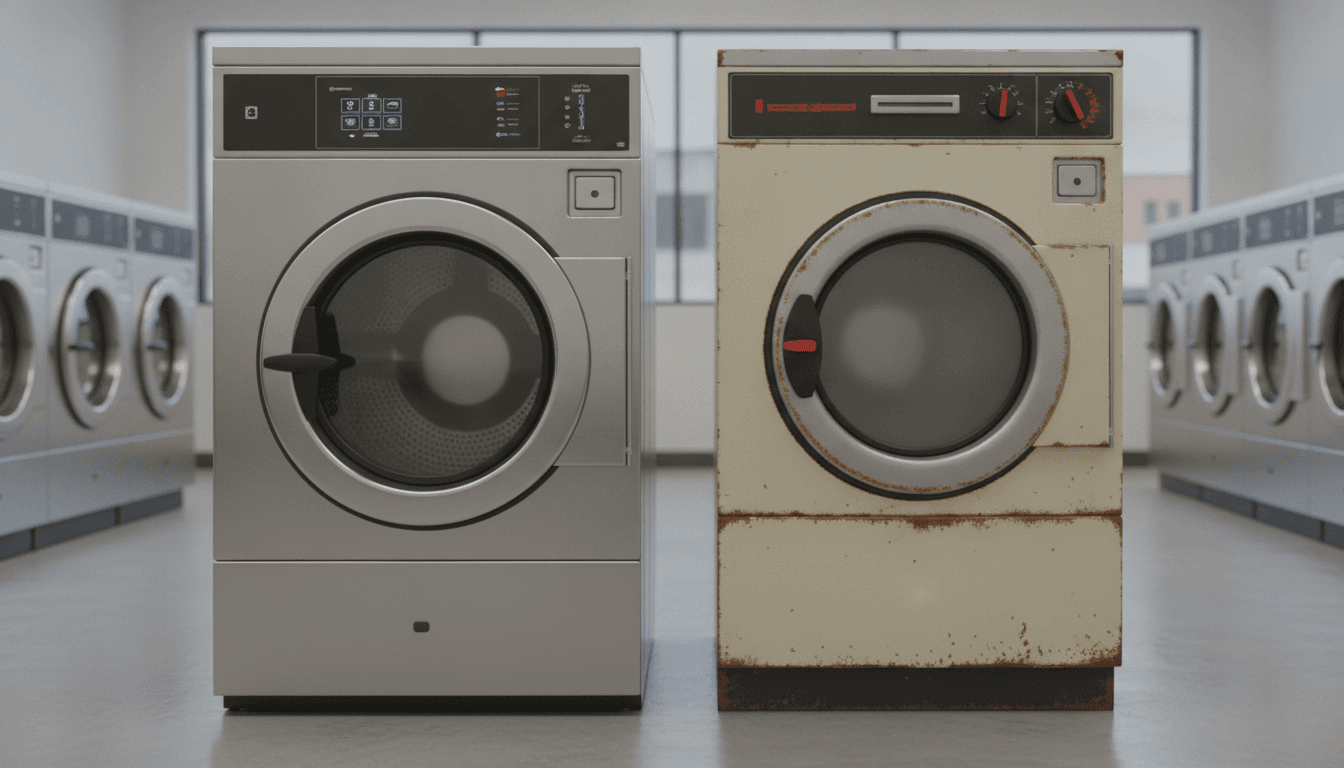
For most buyers, used laundromat equipment in good condition makes more financial sense than new, as long as the machines have years of service life left and you inspect them properly. New equipment costs far more up front but lasts longer, runs more efficiently, and comes with a warranty. The right answer depends on the machines'' age and condition, your budget, and whether you are buying an existing store or building one. This guide compares the real total cost, not just the sticker price.
Key takeaways
- New commercial machines cost the most up front but last 15 to 20 years, use less water and gas, and carry a warranty.
- Good used equipment with years of life left is usually the better value, especially when you buy an existing store with proven revenue.
- The real comparison is total cost of ownership: purchase price plus utilities, repairs, and remaining lifespan, not the sticker price.
- Old machines near the end of their life are a hidden cost, not a bargain, because replacement is a major capital expense.
- Always ask the age, make, and model of every washer and dryer, and budget for replacement based on remaining service life.
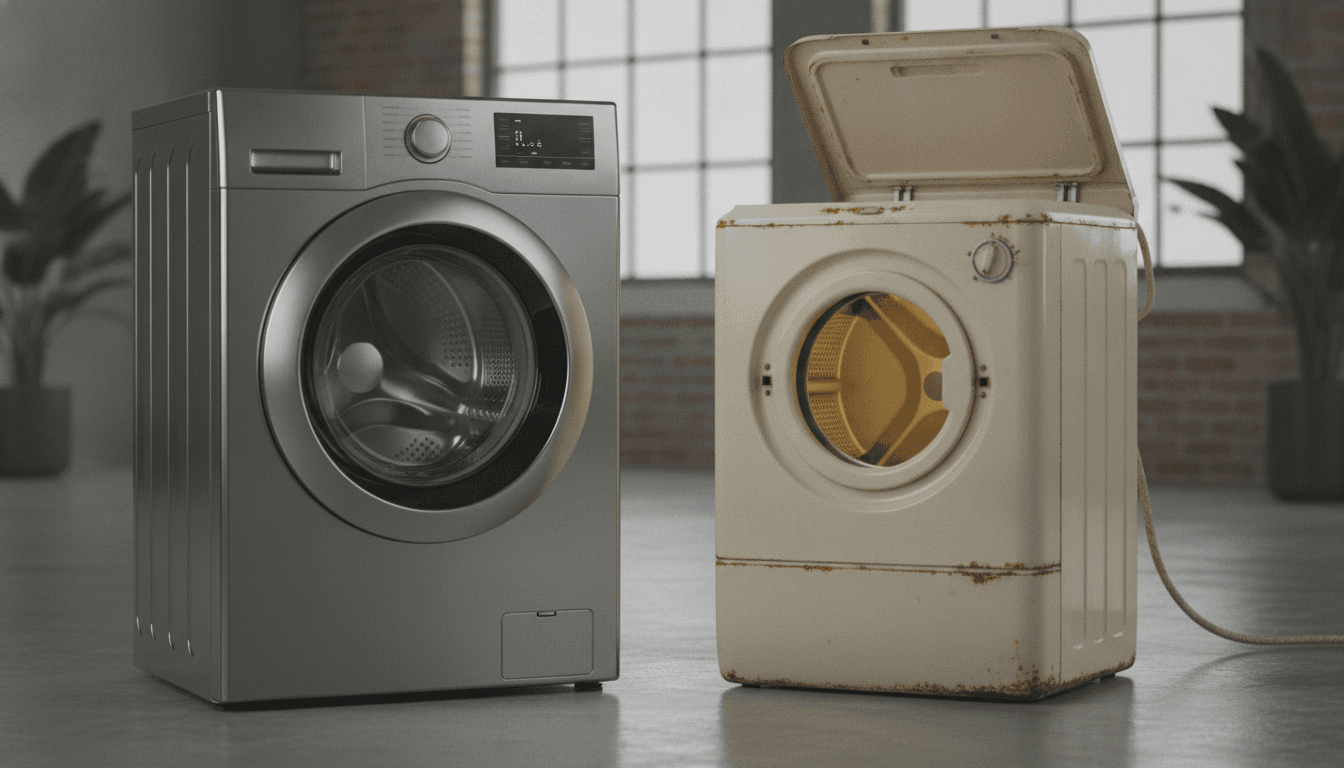
In this guide
- Should you buy new or used laundromat equipment?
- What does new equipment actually get you?
- When does used equipment make more sense?
- New vs used at a glance
- How do you compare the total cost?
- A worked example: new vs used over ten years
- What should you check before buying either?
Should you buy new or used laundromat equipment?
It depends on whether you are buying an existing store or outfitting one from scratch. If you are buying an established laundromat, you are usually inheriting its machines, and the question becomes how much remaining life they have and what replacement will cost. If you are building a store or replacing a worn-out fleet, you choose between the higher up-front cost of new and the lower entry cost of used.
As a rule, good used equipment with substantial life left wins on value, while new wins on longevity, efficiency, and peace of mind. Neither is universally right. What matters is matching the choice to the machines in front of you and your capital, which ties directly into laundromat startup costs.
What does new equipment actually get you?
New equipment buys you time, efficiency, and predictability. A new commercial washer or dryer typically lasts 15 to 20 years with maintenance, so you start the clock at zero and avoid major replacements for over a decade.
The concrete benefits are:
- Lower utilities. Modern high-efficiency washers use markedly less water and energy per load. Because utilities are one of the largest laundromat costs, this compounds over years. The U.S. EPA's Energy Star program documents the water and energy savings of efficient commercial laundry equipment and lists potential utility rebates.
- Warranty coverage that limits your repair exposure in the early years.
- Reliability and image. Fewer breakdowns mean fewer out-of-order machines and lost income, and a fresh fleet attracts customers.
- Financing. New equipment is easier to finance, and distributor or SBA-backed loans often cover it.
The trade-off is the up-front cost, which can run into six figures for a full re-equip and pressures your return in the early years.
When does used equipment make more sense?
Used equipment makes sense when the machines are in genuinely good condition with years of life remaining, and when lowering your entry cost matters more than maximizing lifespan. This is common when buying an existing, profitable store, where the equipment is already installed and generating revenue.
The case for used is strongest when: the machines are a quality commercial brand with parts still available, they have been maintained, and the lower purchase price improves your return on the capital you put in. The case weakens fast when the machines are near the end of their service life, an off-brand with scarce parts, or showing signs of heavy wear. At that point the low price is not a discount; it is a deferred bill, because you will be funding replacement sooner than you think.
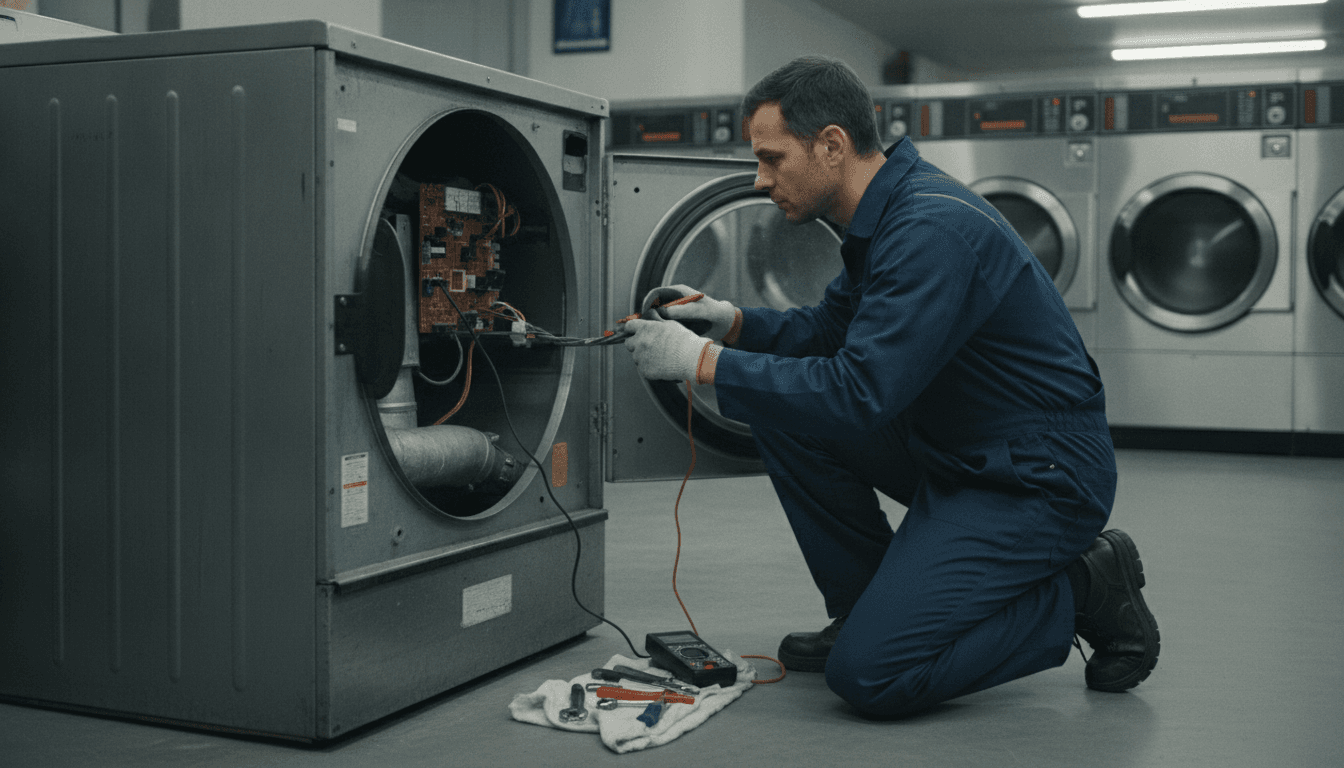
New vs used at a glance
The two options trade up-front cost against lifespan, efficiency, and risk. The table sums up the differences that drive the decision.
| Factor | New equipment | Good used equipment |
|---|---|---|
| Up-front cost | Highest | Much lower |
| Lifespan remaining | Full 15–20 years | Only what is left |
| Utilities | Lower, more efficient | Often higher on older machines |
| Warranty | Yes | Usually none |
| Repair risk | Low in early years | Rises with age |
| Financing | Easiest, including SBA-backed loans | Possible, depends on condition |
| Best suited to | A long hold or a new build | A lower entry cost on a proven store |
Whichever way you lean, benchmark the running costs against industry norms; the Coin Laundry Association's resources help you judge whether a store's utility and repair figures are reasonable for its equipment age.
How do you compare the total cost?
Compare total cost of ownership, not the purchase price. Total cost is what you pay to buy the machines plus what they cost to run and repair over the years you will own them, divided across their remaining life.
Three inputs drive it:
- Purchase price, new or used.
- Utility cost per year, which is higher for older, less efficient machines and is a recurring drain, not a one-time figure.
- Remaining service life and repair risk, since a cheap machine with three years left and rising repair bills can cost more per usable year than a new one with twenty.
A machine that is cheap to buy but expensive to run and near replacement often loses to a costlier, efficient one over any realistic holding period. Run both scenarios through the calculators before you decide.
A worked example: new vs used over ten years
Suppose you are equipping a mid-size store and can either spend $120,000 on new machines or $50,000 on used machines with roughly eight years of life left.
The new fleet costs more up front but runs efficiently and needs little repair for a decade. Say it uses $40,000 a year in utilities and minimal repairs.
The used fleet saves $70,000 at purchase, but older machines might use $48,000 a year in utilities, an extra $8,000 annually, and need growing repairs, plus you face a major replacement around year eight rather than year fifteen-plus.
Over ten years, the $8,000 yearly utility gap alone is $80,000, before counting heavier repairs and an earlier replacement. The used fleet still may win for a buyer who is short on capital or planning a shorter hold, but the gap is far smaller than the sticker prices suggest, and on a long hold new can come out ahead. The point is to run the full picture, not anchor on the $70,000 up-front saving.
What should you check before buying either?
Check the age, brand, condition, and efficiency of every machine, because those determine remaining life and running cost. Whether new or used, you are buying future performance, not appearance.
- Age, make, and model of each washer and dryer, and whether parts are still readily available.
- Condition, including bearings, seals, motors, and signs of leaks or heavy wear; consider an independent equipment inspection on a larger purchase.
- Efficiency, since water and gas usage directly hit your biggest expense line.
- Maintenance history and whether the seller can document it.
- Replacement timeline, so you can budget capital for the machines nearing end of life.
Fold all of this into your valuation and your overall due diligence: equipment condition is one of the biggest swing factors in what an existing store is actually worth. When you are comparing stores, the listings note equipment details you can press the seller to verify.
Frequently asked questions
Is it better to buy new or used laundromat equipment?
For most buyers, good used equipment with years of life left is the better value, particularly when buying an existing store with proven revenue. New equipment wins when longevity, lower utilities, and warranty coverage matter most, or when you are building a store from scratch. The right choice depends on the condition and remaining life of the specific machines.
How long does commercial laundromat equipment last?
A quality commercial washer or dryer typically lasts 15 to 20 years with proper maintenance. Used machines should be valued on the life they have left, not their original lifespan. Equipment near the end of its service life represents a major upcoming replacement cost rather than a bargain.
Does new laundromat equipment really save on utilities?
Yes. Modern high-efficiency commercial washers use noticeably less water and energy per load, and because utilities are one of a laundromat's largest costs, the savings compound over the years. The Energy Star program documents these savings and lists potential utility rebates for efficient commercial laundry equipment.
What should I inspect on used laundromat machines?
Check the age, make, and model of every washer and dryer, whether parts are still available, the condition of bearings, seals, and motors, signs of leaks or heavy wear, water and gas efficiency, and the maintenance history. On a larger purchase, an independent equipment inspection is worth the cost.
Can I finance used laundromat equipment?
New equipment is generally easier to finance, often through distributors or SBA-backed loans, but used equipment can be financed too, especially as part of buying an existing business. Lenders weigh the age and condition of the machines, so well-maintained, quality-brand equipment finances more readily than worn or off-brand machines.