Dealing With Loitering and Problem Customers at a Laundromat
SudsList Editorial · Aug 12, 2026
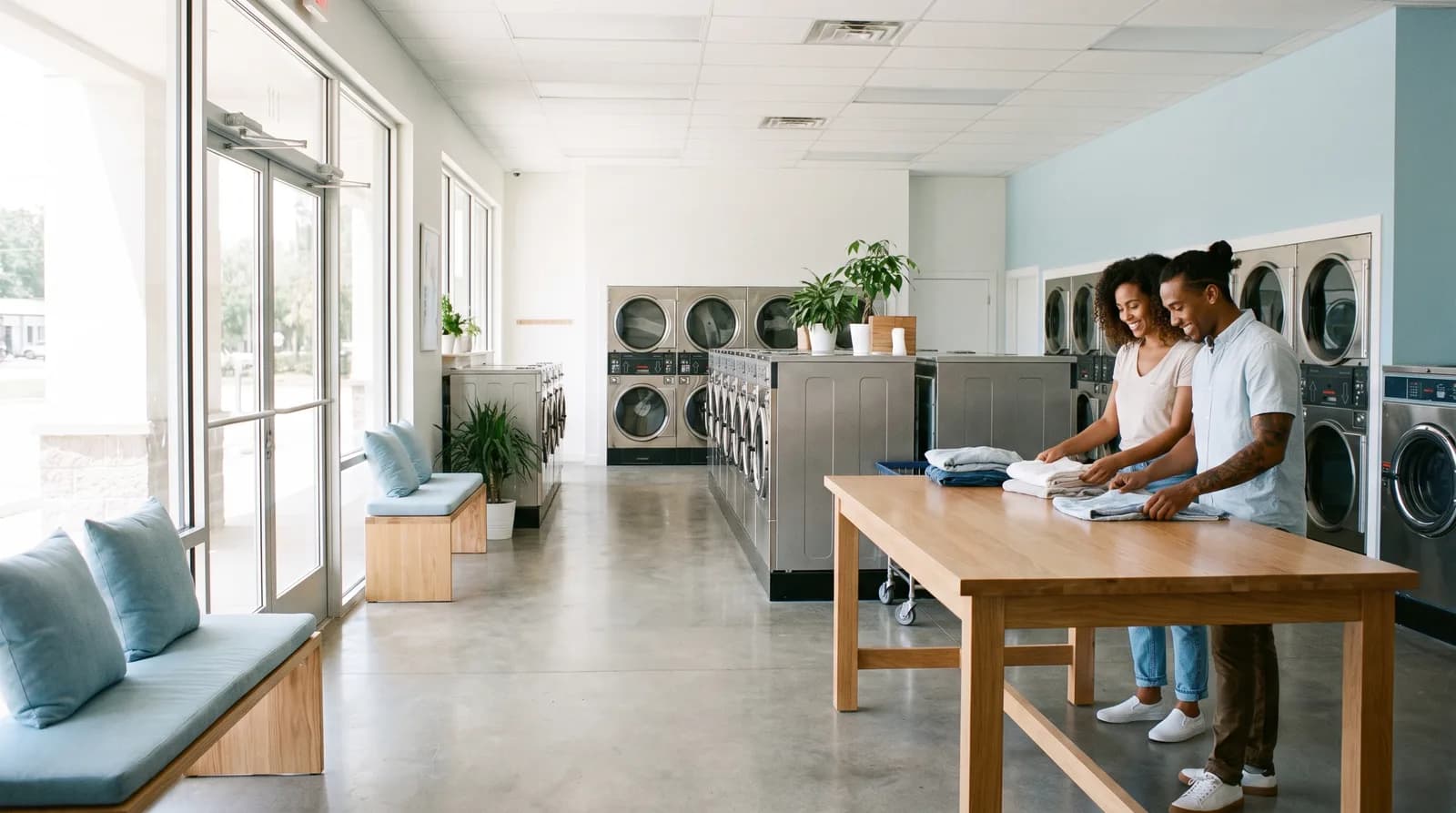
The most effective way to deal with loitering and problem customers at a laundromat is to combine a clear posted policy, an attended or monitored presence, and a store design that gives no comfortable place to linger without doing laundry. Loitering thrives in stores that feel unwatched, have loose seating, and run long unattended hours. You address it with environment and consistency, not confrontation, because a store that is bright, busy, and clearly managed rarely attracts people who are not there to wash clothes.
Key takeaways
- A posted, plainly worded customers-only policy is your foundation, because it sets the expectation and backs any request to leave.
- Presence is the strongest deterrent; an attendant or visible cameras and remote monitoring change who feels comfortable lingering.
- Design against loitering with right-sized seating, bright lighting, and no hidden corners, rather than making the store hostile to real customers.
- Hours are a lever; if problems cluster late at night, attending or restricting those hours often resolves them.
- Handle problem customers with calm, consistent enforcement and clear escalation, never personal confrontation.
Contents
- What causes loitering at a laundromat?
- What policies actually reduce loitering?
- How does store design discourage lingering?
- Does an attendant stop problem behavior?
- How should you handle a problem customer?
- Do hours and lighting change who shows up?
- How do you balance safety with staying welcoming?
What causes loitering at a laundromat?
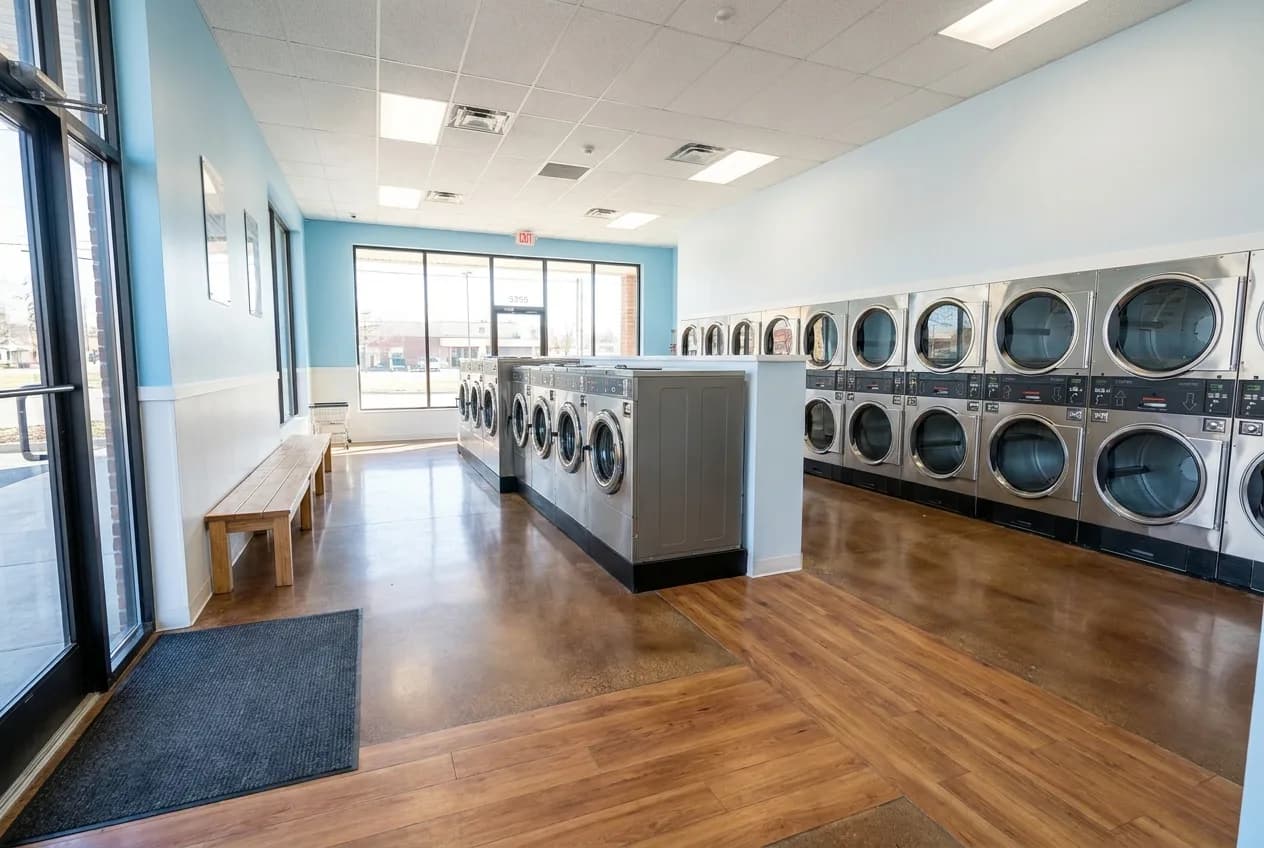
Loitering usually comes from a mix of long unattended hours, comfortable seating with no time limit, a warm sheltered space, and no visible management. Laundromats are open, climate-controlled, and often open late, which makes them a natural gathering spot when nothing signals that the space is only for customers.
The conditions that invite it:
- Extended or 24-hour unattended hours with no attendant and weak cameras.
- Abundant comfortable seating that reads as a lounge rather than a wait area.
- Dim lighting and hidden corners that feel unwatched.
- No posted policy, so there is nothing to point to when asking someone to move on.
- A location without nearby foot traffic, which leaves the store empty and easy to occupy.
Understanding the cause matters because the fix is environmental. You change the conditions, and most casual loitering fades without a single confrontation.
What policies actually reduce loitering?
The policies that work are simple, posted, and enforceable: a customers-only rule, clear hours, and a stated expectation that seating is for people using the machines. A plainly worded sign at the entrance does most of the quiet work by setting the norm before anyone has to say anything.
Policies worth posting:
- Customers-only, with restrooms and seating for paying customers.
- Store hours and any attended hours, so expectations are clear.
- No smoking, no alcohol, and no soliciting on the premises.
- Unattended laundry may be removed after a set time, which also keeps machines turning.
- A monitored-and-recorded notice, which supports both loitering and theft prevention.
Keep the language neutral and consistent, and enforce it the same way for everyone. A policy you apply unevenly creates more problems than it solves. These rules also belong in your written procedures; see laundromat standard operating procedures for documenting them.
How does store design discourage lingering?
Design discourages lingering by removing the comfort and the cover: right-sized seating instead of a lounge, bright lighting with no dim corners, and open sightlines so the whole floor is visible from the door and from a camera. The goal is a store that is pleasant to do laundry in but not somewhere to settle in for hours.
| Design choice | Effect on loitering | Note |
|---|---|---|
| Right-sized, simple seating | Removes lounge feel | Enough to wait, not to camp |
| Bright, even lighting | Eliminates unwatched corners | Also lifts safety perception |
| Open sightlines, low fixtures | Whole floor visible | Helps cameras and attendants |
| Music at moderate volume | Sets an active, managed tone | Neutral, not a hangout playlist |
| Clean, well-kept restrooms with controlled access | Reduces misuse | Customer access only |
Good lighting does double duty for safety and perception; the details are in laundromat lighting and signage. None of this should make the store feel hostile to real customers, which is the balance to protect.
Does an attendant stop problem behavior?
Yes. A present attendant is the single strongest deterrent to loitering and problem behavior, because most issues depend on the space feeling unmanaged. Someone on site who greets customers, keeps the store moving, and calmly enforces the posted policy changes who feels comfortable lingering.
An attendant helps in specific ways:
- Their presence alone signals the store is watched and managed.
- They can ask non-customers to move on early, before a situation grows.
- They keep the store clean and busy, which discourages people looking for an empty space.
- They are your eyes during the hours cameras alone cannot act on anything.
Staffing is a cost, so weigh it against the problem it solves, and confirm wage and hour rules for any staffed time with the U.S. Department of Labor. Whether your store is ready for one is covered in when to hire an attendant for your laundromat. If you run unattended, remote monitoring for laundromats lets you watch and speak up through the store's system.
How should you handle a problem customer?
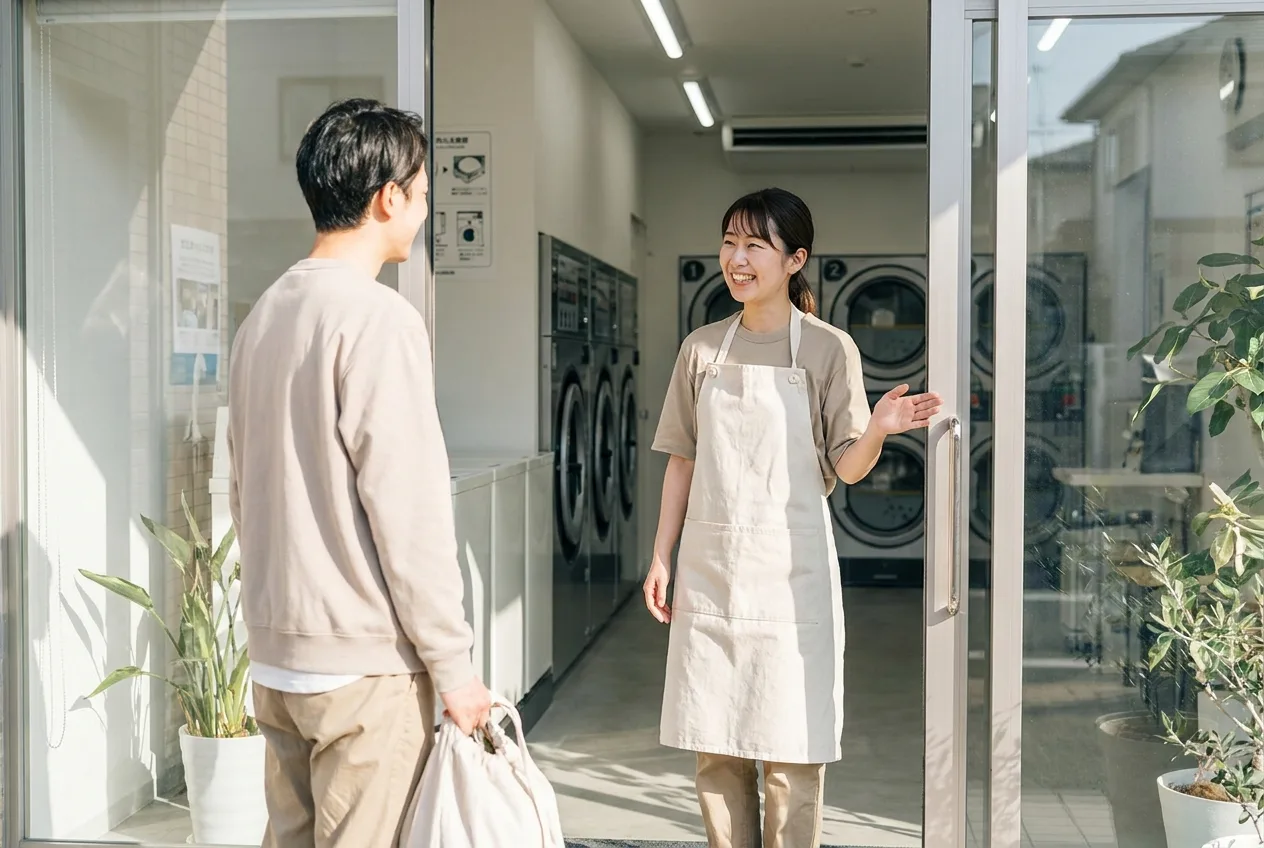
Handle problem customers with calm, consistent enforcement of the posted policy, clear and simple requests, and a defined escalation path, never personal argument. Most situations resolve when a customer is asked politely and firmly to follow the rule or to leave, with the sign as the neutral authority.
A workable escalation ladder:
- Start with a neutral, specific request tied to the posted policy.
- If it continues, restate the policy once and ask the person to leave.
- Disengage from argument; you are enforcing a rule, not winning a debate.
- For threats, safety concerns, or refusal to leave, contact local authorities rather than escalating yourself.
- Document repeat incidents with time and camera reference in case you need them.
Train attendants to prioritize their own safety and the safety of customers over confronting anyone. A calm, documented, consistent approach protects both people and your liability, which ties back to the coverage in laundromat insurance and what you need.
Do hours and lighting change who shows up?
Yes. Long unattended late-night hours and dim lighting are the two conditions most associated with loitering and problems, so adjusting them changes who shows up. A brightly lit store that closes or is attended during the risky window presents a very different environment than a dim 24-hour store no one is watching.
The practical moves:
- If incidents cluster after a certain hour, attend, shorten, or lock down that window.
- Keep interior and exterior lighting bright and every fixture working.
- Use door locks and lighting on timers to secure the store overnight while machines finish.
This overlaps directly with security and revenue, so decide it alongside what hours should a laundromat be open and how to prevent laundromat theft and vandalism. Model the revenue side of any hours change in the laundromat cash flow calculator.
How do you balance safety with staying welcoming?
The balance comes from targeting behavior, not people: enforce a neutral, posted policy consistently, keep the store bright and clean, and design against camping without making the space feel hostile. A laundromat that is genuinely pleasant and clearly managed both discourages loiterers and earns repeat customers, since the same conditions serve both goals.
Guard against overcorrecting. Stripping out all seating, dimming the store to save power, or treating every waiting customer as a suspect drives away the paying business you want. The aim is a comfortable, active, well-run store, which is also the best marketing you have. A clean, welcoming environment doubles as a growth lever, as covered in laundromat cleaning checklist that keeps customers coming back. Operator groups such as the Coin Laundry Association also share practices for keeping a store safe and welcoming that are worth comparing against your own.
Frequently asked questions
Can I legally have a customers-only policy at my laundromat?
Private businesses can generally set reasonable use policies, but rules on removing people and on discrimination vary by state and locality, so enforce any policy evenly and neutrally. Post the policy clearly and apply it the same way to everyone. For anything involving removal or law enforcement, follow local guidance and contact authorities rather than handling it physically yourself.
Should I remove seating to stop loitering?
Reduce and right-size seating rather than removing it. Customers need somewhere to wait during a wash and dry cycle, and stripping all seating punishes the people you want. Aim for enough simple seating to wait comfortably but not so much that the store reads as a lounge.
How do I handle someone using the store as shelter?
Handle it calmly and with the same neutral policy you apply to anyone, prioritizing safety over confrontation. Ask them to follow the customers-only rule, and if there is a safety concern or refusal to leave, contact local authorities. Some owners also keep information on local services on hand, which is a personal choice rather than an operating requirement.
Do cameras alone stop loitering?
Cameras deter and document, but they cannot act, so on their own they help less with loitering than with theft. Pairing visible cameras with either an attendant or remote monitoring you can speak through is far more effective. Presence, not just recording, is what changes behavior.
Will strict policies hurt my regular customers?
Not if they target behavior rather than people and are enforced consistently and politely. Regular customers generally welcome a clean, safe, well-managed store and are unaffected by a customers-only rule. Problems arise only when enforcement is uneven or the store is made unpleasant to save cost.