Commercial Laundry Water Heaters Explained
SudsList Editorial · Jul 24, 2026
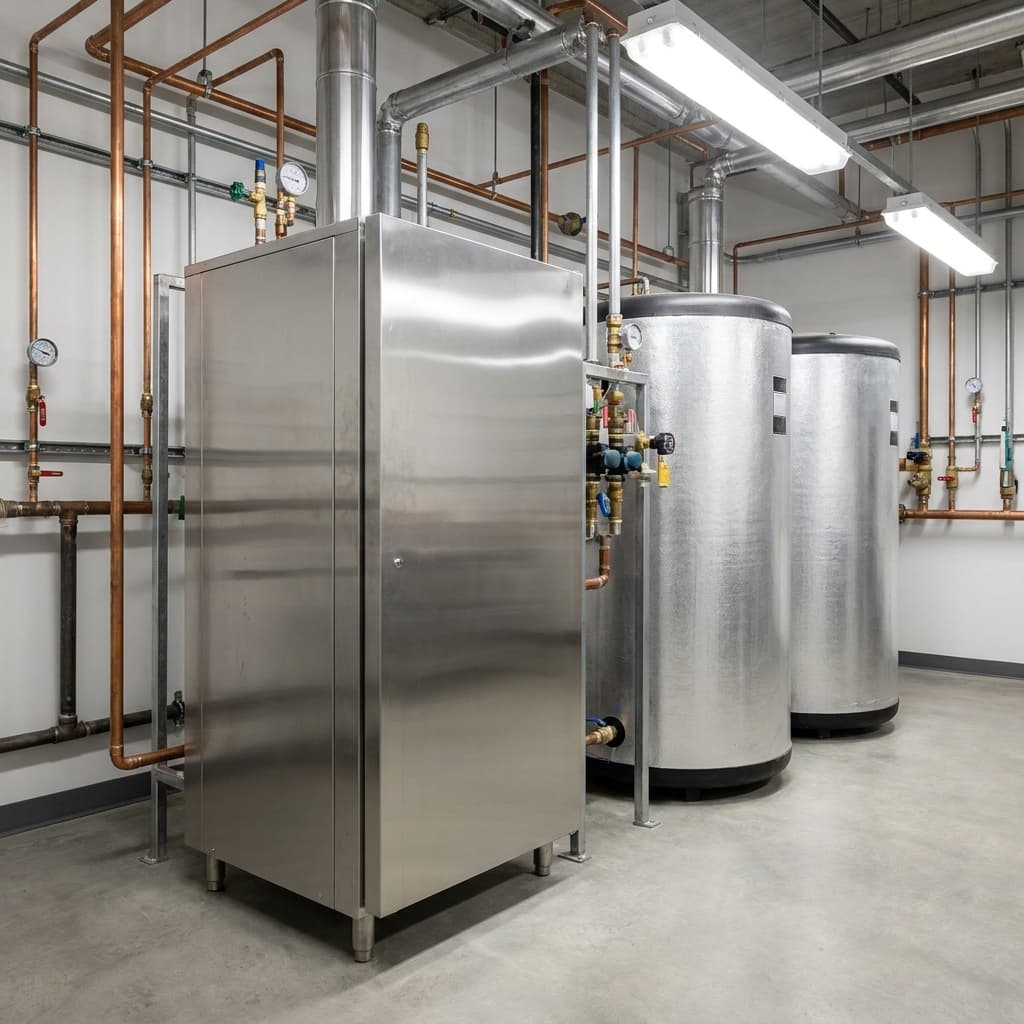
The water heater is one of the most important and least visible pieces of equipment in a laundromat. It has to deliver large volumes of hot water on demand, and how efficiently it does so directly affects your gas bill and your customers' experience. This guide covers the main types of commercial laundry water heaters, how to size them, and what to check when you buy a store.
Contents
- Why the water heater matters
- Tank vs tankless
- Sizing the system
- Gas vs electric and efficiency
- Types at a glance
- Buying a store: what to check
Why the water heater matters
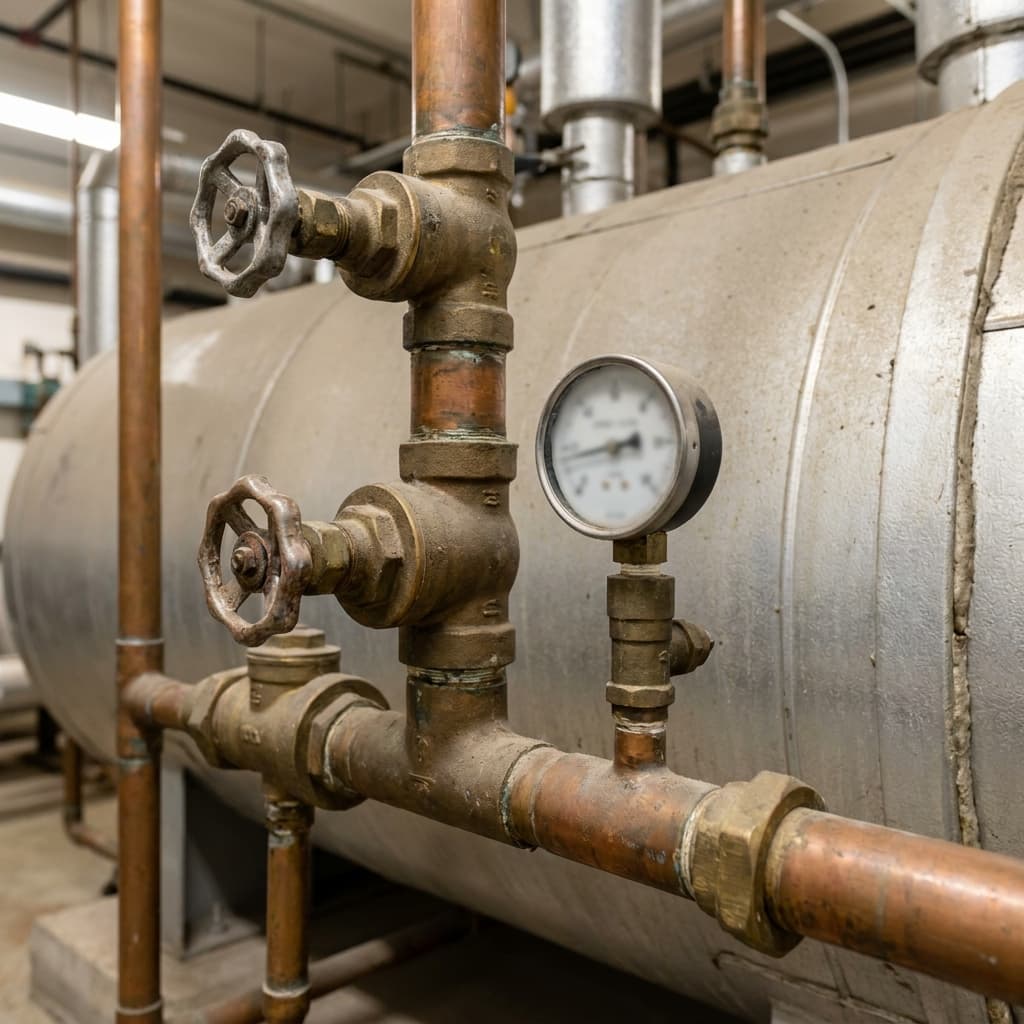
Washers draw large amounts of hot water, often in bursts at busy times, so the heating system has to keep up or customers face cold washes and complaints. At the same time, heating water is a major energy cost, second only to the water itself among utilities. A right-sized, efficient water heater keeps customers happy and the gas bill manageable, while an undersized or inefficient one is a daily drag on both. It is infrastructure that quietly shapes the store's economics.
Tank vs tankless
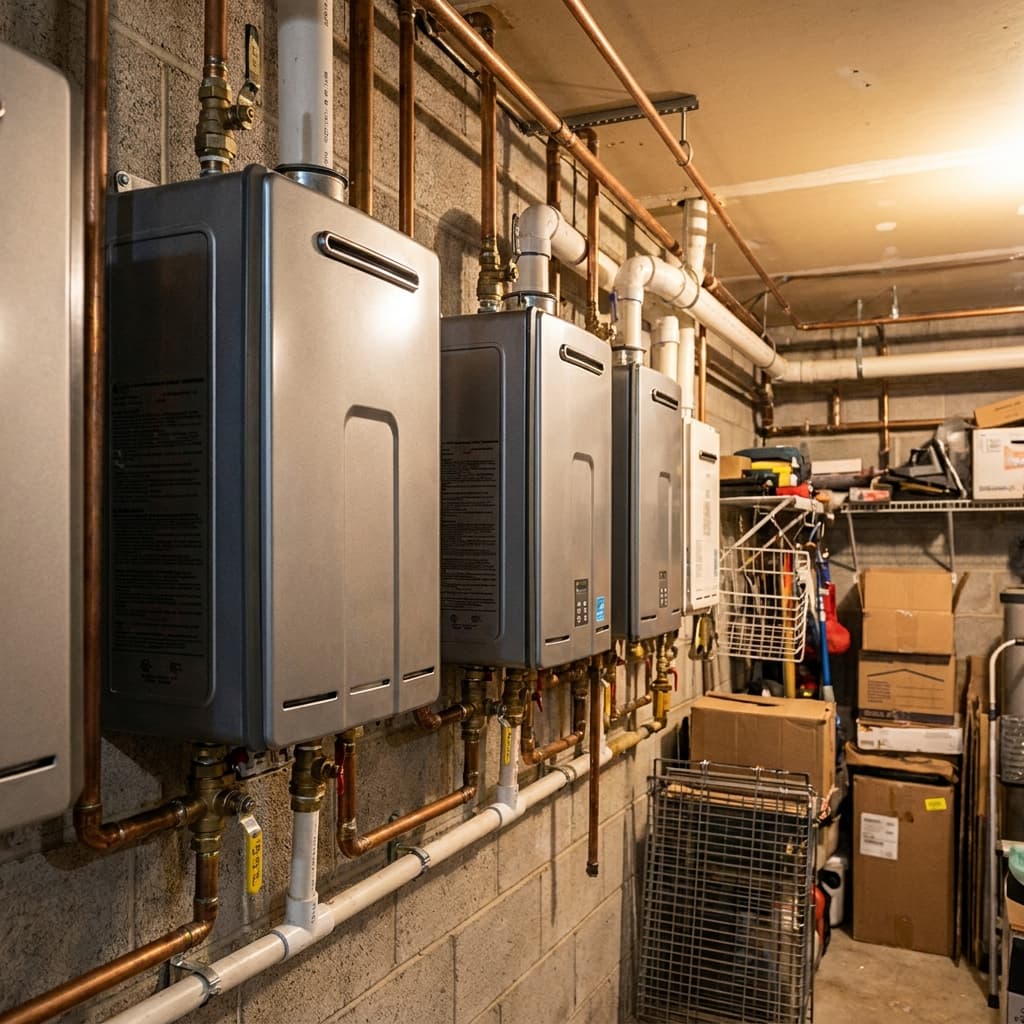
The two main approaches are storage (tank) and tankless (on-demand). A tank system heats and stores a large volume, ready for peak demand, but loses some heat in standby and takes floor space. A tankless system heats water as it flows, which is efficient and never runs out, but the units must be sized carefully for a laundromat's high simultaneous demand, and the upfront cost is higher. Many busy stores use multiple tankless units or a hybrid setup to handle peaks.
Sizing the system
Sizing is where laundromat water heating succeeds or fails. The system has to meet peak demand, when many washers call for hot water at once, not just average use. Undersizing leads to cold washes at the busiest times, exactly when you can least afford unhappy customers; oversizing wastes money and energy. Sizing depends on the number and type of washers, their hot-water draw, and your peak hours, so it is worth getting right with a qualified installer rather than guessing.
Gas vs electric and efficiency
Most commercial laundry water heaters are gas-fired, since gas is usually cheaper than electricity for high-volume heating, though electric and hybrid options exist. Whatever the fuel, efficiency matters across thousands of loads: high-efficiency and condensing units cost more upfront but use less energy, and the savings compound. Because hot water ties directly to the water and sewer costs that dominate a laundromat's utilities, the heater is part of the same efficiency conversation as the machines themselves.
Types at a glance
| Type | Pros | Cons |
|---|---|---|
| Tank (storage) | Steady supply for peaks, lower upfront cost | Standby heat loss, takes space |
| Tankless (on-demand) | Efficient, endless hot water, compact | Higher upfront cost, sizing is critical |
| High-efficiency or condensing | Lower gas use over time | Higher cost, more maintenance |
Buying a store: what to check
When you buy an existing laundromat, inspect the water heating system as carefully as the washers and dryers. Note the type, age, and condition, ask about recent repairs, and watch for signs the store struggles with hot water at peak times. An aging or undersized system is both a near-term replacement cost and a daily operating problem, so factor it into your valuation and your offer. A reliable, efficient water heater is easy to overlook but central to a well-running store, much like the equipment covered in how long commercial washers and dryers last.
Maintenance and lifespan
Like any major equipment, a water heater needs maintenance to stay efficient and reliable. Sediment buildup, especially in hard-water areas, reduces efficiency and shortens lifespan, so periodic flushing and inspection matter. Check anode rods on tank systems, descale tankless units as the manufacturer recommends, and watch for declining hot-water performance, which often signals a problem before a failure. A well-maintained system lasts longer and runs cheaper, while a neglected one fails at the worst possible time, on a busy day with a full store.
Heat recovery and efficiency upgrades
Larger or newer stores sometimes add efficiency measures beyond the heater itself. Drain-water heat recovery systems capture warmth from outgoing hot water to preheat incoming cold water, cutting the energy needed to reach temperature. High-efficiency and condensing heaters extract more heat from the same fuel. These upgrades cost more upfront but can pay back over time in a high-volume store, and they tie into the broader goal of controlling the utility costs that dominate a laundromat's expenses. Energy Star is a useful reference for efficient commercial water heating.
Common mistakes
The most common mistake is undersizing to save money, which produces cold washes at peak times and unhappy customers, the opposite of a saving. The second is neglecting maintenance until the system fails. The third, when buying a store, is overlooking the water heater entirely, then inheriting an aging or undersized system that needs costly replacement. Each is avoidable with proper sizing, routine maintenance, and a careful inspection during diligence.
The bottom line
The water heater is quiet, hidden infrastructure that nonetheless shapes both customer satisfaction and the utility bill. Size it for peak demand, favor efficiency given how much hot water a laundromat uses, maintain it on a schedule, and inspect it carefully when buying a store. Get it right and customers always have hot water while your gas bill stays in check; get it wrong and it becomes a daily problem you cannot easily ignore.
When to repair and when to replace
A common decision is whether to repair an aging water heater or replace it. As a rule, a system near the end of its expected life, frequently failing, or clearly undersized is usually better replaced, since repairs only delay an inevitable failure and an efficient new unit lowers the gas bill. A newer system with an isolated problem is worth repairing. When you buy a store, weigh this honestly: an old heater limping along is a cost you will likely face soon, so price it into the deal.
Frequently asked questions
What kind of water heater does a laundromat need?
A commercial system, tank or tankless, gas-fired in most cases, sized to meet peak hot-water demand when many washers run at once. Sizing matters more than the type.
Tank or tankless for a laundromat?
Tanks provide a stored buffer for peaks at lower upfront cost but lose standby heat and take space. Tankless is efficient and endless but must be carefully sized, often with multiple units for busy stores.
How is a laundromat water heater sized?
By peak demand, not average use, based on the number and type of washers, their hot-water draw, and your busy hours. Undersizing causes cold washes at the worst times.
Are gas or electric water heaters better for a laundromat?
Most use gas because it is usually cheaper for high-volume heating, though electric and hybrid options exist. Efficiency matters more than fuel across thousands of loads.
What should I check about the water heater when buying a store?
Its type, age, condition, and recent repairs, and whether the store struggles with hot water at peak times. An aging or undersized system is a replacement cost to factor into your offer.