Laundromat Profit Margins Explained
SudsList Editorial · Jun 27, 2026

A laundromat's profit margin is the share of revenue left after rent, utilities, payroll, and supplies, and it varies far more than newcomers expect. The same revenue can leave one owner with a healthy margin and another with almost nothing, depending on rent, water rates, staffing, and pricing. Rather than chase a single average, the useful work is understanding what drives the margin and how to improve it. This guide does that.
| Cost Driver | Impact on Margin | Owner Control | Quick Fix Available? |
|---|---|---|---|
| Rent | High — largest fixed cost | Low (locked in lease) | Only at renewal or renegotiation |
| Water and sewer | High — largest variable cost | Medium (equipment efficiency) | Equipment upgrade; fix leaks |
| Machine efficiency | Medium — affects water and gas bills | High (capital investment) | Yes — upgrade older fleet |
| Staffing / payroll | Medium-high for attended stores | High | Adjust hours to match demand |
| Vend pricing | High — directly affects every dollar | High | Yes — review and adjust regularly |
| Supplies and repairs | Low-medium | Medium | Preventive maintenance helps |
Contents
- What margins to expect
- What drives laundromat margins
- Why revenue is not profit
- A worked example
- How to improve your margin
What margins to expect
Self-service laundromats can run attractive margins because they need little labor, while attended stores and wash-and-fold trade some margin for higher revenue and more service. Because the range is so wide, the honest approach is to work down to seller's discretionary earnings for the specific store rather than trust a headline percentage, a process explained in how much does a laundromat make. Treat any quoted average as a starting question, not an answer.
What drives laundromat margins
Four factors do most of the work. Rent as a share of revenue is the first and often the most decisive, which is why the rent-to-revenue ratio is such a quick health check. Water and utility costs are second, driven by local rates and machine efficiency. Payroll is third, separating lean self-service stores from labor-heavy attended ones. Pricing is fourth: vend prices that have not kept up with costs quietly erode the margin year after year. A store can have ordinary revenue and a strong margin, or strong revenue and a weak one, depending on how these four line up.
Why revenue is not profit
It is easy to be impressed by a store's collections and forget what reaches the owner. A high-revenue store in an expensive lease with old, thirsty machines can deliver a thinner margin than a smaller, efficient store with reasonable rent. This is the same reason two stores with identical revenue can be worth very different prices, a point developed in cash flow vs revenue. Always evaluate a store on what it keeps, not on what it collects.
A worked example
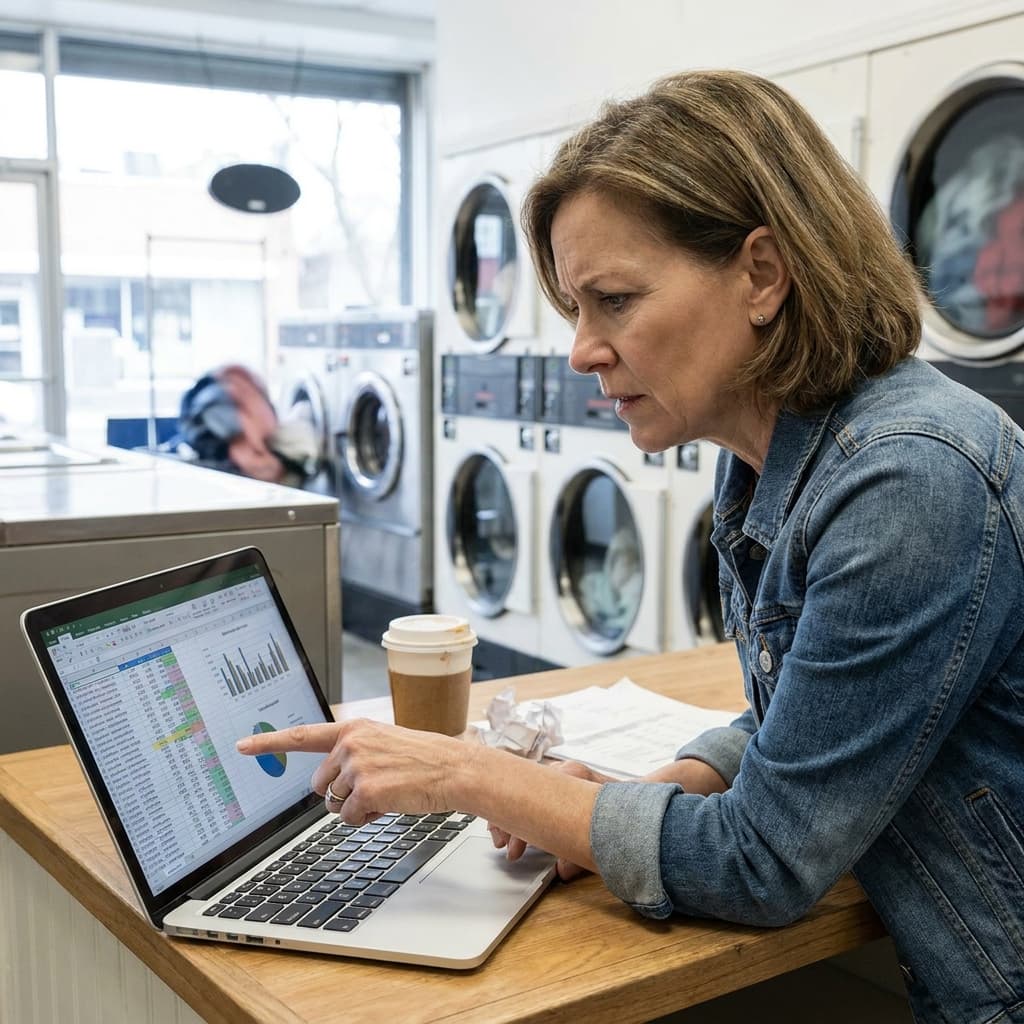
Consider two stores each collecting $200,000 a year. The first pays high rent and runs aging equipment, leaving a slim margin after rent, water, and repairs. The second pays moderate rent, runs efficient machines, and needs little labor, leaving a much healthier margin on the same top line. At a typical earnings multiple, the second store is worth substantially more despite identical revenue, because buyers pay for earnings, not collections. Modeling both in the cash flow calculator makes the difference obvious and keeps you from overpaying for a high-revenue, low-margin store.
How to improve your margin
The levers follow the drivers. Review pricing regularly so vend rates keep pace with utility and rent increases. Cut utility costs with efficient equipment, the same move that lowers the water bill. Staff efficiently, matching attended hours to demand. And add higher-margin services like wash-and-fold or vending thoughtfully, where the local market supports them. The specific tactics are covered in how to increase laundromat revenue. Because stores sell on a multiple of earnings, every durable improvement in the margin also raises what the business is worth when you sell, which connects directly to what a good cash flow multiple looks like. For broader small-business financial guidance, the SBA and the IRS are useful references.
A simple way to estimate the margin
You do not need a complex model to get a useful first read on a store's margin. Start with annual revenue, then subtract the big, knowable costs in order: rent, water and sewer, gas and electricity, payroll if the store is attended, and a reasonable allowance for supplies, repairs, and insurance. What remains is a rough operating profit, and dividing it by revenue gives you the margin. The exercise is valuable less for the exact number than for showing which costs dominate, because the line that takes the biggest bite is the one to scrutinize hardest. For most stores that line is rent or utilities, which is why those two get the most attention in any honest valuation.
Margins by store type
Margins differ by how a store operates. A lean, self-service, card or coin store with low rent and efficient machines can keep a healthy share of revenue because it spends little on labor. An attended store or one built around wash-and-fold and pickup and delivery usually shows a lower margin percentage, but it does so on higher revenue and with more ways to grow, so the absolute dollars can be larger. Neither model is automatically better; the right one depends on the location, the rent, and how much of your own time you intend to put in. Judge each store against its own type rather than against a single industry number.
Common margin mistakes
Three mistakes trip up buyers. The first is trusting a headline margin or a round-number average instead of building the store's own numbers from verified revenue and real costs. The second is forgetting to pay yourself: if you will work in the store, your time is a real cost, and a margin that looks fine only because the owner works unpaid is not as healthy as it appears. The third is ignoring deferred costs, such as aging machines that will need replacing soon, which do not show up in a single year's expenses but will hit your cash flow later. Avoiding these keeps your estimate honest, and an honest estimate is what protects you at the negotiating table.
Protect the margin over time
A margin is not set once; it erodes quietly if you let it. Costs rise every year, so vend prices and service rates have to be reviewed on a schedule rather than left untouched for a decade, which is the most common reason an aging store's margin slips. Keep simple monthly records of revenue and the major costs so you can see the margin moving before it becomes a problem, and treat any durable improvement, a lower utility bill, a price adjustment that sticks, an added service, as permanent value that also raises the store's eventual sale price. The owners who keep the healthiest margins are the ones who watch them.
Frequently asked questions
What profit margin does a laundromat have?
It varies widely with rent, utilities, staffing, and pricing. Work down to seller's discretionary earnings for the specific store rather than relying on an average.
What hurts laundromat margins most?
High rent relative to revenue and high utility costs from inefficient machines are usually the biggest drains, followed by payroll and pricing that has not kept up with costs.
Why is revenue not the same as profit?
A high-revenue store with expensive rent and old equipment can keep less than a smaller, efficient store. Always evaluate a laundromat on what it keeps, not what it collects.
How do I improve a laundromat's margin?
Review pricing regularly, cut utility costs with efficient equipment, staff efficiently, and add higher-margin services like wash-and-fold where the market supports them.
Do better margins raise the sale value?
Yes. Because stores sell on a multiple of earnings, every durable improvement in the margin also raises what the business is worth.