How to Run an Absentee Laundromat
SudsList Editorial · Jul 30, 2026
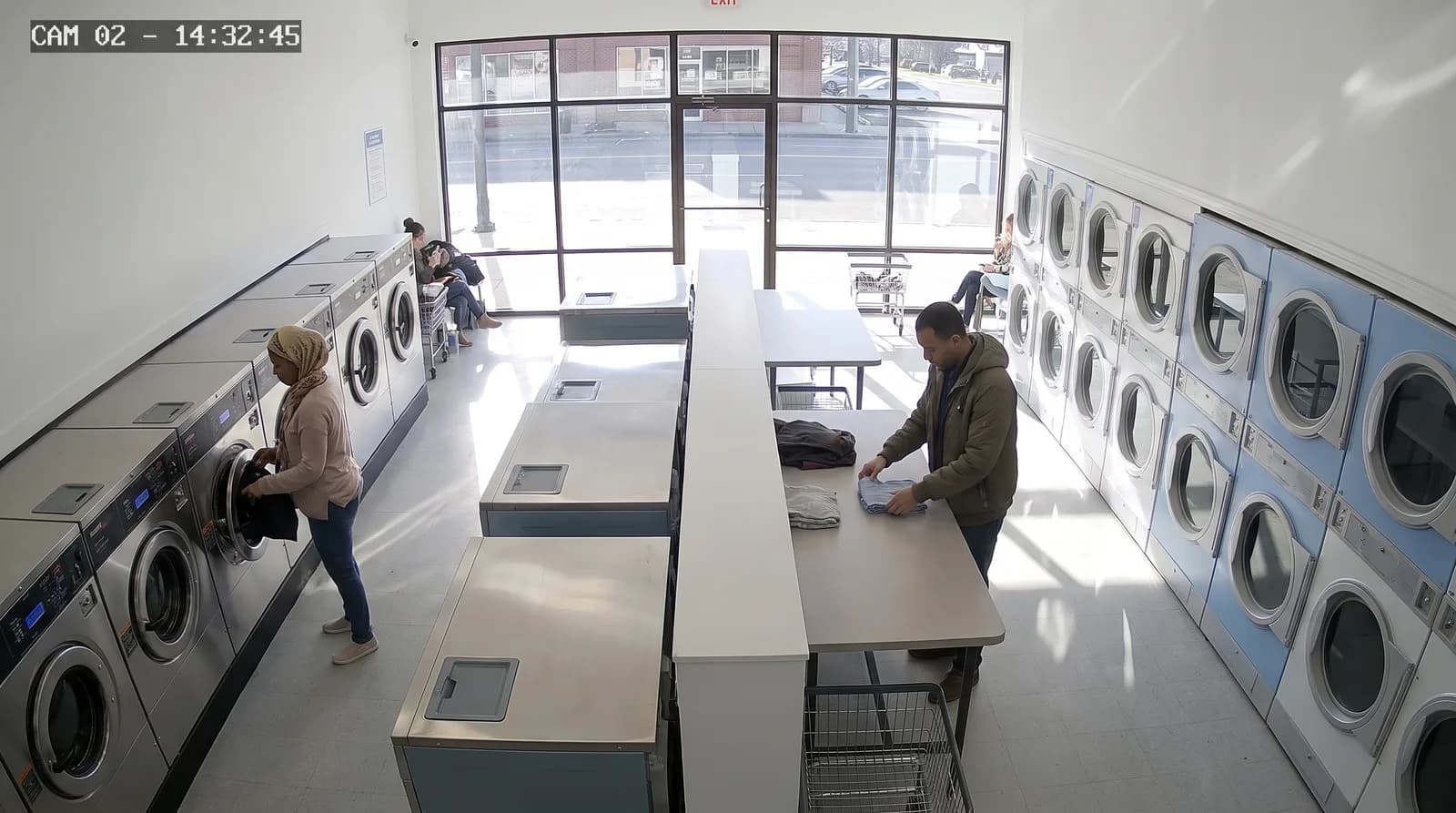
To run an absentee laundromat, you replace your daily presence with systems: remote monitoring for machines and cameras, tight cash-handling controls, a paid cleaning routine, an on-call repair plan, and written procedures anyone can follow. Absentee does not mean hands-off; it means the store runs on documented processes and a few trusted people instead of on you standing in it. The stores that manage this well are usually well-located, card or app enabled, and built around visibility, so you always know what is happening without being there.
Key takeaways
- Absentee operation replaces your presence with systems, not with neglect; the store still needs monitoring, cleaning, cash control, and repair coverage.
- Remote monitoring of machines, cameras, and revenue is the backbone, since you cannot manage what you cannot see.
- Cash is the biggest absentee risk, so card or app payments, dual control, and reconciliation to water usage matter most.
- A reliable cleaning contract and an on-call repair plan cover the two tasks that most often require someone on site.
- Written procedures turn your knowledge into something a cleaner, attendant, or repair tech can execute without you.
Contents
- Can a laundromat really run absentee?
- What does remote monitoring cover?
- How do you handle cash without being there?
- How do you keep an unattended store clean?
- How do you handle repairs remotely?
- What written procedures do you need?
- How do you secure an absentee store?
- Should an absentee store offer wash-and-fold?
- What are the hidden costs of going absentee?
- When is absentee the wrong model?

Can a laundromat really run absentee?
Yes, a self-service laundromat is one of the more absentee-friendly small businesses, because the machines do the work and customers serve themselves. The catch is that absentee means well-systematized, not unmanaged; a neglected store bleeds revenue quietly through broken machines, dirty floors, and cash leakage.
The stores that run absentee well share traits:
- A strong location with steady, self-sustaining foot traffic.
- Card or app payments that cut cash handling and enable remote data.
- Reliable, modern equipment that fails less often.
- Documented routines a few trusted people execute on a schedule.
Industry groups such as the Coin Laundry Association publish operating benchmarks and best practices that help you set standards for a store you are not standing in. For the fuller comparison of involvement levels, read absentee vs owner-operated laundromat. Absentee is a spectrum, and most owners land somewhere between fully hands-off and daily on site.
What does remote monitoring cover?
Remote monitoring lets you see machine status, revenue, and the store itself from your phone, which is the core of running absentee. You cannot manage a store you cannot see, so visibility replaces presence.
Good monitoring covers:
- Machine status, so you know which units are running, idle, or faulted.
- Revenue and turn data by machine, so you catch drops early.
- Live and recorded cameras, so you can check the store any time.
- Alerts for faults, water leaks, or doors left open.
This is where card and app systems earn their keep, since they stream data a coin-only store cannot. See remote monitoring for laundromats and coin vs card vs app payment systems for how the pieces connect. Check the store daily on your phone even when nothing is flagged.
How do you handle cash without being there?
Cash is the single hardest absentee problem, so the best answer is to reduce cash with card or app payments and control what remains with dual control and reconciliation. A coin store run absentee is where shrink hides, because no one is watching the collection.
Controls that work when you are not on site:
- Shift as much volume as possible to card or app, which leaves an audit trail.
- Use dual control for any coin pickup so no one collects alone.
- Reconcile coin and card revenue against water usage and turns every cycle.
- Keep a camera over every collection point and the change machine.
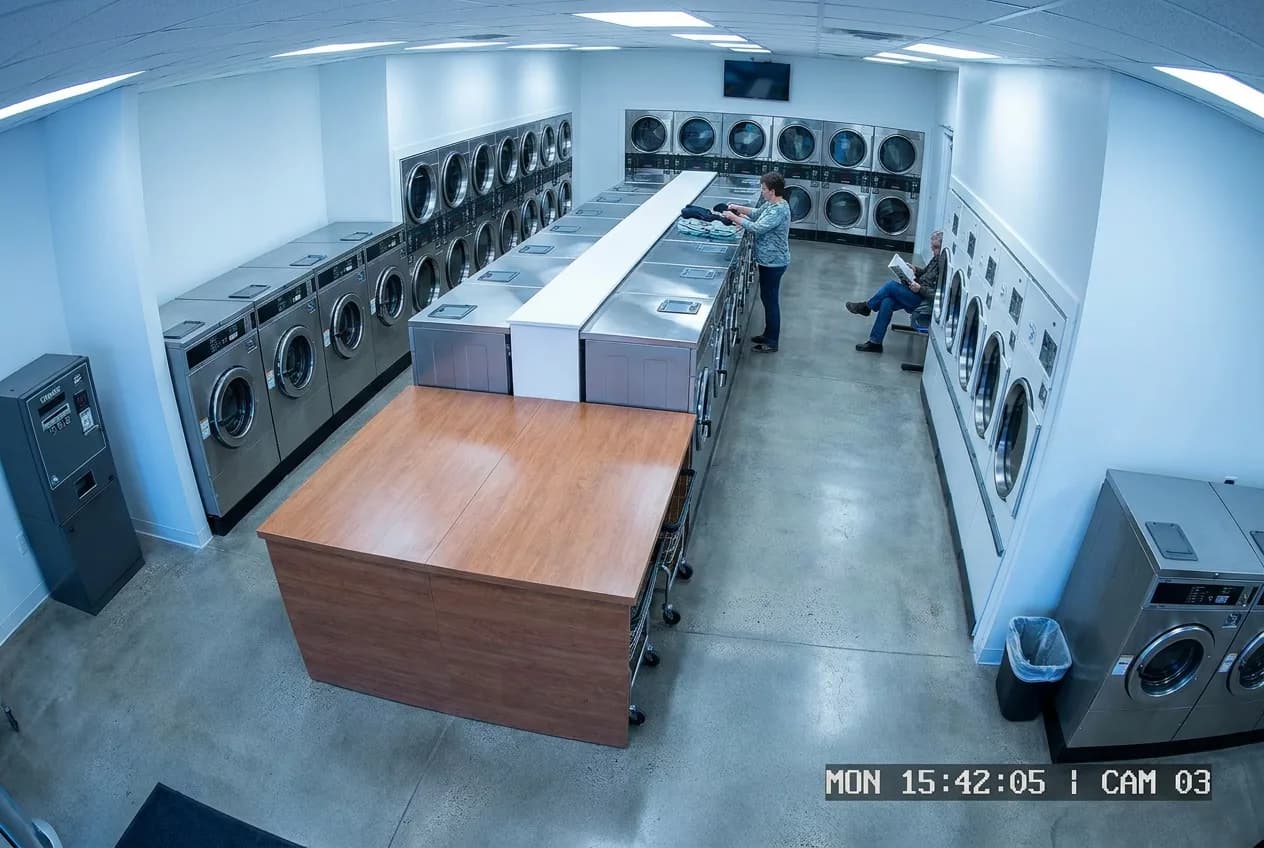
Reconciling revenue to water usage is the check that catches problems a camera misses, since water consumed is a rough proxy for cycles run. Build that habit before you step back. Pair it with the discipline in how to track laundromat cash and prevent skimming.
How do you keep an unattended store clean?
Keep an absentee store clean with a paid, scheduled cleaning routine and a checklist, because cleanliness is the first thing to slip when no owner is watching. A dirty store loses repeat customers faster than almost anything else, so this is a revenue task, not a chore.
Set it up with:
- A contracted cleaner or part-time attendant on a fixed schedule, classified correctly per the U.S. Department of Labor.
- A written cleaning checklist covering machines, folding tables, floors, and restrooms.
- Camera spot-checks to confirm the work is actually done.
- A restocking routine for soap, change, and restroom supplies.
Restrooms and lint buildup deserve special attention, since neglected restrooms drive complaints and lint is a fire risk. For the full routine, use the laundromat cleaning checklist. Verify with cameras rather than assuming the checklist was followed.
How do you handle repairs remotely?
Handle repairs absentee with an on-call relationship you set up before anything breaks: a trusted repair tech or distributor, a small stock of common parts, and clear rules for what gets tagged out of order. Downtime is lost revenue, so response time is the metric that matters.
A workable repair plan:
- A named repair tech or service contract with an agreed response window.
- A spare-parts kit for the failures that happen most, so quick fixes do not wait.
- Machine-fault alerts from your monitoring so you learn of breakdowns fast.
- A simple rule set for your cleaner or attendant on tagging units out of order.
| Repair approach | Best for | Trade-off |
|---|---|---|
| On-call independent tech | Most absentee single stores | Availability can vary |
| Distributor service plan | Newer equipment under coverage | Higher ongoing cost |
| In-house handy attendant | Owners with mechanical skill nearby | Limited to minor fixes |
For deciding between these, see how to handle laundromat repairs. Set the relationship up first, because sourcing a tech during a breakdown costs turns.
What written procedures do you need?
An absentee store needs written standard operating procedures so a cleaner, attendant, or tech can act correctly without calling you. Documentation is what turns your personal knowledge into a system that runs without you.
At minimum, document:
- Opening and closing steps if the store is not 24-hour.
- The cleaning checklist and its schedule.
- Cash pickup and reconciliation procedure with dual control.
- What to do when a machine faults, and who to call.
- How to handle common customer issues and refunds.
- Emergency steps: water shutoff, gas smell, and who to contact.
For the full framework, see laundromat standard operating procedures. Keep the documents where your people can reach them, and update them when a process changes.
How do you secure an absentee store?
Secure an absentee store with cameras, good lighting, controlled hours, and hardened cash points, since no owner is present to deter problems. Security is both loss prevention and a comfort factor that keeps customers coming.
Core measures:
- Full camera coverage with remote viewing and recording.
- Bright interior and exterior lighting, which deters trouble cheaply.
- Hardened coin boxes and change machines against tampering.
- Considered hours, since 24-hour access raises risk you must offset.
See laundromat security cameras and loss prevention and weigh access against risk in what hours should a laundromat be open. Lighting and cameras together do more for an unattended store than either alone.
Should an absentee store offer wash-and-fold?
Wash-and-fold is hard to run truly absentee, because it needs a person to sort, wash, fold, and ticket to a consistent standard. You can offer it, but only if you accept that it adds labor and supervision that pure self-service does not.
Weigh the trade-off honestly. Wash-and-fold is higher margin and can lift revenue, but it pulls the store toward attended operation and adds quality-control risk when you are not watching. Many absentee owners keep the store self-service only, or add a limited drop-off service with one trusted attendant. If you do add it, the wash and fold business guide covers pricing and workflow.
What are the hidden costs of going absentee?
Going absentee trades your time for recurring costs: cleaning contracts, monitoring subscriptions, repair coverage, and the higher card-processing fees that come with cashless convenience. These are real and ongoing, so absentee is not free, it is a different cost structure.
The costs that surprise owners:
- Monthly cleaning and restocking labor.
- Monitoring, camera, and payment-system subscription fees.
- Card and app transaction fees on shifted volume.
- Repair response premiums for fast service.
- Slightly higher shrink or downtime than an owner on site would allow.
Model these against the owner hours you save in the laundromat cash flow calculator. Absentee makes sense when the store's margin comfortably absorbs the added cost; on a thin store, going absentee can erase the profit.
When is absentee the wrong model?
Absentee is the wrong model for a weak store, because systems cannot manufacture demand that the location does not have. If foot traffic is thin or equipment is failing, stepping back only accelerates the decline. Fix the store first, then automate.
Absentee also fits poorly when:
- Margins are too thin to absorb cleaning, monitoring, and repair costs.
- The store depends on wash-and-fold that needs constant supervision.
- You have no reliable local people to clean and repair.
Be honest about readiness. A healthy, well-located, card-enabled store with reliable equipment is a strong absentee candidate; a struggling coin store in a soft location is not. Get it profitable and systematized first, and see how to run a laundromat for that groundwork.
Frequently asked questions
Can you run a laundromat completely hands-off?
Rarely fully hands-off, but many self-service stores run with only a few owner hours a week once systems are in place. You still check cameras and revenue daily, manage a cleaner and repair tech, and reconcile cash, just remotely. True neglect leads to broken machines, dirty floors, and cash leakage, so absentee means systematized, not unmanaged.
What is the biggest risk of an absentee laundromat?
Cash handling is the biggest risk, because no owner is present to watch the collection. Shifting volume to card or app payments, using dual control on any coin pickup, and reconciling revenue to water usage are the core defenses. Cameras over every collection point back those controls up.
Do I need card or app payments to run absentee?
You do not strictly need them, but they make absentee far easier by cutting cash and streaming machine and revenue data to your phone. A coin-only store can run absentee, though it demands tighter dual-control pickups and reconciliation to limit shrink. Most owners going absentee move at least partly to card or app for the visibility.
How often should I visit an absentee laundromat?
Even a well-systematized store benefits from an occasional in-person visit, often weekly or a few times a month, to spot what cameras miss and check equipment. Between visits you monitor cameras and revenue daily from your phone. The visit cadence depends on how reliable your cleaner, attendant, and repair coverage are.
Is wash-and-fold possible in an absentee store?
It is possible but hard, since wash-and-fold needs a person to sort, wash, fold, and ticket consistently. Offering it pulls the store toward attended operation and adds quality-control risk when you are away. Many absentee owners stay self-service only or add a limited drop-off service with one trusted attendant.
Does going absentee reduce a laundromat's profit?
It can, because you trade your time for recurring costs like cleaning, monitoring, repair coverage, and card fees. On a healthy store with comfortable margin, those costs are worth the freedom. On a thin store, they can erase the profit, so model the numbers before you step back.