How to Get Commercial Laundry Accounts
SudsList Editorial · Jul 26, 2026
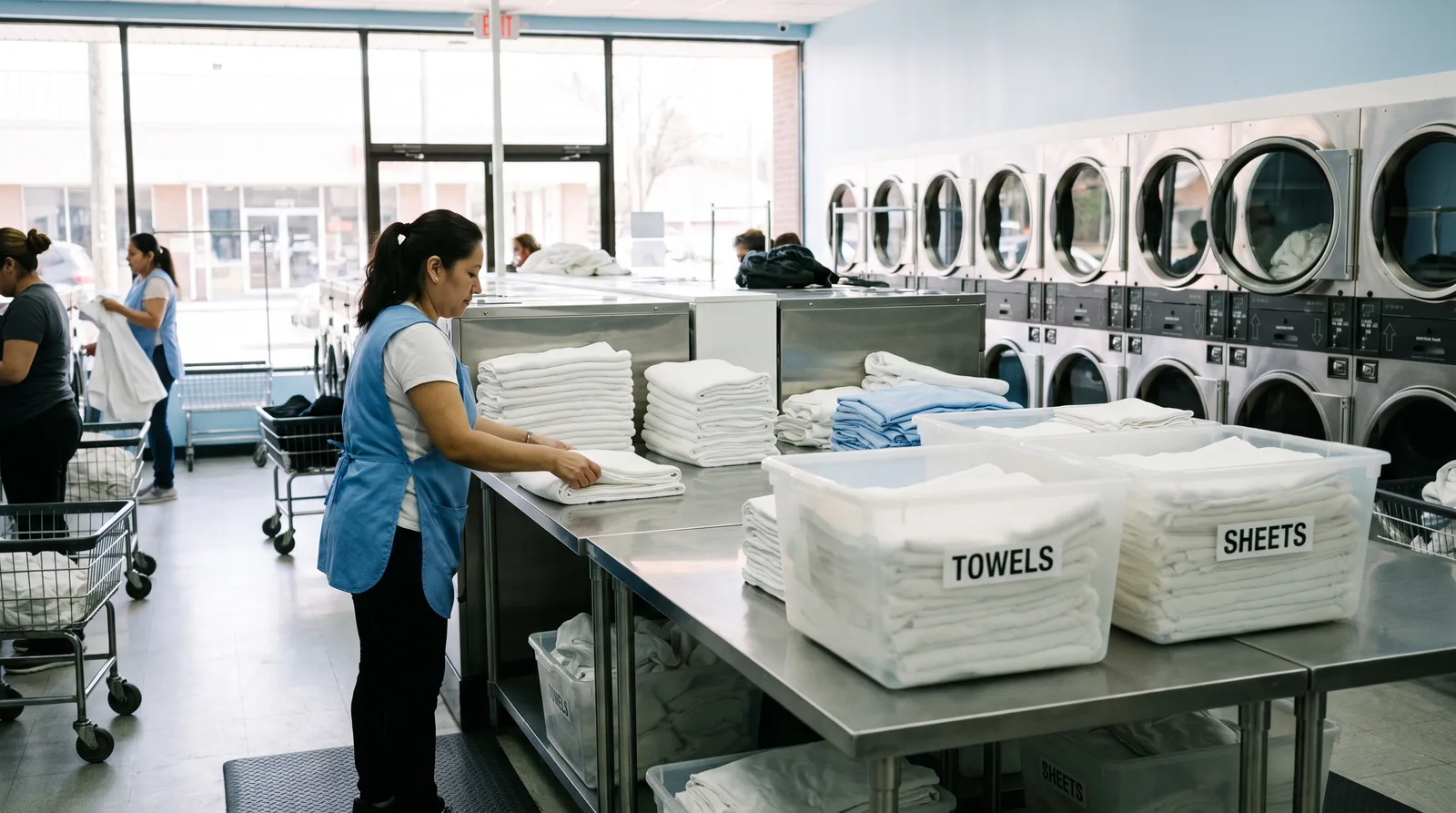
To get commercial laundry accounts, target local businesses with steady linen volume (short-term rentals, salons, gyms, restaurants, and clinics), pitch reliability and pickup, price by the pound or by contract to cover your costs, and lock in recurring pickup schedules. A commercial laundry account (a business that pays you to wash its linens on a recurring basis) fills your machines with predictable volume that a walk-in store cannot match. The trade-off is that businesses expect consistent quality, dependable turnaround, and clear pricing, so this is a service you sell on reliability, not on being cheapest. This guide covers who to target, how to prospect, how to price, how to service the account, and how to keep it profitable.
Key takeaways
- Commercial accounts fill machines with recurring, predictable volume, which stabilizes revenue beyond walk-in traffic.
- The best targets are nearby businesses with steady linen needs: short-term rentals, salons and spas, gyms, restaurants, and clinics.
- Sell reliability, turnaround, and pickup, not the lowest price, because businesses switch over missed deadlines, not pennies.
- Price by the pound or by contract with a minimum, and confirm whether the work adds sales tax or special handling.
- Protect the account with a clear agreement covering volume, turnaround, quality, and liability, then service it consistently.
Contents
- What is a commercial laundry account?
- Which businesses make the best accounts?
- Do you have the capacity to take one on?
- How do you find and prospect accounts?
- How do you pitch a commercial account?
- How should you price commercial laundry?
- What should the agreement cover?
- How do you service an account reliably?
- How do you keep accounts profitable?
- What are the risks and how do you manage them?
What is a commercial laundry account?
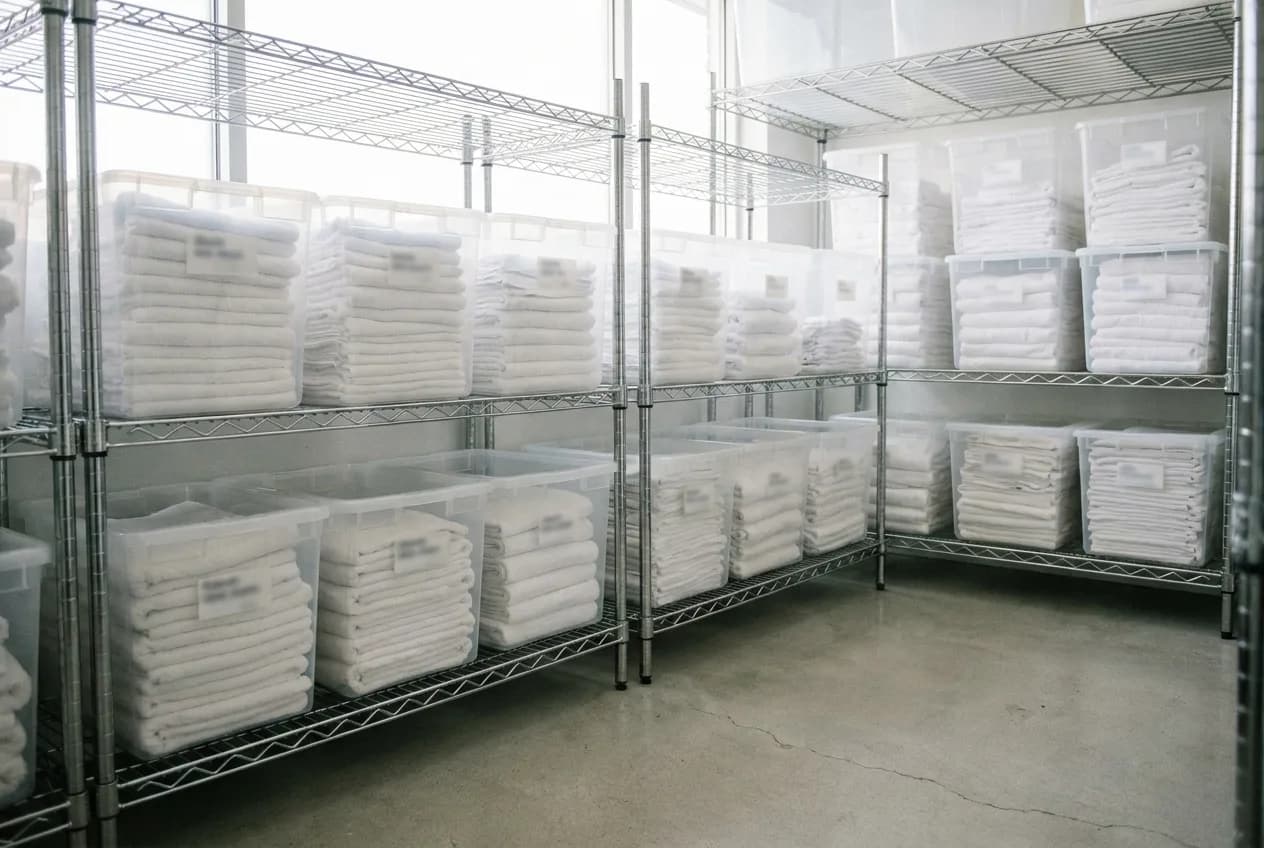
A commercial laundry account is a business that pays your store to wash, dry, and fold its linens on a recurring schedule, usually with pickup and delivery. It differs from retail wash-and-fold in volume and predictability: instead of one-off orders, you handle the same customer's linens week after week.
The appeal is steady, forecastable revenue that fills machine hours you can plan around. The obligation is that a business depends on you, so a missed turnaround can shut down their operation and cost you the account.
Commercial work is a natural extension of an existing wash-and-fold and delivery service, so build it on those foundations. If either is not running yet, start with how to add wash-and-fold to your laundromat and how to add pickup and delivery to a laundromat.
Which businesses make the best accounts?
The best accounts are nearby businesses with steady, ongoing linen volume that they would rather outsource than handle in-house. Proximity matters because pickup and delivery cost is part of your margin, so a dense cluster of local accounts beats one large account across town.
Strong candidate types:
- Short-term rentals and small hotels needing sheets and towels turned between guests.
- Salons, spas, and barbershops with daily towels and capes.
- Gyms and studios cycling through towels constantly.
- Restaurants needing napkins, aprons, and kitchen towels.
- Clinics, pet groomers, and small medical offices with routine linen needs.
Each has different volume, turnaround expectations, and handling needs, so match the account to your capacity. Short-term rentals in particular often cluster near one another, which can fill a delivery route efficiently.
Do you have the capacity to take one on?
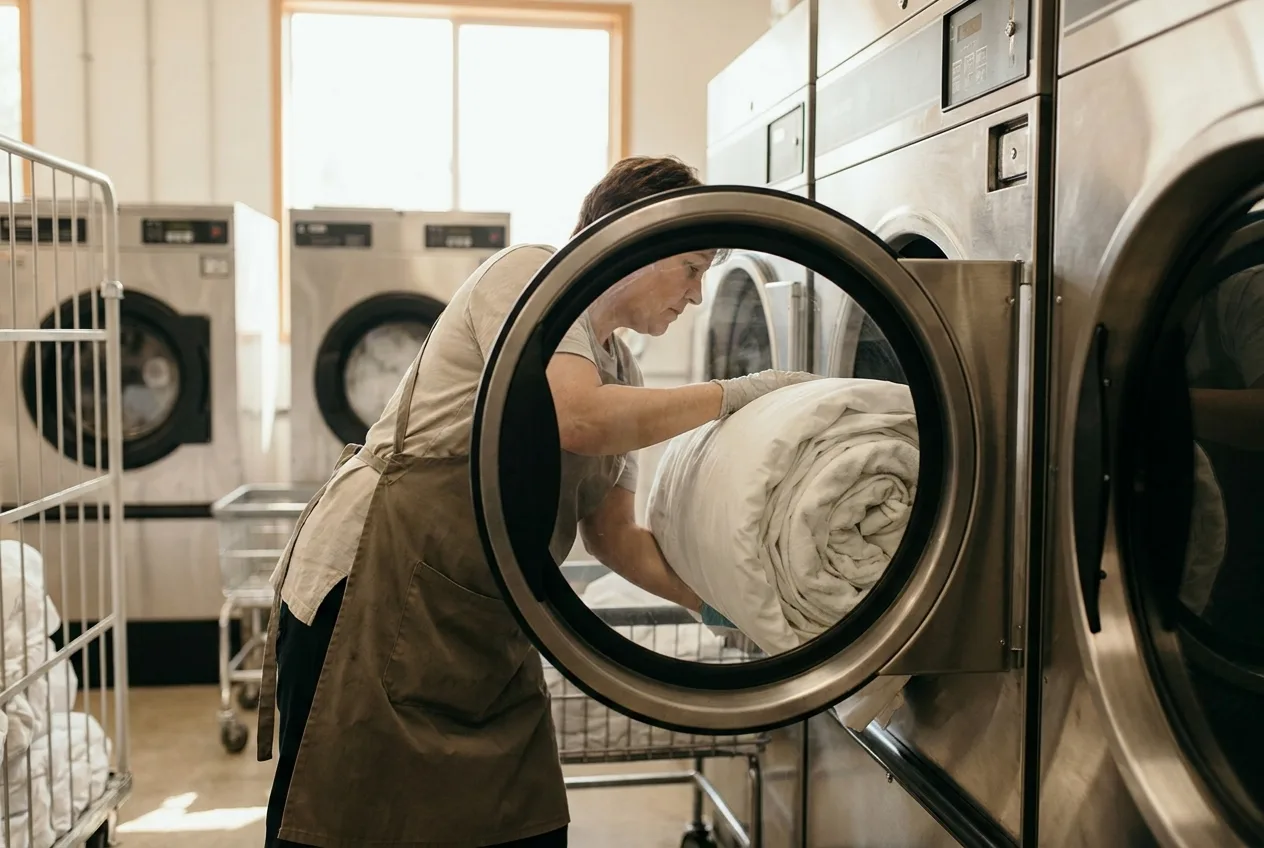
Before chasing accounts, confirm you have the off-peak machine hours, staff, and turnaround ability to serve a business without crowding your self-service customers. A commercial account that forces your walk-in traffic off the machines during peak hours can cost more than it earns.
Check your readiness:
- Do you have machine capacity during slower hours to process linen volume?
- Can your staff handle the extra folding and the account's quality standard?
- Can you meet the turnaround a business needs, every time, not just usually?
- Do larger machines let you process bulky linens efficiently?
Bulk linens reward large-capacity equipment, so if you plan to pursue commercial work seriously, factor that into any re-equipping decision using commercial washer sizes and capacity. Take on accounts only up to the volume you can reliably serve.
How do you find and prospect accounts?
Find accounts by prospecting local businesses directly, since commercial laundry is a relationship sale that rarely comes from advertising alone. The most effective outreach is in-person or direct contact with the person who handles linens, backed by a simple, credible offer.
Prospecting channels that work:
- Walk or drive your delivery zone and note businesses with obvious linen needs.
- Contact short-term rental hosts and property managers in your area directly.
- Ask existing wash-and-fold and delivery customers for business referrals.
- Network with local business groups and chambers where owners gather.
A clean, professional first impression matters, so a strong Google Business Profile and consistent service reputation support the pitch. Warm introductions from current customers convert far better than cold outreach, so ask for them.
How do you pitch a commercial account?
Pitch on reliability, consistent quality, and convenient pickup rather than price, because a business's real fear is a laundry partner who misses a deadline and disrupts their operation. Lead with how you remove a headache, and show you can be counted on.
A credible pitch covers:
- Guaranteed turnaround that fits their operating schedule.
- Consistent quality to their standard, including any special handling.
- Scheduled pickup and delivery so their staff never has to think about it.
- Clear, predictable pricing with no surprises.
- A short trial run so they can judge your service before committing.
Offering a trial period lowers the risk for a business that is nervous about switching. Once you prove reliability, price becomes secondary, which is exactly where you want the conversation.
How should you price commercial laundry?
Price commercial laundry by the pound or by a contracted rate with a minimum, built up from your cost per pound plus pickup, delivery, and any special handling. Volume can justify a lower per-pound rate than retail wash-and-fold, but never below your cost floor, since a big unprofitable account just loses money in bulk.
Common structures:
| Pricing model | Best for | Watch-outs |
|---|---|---|
| Per-pound with minimum | Variable-volume accounts | Set a minimum that covers each pickup |
| Flat weekly or monthly contract | Steady, predictable volume | Cap the pounds the flat rate covers |
| Per-item (linens, mats) | Uniform items like aprons or mats | Price each item to its handling cost |
| Tiered volume pricing | Growing accounts | Keep every tier above your cost floor |
Build any of these from the same foundation as how to price wash-and-fold laundry, then add the route cost of serving the account. Also confirm whether commercial laundry services are taxable in your state, since rules vary, and check the IRS and your state tax authority rather than assuming.
What should the agreement cover?
A commercial agreement should spell out volume, pricing, turnaround, quality standards, and liability so both sides know what is promised. Even a simple written agreement prevents the disputes that end otherwise-good accounts, and it protects you if linens are lost or damaged.
Cover at minimum:
- Expected volume and pickup and delivery schedule.
- Pricing, minimums, and how overages are handled.
- Turnaround commitment and what happens if it is missed.
- Quality and handling standards for the linens.
- Liability limits for lost or damaged items, and how claims are handled.
Keep it clear and fair rather than one-sided, since the goal is a lasting relationship. The detail of what belongs in these agreements is covered in commercial laundry contracts for laundromats. Because contracts carry legal weight, have a professional review your template before you sign accounts.
How do you service an account reliably?
Service an account with the same ticketing, labeling, and quality discipline as retail wash-and-fold, scaled up and tied to a fixed schedule the business can rely on. Reliability is the entire value you sell, so the operational systems have to be tight.
Keep service dependable by:
- Assigning labeled bins or bags so each account's linens stay separate.
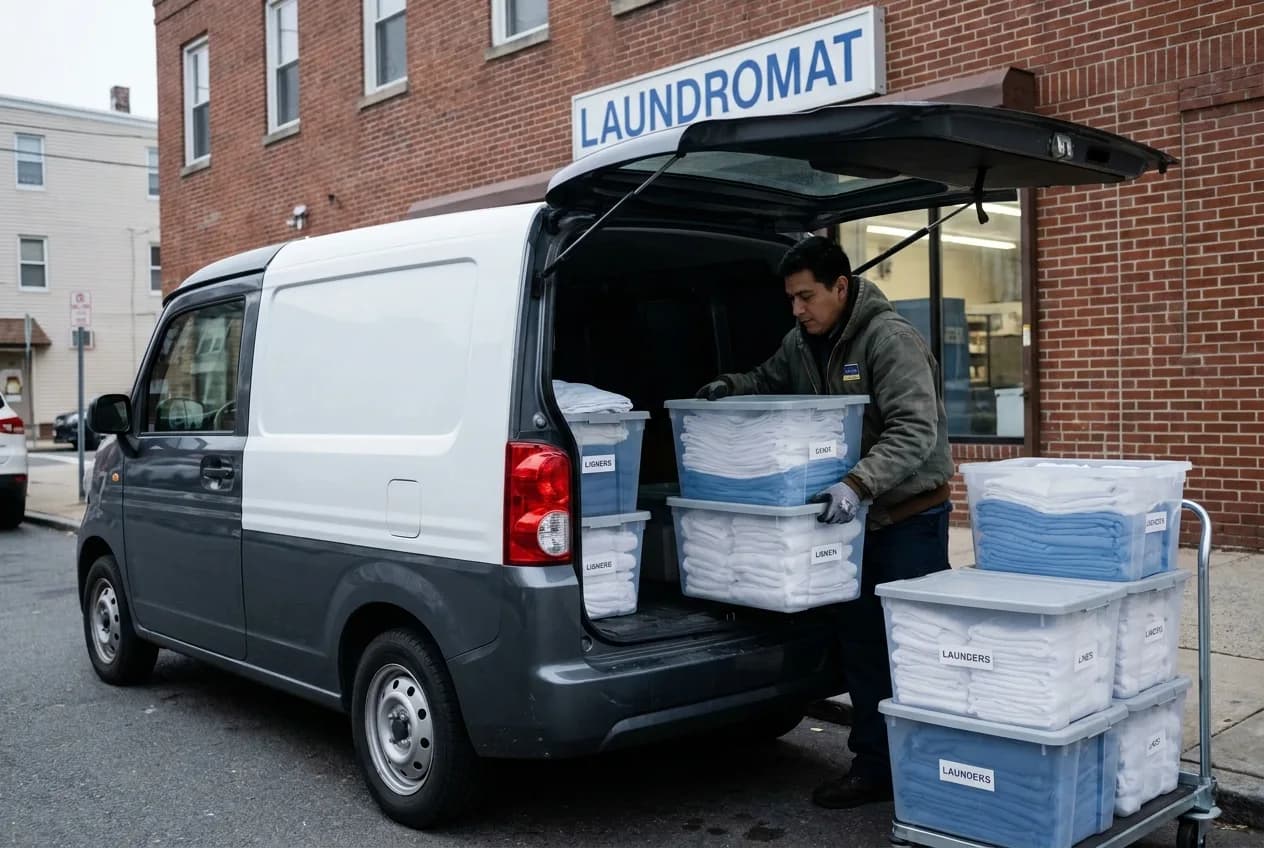
- Scheduling pickups and deliveries at consistent times the business plans around.
- Holding a documented quality standard for each account's items.
- Tracking volume and turnaround so you catch problems before the client does.
- Keeping a backup plan for equipment failure so a breakdown never means a missed delivery.
A single equipment failure can jeopardize an account, so preventive maintenance and a repair plan are part of serving commercial customers. Consistency over months is what turns an account into a long-term revenue base.
How do you keep accounts profitable?
Keep accounts profitable by reviewing volume and pricing regularly, since costs rise and an account priced two years ago may now sit below your floor. The convenience of recurring revenue can hide slow margin erosion if you never recheck the numbers.
Protect margin by:
- Recalculating cost per pound with current wages and utility rates at least yearly.
- Comparing each account's revenue against the labor, machine, and route cost to serve it.
- Adjusting pricing at renewal, with notice, rather than absorbing rising costs.
- Dropping or repricing accounts that consistently lose money.
Track each account like its own small business, because a busy but unprofitable account is worse than an empty machine. Model the effect on your store with the laundromat cash flow calculator and watch how commercial volume shifts your laundromat profit margins.
What are the risks and how do you manage them?
The main risks are concentration (leaning on one large account), liability for damaged linens, and turnaround failures from equipment breakdowns. Each can be managed, but ignoring them is how a promising commercial line becomes a liability.
Manage the risks by:
- Spreading revenue across several accounts so losing one is survivable.
- Setting clear liability limits in writing and confirming your business insurance covers commercial linens.
- Keeping equipment on a preventive-maintenance schedule and a repair plan ready.
- Confirming labor and tax obligations with the U.S. Department of Labor, since added volume may mean added staff.
Commercial accounts are among the most stable revenue a laundromat can build, but only when you serve them reliably and price them to protect margin. Grow them deliberately, on the back of a proven wash-and-fold and delivery operation.
Frequently asked questions
What kinds of businesses make the best laundry accounts?
Nearby businesses with steady linen volume: short-term rentals and small hotels, salons and spas, gyms, restaurants, and clinics. Proximity matters because pickup and delivery cost is part of your margin, so a cluster of local accounts beats one large account across town. Match each account's volume and turnaround needs to your capacity before committing.
How do I price a commercial laundry account?
Price by the pound or by a contracted rate with a minimum, built from your cost per pound plus pickup, delivery, and any special handling. Volume can justify a lower per-pound rate than retail wash-and-fold, but never below your cost floor. A large account priced below cost just loses money in bulk, so track each account's real margin.
Do I need a contract for commercial laundry?
Yes, even a simple written agreement. It should cover volume, pricing, turnaround, quality standards, and liability for lost or damaged linens. A clear agreement prevents the disputes that end otherwise-good accounts and protects you if something goes wrong. Because contracts carry legal weight, have a professional review your template before you sign accounts.
How do I find commercial laundry customers?
Prospect local businesses directly, since commercial laundry is a relationship sale that rarely comes from advertising alone. Walk your delivery zone, contact short-term rental hosts and property managers, ask existing customers for referrals, and network in local business groups. Warm introductions convert far better than cold outreach, so ask current customers for them.
Is commercial laundry service taxable?
It depends on your state, since rules on whether laundry services are taxable vary widely. Do not assume either way. Check your state tax authority and the IRS, and confirm with a qualified professional how to handle sales tax on commercial accounts before you set pricing. Getting this right up front avoids problems later.
What is the biggest risk with commercial accounts?
Over-reliance on one large account and turnaround failures from equipment breakdowns. If a single account is most of your commercial revenue, losing it hurts badly, so spread revenue across several. Keep equipment on a preventive-maintenance schedule with a repair plan, since a breakdown that causes a missed delivery can cost you the account and your reputation.