Commercial Washer Sizes and Capacity: What Each Machine Holds
SudsList Editorial · Jun 27, 2026
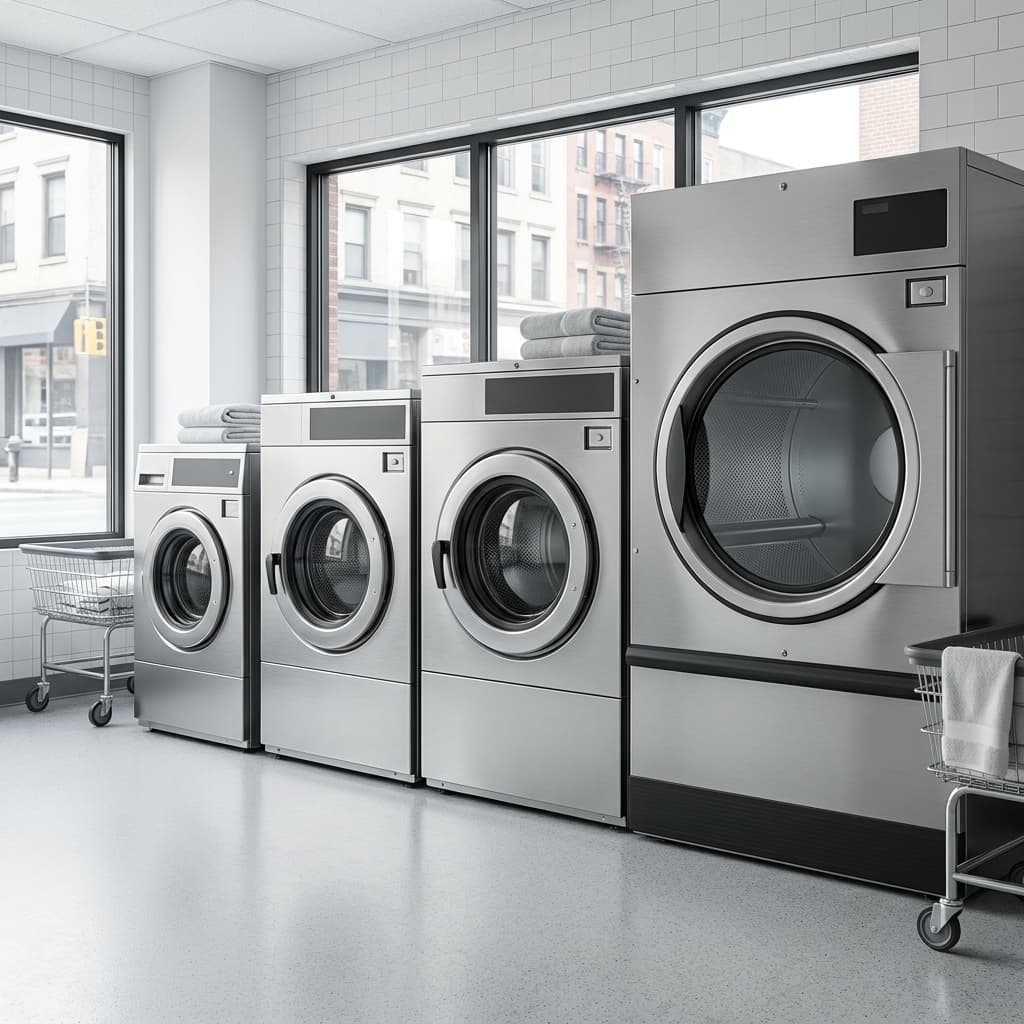
Commercial washers are sold by capacity, almost always measured in pounds of dry laundry, and the mix of sizes you run shapes your revenue, which customers you serve, and your utility costs. A store of all small machines misses bulky-item business; a store of all large machines wastes water on light loads. This guide explains how capacity is measured, what each common size realistically holds, and how to choose a mix.
Contents
- How washer capacity is measured
- Common commercial washer sizes
- What each size holds
- Choosing the right mix for your store
- How size affects pricing and revenue
How washer capacity is measured
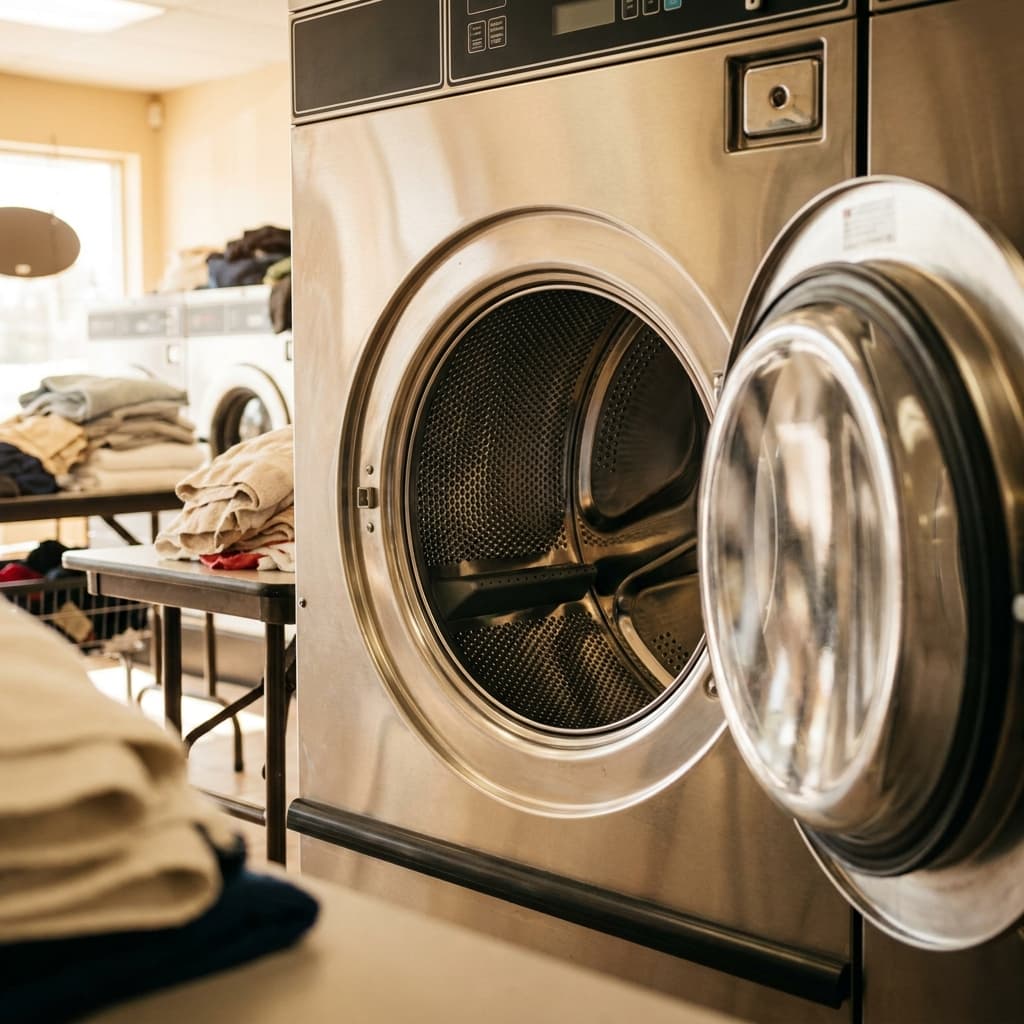
Capacity is the weight of dry laundry a machine is rated to wash, not the weight of the water it uses. A 40-pound washer is built to handle up to about forty pounds of dry clothes and linens. In practice, customers rarely weigh their laundry, so they judge size by how much fits, which means the visible drum size and the door opening matter as much as the rating. Ratings are a guide for you, the operator, to balance loads, pricing, and utility use, rather than a number most customers ever think about.
Common commercial washer sizes
Front-load commercial washers in US laundromats typically come in a range of sizes, often around:
- 20 pounds, the small everyday machine
- 30 pounds, a common mid-size workhorse
- 40 pounds, the popular family and bedding size
- 60 pounds, a large machine for bulky loads
- 80 pounds and up, the extra-large machines for the bulkiest items and light commercial work
Exact ratings vary by manufacturer, and some lines offer in-between sizes, but this range covers most stores.
What each size holds
| Size | Roughly holds | Typical customer |
|---|---|---|
| 20 lb | About two to three baskets, or a couple of normal loads | Singles, couples, top-up washes |
| 30 lb | A large family everyday wash | Families, regulars |
| 40 lb | A king comforter with sheets, or several loads at once | Families, bedding, time-savers |
| 60 lb | Multiple comforters or a week of family laundry | Large families, small commercial |
| 80 lb+ | Bulky bedding, sleeping bags, light commercial loads | Bulky items, wash-dry-fold, businesses |
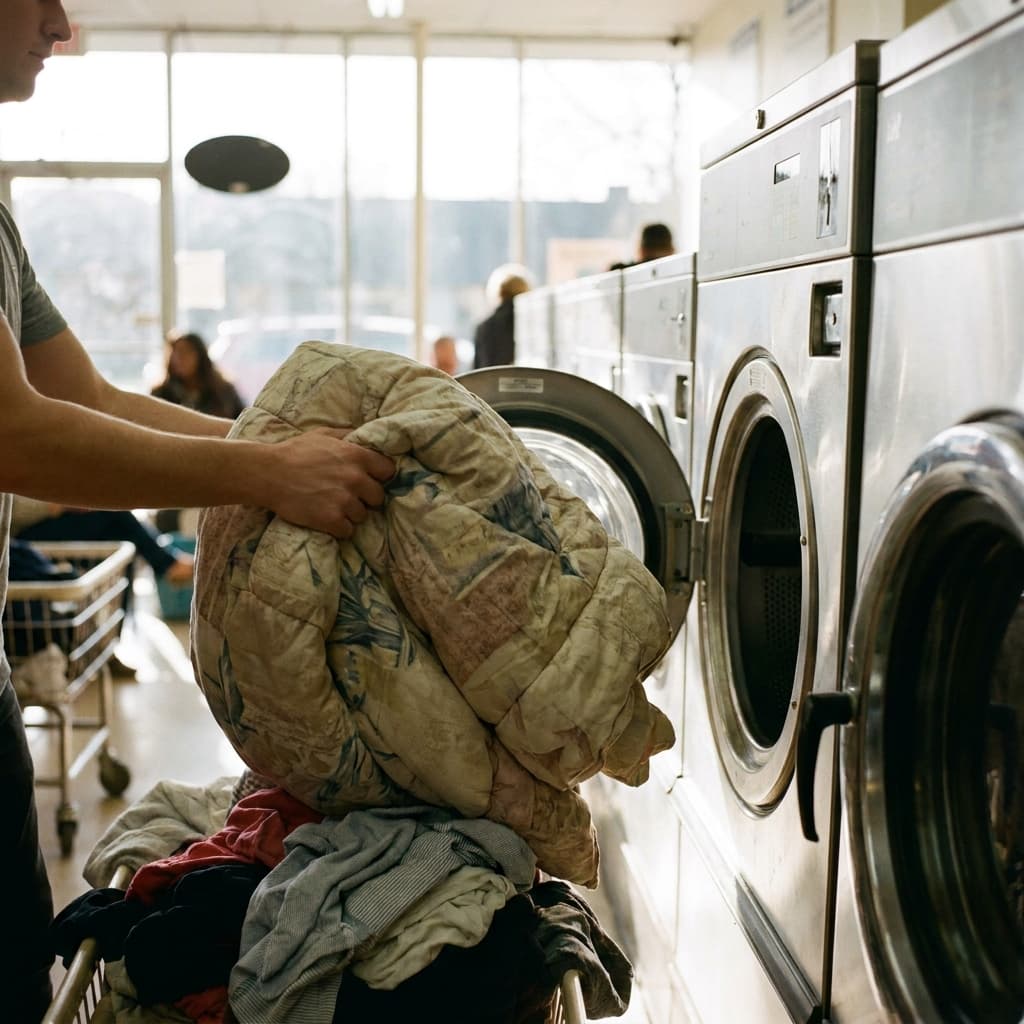
The everyday descriptions matter more than the numbers, because customers choose a machine by what they are carrying. The bulky-item customer with a comforter is exactly who the larger machines are meant to capture.
Choosing the right mix for your store
The goal is a spread that matches your customers. Most stores run a core of mid-size 30 and 40-pound machines, a bank of small 20-pound washers for quick single loads, and a few large 60 and 80-pound machines to capture the high-value bulky business that home machines cannot handle. Lean your mix toward your location: a store near apartments and students needs more small and mid-size machines, while one serving families or near businesses can support more large capacity. The local market, covered in what makes a great laundromat location, should drive the decision more than any rule of thumb.
How size affects pricing and revenue
Vend prices rise with capacity, and the larger machines usually earn the most per square foot of floor space because they command a premium and serve customers with few alternatives. They also cost more to buy and use more water and gas per cycle, so the higher price has to cover the higher running cost. When you plan or re-equip a store, model the revenue and expenses by machine size in the cash flow calculator, and budget a re-tool with the equipment replacement cost calculator. Because larger machines are more expensive to replace, the size mix also affects what an existing store is worth, which feeds into its valuation. A thoughtful size mix is one of the clearest levers you have on both revenue and customer satisfaction. For broader efficiency guidance, Energy Star is a useful reference.
Top-load, stacked, and special configurations
Beyond the standard front-load sizes, stores use a few other configurations. Top-load washers, smaller and cheaper, still appear in some stores for quick single loads, though most modern laundromats favor front-loaders for their efficiency and larger capacity. Stacked washer-dryer units and stacked dryers save floor space, letting you fit more drying capacity into a tight footprint. The right configuration is partly a question of space: a small store has to use its square footage carefully, balancing the floor area each machine size needs against the revenue it generates. Walk the floor plan with capacity in mind, not just machine count.
How size affects utilities and dry times
Larger washers do more work per cycle, but they also draw more water and, because there is more laundry to dry, more dryer gas afterward. The offset is extraction: a machine that spins faster leaves clothes drier and shortens the dryer cycle, which is why extraction speed matters as much as raw capacity when you estimate running costs. When you size a store, think in terms of cost per pound washed and dried, not just the vend price, because two machines of the same capacity can have very different utility footprints. This is also where machine age shows up, since older large machines can be especially thirsty, a theme covered in how long commercial washers and dryers last.
Sizing when you buy an existing store
When you take over a store, the size mix is already set, and evaluating it is part of diligence. Count the machines by capacity and ask whether the spread fits the neighborhood: a store full of small top-loaders in a family area may be leaving the bulky-item business on the table, while a store of all large machines in a student neighborhood may be oversized for its customers. A mismatched mix is not necessarily a dealbreaker, because it can be a value-add opportunity, but it should inform your price and your plan. Factor any re-equipping into the equipment replacement cost calculator and into your overall valuation of the store.
The bottom line on sizing
There is no universal perfect mix, only the mix that fits your customers and your space. Lead with mid-size machines, keep enough small ones for quick loads, and make sure you have the large capacity that captures comforters and bulky items competitors without big machines cannot serve. If you are still deciding between configurations, err toward flexibility: a balanced mix adapts to changing demand far better than a store committed entirely to one size, and it gives every customer who walks in a machine that fits what they carried through the door.
Frequently asked questions
How is commercial washer capacity measured?
By the weight of dry laundry the machine is rated to wash, in pounds, not the weight of the water. A 40-pound washer handles up to about forty pounds of dry clothes and linens.
What size washer do I need for a comforter?
A king comforter with sheets generally fits a 40-pound machine comfortably, and bulky or multiple comforters suit 60 or 80-pound machines.
What is the most common laundromat washer size?
Mid-size 30 and 40-pound machines are the everyday workhorses in most stores, supplemented by smaller 20-pound and larger 60 to 80-pound machines.
Do bigger washers make more money?
They usually earn the most per cycle and capture bulky-item customers, but they cost more to buy and use more water and gas, so the higher vend price has to cover the higher running cost.
How many of each size should a laundromat have?
It depends on your customers. A common approach is a core of mid-size machines, a bank of small ones for quick loads, and a few large machines for bulky business, weighted toward your location.