What Makes a Great Laundromat Location?
SudsList Editorial · Jun 26, 2026

The best laundromat location combines a dense base of renters, easy visibility and parking, and a lease that lets you keep the upside. Location is the single factor you cannot change after you buy, so it deserves more scrutiny than the equipment or the asking price. A great store in a weak location stays weak; a tired store in a strong location can be turned around. Everything below is about reading that location before you commit.
Key takeaways
- The strongest laundromat locations sit in dense, renter-heavy neighborhoods where households lack in-unit laundry.
- Visibility, easy parking, and being on the "going-home" side of traffic matter more than square footage.
- Count the competition within a short drive; an oversupplied area caps revenue no matter how nice your store is.
- A good location with a bad lease is not a good deal. Rent and remaining term decide whether the site is worth anything to you.
- You can improve equipment, hours, and services, but you cannot move the building, so weight location heaviest.

In this guide
- Why does location matter more than anything else?
- What demographics make a strong laundromat location?
- Strong vs weak location signals
- How much does visibility, parking, and access matter?
- How do you size up the competition?
- How does the lease affect a good location?
- How do you evaluate a location before you buy?
Why does location matter more than anything else?
Because it is the only variable you cannot change. You can replace machines, extend hours, add wash-dry-fold, repaint, and re-merchandise, but you cannot pick up the building and move it to a busier corner. A laundromat draws almost all of its customers from a small radius, typically a one-to-two-mile drive or a short walk, so the makeup of that radius sets a ceiling on revenue.
This is why an honest assessment of whether a laundromat is a good investment always starts with the site. A great location forgives a lot of operational mistakes. A poor one punishes even a well-run store.
What demographics make a strong laundromat location?
The strongest demographic is a high concentration of renters and apartment dwellers, because those households are the ones without their own washer and dryer. The customers you want are the ones who have no alternative to a laundromat.
Look for these signals in the immediate area:
- High renter percentage. Neighborhoods where most housing is rented, especially older apartments and multifamily buildings without in-unit hookups. The U.S. Census Bureau's American Community Survey publishes renter-occupancy and housing data by tract.
- Population density. More households within the draw radius means more potential turns per day.
- Moderate household incomes. Very affluent areas tend to have in-home laundry; working-class and mixed neighborhoods support self-service demand.
- Stable or growing population. A shrinking area shrinks your customer base year over year.
A store surrounded by single-family homes with their own laundry rooms faces a structural headwind no amount of marketing fixes.
Strong vs weak location signals
You can read a location quickly once you know what to look for. The table contrasts the signals of a strong laundromat location with the warning signs of a weak one.
| Signal | Strong location | Weak location |
|---|---|---|
| Housing mix | Many renters and apartments | Mostly owner-occupied single-family homes |
| Density | High household density | Sparse or thinning |
| In-unit laundry | Few households have it | Most have their own |
| Visibility and parking | On a busy road, easy to park | Hidden, hard to reach |
| Competition | Few or tired competitors | Several modern, busy stores |
| Population trend | Stable or growing | Shrinking |
Most real locations are a mix, so weigh the signals rather than tallying them. A site can overcome one weak column, dense renters can carry mediocre parking, but a location that is weak on housing mix and trend at once rarely turns into a strong store no matter how the rest looks.
How much does visibility, parking, and access matter?
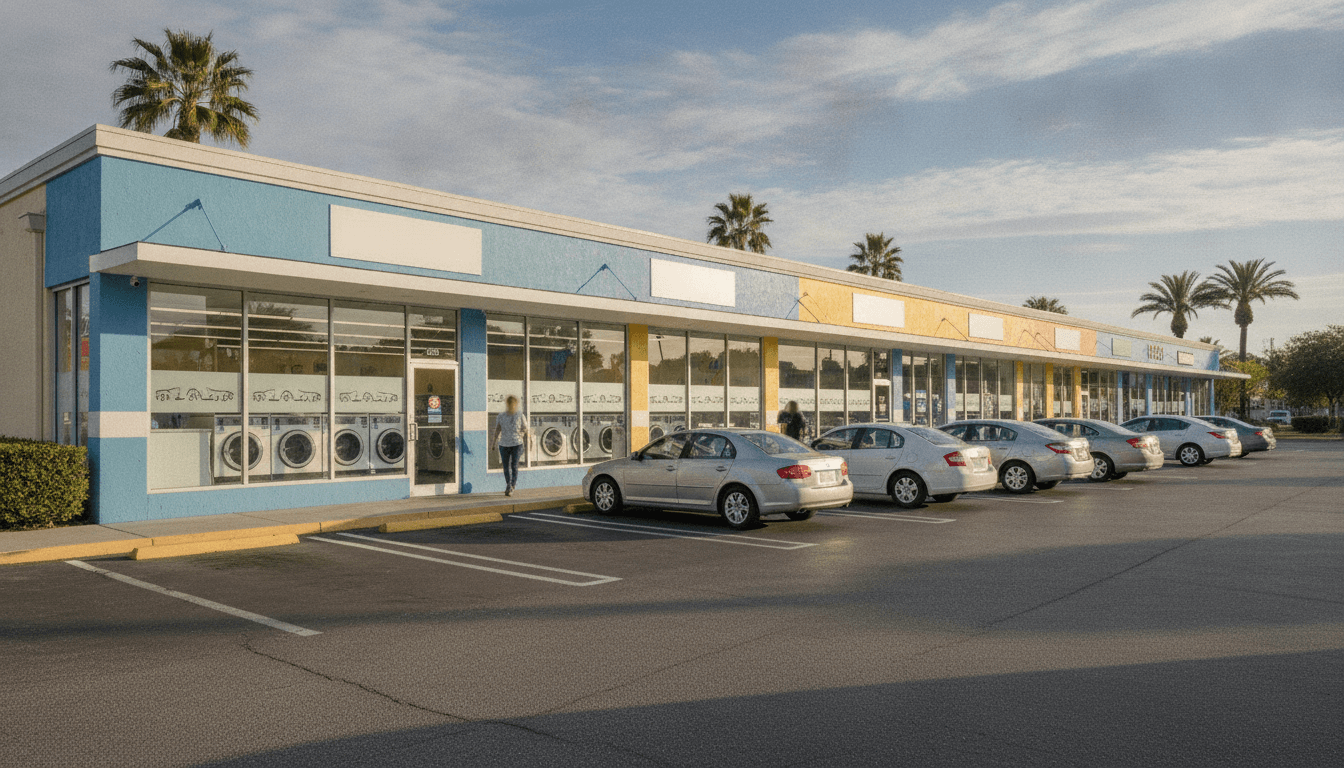
A lot. Customers carry heavy, awkward loads, so convenience is not a nicety, it is the product. The ideal site is easy to see from the road, easy to pull into, and easy to park near the door.
Favor locations that are visible from a busy street, anchored near a grocery store or other daily-errand traffic, on the side of the road people use heading home, and served by dedicated, well-lit parking. Corner spots and strip centers with a high-traffic anchor tenant tend to outperform tucked-away units. Foot-traffic neighborhoods change the math: in dense urban areas, walk-in customers can matter more than parking. Either way, if customers struggle to get in and out with a basket of laundry, they go elsewhere.
How do you size up the competition?
Count every competing store within the realistic draw radius and judge how saturated the area already is. A neighborhood can only support so many machines; past that point, adding another store just splits the same demand thinner.
Drive the area and map the competitors within roughly a one-to-two-mile radius. For each, note: how modern the equipment looks, hours, whether it offers wash-dry-fold or pickup and delivery, how busy the lot is at peak times, and overall condition. A market with several tired, poorly run stores can be an opportunity for a sharp operator. A market with one or two modern, well-run stores already serving the demand is much harder to enter. The Coin Laundry Association's industry resources are a useful reference for benchmarking store density and capacity. When you are scanning real stores, the listings and our local laundromats-for-sale pages let you see what is on the market in a given area.
How does the lease affect a good location?
A great location with a bad lease is not a great deal, because the lease controls how much of the upside you actually keep. Rent that is too high or a term that is too short can erase the value of an otherwise excellent site.
Two lease factors decide it. Rent as a share of revenue should generally stay in the 15% to 25% range; a prime corner with rent at 35% of revenue may be worse than a quieter site with affordable rent. Remaining term and options matter because a laundromat is a long-term, equipment-heavy business, and a lease with only a few years left and no renewal options puts your entire investment at the landlord's mercy. Read the rent escalations and renewal clauses closely before you fall in love with the corner. Our guide to reviewing a laundromat lease covers the specific clauses to check.
How do you evaluate a location before you buy?
Evaluate it the way a customer experiences it, then confirm with data. The goal is to know the ceiling on revenue before you negotiate price.
- Visit at different times. See the store and the surrounding traffic on a weekday morning, a weekday evening, and a weekend, when laundromats are busiest.
- Check the demographics. Pull renter percentage, density, and income for the surrounding tracts from public Census data.
- Map the competition. Drive the radius and rate each competing store.
- Walk the access. Park as a customer would, carry a basket from car to door, and judge the friction.
- Read the lease. Confirm rent as a percentage of revenue and the remaining term before anything else.
- Run the numbers. Use the calculators to test what the location's realistic revenue supports as a price, then cross-check against the red flags and a full due diligence checklist.
A location that holds up across all six checks is rare and worth paying for. One that fails the demographic or lease test is rarely worth fixing, no matter how cheap the equipment looks.
Frequently asked questions
What is the ideal demographic for a laundromat?
A dense neighborhood with a high percentage of renters and apartment dwellers who lack in-unit laundry, at moderate household incomes. These households rely on laundromats rather than owning a washer and dryer, which is what creates steady demand. Areas dominated by single-family homes with their own laundry rooms are much weaker.
How big is a laundromat's customer draw area?
Most customers come from a small radius, commonly a one-to-two-mile drive or a short walk in dense urban areas. Because the draw is local, the demographics and competition inside that radius set the ceiling on revenue, which is why you evaluate the immediate neighborhood rather than the broader city.
Does parking matter for a laundromat?
Yes, in most markets it matters a great deal because customers carry heavy loads and want to get in and out easily. Dedicated, well-lit parking near the door is a real advantage. The exception is dense, walkable urban neighborhoods, where foot traffic can matter more than parking.
Can a good operator overcome a bad location?
Only to a limited degree. You can improve equipment, hours, services, and cleanliness, but you cannot change the demographics, visibility, or competition of the site. A weak location caps revenue no matter how well the store is run, so location should carry the most weight in your decision.
How does the lease affect a laundromat location?
The lease decides how much of a good location's value you keep. Rent above roughly 25% of revenue squeezes cash flow, and a short remaining term with no renewal options puts your equipment-heavy investment at risk. A prime site with a punishing lease can be a worse deal than a modest site with affordable, long-term rent.