How to Attract Wash-and-Fold Customers
SudsList Editorial · Jul 26, 2026
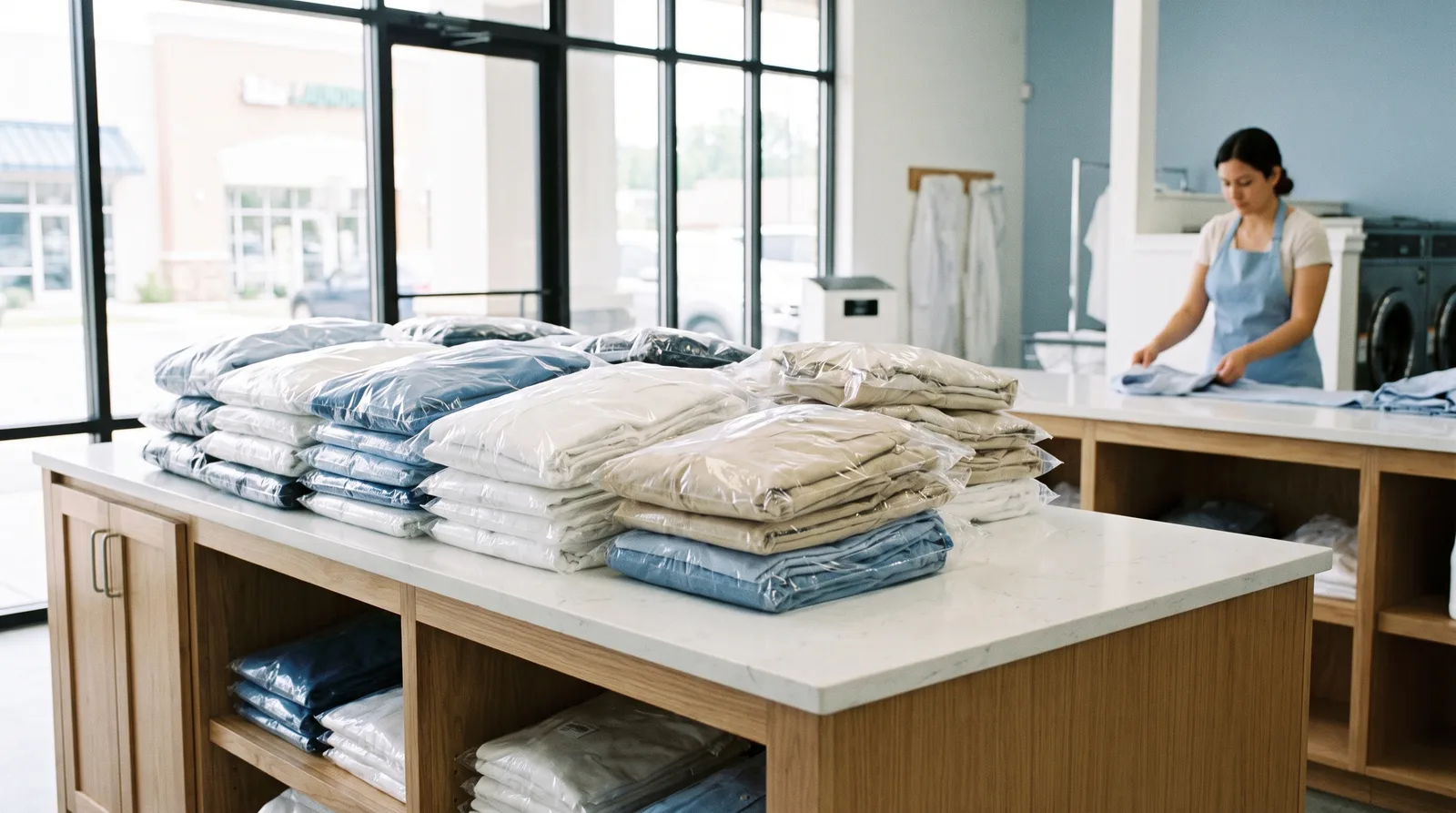
To attract wash-and-fold customers, make the service impossible to miss and easy to buy: clear in-store signage, plainly posted per-pound pricing, a simple drop-off and pickup process, plus local outreach to busy households and small businesses and a referral offer once you have happy customers. Most self-service laundromats already have wash-and-fold demand walking past the folding tables every day; the reason it stays small is usually that customers do not know it exists or cannot tell what it costs. Wash-and-fold carries far better margin than coin turns because you are selling labor and convenience, not just machine time, so growing it is one of the highest-return moves an operator can make. This guide covers the specific levers that turn that latent demand into paying orders.
Key takeaways
- Most laundromats have untapped wash-and-fold demand; the usual barrier is that customers do not know the service exists or what it costs.
- Clear signage and plainly posted per-pound pricing convert existing foot traffic into orders with almost no added cost.
- Wash-and-fold sells convenience to time-pressed people, so delivery and easy scheduling widen the customer base well beyond walk-ins.
- Local businesses (Airbnbs, salons, gyms, small clinics) are a steady, high-volume source of recurring orders.
- Referrals and reviews compound, because a neighbor's recommendation carries real weight for a trust-based service.
Contents
- Who is the wash-and-fold customer?
- How does signage and pricing display drive orders?
- Does delivery bring in more wash-and-fold customers?
- How do you win local business accounts?
- How do referrals and reviews grow wash-and-fold?
- What role does online visibility play?
- What mistakes keep wash-and-fold small?
Who is the wash-and-fold customer?
The wash-and-fold customer is someone who values time over the effort of doing laundry themselves, which spans busy families, working professionals, older customers, travelers, and small businesses. Understanding that you are selling convenience, not clean clothes, changes how you market it.
That framing points to where the demand sits:
- Time-pressed households already in your store doing self-service, who would happily hand it off.
- Professionals and renters nearby who lack a washer or the hours to use one.
- Local businesses that generate laundry as part of operations, from short-term rentals to salons.
The first group is the easiest win because they are literally in front of you. The others require a little outreach, but they include the highest-volume, most repeatable orders. For the underlying service model, see the wash-and-fold business guide, and if you are shopping for a store built around this service, browse wash, dry, and fold businesses for sale. Industry bodies such as the Coin Laundry Association also publish resources on building the wash-and-fold side.
| Customer type | What they want most | How to reach them |
|---|---|---|
| Busy professionals | Time saved and reliable turnaround | Pickup and delivery, online booking |
| Families | Fair per-pound pricing and careful folding | Volume value, loyalty punch cards |
| Renters without in-unit laundry | Convenience close to home | Local signage and a strong Google Business Profile |
| Small businesses (Airbnb hosts, salons) | Consistent scheduled service | Direct outreach and account pricing |
How does signage and pricing display drive orders?
Clear signage and plainly posted per-pound pricing are the single cheapest way to grow wash-and-fold, because they convert people already in your store who simply did not know the service existed or feared an unpredictable bill. Uncertainty about cost is the most common reason a curious customer walks away.
Make the offer obvious:
- Prominent signage at the entrance and above the folding or drop-off counter, not a small notice by the register.
- Per-pound price, any minimum, and typical turnaround stated plainly so there are no surprises.
- A simple explanation of how it works: drop off, weighed and priced per pound, ready by a set time.
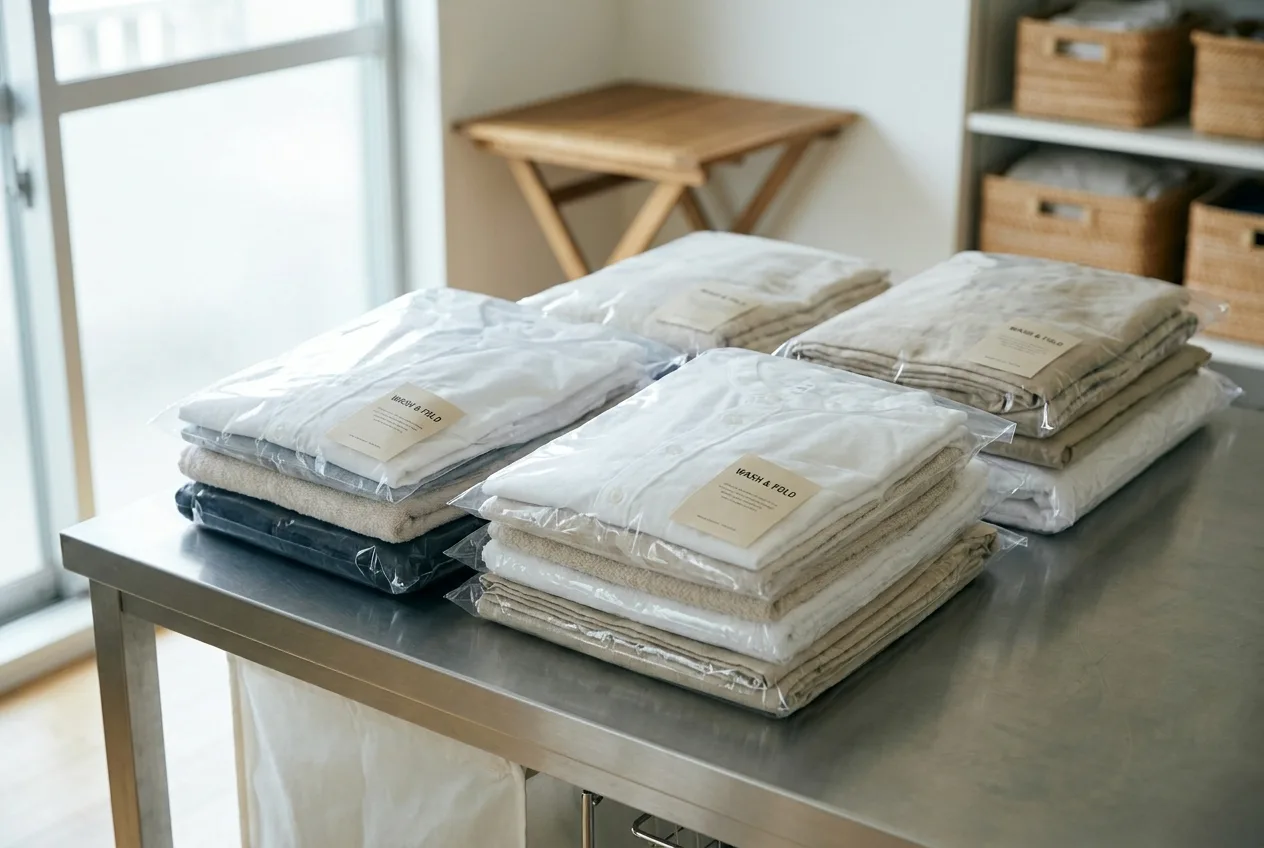
- A visible example of finished, folded, packaged laundry, since the result sells the service.
People buy what they can price. A customer folding their own laundry who can see the per-pound rate and a next-day pickup time is a short step from handing you the basket. For getting the price itself right, see how to price wash-and-fold laundry.
Does delivery bring in more wash-and-fold customers?
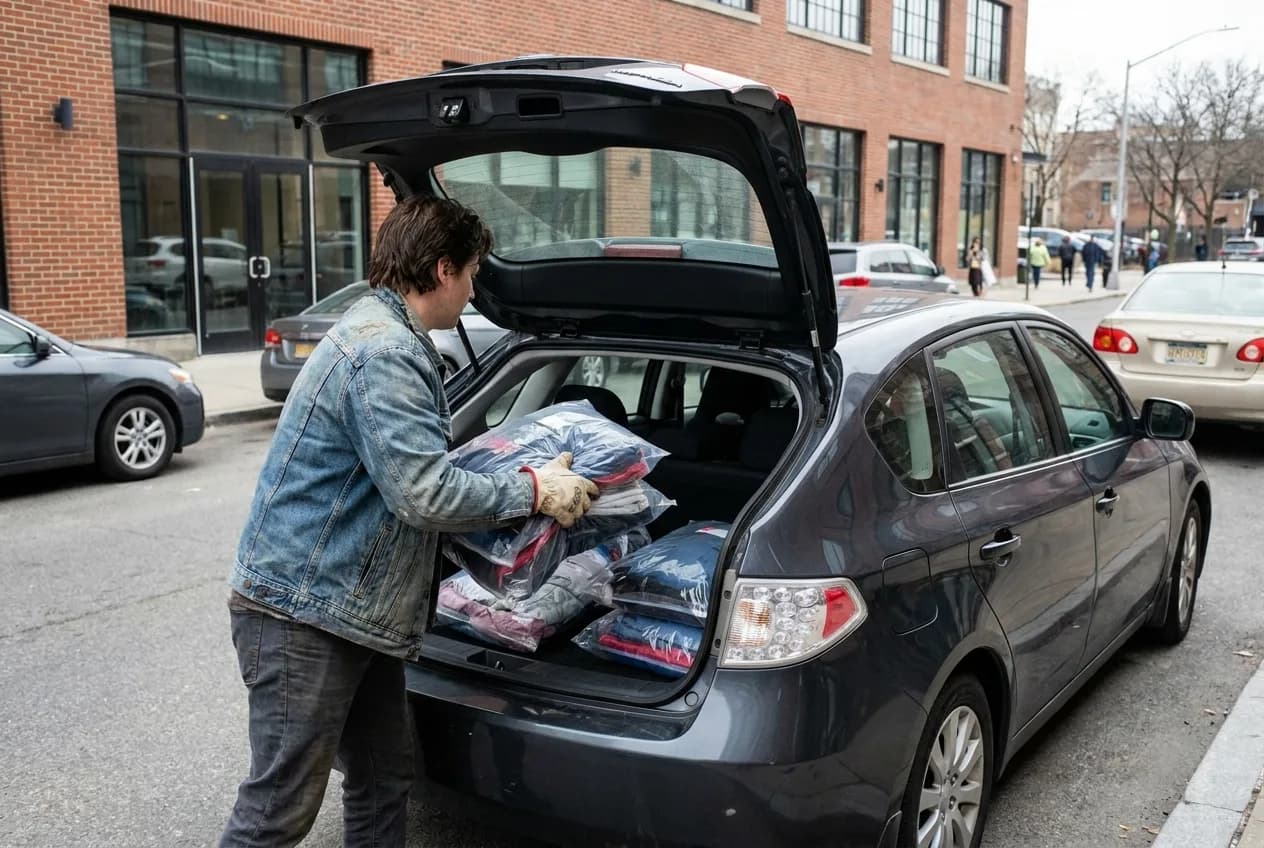
Yes, adding pickup and delivery meaningfully widens the wash-and-fold customer base, because it reaches convenience-driven people who would never carry a basket to your store. Delivery turns a local service into one anyone in your radius can use from their phone.
Delivery attracts customers walk-in signage never will:
- Professionals and parents with no time to visit, who will pay a premium for pickup.
- Renters and apartment dwellers without in-unit laundry.
- Recurring weekly customers, which smooths revenue and builds route density.
It does add cost and logistics, so price it to cover driver time and start with a tight local radius. Weigh the model in how to add pickup and delivery to a laundromat before committing. Even without your own drivers, offering scheduled pickup on set days can capture much of the demand.
How do you win local business accounts?
You win local business accounts by prospecting nearby operations that generate steady laundry, showing up in person, and offering reliable turnaround at a volume price. B2B accounts are the most valuable wash-and-fold customers because they order repeatedly and predictably, which fills capacity and stabilizes revenue.
Strong prospects near most laundromats include short-term rental hosts, salons and barbershops, gyms and studios, pet groomers, small clinics, and restaurants with linens. To land them:
- Visit in person with a simple offer: pricing, turnaround, and pickup schedule.
- Emphasize reliability, since a missed turnaround hurts their business, not just yours.
- Price by volume and set clear terms so both sides know the commitment.
Start with one or two accounts to prove you can hit turnaround before scaling. For prospecting and pricing recurring accounts in depth, see how to get commercial laundry accounts and structure the terms with commercial laundry contracts for laundromats.
How do referrals and reviews grow wash-and-fold?
Referrals and reviews grow wash-and-fold faster than paid ads because it is a trust-based service, and people are far more comfortable handing over their clothes on a neighbor's recommendation. Once you have satisfied customers, their word does the marketing.
Put that trust to work:
- Ask happy customers for a review at pickup, when satisfaction is highest.
- Offer a modest, capped referral credit that pays only on a new customer's first completed order.
- Respond to every review, positive or negative, since prospects read how you handle problems.
Keep review requests honest and within the rules; the FTC publishes guidance on genuine reviews and endorsements that is worth following. Design the referral offer so it targets new customers rather than discounting regulars; see the incremental approach in laundromat promotions that protect your margin. Consistent quality is the real engine here, because referrals only compound if the folded orders are reliably good.
What role does online visibility play?
Online visibility, especially a well-maintained Google Business Profile, drives wash-and-fold discovery because time-pressed customers search for the service nearby before they ever walk in. Being the store that clearly offers wash-and-fold, with photos and hours, wins that search.
The basics that matter:
- A claimed, complete Google Business Profile listing wash-and-fold as a service, with real photos and current hours.
- A simple way to ask a question or book, and quick replies to messages.
- A light social presence showing finished orders and pricing cues to build local trust.
You do not need a big marketing budget, just to be findable and clearly open for the service. Tie this into your broader plan in how to market a laundromat.
What mistakes keep wash-and-fold small?
The mistakes that keep wash-and-fold small are hiding the service, unclear pricing, inconsistent turnaround, and treating it as a side task rather than a real product. Each one either prevents orders or loses the customers you win.
Avoid these:
- Burying the offer behind a small sign, so foot traffic never knows it exists.
- Vague or unpredictable pricing, which makes cautious customers walk away.
- Missing promised turnaround, which kills repeat orders and B2B accounts fastest.
- Underpricing to compete, which floods you with low-margin work you cannot staff.
Wash-and-fold rewards consistency more than cleverness. Make it visible, price it clearly, deliver on time, and the higher-margin side of the store grows on its own.
Frequently asked questions
Why is wash-and-fold worth growing over self-service?
Wash-and-fold carries far better margin than coin turns because you are selling labor and convenience, not just machine time. Most laundromats also have untapped demand walking past the folding tables already, so the growth cost is low. It tends to bring more predictable, repeat revenue, especially once you add delivery and business accounts.
What is the cheapest way to get more wash-and-fold orders?
Clear signage and plainly posted per-pound pricing, because they convert people already in your store who did not know the service existed or feared an unpredictable bill. Show a visible example of finished, folded laundry and state the turnaround. This costs almost nothing and works on your existing foot traffic.
Do I need delivery to grow wash-and-fold?
No, but it meaningfully widens the customer base by reaching convenience-driven people who would never carry a basket to your store. If you are not ready for full delivery, offering scheduled pickup on set days captures much of the same demand. Price any delivery to cover driver time and start with a tight local radius.
How do I get business accounts for wash-and-fold?
Prospect nearby operations that generate steady laundry, such as short-term rentals, salons, gyms, and small clinics, and visit in person with clear pricing, turnaround, and a pickup schedule. Emphasize reliability, since a missed turnaround hurts their business. Start with one or two accounts to prove you can hit turnaround before scaling.
How important are reviews for wash-and-fold?
Very, because wash-and-fold is a trust-based service and people are far more comfortable handing over their clothes on a recommendation. Ask happy customers for a review at pickup, respond to every review, and pair it with a modest referral credit that pays on a new customer's first order. Consistent quality is what makes referrals compound.