How to Build a Laundry Delivery Route
SudsList Editorial · Jul 26, 2026
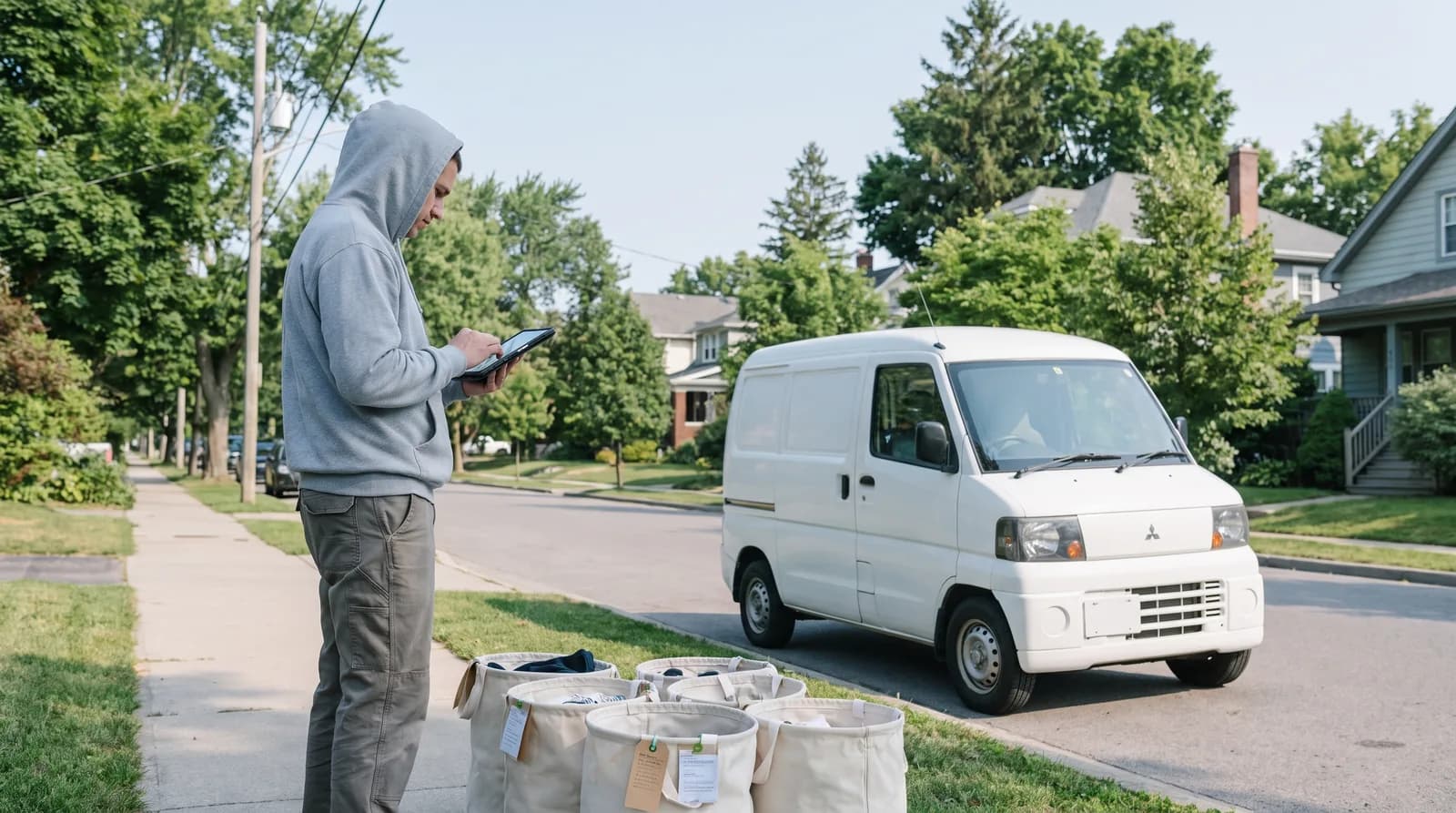
To build a profitable laundry delivery route, concentrate stops in a small zone, batch them into fixed scheduling windows, and track revenue and cost per stop so density stays high as you grow. A laundry delivery route (a repeating set of pickups and drop-offs a driver runs on set days) makes money on density, not distance, so the whole job is packing paying stops close together. The most common failure is scattering a driver across a wide area for a few orders, which turns unpaid drive time into your largest cost. This guide covers density, windows, sequencing, per-stop math, and scaling from one route to several.
Key takeaways
- Route density (stops close together) is the main driver of profit, so a small full zone beats a wide empty one.
- Fixed scheduling windows by neighborhood keep stops clustered and turnaround predictable.
- Track revenue and cost per stop, since that ratio, not total revenue, tells you whether a route works.
- Set a delivery minimum so every stop is worth the drive, and reduce no-shows with confirmations.
- Fill one route before adding a second, then expand into adjacent zones that share store capacity.
Contents
- What makes a laundry route profitable?
- How do you build route density?
- How should you set scheduling windows?
- How do you sequence stops efficiently?
- How do the per-stop economics work?
- How do you reduce no-shows and failed stops?
- How do you scale from one route to several?
What makes a laundry route profitable?
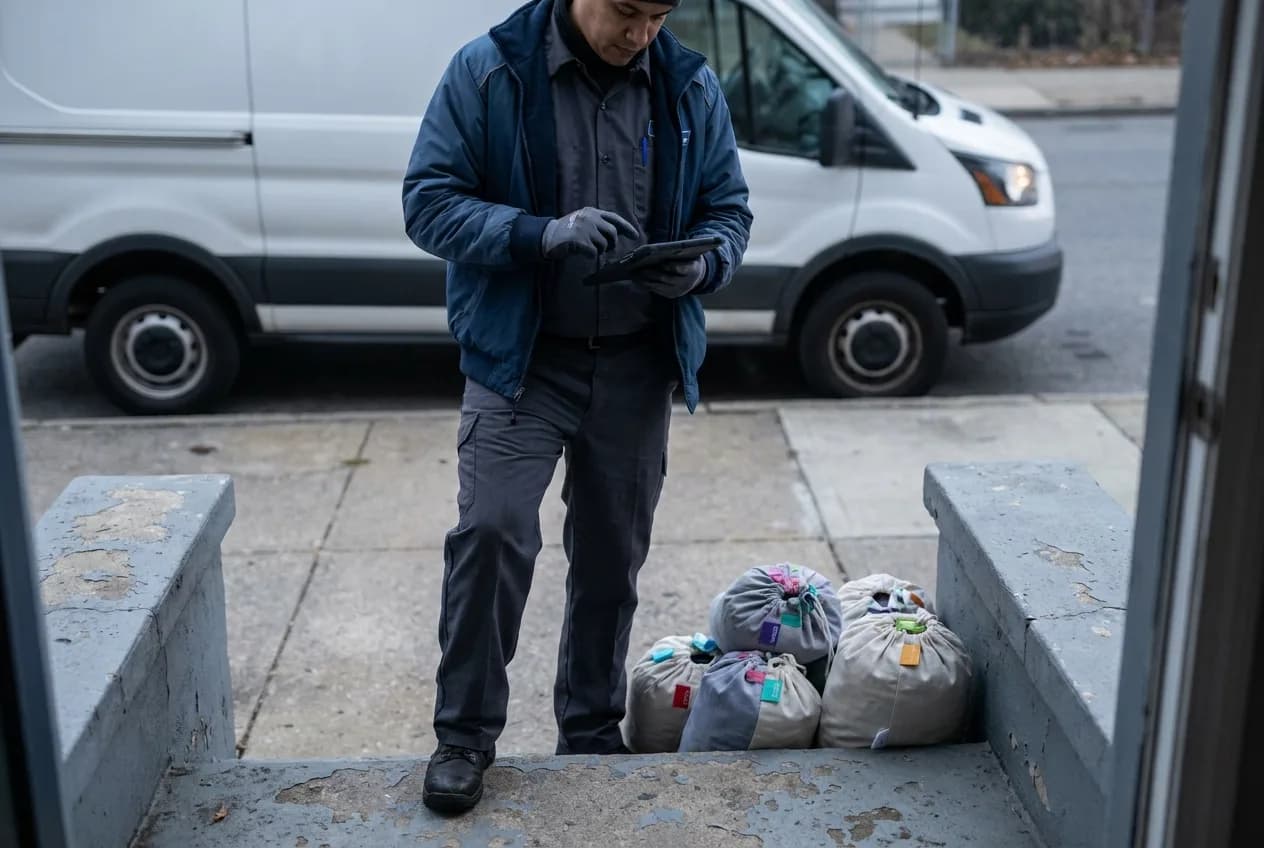
A route is profitable when the revenue from its stops comfortably exceeds the driver labor, fuel, and vehicle cost to run it, and density is what makes that possible. A driver who completes many close stops per hour spreads fixed drive time across more paying orders, while the same driver crossing town for scattered pickups loses money.
The profit equation is simple:
- More stops per hour lowers the driving cost carried by each order.
- A delivery minimum keeps each stop above the cost of reaching it.
- A delivery premium over walk-in pricing covers the driving and app fees.
Everything else in route building serves those three levers. If you have not set delivery pricing yet, start with how to add pickup and delivery to a laundromat, which covers the pricing structures a route relies on.
How do you build route density?
Build density by starting in one small, high-demand zone and filling it with customers before expanding, rather than accepting stops wherever they appear. Density is a deliberate choice, and saying no to a far-off order today protects your route economics tomorrow.
Practical steps:
- Draw a small zone near the store centered on dense, likely-demand neighborhoods.
- Concentrate marketing inside that zone instead of the whole metro.
- Convert existing wash-and-fold regulars in the area to delivery first.
- Pursue clustered demand like apartment complexes and nearby businesses.
A compact, full zone lets one driver run an efficient route, which is the entire economic case for delivery. For where that demand comes from, see how to attract wash-and-fold customers and recurring commercial laundry accounts, which fill a route with predictable volume.
How should you set scheduling windows?
Set a small number of fixed pickup and delivery windows tied to neighborhoods, so stops in the same area cluster on the same run. On-demand pickups scatter the driver across the map and destroy the density you built, so batching is essential.
A workable window model:
- Assign specific days or time blocks to each part of the zone.
- Use a standard next-day or two-day turnaround, with rush priced higher.
- Let customers book an available window rather than any time they want.
- Cap stops per window so the driver can actually complete the run.
Customers accept fixed windows when turnaround is reliable, and reliable turnaround is what earns repeat orders. Predictability serves both the customer and your route efficiency.
How do you sequence stops efficiently?
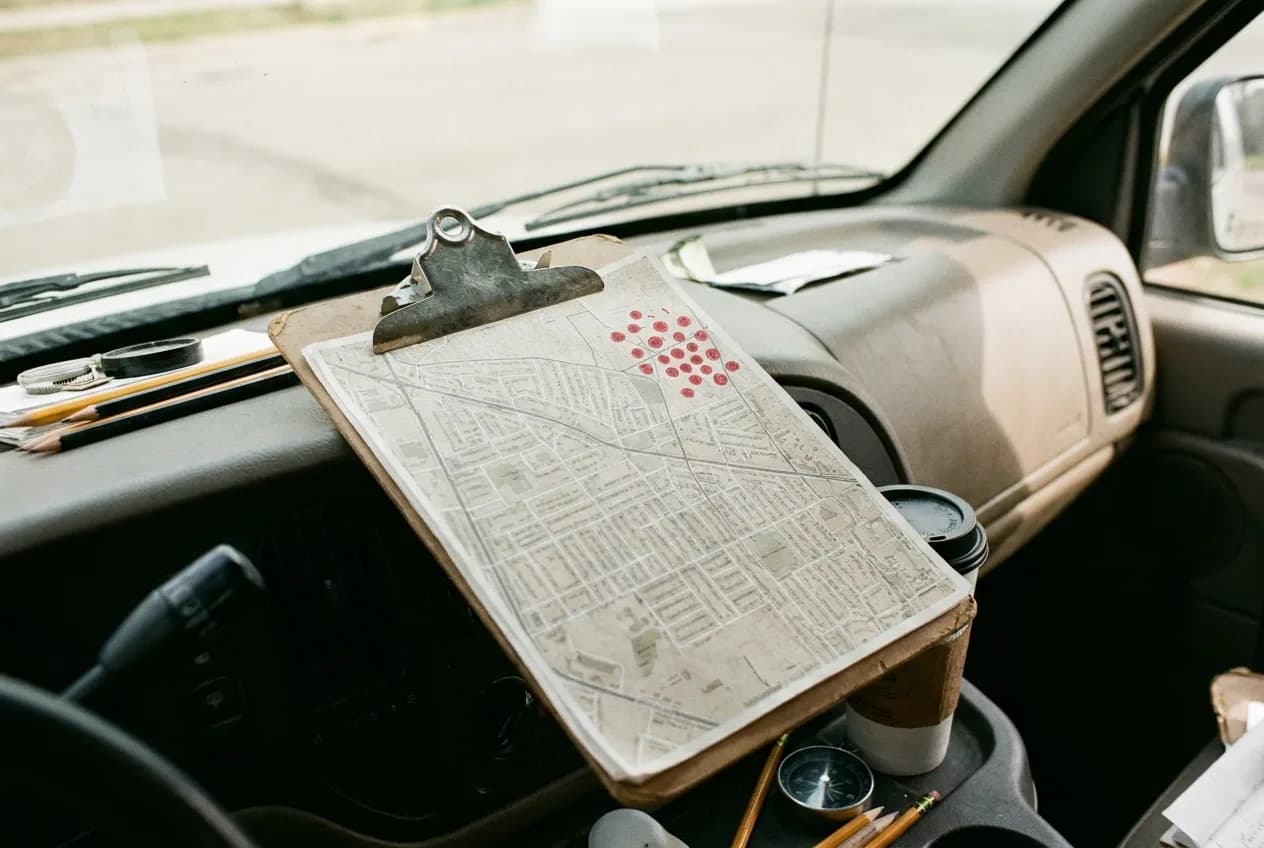
Sequence stops so the driver travels a logical loop with minimal backtracking, which route software does automatically once you enter the day's addresses. Good sequencing turns the same set of stops into a shorter drive, directly lowering cost per stop.
Keep sequencing tight by:
- Using route-planning software to order stops rather than the driver guessing.
- Grouping pickups and deliveries in the same area on the same pass.
- Building the route as a loop that returns toward the store.
- Adjusting for known traffic patterns and one-way streets.
The difference between a planned and an unplanned route shows up directly in fuel and hours. For the tools that handle booking and sequencing together, review the software section in the pickup and delivery guide.
How do the per-stop economics work?
Per-stop economics compare what each stop earns against what it costs in driver time, fuel, and vehicle wear, and dense routes tip that ratio into profit. Tracking it per stop, rather than looking only at total route revenue, is what reveals whether a route is actually working.
Compare the levers directly:
| Lever | Effect on per-stop profit | How to improve it |
|---|---|---|
| Stops per hour | Spreads driving cost over more orders | Tighten the zone, cluster windows |
| Average order size | Raises revenue per stop | Set a delivery minimum |
| Drive time between stops | Unpaid time that eats margin | Sequence the route, keep it dense |
| Delivery premium | Covers driving and app fees | Price above walk-in wash-and-fold |
| Failed or repeat stops | Wasted trips destroy the stop's margin | Confirm windows, take prepayment |
As a scenario, a route of tightly clustered stops with a sensible minimum can comfortably carry its driver cost, while a handful of scattered pickups cannot. Model your own route against your store's numbers with the laundromat cash flow calculator.
How do you reduce no-shows and failed stops?
Reduce failed stops with confirmed windows, prepayment or a card on file, and clear pickup instructions, since every wasted trip erases the margin on the stops around it. A single failed stop can cost more than one successful stop earns, so prevention matters.
Effective safeguards:
- Confirm each pickup window by text or app the day before.
- Keep a card on file so orders are paid regardless of contact at the door.
- Offer contactless pickup with clear bag-placement instructions.
- Track repeat no-shows and adjust or drop chronically missed stops.
These steps protect the route's density by keeping the driver moving between paying stops. Reliability from the customer side is as important as your own scheduling discipline.
How do you scale from one route to several?
Scale by filling one route to capacity, then adding an adjacent zone and a second driver only once the first route is consistently busy. Expanding before a route is dense spreads drivers thin and drags down the economics you built.
A measured path:
- Fill the first zone until the driver's day is consistently full.
- Add a neighboring zone that shares the store's processing capacity.
- Bring on a second driver or a second route day when volume justifies it.
- Watch store capacity, since more routes mean more folding and machine hours.
Growth is a density-and-demand problem, not a coverage problem, so resist widening the map ahead of demand. Before you put a scheduled driver on payroll, confirm wage and worker-classification rules with the U.S. Department of Labor and the IRS, since a driver who runs your route on set days is usually an employee rather than a contractor. As routes and store volume grow, keep an eye on how the added labor and machine time affect your laundromat profit margins and overall store revenue.
Frequently asked questions
What is the single most important factor in a laundry route?
Density. Stops close together let a driver complete more paying orders per hour and spread fixed drive time across them. A small, full zone is far more profitable than a wide, sparse one. Nearly every route decision, from zone size to scheduling windows, exists to protect density.
Should I offer on-demand pickup or fixed windows?
Fixed windows. On-demand pickups scatter your driver across the map and destroy route density, which is what makes delivery profitable. Assign windows by neighborhood so nearby stops cluster on the same run, and use a reliable next-day or two-day turnaround. Customers accept set windows when turnaround is dependable.
How do I set a delivery minimum?
Set it high enough that each stop is worth the drive to reach it, based on your revenue per stop against driver and fuel cost. A minimum keeps small orders from losing money on driving. Post it clearly when customers book, and pair it with a delivery premium over your walk-in wash-and-fold rate.
How do I reduce no-show pickups?
Confirm each window by text or app the day before, keep a card on file so orders are paid regardless of door contact, and give clear contactless pickup instructions. Track chronic no-shows and adjust or drop those stops. A single failed trip can erase the margin on the stops around it, so prevention is worth the effort.
When should I add a second route?
Only after the first route is consistently full. Adding a zone or driver before the first route is dense just spreads drivers thin and lowers per-stop profit. Expand into an adjacent area that shares your store's processing capacity, and watch that the extra folding and machine time do not overwhelm the store.
Do I need route software or can I plan by hand?
A handful of stops can be planned by hand, but once a route grows, software that sequences stops and handles booking and payment saves real time and fuel. It orders stops into an efficient loop and reduces backtracking. Match the tool to your volume, using lightweight scheduling for one small route and fuller software as you scale.