Commercial Dryer Sizes and Capacity: What Each Holds
SudsList Editorial · Jul 3, 2026
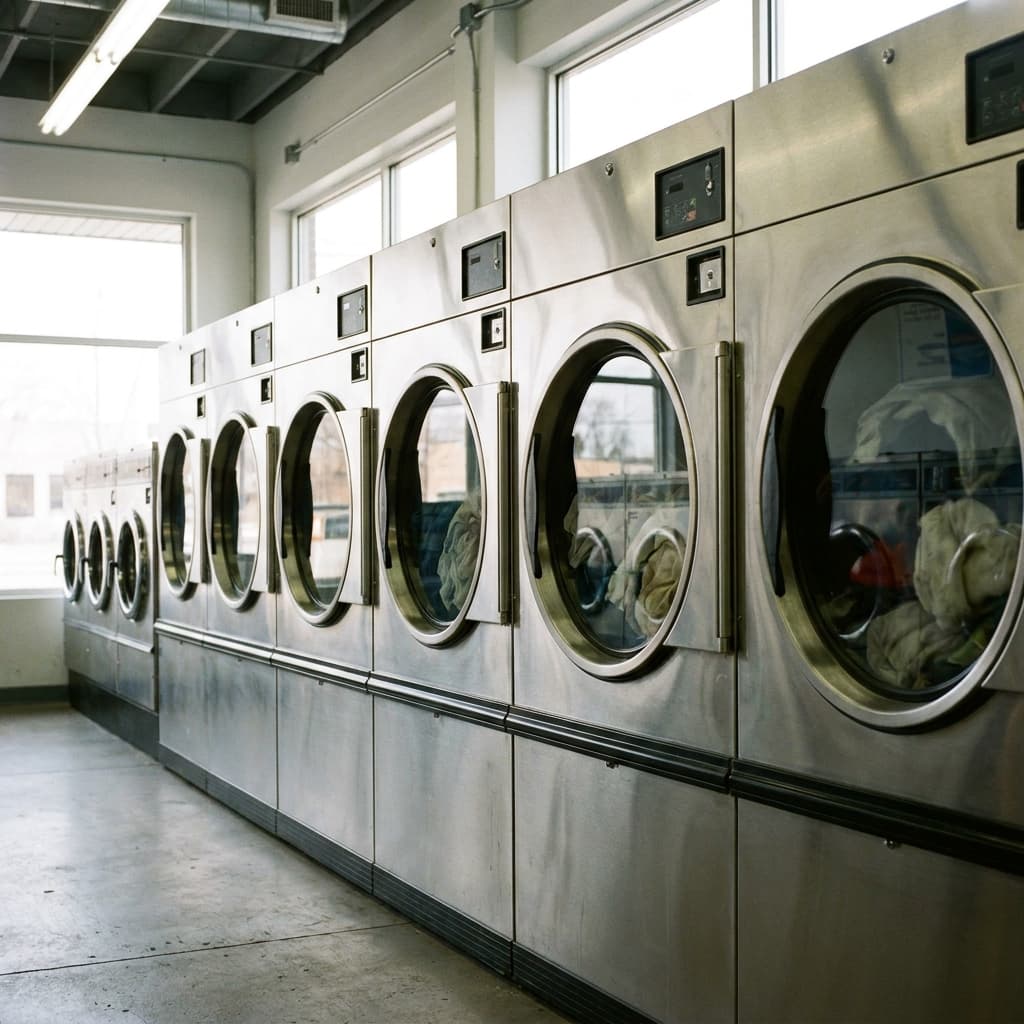
Commercial dryers, like washers, are sold by capacity in pounds, and getting the dryer sizing right is just as important as the washers, because drying is where bottlenecks and gas costs show up. This guide explains how dryer capacity is measured, the common sizes, how to match dryers to your washers, and how stacked versus single units affect a store.
Contents
- How dryer capacity is measured
- Common commercial dryer sizes
- Matching dryers to your washers
- Stacked vs single-pocket dryers
- Dryers, gas, and turnover
How dryer capacity is measured
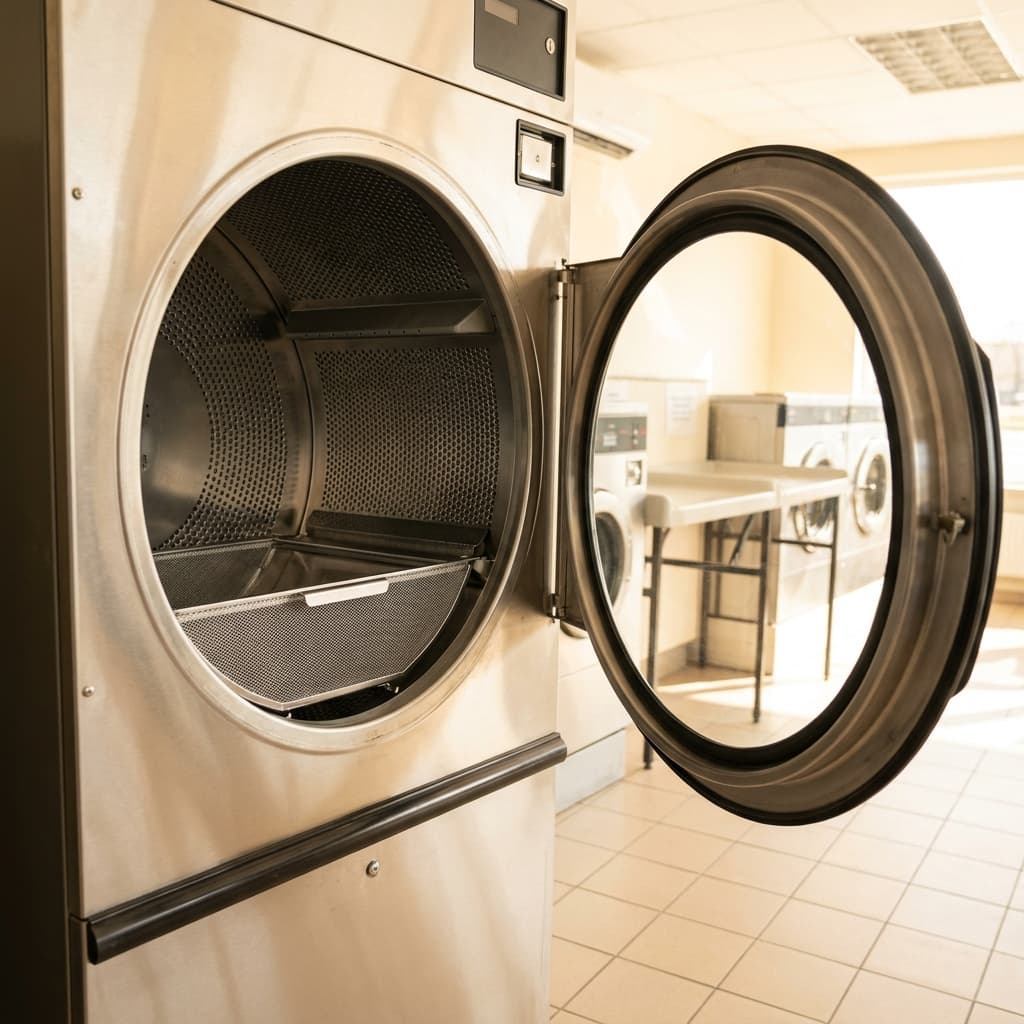
Dryer capacity is rated in pounds of dry laundry, the same unit used for washers, but a dryer needs more drum volume than a washer of the same rating because clothes must tumble freely in air to dry. That is why a dryer pocket looks larger than the washer it serves. As with washers, the rating is a guide for you as the operator; customers judge a dryer by whether their wet load fits and dries in one cycle. The goal is enough drying capacity that a customer who finishes a wash can move straight into a dryer without waiting.
Common commercial dryer sizes
Commercial dryers come in a range of pocket sizes, often around:
- 30 to 35 pounds, common single-pocket dryers for everyday loads
- 50 to 55 pounds, larger single pockets for bigger or bulky loads
- 75 pounds and up, large-capacity dryers for the bulkiest items and light commercial work
Many of these are sold as stacked units, putting two pockets in one footprint, which is the most common configuration in space-conscious stores.
Matching dryers to your washers
The key rule is that drying capacity should keep pace with washing capacity so customers are not stuck waiting for a dryer. A common approach is to provide dryer pocket capacity that meets or exceeds the washer capacity it serves, often pairing each washer with a dryer pocket of equal or larger rating, since wet laundry fluffs up and needs room. If your store leans on large washers for bulky loads, you need large dryers to match, or those customers wait and turnover stalls. Undersized drying is one of the most common design mistakes, and it quietly caps how many customers a store can serve at peak times.
Stacked vs single-pocket dryers
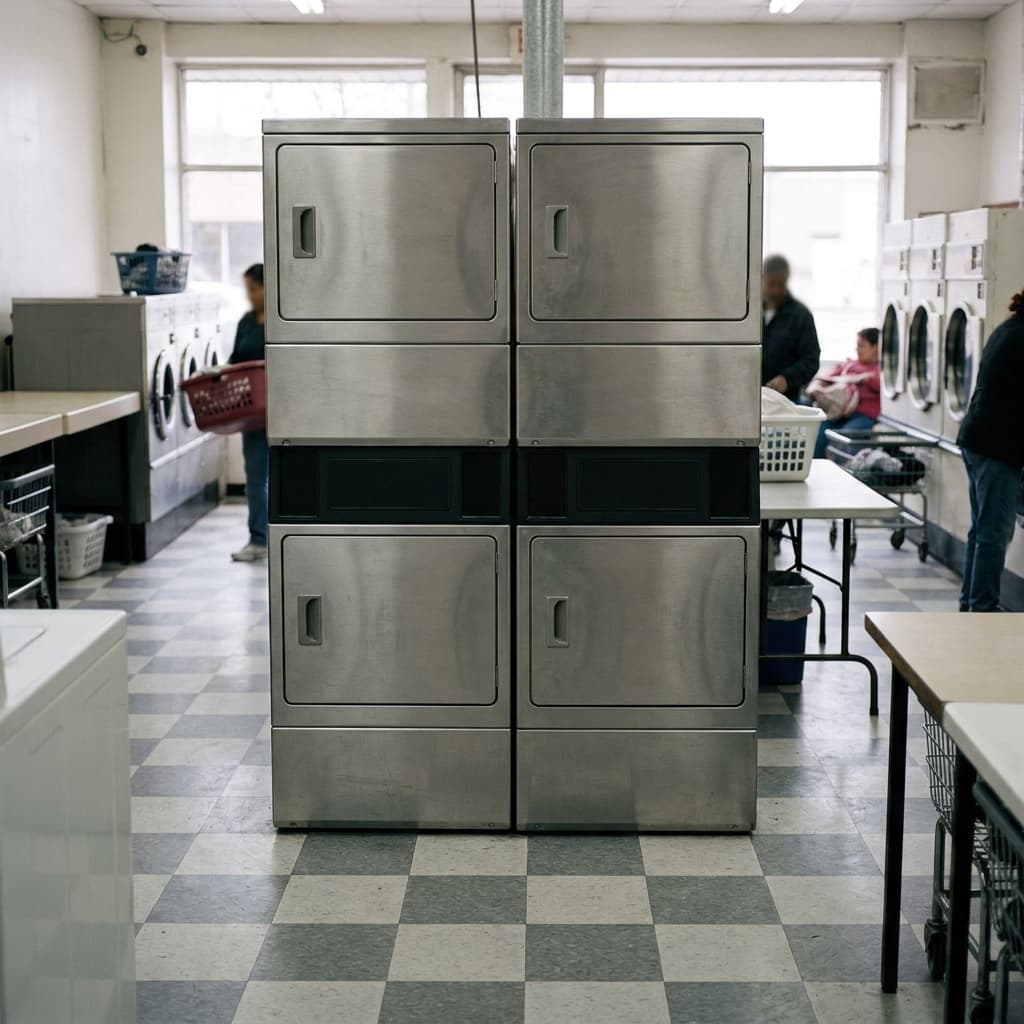
Stacked dryers place two pockets in the floor space of one, which roughly doubles drying capacity per square foot, a major advantage in a tight store. Single-pocket dryers, often the larger sizes, handle the biggest loads but use more floor space per pocket. Most stores use a mix: stacked mid-size dryers for the bulk of everyday drying, plus a few large single pockets for comforters and oversized loads. The right balance depends on your floor plan and your washer mix, since drying has to mirror washing to keep laundry flowing.
Dryers, gas, and turnover
Dryers are usually gas-fired, so they are a significant utility cost, and their efficiency, along with how wet the clothes arrive, drives that cost. This is the hidden link between washers and dryers: a high-extraction washer that spins clothes drier shortens dryer cycles, saving gas and freeing dryers faster, which is part of why equipment efficiency and water costs are really one conversation. Faster drying also means higher turnover and more revenue at busy times. When you plan or re-equip a store, budget dryer replacement with the equipment replacement cost calculator and model the utility impact in your cash flow. For equipment lifespan, see how long commercial washers and dryers last; for efficiency references, Energy Star is useful.
A quick reference for matching sizes:
| Dryer pocket | Roughly handles | Pairs with |
|---|---|---|
| 30-35 lb | Everyday single loads | 20-30 lb washers |
| 50-55 lb | Larger and bulky loads | 40 lb washers |
| 75 lb+ | Comforters, oversized, light commercial | 60-80 lb washers |
Get the dryer sizing right and your store keeps laundry moving; get it wrong and even a well-equipped wash floor backs up at the dryers.
How many dryers per washer
A frequent planning question is how many dryers a store needs relative to its washers. There is no single ratio that fits every store, because it depends on machine sizes and how customers behave, but the principle is simple: total drying capacity, measured in pounds, should at least match total washing capacity, and often exceed it, because wet laundry expands and a dryer cycle can run longer than a wash. In practice many stores end up with more dryer pockets than washers once stacking is counted, since stacked units add capacity cheaply in the same floor space. Watch your own store at peak times: if customers regularly finish washing and then wait for a dryer, you are dryer-constrained and leaving revenue on the table, no matter how many washers you have.
Dryer features that affect sizing and cost
Modern commercial dryers offer features that change the sizing math. Moisture-sensing controls stop the cycle when clothes are dry rather than running a fixed time, which saves gas and frees the machine sooner, effectively increasing capacity without adding pockets. Efficient burners and good airflow design shorten cycles for the same reason. When you compare dryers, look past the raw pocket size to how quickly and efficiently each one turns a load, because a faster, smarter dryer serves more customers per hour than a slow one of the same rating. These efficiency gains also lower the gas bill, which ties dryer choice back to the utility picture in laundromat water and sewer costs.
Sizing dryers when you buy a store
When you take over an existing laundromat, evaluate the dryers as carefully as the washers. Count the pockets by size, note their age, and watch whether the store backs up at the dryers during busy hours. An undersized or aging dryer bank is both a capacity limit and a future replacement cost, and like the washers it should inform your valuation and your offer. If the dryers cannot keep pace with the washers, factor a dryer upgrade into your plan, because fixing a drying bottleneck is one of the more direct ways to lift the revenue of a store you have just bought. Done right, dryers fade into the background and laundry flows; done wrong, they are the quiet bottleneck that caps a store no one can quite explain.
Venting, gas, and installation
Dryer sizing also has a physical side that is easy to forget until installation: large and stacked dryers need adequate gas supply and proper venting, and a store's existing infrastructure can limit what you install. Before committing to a particular dryer mix, confirm the gas line capacity and the venting can support it, because upgrading either is a real cost. When you buy an existing store, the current venting and gas setup is part of what you inherit, and any change to the dryer lineup has to work within it or budget for the upgrade. Getting this right keeps an otherwise good sizing plan from stalling on a contractor's estimate.
Frequently asked questions
How is commercial dryer capacity measured?
In pounds of dry laundry, the same as washers, though a dryer needs more drum volume than a washer of equal rating so clothes can tumble freely in air.
What size dryers should a laundromat have?
Enough drying capacity to keep pace with the washers. Many stores pair each washer with a dryer pocket of equal or larger rating, using stacked mid-size dryers plus a few large pockets for bulky loads.
What is a stacked dryer?
Two dryer pockets in the floor space of one unit, roughly doubling drying capacity per square foot. Stacked dryers are common in space-conscious stores.
Why does washer extraction affect dryers?
A washer that spins clothes drier sends less water to the dryer, shortening dry cycles, saving gas, and freeing dryers faster for higher turnover.
What happens if dryers are undersized?
Customers finish washing but wait for a dryer, which stalls turnover and caps how many people the store can serve at peak times. Undersized drying is a common design mistake.