Self-Service vs Wash-Dry-Fold: Which Laundromat Is More Profitable?
SudsList Editorial · Jun 26, 2026
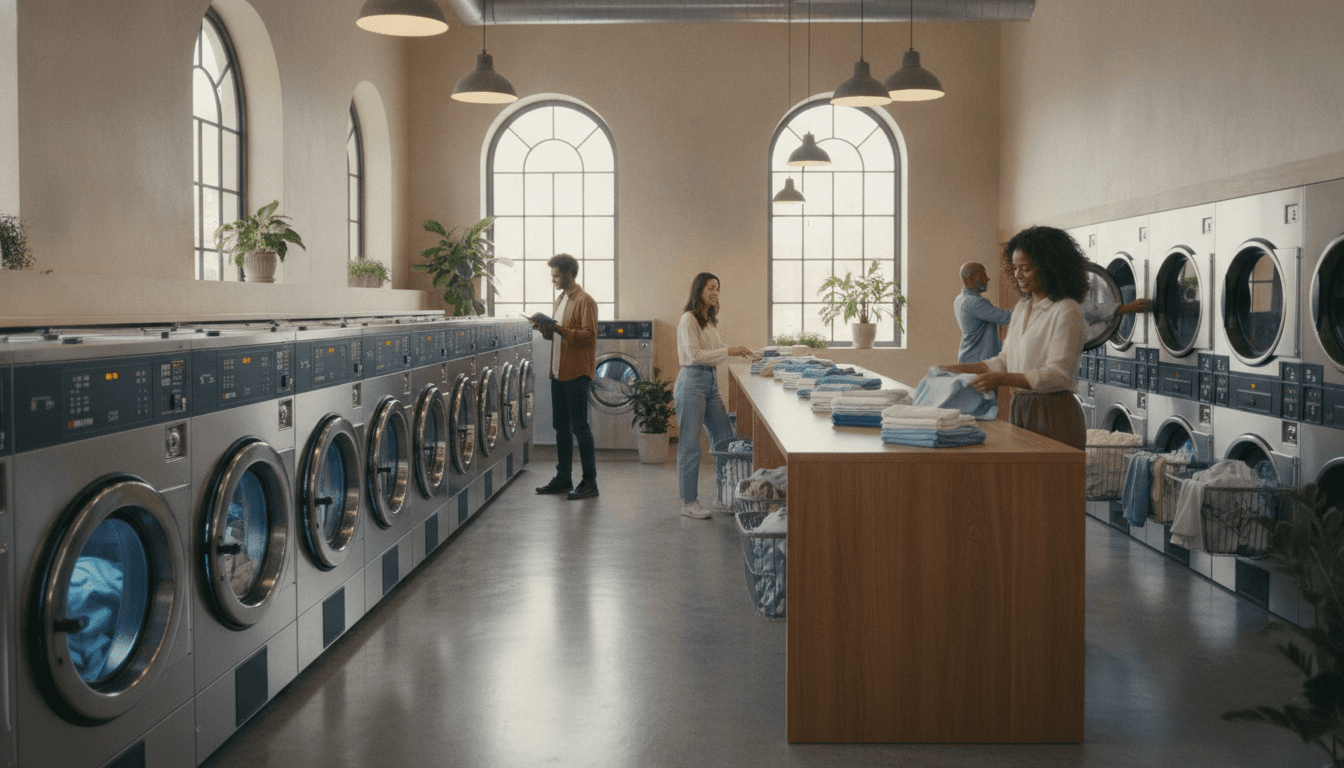
Self-service laundry is more profitable per dollar of revenue because it carries almost no labor cost, while wash-dry-fold generates more revenue per customer but spends a large share of it on staff. Which laundromat is more profitable depends on what you mean by profitable: self-service wins on margin, wash-dry-fold wins on revenue per square foot and customer loyalty. The most profitable stores usually combine both. This guide compares the two models and the economics behind each.
Key takeaways
- Self-service has the highest margins because customers do the work; the main costs are rent and utilities, not labor.
- Wash-dry-fold (WDF) earns more revenue per customer but requires paid staff, so much of that revenue goes to labor.
- Self-service scales toward absentee or lightly attended operation; wash-dry-fold requires reliable, trained labor and management.
- The most profitable laundromats typically run a strong self-service base with wash-dry-fold and pickup-delivery layered on top.
- When comparing stores, separate the two revenue streams and look at the margin on each, not just total revenue.

In this guide
- What is the difference between self-service and wash-dry-fold?
- Self-service vs wash-dry-fold at a glance
- Which model has higher profit margins?
- Why add wash-dry-fold at all?
- A worked example: margin vs revenue
- How does each model change how the store runs?
- Which should you buy or build toward?
What is the difference between self-service and wash-dry-fold?
In self-service, customers operate the machines themselves and pay per use; in wash-dry-fold, customers drop off laundry and pay staff to wash, dry, and fold it, typically priced by the pound. Most laundromats offer self-service as their core, and many add wash-dry-fold and pickup-and-delivery as services on top.
The economic difference is labor. Self-service sells access to equipment with little ongoing staffing. Wash-dry-fold sells a finished service, which means someone has to be paid to do the work. That single distinction drives everything about how the two models compare on profit, as our wash-and-fold business guide explores in more depth.
Self-service vs wash-dry-fold at a glance
The two models differ most on one thing: who does the work, and therefore who gets paid. The table below frames the trade-off.
| Factor | Self-service | Wash-dry-fold |
|---|---|---|
| Who does the labor | The customer | Paid staff |
| Profit margin | High | Lower, labor-heavy |
| Revenue per customer | Lower | Higher |
| Staffing needs | Minimal | Significant and trained |
| Absentee-friendly | Yes | No |
| Main risk | Price competition | Labor and quality control |
| Best role | The dependable core | A growth layer on top |
The pattern that emerges is that self-service is the engine and wash-dry-fold is the accelerator. Self-service produces reliable, high-margin cash flow with little management; wash-dry-fold adds revenue and loyalty but only rewards an owner who controls the labor. A store that has bolted a busy wash-dry-fold service onto a weak self-service base is more fragile than its revenue suggests, because the part of the business that needs the most management is carrying the part that should be effortless.
That is why buyers weigh the two streams separately. A high combined revenue figure can hide a thin, labor-eaten margin, so confirm what each stream actually contributes to cash flow before you treat a bigger top line as a better business.
Which model has higher profit margins?
Self-service has the higher margin by a wide gap, because the customer supplies the labor for free. Once rent and utilities are covered, a large share of each additional self-service dollar flows through to cash flow.
Wash-dry-fold carries a real cost of goods: the staff time to process each order. After paying attendants, a meaningful portion of WDF revenue is consumed before it reaches the bottom line. The U.S. Bureau of Labor Statistics publishes wage data for laundry workers that gives a realistic sense of that labor cost. So on a pure margin basis, self-service is the more profitable model per dollar, which is part of why it underpins most strong stores and why so many buyers prize a laundromat that can run largely absentee.
Why add wash-dry-fold at all?
Because it raises total revenue, deepens customer loyalty, and uses capacity you have already paid for. Margin is not the only thing that matters; revenue per square foot and per customer matter too, and wash-dry-fold improves both.
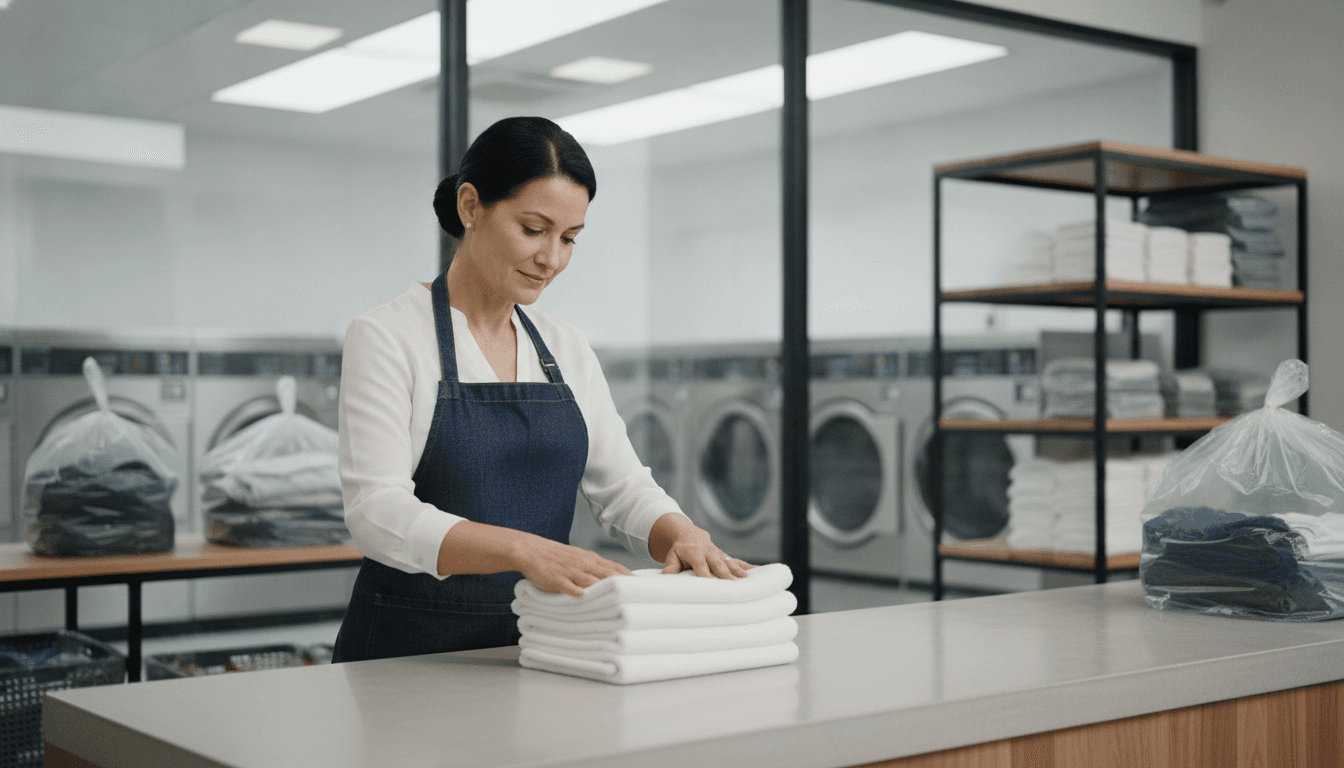
Wash-dry-fold turns idle machine time and floor space into additional income, often at busier price points than self-service. It attracts customers who will pay for convenience and tend to return, and it pairs naturally with pickup-and-delivery, which extends your market beyond walk-in range. For an owner focused on increasing laundromat revenue, adding or growing wash-dry-fold is one of the most common levers, as long as the labor is managed well enough to protect the margin.
A worked example: margin vs revenue
Picture a store with $200,000 in self-service revenue. After rent and utilities, with almost no labor, a strong store might convert a high share of that to cash flow.
Now the owner adds $60,000 in wash-dry-fold revenue. That sounds like a clean $60,000 gain, but processing it requires attendant hours. If labor and supplies consume, say, half of the WDF revenue, the service contributes roughly $30,000 to cash flow, not $60,000.
So the wash-dry-fold adds real money, just at a much lower margin than the self-service base. A store doing $260,000 total is not automatically more profitable than one doing $200,000 of pure self-service; it depends entirely on the WDF margin after labor. This is why, when you value a laundromat, you separate the streams and examine the margin on each rather than reacting to the bigger top-line number. Run both versions through the calculators to see the cash-flow difference.
How does each model change how the store runs?
Self-service can run with minimal staffing, while wash-dry-fold demands reliable, trained labor and active management. The model you emphasize determines how much of your time, or a manager''s, the store will require.
A self-service-heavy store can be operated lightly attended or close to absentee, with the owner handling collections, maintenance, and oversight. A wash-dry-fold-heavy store is a labor business: it lives or dies on dependable staff, consistent quality, and turnaround time, and a single unreliable attendant can erode both margin and reputation. Be honest about which kind of operation you want to run, because it shapes your daily life as much as your financials. The Coin Laundry Association''s resources offer useful benchmarks for staffing and service mix.
Which should you buy or build toward?
Buy a store with a strong self-service foundation, then judge wash-dry-fold by its margin, not its headline revenue. Self-service is the dependable, high-margin core; wash-dry-fold and pickup-delivery are growth layers that work when the labor is controlled.
When comparing stores, separate self-service from wash-dry-fold revenue, check the margin on each, and ask whether the WDF is genuinely profitable after staff or just inflating the top line. A store leaning entirely on low-margin wash-dry-fold is more fragile than its revenue suggests. A store with a healthy self-service base and well-run WDF is usually the stronger and more profitable buy. The listings break out service types so you can compare the mix before you ever contact a seller.
Frequently asked questions
Is self-service or wash-dry-fold more profitable?
Self-service has the higher profit margin because customers do the work, so after rent and utilities most additional revenue becomes cash flow. Wash-dry-fold earns more revenue per customer but spends much of it on staff. Self-service wins on margin; wash-dry-fold wins on revenue per customer. The strongest stores combine both.
Does wash-dry-fold make a laundromat more valuable?
It can, but only to the extent it is profitable after labor. Wash-dry-fold raises total revenue and customer loyalty, yet a large share of that revenue pays attendants. When valuing a store, separate self-service from wash-dry-fold revenue and look at the margin on each, rather than reacting to the larger combined top line.
Can a self-service laundromat run without employees?
A self-service-focused store can run lightly attended or close to absentee, with the owner handling collections, maintenance, and oversight. Adding significant wash-dry-fold changes that, because processing drop-off orders requires reliable, trained staff and active management of quality and turnaround.
What margin should I expect on wash-dry-fold?
It varies with local wages and pricing, but a meaningful portion of wash-dry-fold revenue is consumed by labor and supplies before it reaches cash flow. Treat it as a lower-margin service layered on a high-margin self-service base, and confirm the actual labor cost rather than assuming the revenue drops straight to the bottom line.
Should a first-time buyer focus on self-service or wash-dry-fold?
Most first-time buyers are better served by a store with a strong self-service core, which is higher-margin and easier to operate, then growing wash-dry-fold deliberately once they understand the labor involved. A business that depends mainly on low-margin wash-dry-fold is more demanding to run and more fragile than its revenue suggests.