Speed Queen vs Dexter vs Continental Girbau: Commercial Washers Compared
SudsList Editorial · Jun 27, 2026
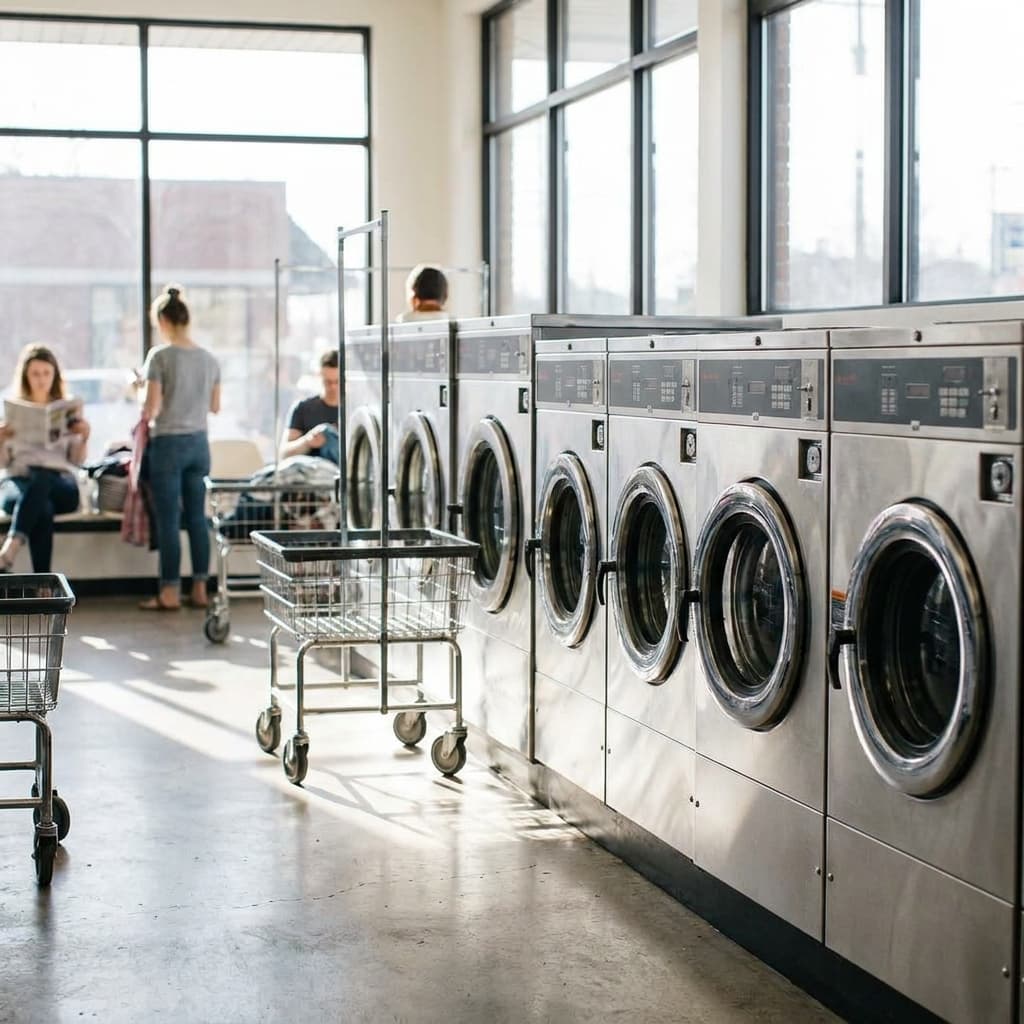
For a laundromat, the washer brand you run sets your reliability, your water and gas bills, your resale value, and how easily you can get parts for the next ten to fifteen years. Three of the most common commercial choices in the United States are Speed Queen, Dexter, and Continental Girbau, and each has a distinct profile. This guide compares them on the factors that actually affect a store owner, with a side-by-side table, so you can match a brand to your situation rather than to marketing.
Contents
- How to compare commercial washer brands
- Speed Queen
- Dexter
- Continental Girbau
- New, used, and matching your fleet
- Side-by-side comparison
- Which brand is right for your store
How to compare commercial washer brands
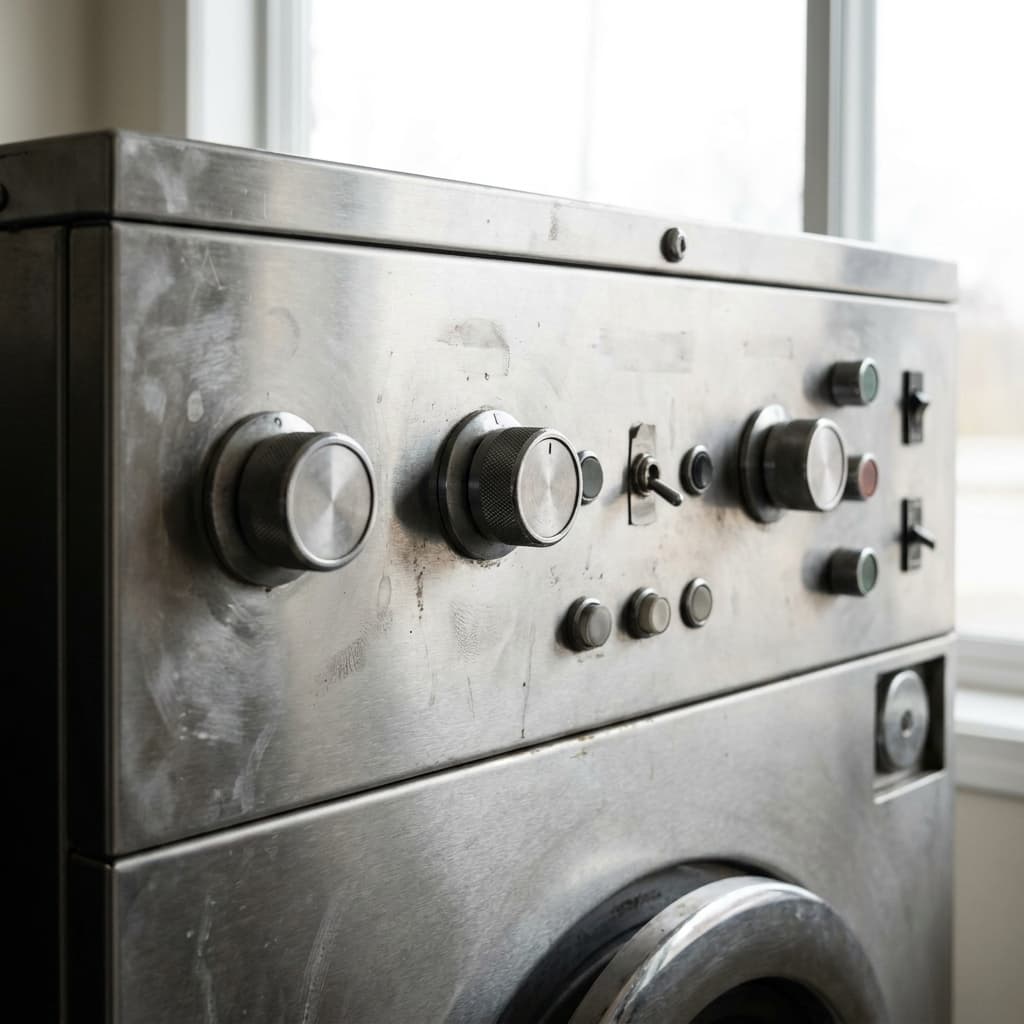
Ignore brand loyalty and judge machines on the things that move your numbers. The factors that matter most are build quality and expected lifespan, water and energy efficiency, the spin or extraction speed, upfront cost, the availability of parts and local service, warranty length, and resale value when you eventually sell the store or upgrade. Extraction speed, often described as G-force, deserves special attention: a higher-G spin removes more water from each load, so clothes need less time in the dryer, which lowers your gas bill and turns machines faster on busy days. A brand that costs more upfront but spins harder and lasts longer can be cheaper over its life than a bargain machine.
Speed Queen
Speed Queen has a reputation built on rugged simplicity. Its commercial washers are known for straightforward, durable designs that run for years with basic maintenance, which is why many self-service owners favor the brand and why used Speed Queen equipment tends to hold its value well. The trade-off is that the simplest models emphasize toughness over the highest efficiency, though newer lines have closed much of that gap. The dealer and parts network is broad, which matters when a machine is down and every idle day costs money. For an owner who prizes reliability, easy service, and strong resale above all, Speed Queen is the safe default.
Dexter
Dexter occupies a strong middle ground. Built in the United States with heavy use of stainless steel, Dexter washers have a solid reputation for durability and value, and the brand is well supported with parts and service. Owners often describe Dexter as offering much of Speed Queen's longevity with competitive efficiency and pricing. For a buyer who wants a dependable, widely serviced machine without paying the most premium price, Dexter is a frequent choice, and like Speed Queen it tends to resell well because operators trust it.
Continental Girbau
Continental Girbau leans into efficiency and programmability. Its washers are known for high-G extraction and flexible electronic controls, which can lower dry times and utility costs and suit higher-volume stores, wash-dry-fold, and on-premise laundry. The trade-offs are a potentially higher upfront cost and more electronics, which can mean more to maintain than a purely mechanical machine. For a store that runs a lot of volume, does bulky or commercial work, and wants to squeeze utility costs, the efficiency can pay back over time.
New, used, and matching your fleet
Brand also interacts with the new-versus-used decision. Because Speed Queen and Dexter hold value and have deep parts support, good used machines from these brands can be a sensible way to equip a store on a budget, where a less common brand might be hard to service later. If you are adding to an existing bank of machines, matching the current brand simplifies parts, training, and the look of the store, and it can be worth doing even if another brand scores slightly higher on paper. When you take over a store, inventory the make, model, and age of every machine; a fleet of well-known, well-maintained washers is worth more and easier to run than a mix of orphan brands.
Side-by-side comparison
| Factor | Speed Queen | Dexter | Continental Girbau |
|---|---|---|---|
| Reputation | Rugged, simple, reliable | Durable value, US-built | Efficient, programmable |
| Construction | Heavy, mechanical | Stainless steel | Electronic, high-G |
| Efficiency | Good, improving | Competitive | Strong |
| Upfront cost | Mid to high | Mid | Higher |
| Parts and service | Very wide | Wide | Available, more electronics |
| Resale value | Strong | Strong | Holds value in volume stores |
| Best for | Reliability-first self-service | Balanced value | High-volume and wash-dry-fold |
Treat the table as a general guide, not a verdict. Specific models within each brand vary, and the right pick depends on your store.
Which brand is right for your store
Start from how the store operates. A standard self-service laundromat that wants minimal downtime and easy resale is well served by Speed Queen or Dexter. A higher-volume store, or one adding wash-and-fold, benefits more from the extraction and efficiency of a high-G brand like Continental Girbau. Whatever you choose, weigh the full lifecycle cost, not just the sticker price, since efficiency and lifespan show up on every utility bill and in how long the equipment lasts. Use the equipment replacement cost calculator to budget a re-tool, and the best commercial washer brands guide for a wider look at the field. If you are buying an existing store, the installed brand and the age of the machines feed directly into your valuation, so factor it into the price. Independent efficiency information is available from Energy Star, and the Coin Laundry Association is a useful industry resource for equipment decisions.
Beyond the big three
Speed Queen, Dexter, and Continental Girbau are among the most common choices, but they are not the only ones. Huebsch is a sister brand to Speed Queen and shares much of its rugged design and parts support. Maytag Commercial, Wascomat and Electrolux Professional, LG, and Whirlpool Commercial all appear in laundromats as well, each with its own strengths in efficiency, price, or controls. The same evaluation applies to any of them: judge build quality, efficiency, extraction speed, parts availability, and resale rather than the badge. A less common brand is not automatically a worse machine, but if local service and parts are thin, even a good machine becomes a liability when it goes down.
Do not forget the dryers and payment system
Washers get most of the attention, but the package matters as a whole. Match your washers with reliable dryers from a well-supported brand, since dry-time bottlenecks cost you turns on busy days, and confirm the payment system works cleanly with whatever machines you choose. When you buy an existing store, the consistency of the equipment, one or two known brands rather than a patchwork, is itself a sign of how well the store has been run and how easy it will be to maintain. A coherent, well-supported equipment package is worth more than any single brand-name win.
Frequently asked questions
Which commercial washer brand is most reliable?
Speed Queen and Dexter both have strong reputations for durability and easy service. The most reliable choice for you depends on your volume and how the store is run; high-volume stores often value the efficiency of high-G brands like Continental Girbau.
What is G-force and why does it matter?
G-force describes how hard a washer spins to extract water. Higher extraction leaves clothes drier, which cuts dry time, lowers gas costs, and turns machines faster on busy days.
Which washer brand has the best resale value?
Speed Queen and Dexter generally hold value well because operators trust them and parts are widely available, which makes used machines easier to sell.
Should I match the existing brand when I buy a store?
Often yes. Matching simplifies parts, service, and training, and a consistent, well-known fleet is easier to run and worth more than a mix of uncommon brands.
Are more expensive washers worth it?
Sometimes. A pricier machine that spins harder and lasts longer can cost less over its life through lower utility and replacement costs, especially in a high-volume store. Weigh lifecycle cost, not just the sticker price.