Arcade and Amusement Machines in Laundromats: Do They Add Revenue?
SudsList Editorial · Jul 25, 2026
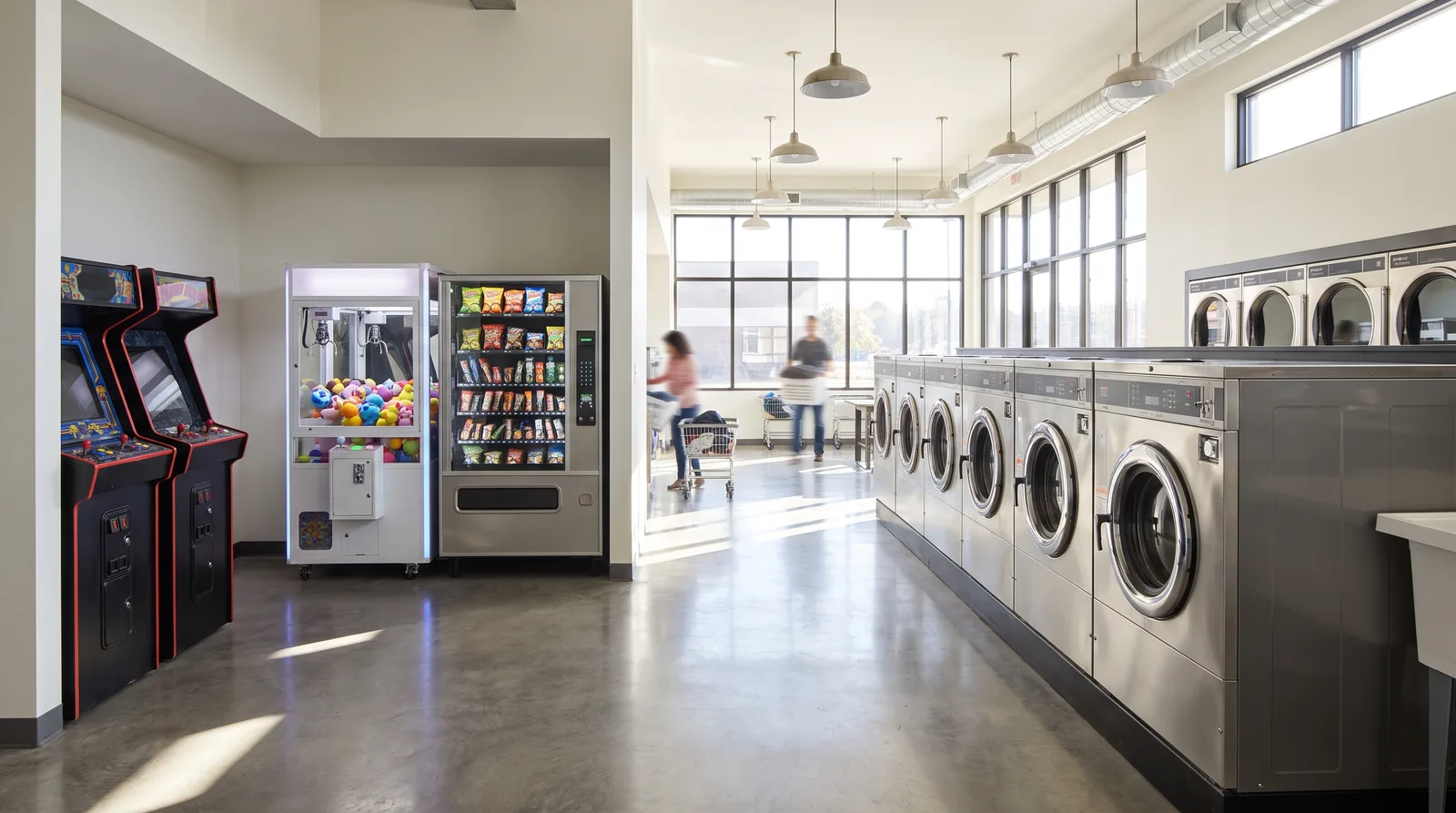
Arcade and amusement machines can add real revenue to a laundromat, but the amount is usually modest and depends heavily on your location, foot traffic, and how long customers wait. Claw cranes, a couple of arcade cabinets, and snack or drink vending fill the dead time while clothes wash and dry, capturing spending from people who are already in your store. Treated as a low-labor supplement rather than a business of its own, amusement machines can lift monthly cash flow, and because laundromats sell on a multiple of earnings, that steady income can also raise the eventual sale price.
Key takeaways
- Amusement machines are a supplement, not a core revenue stream. Expect a modest lift, not a transformation.
- Claw cranes and vending usually earn the most per square foot for the least labor. Full-size arcade cabinets earn less and date faster.
- Earnings are highly location-dependent, so meter-test one or two machines before you fill a wall.
- You can own the machines outright or let a route operator place them for a revenue split, trading income for zero upfront cost and labor.
- Because laundromats are valued on a multiple of cash flow, steady and verifiable amusement income raises both profit and resale value.
In this guide
- What counts as an amusement machine in a laundromat?
- How much can arcade and claw machines earn?
- Which machines make the most sense for a laundromat?
- Should you own the machines or use a route operator?
- What space and power do you need?
- How are amusement machines taxed and insured?
- How do amusement machines affect resale value?
- How to test amusement revenue before you commit
What counts as an amusement machine in a laundromat?
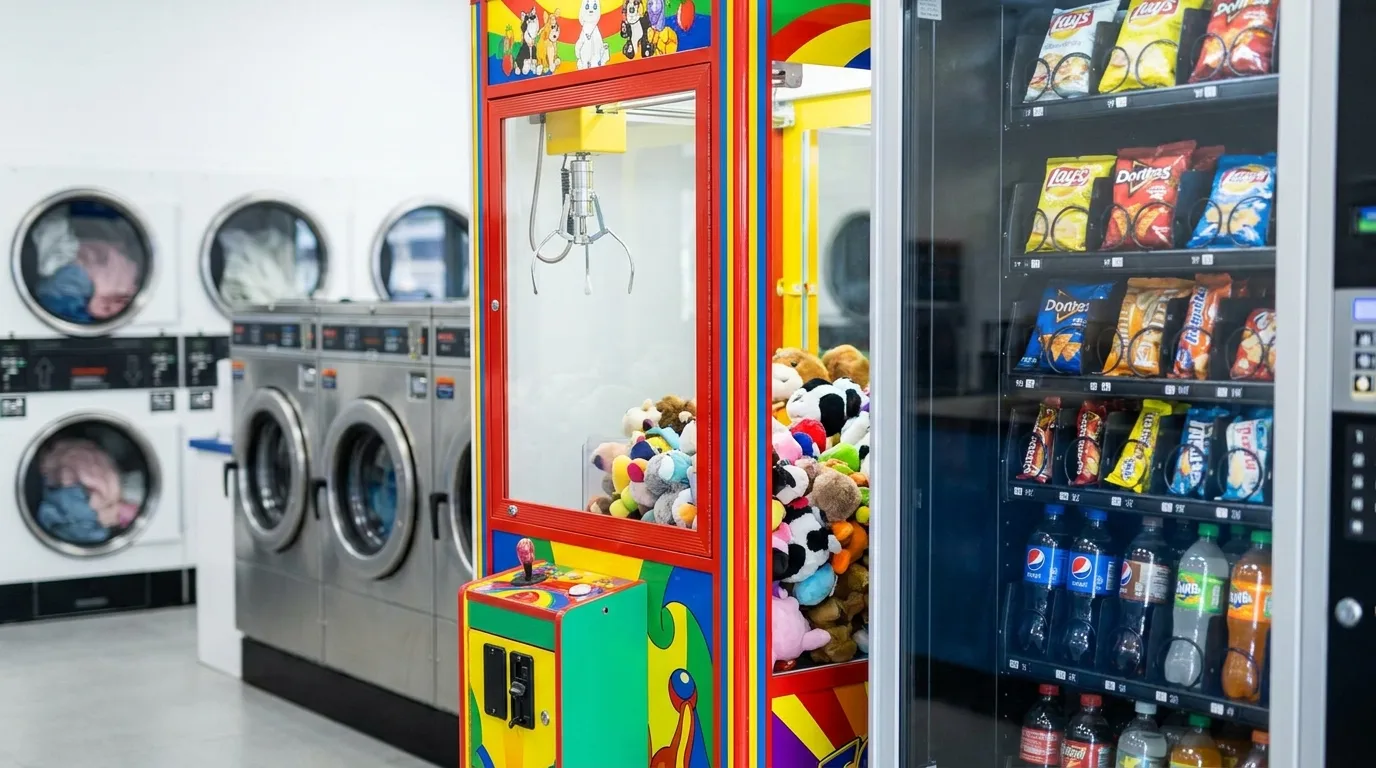
An amusement machine is any coin or card operated device that earns money from entertainment rather than laundry. In a laundromat that usually means claw cranes, kiddie rides, a small arcade cabinet or pinball machine, and sometimes a jukebox. Vending machines for snacks, drinks, and laundry supplies are close cousins that belong in the same plan, because they capture the same captive audience and take even less effort to run.
The common thread is dwell time. Customers spend 30 to 90 minutes in a laundromat with little to do, often with children in tow. Anything that turns that idle time into a small purchase adds to the bottom line without pulling a single extra person through the door. For the wider menu of options, see the guide to laundromat vending and add-on revenue.
How much can arcade and claw machines earn?
Earnings vary widely, so treat any single figure with suspicion. A claw machine in a busy, family-heavy store can bring in a meaningful amount each week, while the same machine in a quiet location may barely cover the cost of its prizes. Vending is steadier than games, and laundry-supply vending carries the highest margin because customers who forget detergent will pay a premium for it on the spot.
The honest answer is that amusement income is a supplement measured in dollars per machine per week, not a second salary. What moves the number most is traffic, the share of customers with children, and how long people wait. A store with slow dryers and long waits, counterintuitively, often earns more from amusements because customers have more idle time to fill. To put any add-on income in context, compare it against the store's core numbers in the guide on how much a laundromat makes.
Which machines make the most sense for a laundromat?
Start with the machines that earn the most for the least labor and space, then add novelty only if you have the traffic to support it. The table below ranks the common options on the factors that matter to an operator.
| Machine type | Typical upfront cost | Labor and restocking | Earning potential | Best for |
|---|---|---|---|---|
| Snack and drink vending | Low to moderate | Restock only | Steady and reliable | Almost every store |
| Laundry supply vending | Low | Restock only | High margin, low volume | Every store |
| Claw crane | Moderate | Restock prizes | Good per square foot | Family and evening traffic |
| Kiddie ride | Low to moderate | Minimal | Small but steady | Stores with young families |
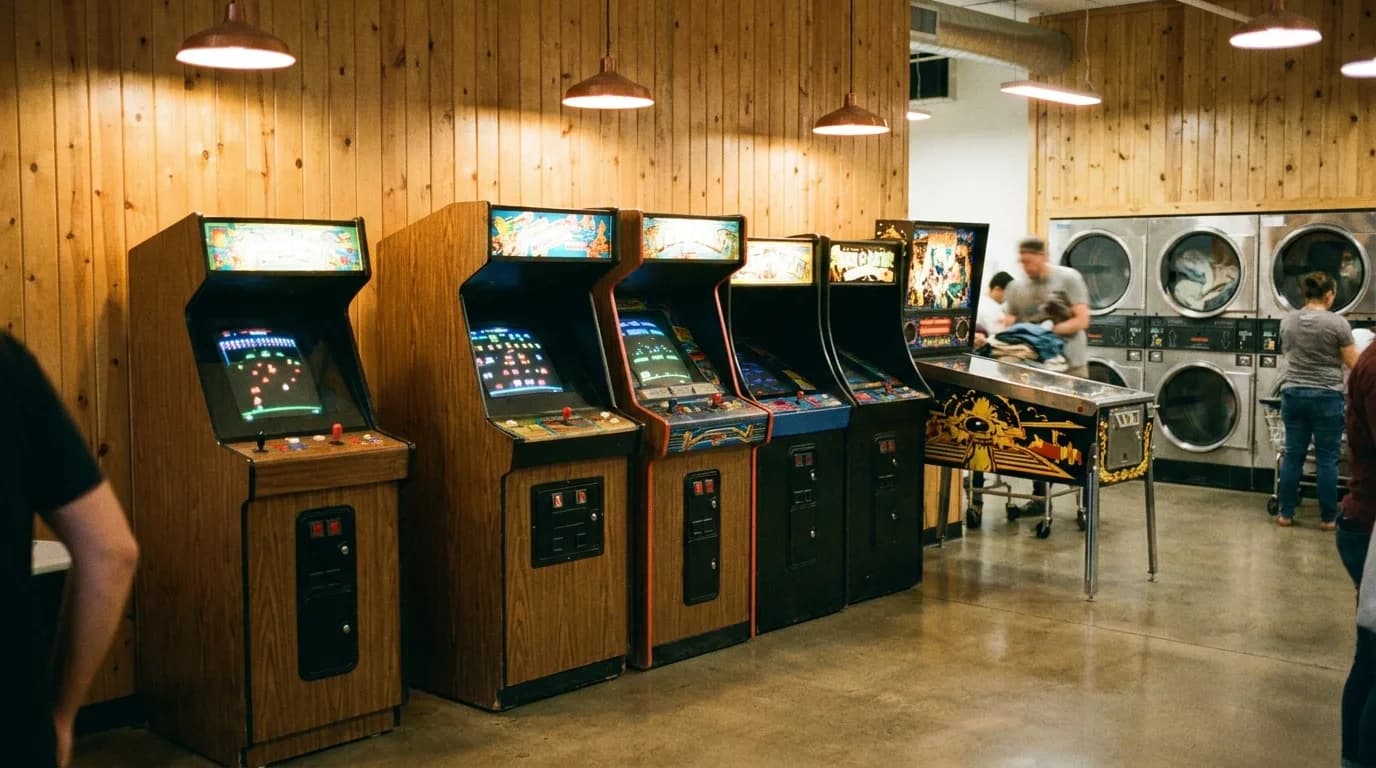
| Arcade cabinet or pinball | Moderate to high | Occasional maintenance | Variable, novelty driven | High-traffic, high-dwell stores |
For most stores the winning mix is vending plus one claw machine, with a kiddie ride if you serve a lot of young families. Reserve full arcade cabinets and pinball for high-traffic locations where the novelty draws repeat play, since they cost more, need upkeep, and lose their pull as the games age.
Should you own the machines or use a route operator?
You have two paths. You can buy the machines outright and keep all the income, or you can let a route operator place their machines in your store and split the revenue, commonly somewhere around half, with the operator handling delivery, maintenance, and restocking.
Owning maximizes income and lets you value the revenue cleanly when you sell, but it ties up cash, adds a maintenance chore, and puts the risk of a dud machine on you. An operator deal removes the upfront cost and the labor, which makes it a low-risk way to test whether amusements work in your location at all. A sensible approach is to start with an operator or a single owned machine, prove the demand, then buy your own once you know the numbers.
What space and power do you need?
Amusement machines compete with washers and dryers for the most valuable thing in a laundromat, which is floor space. Before you add anything, make sure it will not block the walkways to your best-earning machines or crowd the folding area. Claw machines and arcade cabinets each need a few square feet plus clearance, and most run on a standard outlet, though heavier machines and multiple units can add up on your electrical load.
Put amusements where they catch idle attention without getting in the way, typically along a wall near the seating or the children's area rather than in the main traffic lane. If space is tight, a single well-placed claw machine and a vending bank will almost always out-earn a crowded row of cabinets that make the store feel cluttered. Layout is part of what makes a location work, a theme covered in what makes a great laundromat location.
How are amusement machines taxed and insured?
Amusement income is taxable business income, so it belongs on your books alongside laundry revenue and should be reported like any other receipts. Keep the collections logged, because clean records are what let you prove the income to a buyer or a lender later. General guidance on reporting business income is available from the IRS.
Local rules vary. Some cities and counties require a permit or a per-machine license for coin-operated amusement devices, and a few restrict certain game types, so confirm the rules with your local authority before you install anything. On insurance, tell your carrier you are adding machines, since coverage for the equipment and any related liability may need to be added to your policy. The Coin Laundry Association is a useful industry resource for operators weighing these decisions.
How do amusement machines affect resale value?
Because laundromats sell on a multiple of seller's discretionary earnings, any steady, verifiable add-on income raises the sale price, not just the monthly cash flow. If amusement machines add a few hundred dollars of real monthly profit, a typical multiple turns that into several thousand dollars of extra value at sale. The catch is that a buyer will only pay for income they can verify, so undocumented cash from a claw machine is worth far less than the same income backed by collection logs.
Owned machines also count as assets that transfer with the sale, while operator-placed machines usually do not, since they belong to the operator. If you plan to sell, own the income you want credit for and keep records that hold up in due diligence. To see how add-on income flows into a valuation, run the numbers in the laundromat calculators and read how to value a laundromat.
How to test amusement revenue before you commit
Do not fill a wall on a hunch. Start with one or two machines, ideally on an operator deal or a single owned claw machine, and meter the collections for two to three months across different seasons. Track each machine separately so you can keep the winners and pull the ones that do not pay for their floor space.
Consider a worked example. Say you place one claw machine and it nets 40 dollars a week after prizes, which is roughly 170 dollars a month, or about 2,000 dollars a year of added profit. On a typical earnings multiple, that steady income could add several thousand dollars to the store's value, on top of the cash it produces each month. If a second machine earns half as much, it may still be worth keeping. If it earns almost nothing, the test just saved you from tying up cash and cluttering the floor. Let the meters, not the sales pitch, decide what stays.
Frequently asked questions
Do arcade machines make money in a laundromat?
They can, but usually as a modest supplement rather than a core income stream. Earnings depend heavily on traffic, the share of customers with children, and how long people wait. Meter-test one machine before adding more.
What is the best amusement machine for a laundromat?
For most stores, vending plus a single claw crane earns the most for the least labor and space. Kiddie rides suit stores with young families, and full arcade cabinets only pay off in high-traffic, high-dwell locations.
Should I own the machines or use a route operator?
An operator places and services machines for a revenue split, usually around half, with no upfront cost or labor, which makes it a low-risk way to test demand. Owning the machines keeps all the income and lets you value it cleanly at sale, but ties up cash and adds upkeep.
Do amusement machines increase a laundromat's value?
Yes, when the income is steady and documented. Laundromats sell on a multiple of earnings, so verifiable add-on profit raises both monthly cash flow and the sale price. Undocumented cash is worth far less to a buyer.
Do I need a license for coin-operated amusement machines?
Often yes. Many cities and counties require a permit or a per-machine license for coin-operated amusement devices, and some restrict certain game types. Confirm the rules with your local authority before installing anything.