Buying a Laundromat in Idaho
SudsList Editorial · Jul 27, 2026
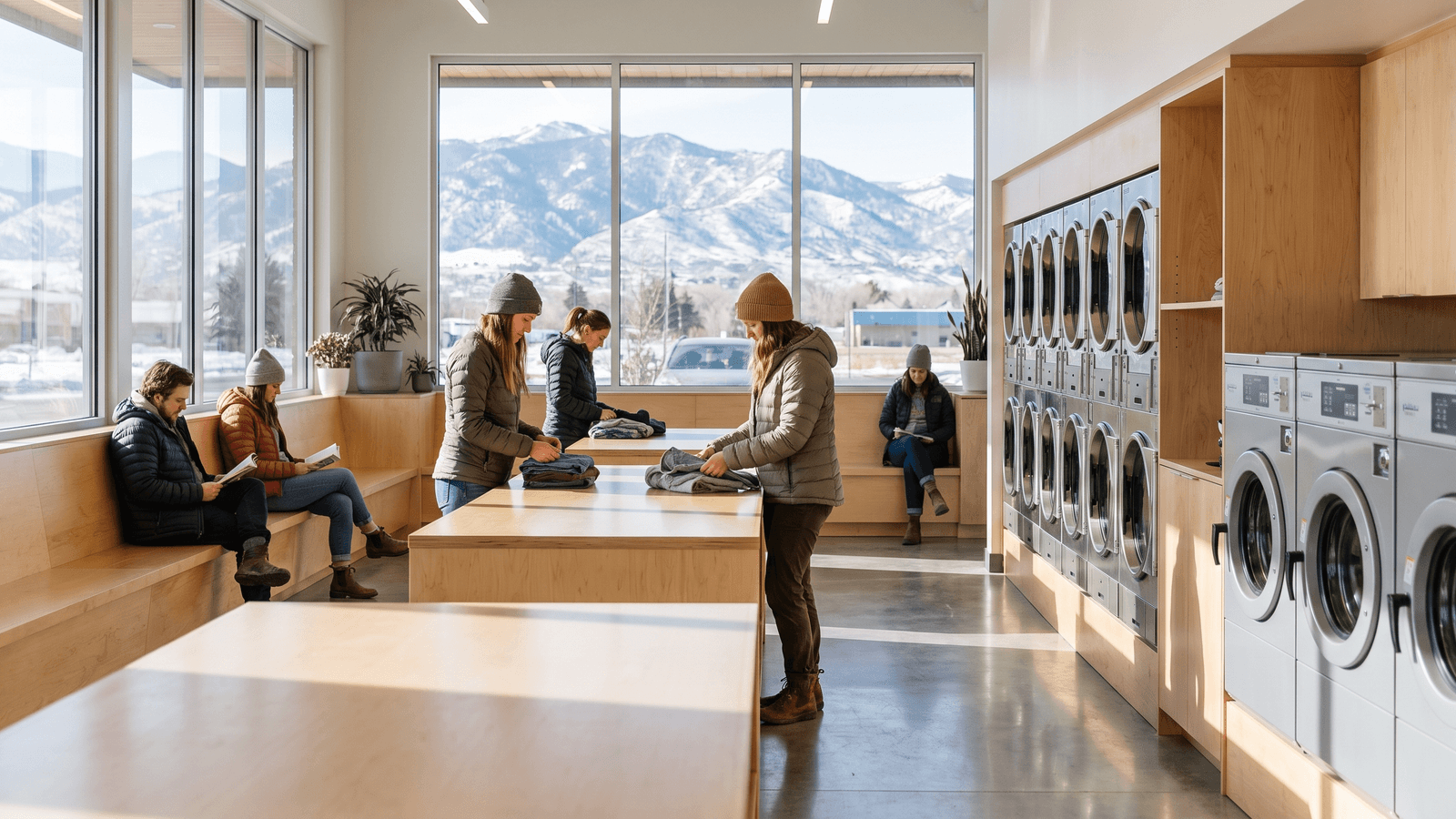
Buying a laundromat in Idaho means matching one of the fastest-growing states in the country with a business model that thrives on steady rental demand. Strong in-migration into the Treasure Valley (Boise, Meridian, and Nampa), plus growth in Idaho Falls and Coeur d'Alene, keeps renters and apartment dwellers cycling through laundry. Expect to pay a multiple of seller's discretionary earnings (SDE), commonly around 3.0x to 4.5x, with price driven by lease terms, equipment age, and verified revenue. Confirm every number in person and lean on a CPA and attorney before you sign.
Contents
- The Idaho market
- Where the demand is
- What to check in Idaho
- Financing and costs
- Idaho permits and rules
- A worked example
- Where to look
The Idaho market
Idaho has been one of the fastest-growing states in recent years, and that growth is the backbone of the laundromat opportunity here. New residents, younger households, and a steady stream of renters all support consistent wash-and-dry volume, especially in and around Boise. The state has absorbed people leaving higher-cost markets in the West, and many of them land in rentals before they buy, exactly the households that keep a laundromat busy. That inbound flow, combined with a comparatively affordable cost structure, is why patient operators find room to run profitable stores here. Before you fall for a headline number, learn how to value a laundromat and run the figures through the laundromat valuation calculator.
- Rapid population growth. Sustained in-migration adds households faster than many markets, which supports rental density and laundry demand.
- Lower operating costs. Compared with many coastal states, Idaho tends to offer relatively lower utility and occupancy costs, which can help margins.
- Newer renter base. A younger, mobile population leans on apartments and rentals, the households most likely to use a laundromat.
- Room to modernize. Many stores still run older equipment, so a buyer who upgrades machines and adds card or app payments can lift revenue.
Where the demand is
Demand concentrates in the fast-growing metros, where renters and multifamily housing cluster. The strongest sites sit near dense apartment stock, workplaces, and everyday errand traffic, so study the trade area around each candidate rather than the metro as a whole.
| Metro | Why it matters |
|---|---|
| Boise | State capital and largest metro, strong job growth and a deep renter base driving steady laundry volume. |
| Meridian / Nampa (Treasure Valley) | Booming Boise suburbs with rapid housing and population growth, expanding rooftops and rental demand. |
| Idaho Falls | Eastern Idaho hub serving a wide regional trade area with stable, less-seasonal demand. |
| Coeur d'Alene | Northern Idaho growth market near Spokane with tourism and in-migration supporting usage. |
Whichever metro you target, weigh the fundamentals in what makes a great laundromat location.
What to check in Idaho
Serious diligence protects your money, so work through a full due diligence checklist for laundromat buyers before committing.
- Utilities and water. Pull 12 to 24 months of water, sewer, gas, and electric bills. These are your largest recurring costs and they reveal real machine usage. A sudden dip in water consumption can signal broken machines or a store that is quieter than the seller claims.
- Equipment age and condition. Note the make, age, and service history of washers and dryers. Aging equipment can mean large near-term replacement costs.
- The lease. Term, rent escalators, renewal options, and assignment rights can make or break a deal. Study reviewing a laundromat lease closely.
- Real revenue verification. Ask for bank deposits, coin or card processor reports, and utility-implied volume rather than relying on a seller's spoken figure.
- Competition and trade area. Map nearby stores and check whether recent growth has attracted new competitors or new construction that could shift traffic. Fast-growing suburbs like Meridian and Nampa can add a modern competitor within a mile of an older store, so drive the area at different hours and note who is winning the wash.
Financing and costs
Many Idaho laundromat purchases fit the SBA 7(a) model, which appeals to buyers because of longer terms and modest down payments. Because laundromats generate steady cash flow, lenders often view them favorably, and the relatively lower occupancy costs in many Idaho markets can strengthen the coverage a lender wants to see. Model the monthly payment with the SBA loan payment calculator and review your options on the financing page.
- Down payment. SBA deals often require roughly 10% to 20% down, though your lender and credit profile set the terms.
- Rent-to-revenue ratio. Keep occupancy cost in check. Test it with the rent-to-revenue calculator before you commit.
- Working capital. Budget for repairs, deposits, and a few slow months so a surprise does not stall you.
- Equipment reserves. Older machines can fail, so set aside funds for replacement or refurbishment.
- Upgrade budget. Plan for payment-system or machine upgrades that can grow revenue over time.
Once you have real numbers, run the deal through the deal analyzer and confirm earnings with the SDE calculator.
Idaho permits and rules
Requirements vary by city and county, so confirm the specifics with local agencies before you buy or transfer a store. Boise, Meridian, Nampa, Idaho Falls, and Coeur d'Alene each set their own local rules.
- Business licensing. Idaho has no statewide general business license, but you will register for a seller's permit and may need local licensing depending on the jurisdiction.
- Plumbing and building permits. Any changes to machines, drains, or the buildout typically trigger local plumbing and building permit review.
- Wastewater and water rules. Municipal sewer and water utilities set discharge and usage standards that affect a high-volume laundry.
- Zoning, signage, and health. Confirm the site's zoning allows a laundromat and that signage and any attendant or vending elements meet local codes.
None of this is legal advice, so verify licensing, permits, and tax treatment with a CPA, an attorney, and the relevant Idaho and local agencies.
A worked example
Picture a Treasure Valley store with a verified SDE somewhere between $80,000 and $95,000 per year. At a 3.0x multiple, an $80,000 SDE points to roughly $240,000, while a 4.5x multiple on a $95,000 SDE points to roughly $427,500. That spread reflects differences in lease strength, equipment age, competition, and how clean the revenue records are. A long, assignable lease and newer machines push toward the high end, while short leases and aging equipment pull the price down. The gap between those two prices is real money, and it is decided almost entirely by diligence, so the effort you put into verifying the numbers directly protects what you pay.
These numbers are illustrative only. Plug your own figures into the valuation calculator, confirm earnings with the SDE calculator, and size the loan with the SBA loan payment calculator.
Where to look
- Browse active listings. Start with laundromat listings and filter for Idaho markets like Boise, Nampa, and Coeur d'Alene.
- Set alerts. Good stores sell fast, so create alerts so new Idaho listings reach you early. In competitive markets like the Treasure Valley, being first to respond can put you ahead of other buyers.
- Follow a process. Work the buyers roadmap and read how to buy a laundromat to move from search to close with discipline.
Idaho rewards patient buyers who verify the numbers and pick growing trade areas. The state's momentum is real, but it does not fix a bad lease, tired equipment, or an overpriced deal, so let diligence guide every offer. Do the work, lean on local advisors, and let the growth of Boise, the Treasure Valley, and beyond work in your favor over the long run.
Frequently asked questions
Where is laundromat demand strongest in Idaho?
Demand concentrates in the Treasure Valley, meaning Boise, Meridian, and Nampa, where population and rental growth are fastest. Idaho Falls and Coeur d'Alene are also solid growth markets. Renter-heavy neighborhoods and multifamily housing tend to support the steadiest laundry volume.
How is an Idaho laundromat valued?
Most laundromats are priced as a multiple of seller's discretionary earnings (SDE), commonly around 3.0x to 4.5x. Lease strength, equipment age, competition, and how clean the revenue records are move the multiple. Always verify earnings with bank deposits and utility bills rather than the seller's spoken figures.
Can I use an SBA loan to buy a laundromat in Idaho?
Yes, many Idaho laundromat purchases fit the SBA 7(a) program, which offers longer terms and modest down payments. Down payments often run roughly 10% to 20% depending on your lender and credit profile. Model the monthly payment and confirm your rent-to-revenue ratio before committing.
What permits and rules apply to Idaho laundromats?
Requirements vary by city and county, so confirm with local agencies in places like Boise, Nampa, or Coeur d'Alene. You may need a seller's permit, local business licensing, plumbing and building permits, and zoning approval. Wastewater and water utility standards also apply to high-volume laundries.
How is sales tax handled for an Idaho laundromat purchase?
Idaho charges statewide sales tax, and self-service laundry and asset transfers can have specific treatment, so this is not tax advice. You will typically register for a seller's permit, and the sale of business assets may carry tax implications. Confirm the details with a CPA and the Idaho State Tax Commission.