Buying a Laundromat in Indiana
SudsList Editorial · Jul 27, 2026
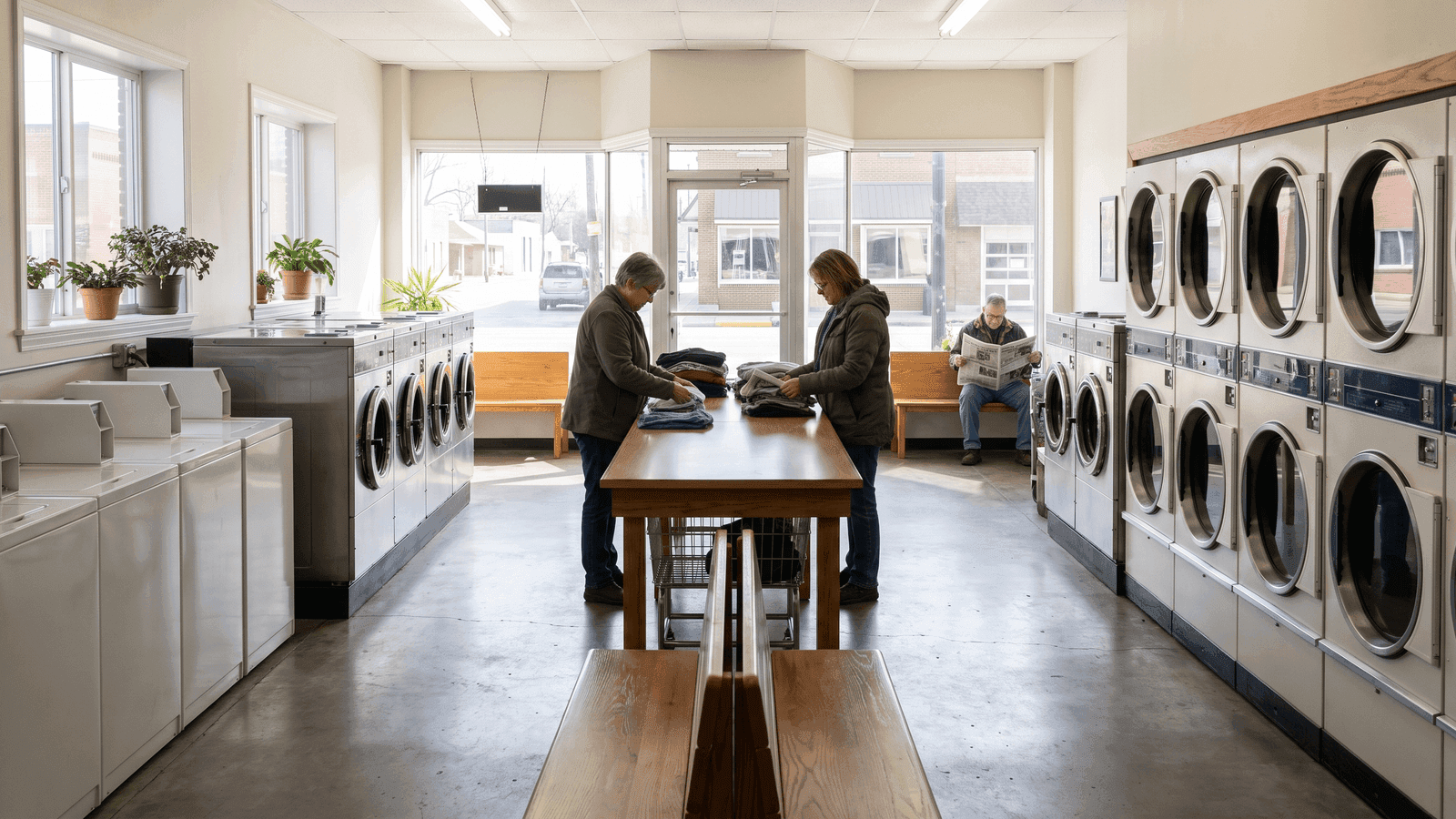
Indiana offers steady, unglamorous laundromat demand rooted in a mix of manufacturing towns, university communities, and dense renter neighborhoods across its metros. Indianapolis anchors the market with the largest pool of buyers, sellers, and rental households, while Fort Wayne and Evansville give secondary markets with lower entry prices and loyal repeat customers. The trade-offs are familiar: metro stores cost more but offer deeper demand and easier resale, while smaller-city and rural stores can be cheaper to buy but hinge on a single anchor (an apartment cluster, a plant, a campus). Success in Indiana comes down to verifying real utility costs, confirming lease terms, and checking that equipment is not near the end of its life.
Contents - The Indiana market - Where the demand is - What to check in Indiana - Financing and costs - Indiana permits and rules - A worked example - Where to look
The Indiana market
Indiana laundromats serve renters, students, and working households who either lack in-unit machines or prefer the speed of large-capacity commercial equipment. That demand is durable, but it is not uniform across the state.
- Renter density drives revenue. Stores near apartment complexes, older housing stock, and neighborhoods with many multi-family units tend to see the most consistent turns.
- Equipment condition sets the risk. A store with recently replaced washers and dryers is very different from one running 15-year-old machines. Ask for the age and service history of every unit.
- Utility exposure is real. Laundromats are water-, gas-, and electricity-intensive. In Indiana's climate, gas dryer costs matter through the cold months, so review a full year of bills, not a summer snapshot.
- Card versus coin. Many Indiana stores have converted to card or app payment, which changes both revenue reporting and reinvestment needs. Understand what system is in place and who supports it.
To pressure-test whether an asking price matches the earnings, run the numbers through the laundromat valuation calculator before you get emotionally attached to a listing.
Where the demand is
Indiana's three primary metros each have a distinct character worth understanding before you shop.
- Indianapolis. The state's largest market, with the widest range of neighborhoods, the most rental households, and the deepest pool of both buyers and sellers. Expect more competition for good stores and firmer pricing, but also the easiest path to resale later.
- Fort Wayne. A steady northeastern Indiana market with a broad residential base and lower typical entry costs than Indianapolis. Neighborhood anchors and repeat local customers matter here.
- Evansville. A southwestern Indiana hub near the Ohio River with its own working-household base and a smaller, more relationship-driven market.
Beyond the big three, university towns (such as the Bloomington and West Lafayette areas) and smaller manufacturing cities can support strong single stores, but they concentrate risk in one demand source. If a college store empties out every summer or a plant closes, revenue moves with it. Study the surrounding rooftops and the tenant mix using the principles in what makes a great laundromat location.
What to check in Indiana
Diligence in Indiana looks like diligence anywhere, with a few local emphases. Work through a full due diligence checklist and pay special attention to:
- Verified utility bills. Get 12 months of water, sewer, gas, and electric statements. Utilities are usually the largest operating cost, and a seller's estimate is not evidence.
- The lease. Most Indiana stores are tenants, not owners of the real estate. Read the term, renewal options, rent escalators, and who pays for plumbing and mechanical repairs. A short remaining lease can sink an otherwise good deal. See reviewing a laundromat lease.
- Equipment age and water efficiency. Newer high-efficiency machines lower water and sewer bills. Confirm the make, model, age, and any outstanding lease or loan on the equipment itself.
- Actual collections. For coin stores especially, reconcile reported revenue against bank deposits, water usage, and machine cycle counts. Card systems make this easier but still deserve a cross-check.
- Deferred maintenance. Look for chronic leaks, aging water heaters, and electrical or venting issues that a new owner would have to fund quickly.
Financing and costs
Costs vary widely by market and store size, so treat every figure as something to verify rather than assume.
- Down payment and structure. Many laundromat purchases use SBA-backed loans or seller financing. Model your monthly payment before you commit using the SBA loan payment calculator.
- Rent as a share of revenue. Rent is often the second-largest cost after utilities. A quick rent-to-revenue check tells you whether the lease leaves room for profit.
- Reserve for equipment. If machines are aging, budget for replacement soon after purchase. Fold that into your offer, not into hope.
- Normalized earnings. Rebuild the seller's numbers into a true owner benefit figure using the SDE calculator, then stress-test the whole deal in the deal analyzer.
For a broader view of loan types and lender expectations, the financing overview walks through the common paths.
Indiana permits and rules
Rules vary by city and county, and they change, so confirm current requirements directly with the agencies that enforce them.
- Business registration. Confirm state and local business registration and any local business license requirements with the city or county where the store operates.
- Plumbing and building permits. Any renovation, equipment swap, or plumbing change typically needs permits and inspection through the local building department. Verify before you plan a buildout.
- Water and wastewater. Confirm water service terms and sewer or wastewater discharge rules with the local utility, since usage-based charges directly affect operating costs.
- Sales tax on services. The sales-tax treatment of self-service laundry versus wash-and-fold can differ. Confirm how your specific revenue is treated with an Indiana CPA rather than guessing.
- Signage and zoning. Check zoning and signage rules with the local planning office, especially if you plan to change use or expand.
None of this is legal or tax advice. Use it as an orientation, then verify licenses, permits, wastewater rules, and tax treatment with the appropriate Indiana agencies and a licensed professional.
A worked example
Here is a simplified, illustrative example to show how the math connects. These are round numbers, not a quote for any real store.
- Seller's discretionary earnings (SDE): about $80,000 per year after normalizing add-backs.
- Valuation multiple: laundromats commonly trade in a 3.0x to 4.5x range of SDE, depending on lease quality, equipment age, and location strength.
- Implied price range: roughly $240,000 to $360,000.
A store at the low end of that range might have a shorter lease or older machines, while the high end assumes a long lease, newer high-efficiency equipment, and a strong renter base. If the same store needs $40,000 in near-term equipment replacement, that cost should come out of your offer. Confirm the SDE with the SDE calculator and test the financing against realistic rent and utility assumptions in the deal analyzer. The multiple is a starting point, not a verdict; the lease, the utilities, and the equipment decide where a specific store lands.
Where to look
Good Indiana stores sell through brokers, owner networks, and marketplace listings, and the best ones move quickly.
- Browse active [listings](/listings) to see what is currently for sale across Indianapolis, Fort Wayne, Evansville, and smaller markets.
- Set alerts so new stores in your target metros reach you before the deal is done.
- Follow a process. The buyers roadmap lays out the steps from first look to close, and how to buy a laundromat covers the fundamentals of getting a deal across the line.
Indiana rewards patient buyers who verify the numbers, read the lease closely, and confirm local rules before they sign. Do that work, and a steady laundromat in the right neighborhood can be a durable business.
Frequently asked questions
Which Indiana metros have the strongest laundromat demand?
Indianapolis has the largest and deepest market, with the most renters, buyers, and sellers. Fort Wayne and Evansville are steady secondary markets with lower typical entry costs and loyal local customers. University and manufacturing towns can support strong single stores but concentrate risk in one demand source.
How much does a laundromat cost in Indiana?
Prices vary widely by market, store size, lease quality, and equipment age. Laundromats commonly trade around 3.0x to 4.5x of seller's discretionary earnings. Verify a store's actual earnings and utility costs before assuming any figure, and treat asking prices as a starting point.
What should I check before buying an Indiana laundromat?
Review 12 months of water, sewer, gas, and electric bills, read the full lease including renewal terms and repair responsibility, confirm the age and service history of every machine, reconcile reported revenue against deposits and usage, and budget for any near-term equipment replacement.
What permits and licenses do Indiana laundromats need?
Requirements vary by city and county. Confirm business registration, local licensing, plumbing and building permits, and water or wastewater discharge rules with the relevant local agencies before you buy or renovate. Rules change, so verify current requirements directly rather than relying on estimates.
Is laundry service taxable in Indiana?
The sales-tax treatment of self-service laundry versus wash-and-fold can differ. This guide is a buyer orientation, not tax advice, so confirm how your specific revenue is treated with a licensed Indiana CPA before you close.