Buying a Laundromat in Iowa
SudsList Editorial · Jul 27, 2026
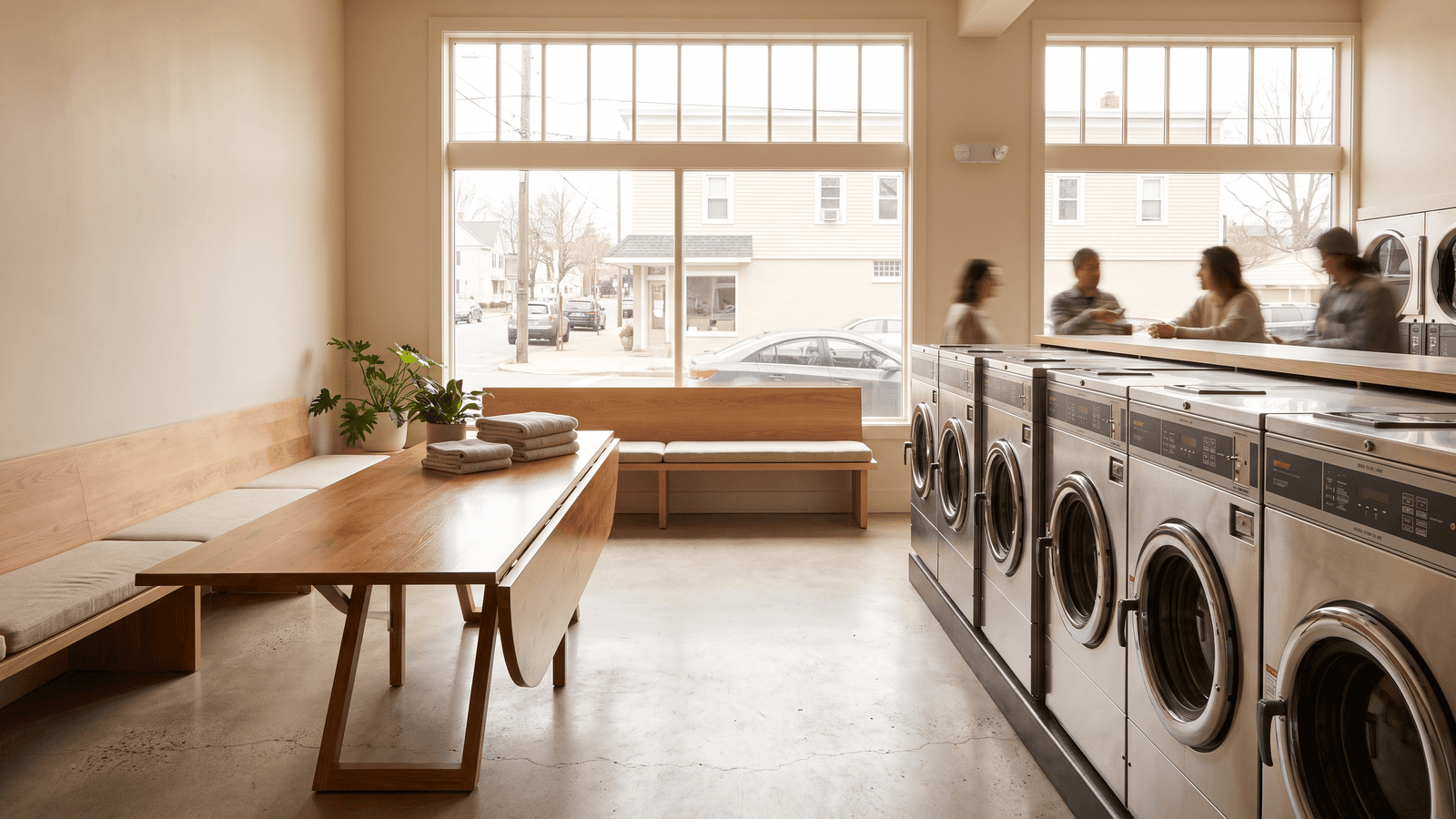
Buying a laundromat in Iowa can be a steady, cash-flowing move because the state pairs low operating costs and modest rents with reliable Midwestern demand. Steady renter populations in Des Moines, Cedar Rapids, the Quad Cities, and university towns like Iowa City and Ames support consistent turns without big-city overhead. To buy well, verify real revenue from utility and collection records, confirm equipment age and lease terms, and value the store on seller's discretionary earnings (SDE). Most deals sell in a common range of about 3.0x to 4.5x SDE, and SBA financing often fits. Always confirm details with a CPA, attorney, and local agencies.
Contents
- The Iowa market
- Where the demand is
- What to check in Iowa
- Financing and costs
- Iowa permits and rules
- A worked example
- Where to look
The Iowa market
Iowa rewards operators who like predictable, unglamorous businesses. Rents and land costs sit well below coastal averages, renter demand holds steady across the year, and the state's diversified economy keeps neighborhoods stable. That combination can make the math work at purchase prices that would be hard to justify in higher-cost states. Iowa also tends to see fewer boom-and-bust swings than markets tied to a single industry, so occupancy and collections stay more consistent from one year to the next. Before you make an offer, ground your numbers with how to value a laundromat and the laundromat valuation calculator.
- Low operating costs. Modest rents and reasonable utility rates leave more room in the margin than most metro markets, which matters because utilities and occupancy are the two biggest line items in any laundromat.
- Steady Midwestern demand. Renter households in college and working-class neighborhoods keep machines turning through every season, and cold winters push more customers indoors to dry rather than line-dry.
- Stable local economies. Des Moines finance and insurance jobs, along with major universities and healthcare systems, cushion Iowa against sharp swings that can hollow out demand in less diversified regions.
- Reasonable entry prices. Lower rents and asking multiples can shorten the path to positive cash flow after debt service, giving newer buyers more room for early mistakes.
Where the demand is
Demand concentrates where renters cluster: growing metros, university towns, and older neighborhoods with fewer in-unit machines.
| Metro | Why it matters |
|---|---|
| Des Moines | Largest metro with a deep insurance and finance job base, steady population growth, and dense renter neighborhoods that support multiple stores. |
| Cedar Rapids | Solid manufacturing and services economy with established working-class areas and consistent, year-round laundry demand. |
| Quad Cities (Davenport) | Cross-river metro spanning Iowa and Illinois, with dense older housing stock and steady renter turnover. |
| Iowa City | University of Iowa anchors a large, stable student renter base that refreshes each academic year. |
University-town stability in Iowa City and nearby Ames (Iowa State) is a real advantage, so weigh renter density and turnover using what makes a great laundromat location.
What to check in Iowa
Careful diligence protects your downside, so work through a structured due diligence checklist for laundromat buyers before you commit.
- Utilities and water. Pull 12 to 24 months of water, sewer, gas, and electric bills to confirm true usage and spot rising municipal rates, since some Iowa cities have raised water and sewer charges to fund infrastructure work.
- Equipment age and condition. Inventory every washer and dryer, note ages and brands, and budget for near-term replacements on tired machines, because a wave of failing equipment can wipe out a year of profit.
- Lease terms. Review remaining term, renewal options, and escalators closely, and study reviewing a laundromat lease before signing anything, since a laundromat lives or dies by its location and lease.
- Real revenue verification. Cross-check claimed collections against utility usage, bank deposits, and any card-system reports rather than trusting a stated number, and ask to observe collections in person if the store is cash-heavy.
- Competition and trade area. Map nearby stores, renter density, and parking, since a crowded corridor can cap your realistic revenue, and drive the area at different times to gauge real foot traffic.
Financing and costs
Laundromats often fit SBA lending well because they show durable cash flow and include equipment as collateral, and Iowa's lower price points can keep loan sizes manageable. Model payments before you offer using the SBA loan payment calculator.
- Down payment. SBA 7(a) deals commonly require meaningful buyer equity, so plan your cash-in early and confirm the exact figure with your lender.
- Rent-to-revenue ratio. Keep occupancy costs sustainable and test them with the rent-to-revenue calculator, since a high ratio quietly erodes every other number in the deal.
- Working capital. Reserve cash for repairs, deposits, and slow early months after closing, because ramp-up rarely goes exactly as projected.
- Financing options. Compare lenders and structures on the financing page before committing to one path, and ask about local Iowa banks that know the market.
- Capital expenditures. Price out likely machine replacements so they do not surprise your first-year budget, and factor any upgrades into your loan request rather than paying out of pocket later.
Pressure-test the full deal with the deal analyzer and confirm earnings with the SDE calculator.
Iowa permits and rules
Requirements vary by city and county, so confirm specifics with local agencies and the relevant Iowa departments before you buy. Treat the items below as a starting checklist, not a complete list.
- Business licensing. Register your entity with the state, confirm any local business license, and secure the sales-tax permit that applies to your operation.
- Plumbing and building permits. Any equipment changes, gas work, or buildouts typically need permits and inspections from your city or county before the machines can run.
- Wastewater and water rules. Laundromats are heavy water users, so verify local sewer, discharge, backflow, and metering requirements, which can carry meaningful monthly costs.
- Zoning, signage, and health. Confirm the site is properly zoned for a self-service laundry and that signage, lighting, and any attended-service rules meet local code.
None of this is legal advice, so confirm your obligations with a CPA, an attorney, and the appropriate Iowa and municipal agencies.
A worked example
Picture an Iowa store with verified SDE somewhere between $75,000 and $90,000 per year. At a 3.0x multiple, that implies a price near $225,000 to $270,000, while a 4.5x multiple implies roughly $337,500 to $405,000. The spread reflects real differences: newer equipment, a long and favorable lease, strong location, and clean books push toward the higher end, while aging machines, a short lease, or thin records pull toward the lower end. A store at the low end of that price range with strong fundamentals is often a better buy than a cheaper store with a failing lease or worn-out machines, so weigh the multiple against what you are actually getting. Run your own figures through the valuation calculator, confirm earnings with the SDE calculator, and test the loan with the SBA loan payment calculator. These numbers are illustrative only.
Where to look
- Browse current laundromat listings and filter for Iowa metros like Des Moines, Cedar Rapids, the Quad Cities, and Iowa City to see what is realistically available.
- Set alerts so new Iowa stores reach you early, before they attract a crowd of buyers, and be ready to move quickly on a well-priced deal.
- Follow a disciplined process with the buyers roadmap and how to buy a laundromat so each step, from first look to closing, has a clear checklist behind it.
Iowa offers a rare mix of low costs and dependable demand, which is exactly the backdrop patient buyers want. Do the diligence, value on verified SDE, lean on the calculators and guides above, and let the numbers guide your offer rather than the seller's optimism.
Frequently asked questions
Where is laundromat demand strongest in Iowa?
Demand concentrates in Iowa's larger metros and university towns. Des Moines has the deepest renter base thanks to its insurance and finance jobs, while Cedar Rapids and the Quad Cities offer dense older housing. Iowa City and Ames add stable, year-round student demand.
How are Iowa laundromats valued?
Most Iowa laundromats are valued on seller's discretionary earnings (SDE), which is owner profit plus add-backs. Sale prices commonly land in a range of about 3.0x to 4.5x SDE. Newer equipment, a strong lease, and clean books push toward the higher multiples.
Can I use an SBA loan to buy a laundromat in Iowa?
Yes, SBA 7(a) loans are frequently used to buy laundromats because the cash flow is durable and equipment adds collateral. Expect a meaningful buyer down payment and plan for working capital. Model your payments and confirm terms with a lender before you make an offer.
What permits and rules apply to Iowa laundromats?
Requirements vary by city and county, so confirm with local agencies. Common items include business licensing, plumbing and building permits for any changes, wastewater and water-use rules, and zoning and signage compliance. This is not legal advice, so consult an attorney.
How is sales tax handled when buying an Iowa laundromat?
Sales-tax treatment of coin and card laundry services can vary, and business asset sales may have their own tax considerations. Register for any required Iowa sales-tax permit if it applies to your operation. Confirm your specific obligations with a CPA and the Iowa Department of Revenue.