Buying a Laundromat in Kansas
SudsList Editorial · Jul 27, 2026
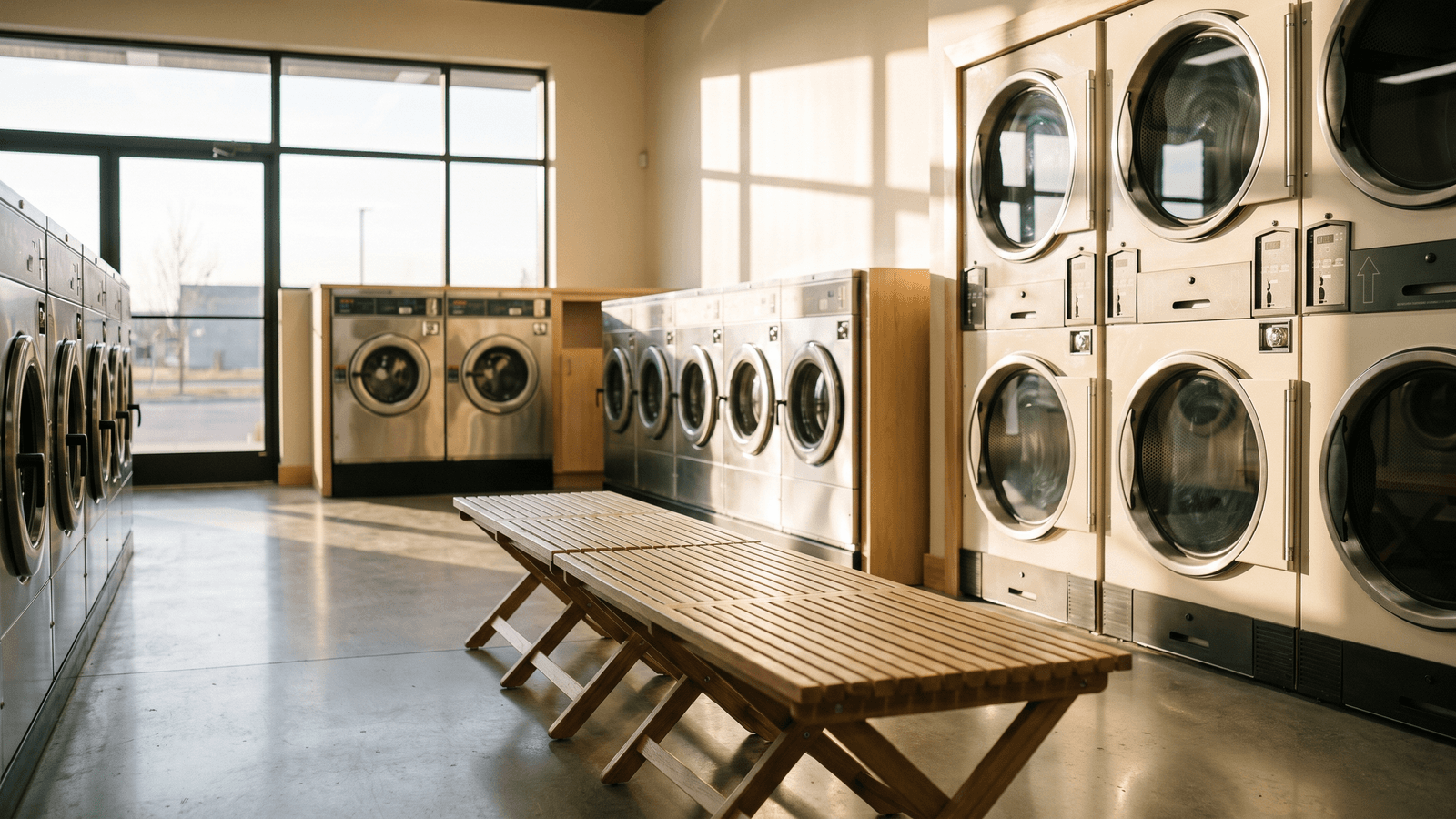
Buying a laundromat in Kansas can be a practical way to own a cash-flowing small business, largely because the state pairs steady Midwestern demand with some of the lowest operating costs in the country. Rents and utilities tend to run cheaper than on the coasts, which protects margins on a business that lives and dies by fixed overhead. Wichita, the Kansas City metro, Topeka, and the university towns of Lawrence and Manhattan all support renter-heavy trade areas. The key is buying on verified numbers, a fair multiple, and a lease long enough to protect your investment for years.
Contents
- The Kansas market
- Where the demand is
- What to check in Kansas
- Financing and costs
- Kansas permits and rules
- A worked example
- Where to look
The Kansas market
Kansas is a lower-cost operating environment, and that shapes how laundromats trade. Cheaper rent and utilities mean more of each dollar in the till reaches the bottom line, which can make even modest gross revenue produce healthy owner earnings. That cost advantage is one reason Kansas stores can pencil out even when top-line collections look ordinary compared with a big coastal metro. Deals are typically priced on a multiple of seller's discretionary earnings (SDE), so learning how to value a laundromat and running numbers through a laundromat valuation calculator matters more than any headline asking price. Treat every asking figure as a starting point to test, never as the value itself.
- Low overhead protects margins. Utility and rent costs in Kansas are generally below coastal averages, which cushions the fixed expenses that drive laundromat profitability.
- Steady, not flashy, demand. Renter households across Kansas metros create consistent year-round volume rather than boom-and-bust seasonality.
- Multiples reward proof. Turnkey stores with verified income and newer equipment command higher multiples, commonly in the 3.0x to 4.5x SDE range depending on lease, location, and condition.
- Older stores carry risk. Attractively cheap listings often hide aging machines or short leases, so the discount can be real cost in disguise.
Where the demand is
Kansas demand concentrates in a handful of metros, each with a slightly different reason to pay attention. The right market for you depends on how much competition you can tolerate and how far you want to travel to manage the store.
| Metro | Why it matters |
|---|---|
| Wichita | Largest city and biggest renter base, giving the deepest pool of trade areas and listings statewide. |
| Kansas City metro / Overland Park | Johnson County spillover brings dense suburbs and strong household counts across the state line. |
| Topeka | Stable state-capital economy with steady, employment-driven demand and modest competition. |
| Lawrence / Manhattan | University towns (KU and Kansas State) supply reliable student and renter turnover near campus. |
Before you commit, study what makes a great laundromat location so you can judge whether a specific address actually captures the renters and foot traffic the metro implies.
What to check in Kansas
Careful diligence is what separates a good buy from an expensive lesson, so work through a full due diligence checklist for laundromat buyers before you sign anything.
- Utilities and water. Pull 12 to 24 months of water, sewer, gas, and electric bills. These are the largest ongoing costs, and Kansas metros vary in rates, so verify them against the machines actually installed.
- Equipment age and condition. Note the make, model, and age of every washer and dryer. Machines near the end of their life mean a capital bill that should shrink the price you pay.
- The lease. A laundromat is only as valuable as its remaining lease term. Read reviewing a laundromat lease and confirm the term, renewal options, and escalation clauses support a long hold.
- Real revenue verification. Trust collections you can prove, not a seller's estimate. Cross-check coin and card revenue against utility usage, and if possible observe collections yourself.
- Competition and trade area. Map nearby laundromats and count renter households within a short drive. A crowded corner or thinning trade area changes the whole picture.
Financing and costs
Established laundromats with documented cash flow are a common fit for SBA 7(a) financing, which can offer long terms and modest down payments for qualified buyers. Because Kansas purchase prices are often lower than in high-cost states, the loan you need may be smaller and the monthly payment easier to cover. Model the payment before you make an offer, and always leave a margin of safety between projected cash flow and debt service.
- Run the loan math. Use an SBA loan payment calculator to see how term and rate change your monthly obligation and cash flow.
- Learn the lending landscape. Review your financing options so you understand what lenders expect from books, collateral, and down payment.
- Keep rent in check. A rent-to-revenue calculator helps confirm occupancy cost stays sustainable, which is easier to achieve given Kansas rents.
- Budget for reinvestment. Set aside reserves for machine replacement, especially in older stores where deferred maintenance is common.
Once you have real numbers, pressure-test the whole deal with a deal analyzer and confirm owner earnings with an SDE calculator before you commit capital.
Kansas permits and rules
Requirements vary by city and county across Kansas, so confirm the specifics with your local municipal offices, county agencies, and the Kansas Department of Health and Environment before closing. Treat the list below as a starting map, not a complete checklist.
- Business licensing. Register your business entity and obtain any city or county business license, plus a Kansas sales tax registration through the Department of Revenue.
- Plumbing and building permits. Any change to plumbing, gas lines, or electrical for machines usually needs local permits and inspections.
- Wastewater and water rules. Confirm sewer discharge, backflow prevention, and water use requirements with the local utility and public works department.
- Zoning, signage, and health. Verify the site is zoned for a laundromat, that signage complies with local code, and that any attached services meet health rules.
None of this is legal advice, so confirm your obligations with a CPA and an attorney familiar with Kansas rules before you close.
A worked example
Consider an illustrative Kansas store with SDE between $75,000 and $90,000 per year. At a 3.0x multiple, the lower end prices near $225,000, and at 4.5x the higher end approaches $405,000. The spread reflects real differences in risk. A store earning $75,000 with older machines and a short lease sits at the low multiple, while a store earning $90,000 with newer equipment, a long lease, and clean books justifies the higher one.
That gap is why proof matters. Two Kansas stores with the same SDE can be worth very different prices depending on lease and equipment. Move an offer up the multiple range only when the fundamentals support it, and walk toward the low end when anything about the books, machines, or lease is uncertain. Test any figure through a valuation calculator, confirm the earnings with an SDE calculator, and check the resulting payment against cash flow using an SBA loan payment calculator. These numbers are illustrative only, so build your own from verified statements.
Where to look
- Browse active inventory. Start with laundromat listings and filter for Kansas to see what is trading in Wichita, the Kansas City metro, Topeka, and the university towns.
- Set alerts and stay patient. Good deals move quickly, so save searches and watch for new stores rather than forcing a purchase.
- Follow a process. Work the buyers roadmap and read how to buy a laundromat so each step, from offer to close, stays disciplined.
Kansas rewards buyers who combine low operating costs with careful diligence and a fair multiple. Verify the numbers, secure a strong lease, and lean on the calculators above, and you can turn a steady Midwestern laundromat into a durable source of cash flow.
Frequently asked questions
Where is laundromat demand strongest in Kansas?
Demand concentrates in Wichita, the largest city with the deepest renter base, and the Kansas City metro, where Overland Park and Johnson County bring dense suburbs. Topeka offers stable state-capital demand, while Lawrence and Manhattan add university-town turnover near KU and Kansas State. These metros give you the most listings and the most reliable trade areas.
How are laundromats valued in Kansas?
Most laundromats are priced on a multiple of seller's discretionary earnings (SDE), commonly in the 3.0x to 4.5x range. The exact multiple depends on lease term, location, equipment age, and how well the income is documented. Kansas low operating costs can lift owner earnings, but you should still verify collections against utility usage before trusting any price.
Can I use an SBA loan to buy a Kansas laundromat?
Yes. Established laundromats with documented cash flow are a common fit for SBA 7(a) financing, which can offer long terms and modest down payments for qualified buyers. Lenders will expect clean books, collateral, and a reasonable down payment. Model the monthly payment against cash flow before making an offer to confirm the deal still works.
What permits and rules apply to laundromats in Kansas?
Requirements vary by city and county, so confirm details with your local municipal and county offices and the Kansas Department of Health and Environment. Typical items include a business license, sales tax registration, plumbing and building permits, wastewater and water rules, and zoning and signage compliance. This is not legal advice, so consult a CPA and attorney before closing.
How is sales tax treated for Kansas laundromats?
Kansas sales tax treatment can depend on how services are delivered, such as self-service coin laundry versus attended or drop-off services. Because rules and rates change and vary locally, register with the Kansas Department of Revenue and confirm your specific obligations. A Kansas CPA can tell you exactly what is taxable for your setup before you take over the business.