Buying a Laundromat in Maine
SudsList Editorial · Jul 27, 2026
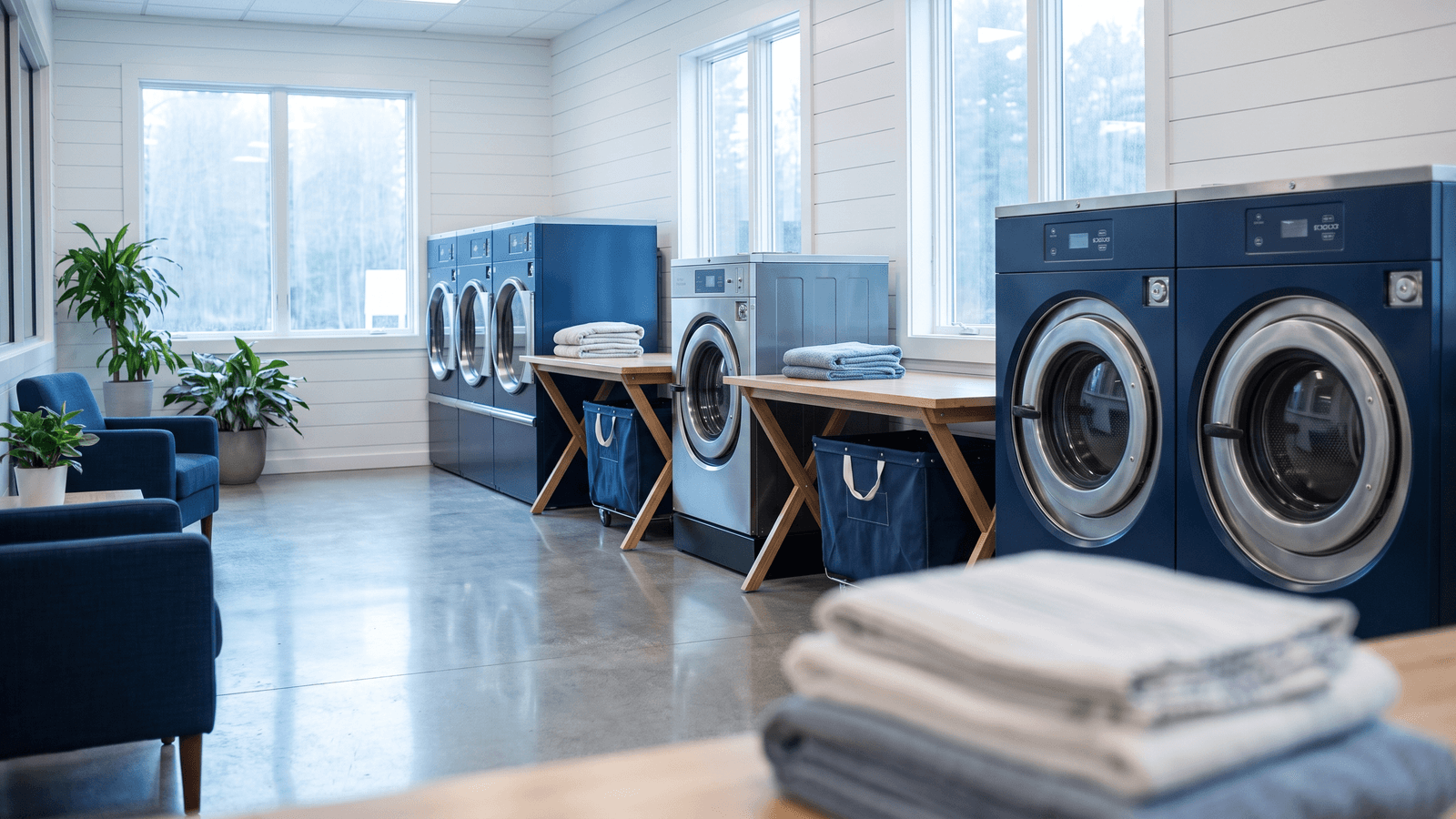
Buying a laundromat in Maine means underwriting a small, seasonal market where long, cold winters push more people toward indoor and outside-the-home laundry. Portland, Lewiston-Auburn, Bangor, and Augusta anchor most of the renter demand, and older housing stock with limited in-unit hookups keeps stores busy year round. Expect to pay a multiple of seller's discretionary earnings, verify utility and heating costs closely, and confirm the lease has real runway. Done carefully, a Maine store can produce steady cash flow, but heating exposure and seasonality make thorough due diligence essential before you commit capital.
Contents
- The Maine market
- Where the demand is
- What to check in Maine
- Financing and costs
- Maine permits and rules
- A worked example
- Where to look
The Maine market
Maine is a small-population state, so laundromats cluster around a handful of renter-heavy metros and college towns rather than sprawling suburban corridors. The upside is stable, recurring demand from tenants who lack in-unit machines. The main variables to model are energy costs and seasonality, both of which hit harder here than in warmer states. Before you build your offer, read how to value a laundromat and run the numbers through the laundromat valuation calculator.
- Winter drives volume and cost. Long, cold winters increase indoor laundry reliance, but heating a store and heating wash water also raise operating expenses you must underwrite carefully. In many Maine stores, energy is the largest controllable line after rent, so a store with efficient heating and hot-water systems can be worth noticeably more than one with dated equipment.
- Seasonality is real. Coastal tourism and summer populations can lift revenue in warmer months, so ask for month-by-month numbers rather than a single annual figure. A store near the coast may see meaningful summer lift from short-term rentals and visitors, then quieter shoulder seasons you need to plan around.
- Older housing helps demand. Much of Maine's housing stock is older with limited in-unit laundry, which sustains a reliable base of repeat customers who have no practical alternative at home.
- Aging population matters. An older demographic can favor clean, safe, well-lit stores and drop-off wash-dry-fold service over bare-bones self-service, which can support a modest premium and higher per-visit revenue.
Where the demand is
Demand concentrates in a few markets where renters, students, and year-round residents overlap.
| Metro | Why it matters |
|---|---|
| Portland / South Portland | Largest metro and renter base, strongest year-round demand and highest competition. |
| Lewiston-Auburn | Dense, historically renter-heavy mill cities with steady working-class laundry demand. |
| Bangor | Regional hub for northern and eastern Maine with a broad surrounding trade area. |
| Augusta | State capital with government workforce and stable local population. |
When you compare specific storefronts, weigh visibility, parking, and nearby apartment density using what makes a great laundromat location.
What to check in Maine
Diligence protects you from paying for revenue that is not there. Start with the due diligence checklist for laundromat buyers, then dig into these Maine-specific items.
- Utilities and heating. Pull 12 to 24 months of gas, electric, and water bills. Cold-climate heating and hot-water costs can swing margins, so understand the fuel source, the age of the heating system, and how the water heater performs during peak winter load.
- Equipment age and condition. Ask the install dates on washers, dryers, and the water heater. Aging machines mean near-term capital expense and downtime in a market where winter reliability matters, and a wave of failures right after closing can wipe out a year of profit.
- Lease terms. Confirm remaining term, renewal options, escalations, and who covers repairs to the roof, HVAC, and plumbing. Use reviewing a laundromat lease so you do not inherit an unfavorable or short lease that undercuts the value of the equipment you are buying.
- Real revenue and seasonality. Verify collections against bank deposits and, where possible, machine counters and utility usage. Insist on monthly figures so summer tourism spikes and quieter winter patterns are both visible before you settle on a price.
- Competition and trade area. Map nearby stores and apartment clusters to confirm the store has a defensible customer base rather than overlapping saturation, and drive the area to judge visibility and parking in real conditions.
Financing and costs
Many Maine laundromat purchases fit SBA financing well because the model produces documented, recurring cash flow that lenders like to see. Lenders will still scrutinize the lease, equipment condition, and verified earnings, so a clean diligence file with organized bills and deposit records strengthens your case and can speed approval.
- Down payment. Plan for a meaningful equity injection, commonly in the range of 10% to 20% of the deal, depending on the lender and structure.
- Debt service. Model the monthly payment before you offer using the SBA loan payment calculator, and review general options on the financing page.
- Rent load. Keep occupancy cost sustainable. Check the ratio with the rent-to-revenue calculator, since Maine rents plus winter utilities can stack up.
- Reserves. Hold cash for a cold-weather equipment failure or a slow shoulder season so a single bad month does not sink you.
Once you have real numbers, stress-test the deal in the deal analyzer and confirm the earnings base with the SDE calculator.
Maine permits and rules
Requirements vary by town and city in Maine, and small municipalities can differ meaningfully from Portland or Bangor. Confirm specifics with local agencies before closing.
- Business licensing. Register your entity with the state and check whether the municipality requires a local business license or registration.
- Plumbing and building permits. Any equipment replacement, plumbing changes, or buildout typically needs permits and inspections through the local code office.
- Wastewater and water rules. Confirm discharge, sewer, and water-use requirements with the local utility or sanitary district, especially for high-volume machines.
- Zoning, signage, and health. Verify zoning allows the use and that signage and any wash-dry-fold or attendant operations meet local rules.
None of this is legal advice. Confirm licensing, permitting, and tax questions with a Maine CPA, an attorney, and the relevant local and state agencies.
A worked example
Here is an illustrative example, not a quote for any specific store. Suppose a Maine laundromat shows seller's discretionary earnings (SDE) between $75,000 and $90,000 per year after you verify the books. At a 3.0x multiple, an $80,000 SDE implies roughly a $240,000 price. At 4.5x, the same earnings imply about $360,000.
That spread reflects risk and quality. A store earns a higher multiple with newer equipment, a long favorable lease, strong verified revenue, and steady year-round demand. It earns a lower multiple when machines are aging, the lease is short, heating costs are heavy, or revenue leans hard on seasonal months. Rework the figures with your own verified numbers using the valuation calculator and the SDE calculator, then check whether the debt service works in the SBA loan payment calculator. Treat every number here as illustrative only.
Where to look
- Browse active inventory. Start with current laundromat listings filtered for Maine to see what Portland, Bangor, and smaller markets are offering.
- Set alerts. Deal flow is thin in a small state, so save a search and set alerts so you see new Maine stores as soon as they post.
- Follow a process. Work the buyers roadmap and how to buy a laundromat so you move from browsing to offer to close in a disciplined order.
Maine rewards patient, careful buyers. Verify the utilities and lease, respect the seasonality, and let the numbers, not the pitch, set your price. With thin deal flow and real heating exposure, the buyer who does the homework and waits for the right store usually ends up with a healthier, longer-lasting investment.
Frequently asked questions
Where is laundromat demand strongest in Maine?
Demand concentrates in the renter-heavy metros: Portland and South Portland, Lewiston-Auburn, Bangor, and Augusta. These markets combine tenants, students, and year-round residents with older housing that often lacks in-unit laundry. Portland has the largest base but also the most competition.
How are Maine laundromats valued?
Most stores are priced as a multiple of seller's discretionary earnings (SDE), commonly in the range of 3.0x to 4.5x. Newer equipment, a long favorable lease, verified revenue, and steady year-round demand push the multiple higher. Aging machines, short leases, and heavy seasonality push it lower.
Can I use an SBA loan to buy a laundromat in Maine?
Often yes. Laundromats produce documented, recurring cash flow that fits SBA lending well. Expect to contribute a meaningful down payment, commonly 10% to 20%, and expect the lender to review the lease, equipment condition, and verified earnings. A clean diligence file helps your case.
What permits and rules apply in Maine?
Requirements vary by town and city. You may need state business registration, a local license, and plumbing or building permits for any buildout or equipment changes. Confirm wastewater, water-use, zoning, and signage rules with local agencies before closing. This is not legal advice.
How is sales tax handled when buying a laundromat in Maine?
Tax treatment of the sale, equipment, and self-service versus wash-dry-fold revenue can vary, and rules change over time. Do not assume a given rate or exemption applies. Confirm the sales-tax and transfer treatment for your specific deal with a Maine CPA and Maine Revenue Services.