Buying a Laundromat in Massachusetts
SudsList Editorial · Jul 27, 2026
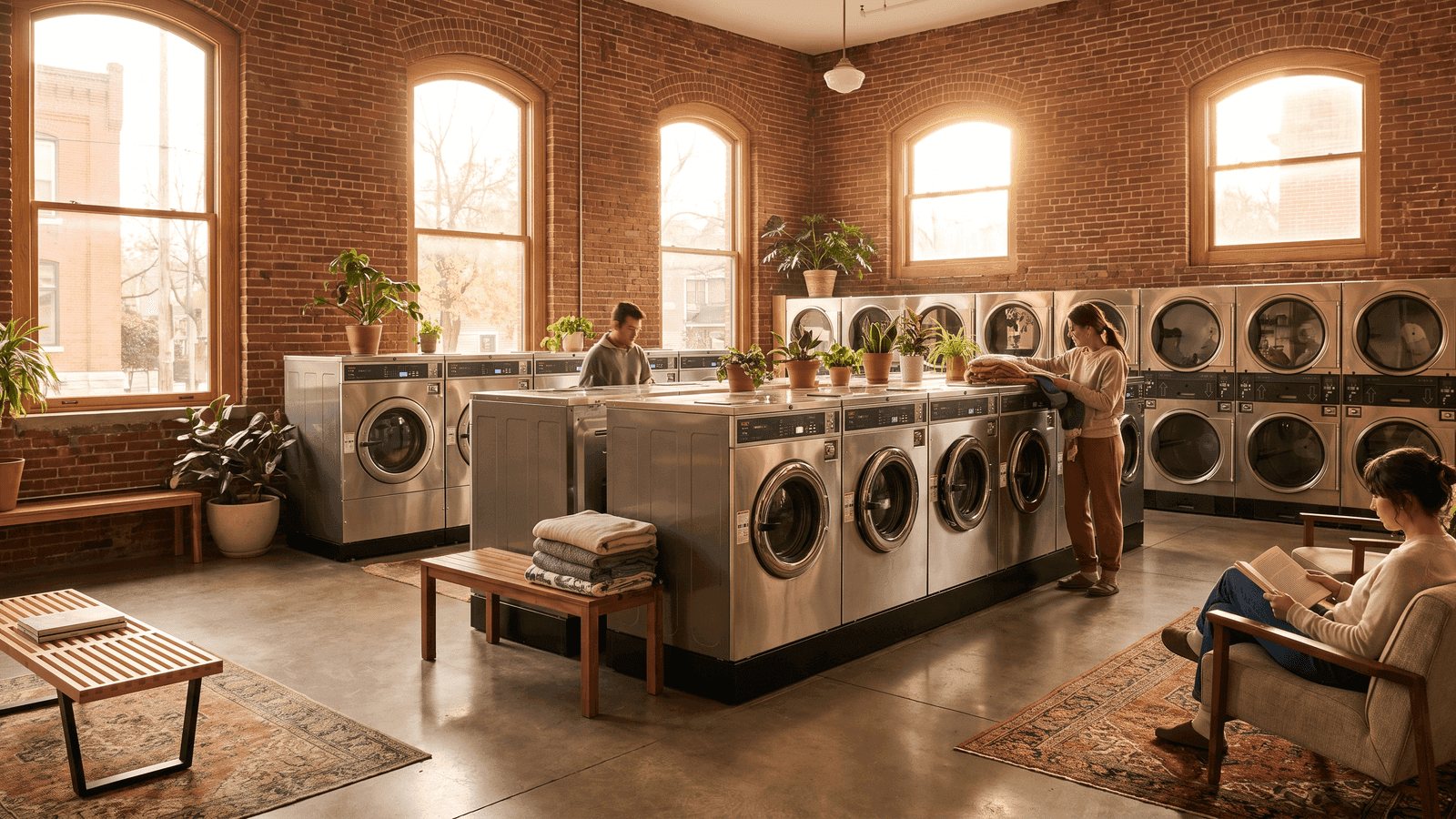
Massachusetts offers steady laundromat demand built on dense, renter-heavy neighborhoods, cold winters that keep dryers busy, and a large base of students and multi-family housing. Most activity clusters around Boston, Worcester, and Springfield, where apartment living and limited in-unit laundry support consistent walk-in traffic. The main trade-off is cost: high rents and property values in the Boston area can compress margins, so pairing strong demand with a workable lease and realistic occupancy costs is the core of any deal here.
Contents
- The Massachusetts market
- Where the demand is
- What to check in Massachusetts
- Financing and costs
- Massachusetts permits and rules
- A worked example
- Where to look
The Massachusetts market
Massachusetts is a densely populated, renter-heavy state, and that profile favors laundromats. Older housing stock in urban neighborhoods often lacks in-unit washers and dryers, which keeps a reliable stream of customers coming through the door. Cold, wet winters add to dryer usage, and a large student population in the greater Boston area creates predictable seasonal turnover.
The flip side is cost. Commercial rents and real estate values in eastern Massachusetts are among the highest in the country, so a store that looks busy can still be squeezed if occupancy costs run too high. That makes the lease and the rent-to-revenue relationship the first things to scrutinize. A useful early screen is to compare rent against gross revenue with the rent-to-revenue calculator before you get attached to a location.
- Renter density drives volume. Neighborhoods with many apartments and triple-deckers tend to support the strongest stores.
- Weather helps. Long winters push more loads through dryers and reduce line-drying.
- Costs vary widely. Rent, utilities, and buildout expenses differ sharply between Boston-area sites and smaller cities.
Where the demand is
Massachusetts demand concentrates in and around its major population centers.
- Boston anchors the state with dense, high-rent neighborhoods, heavy renter and student populations, and strong foot traffic. Competition and occupancy costs are highest here, so location quality matters more than raw size.
- Worcester is the second-largest city and offers a more moderate cost structure, a mix of student and working-family households, and solid neighborhood demand.
- Springfield and the surrounding Pioneer Valley provide lower-cost entry points with steady demand from renters and nearby colleges.
Beyond the big three, smaller cities and mill towns across the state can host durable neighborhood laundromats. What matters most is the immediate trade area: rooftop density, the share of renters, parking or walkability, and how many competing stores share that catchment. For a framework on judging a specific site, see what makes a great laundromat location.
What to check in Massachusetts
Diligence in Massachusetts follows the same fundamentals as anywhere, with extra attention to lease terms and utility costs because both run high in this market.
- Verify the numbers. Reconstruct income from utility bills, coin or card-system reports, and vend prices rather than relying on a seller's summary. Rebuild owner earnings with an SDE calculator.
- Read the lease closely. Remaining term, renewal options, rent escalations, and who pays for major repairs can make or break a store. Walk through reviewing a laundromat lease before signing anything.
- Inspect the equipment. Note the age, brand, and condition of washers and dryers, and budget for near-term replacements.
- Check the utilities. Water, sewer, gas, and electric costs are significant line items; confirm recent bills and how they trend seasonally.
- Understand the water heating and plumbing. These systems are expensive to replace and central to a laundromat's operation.
Work through a full due diligence checklist for laundromat buyers so nothing important slips through.
Financing and costs
Laundromats are often financed with a mix of buyer cash and an SBA-backed loan, since they carry equipment and, in some cases, real estate. Lenders will want to see clean books, a defensible lease, and equipment with useful life remaining.
- Purchase price typically reflects a multiple of yearly owner earnings, adjusted for equipment condition and lease strength.
- Buildout and upgrades can add up quickly if machines are aging or the store needs a card-payment conversion.
- Working capital covers utilities, insurance, and repairs during the ramp-up period.
Estimate a monthly payment with the SBA loan payment calculator, and read the financing overview to understand how buyers usually structure these deals. Massachusetts occupancy costs mean you should stress-test the payment against conservative revenue.
Massachusetts permits and rules
Regulatory requirements are handled locally, so confirm the specifics for your city or town rather than assuming a statewide answer.
- Business licensing. Confirm general business registration and any local licenses with your city or town clerk and the relevant county or municipal agencies.
- Plumbing and building permits. Any equipment replacement, plumbing work, or buildout usually requires permits; confirm requirements with the local building and plumbing departments.
- Wastewater and sewer. Laundromats discharge significant water, so confirm any wastewater or sewer-use rules with the local water and sewer authority.
- Sales tax treatment. The tax treatment of self-service laundry versus wash-and-fold service can differ; confirm how sales tax applies to your revenue with a Massachusetts CPA.
This is buyer orientation, not legal or tax advice. Treat every regulatory and tax item as something to verify with the appropriate local agency or a licensed professional before you close.
A worked example
Consider a hypothetical Worcester-area store. Suppose diligence supports about $120,000 in seller's discretionary earnings (SDE) after normalizing the owner's add-backs. Laundromats commonly trade in a range of roughly 3.0x to 4.5x SDE, with the multiple driven by lease strength, equipment age, and how hands-off the store runs.
- At 3.0x, the price lands near $360,000, a level that might reflect aging machines or a short remaining lease.
- At 4.5x, the price approaches $540,000, more typical of newer equipment, a long lease, and strong, verifiable books.
- A mid-range 3.75x puts the price around $450,000.
These are round, illustrative figures, not an appraisal. Plug your own numbers into the laundromat valuation calculator and run the full picture through the deal analyzer to see how price, financing, and rent interact. For the underlying method, read how to value a laundromat.
Where to look
Start by browsing available stores and building a feel for pricing in your target metros. Set alerts so new Massachusetts listings reach you early, since well-priced stores in dense areas move quickly.
- Browse current laundromat listings and filter for your target cities.
- Set alerts for Boston, Worcester, and Springfield so you see new stores as they post.
- Line up your process in advance with the buyer's roadmap and the broader guide on how to buy a laundromat.
With demand grounded in renter density and cold winters, the Massachusetts opportunity is real. The winning approach is disciplined: confirm the numbers, secure a workable lease, respect the state's higher cost base, and verify every permit and tax question locally before you commit.
Frequently asked questions
Is Massachusetts a good state to buy a laundromat?
It can be. Dense, renter-heavy neighborhoods and cold winters support steady demand, especially around Boston, Worcester, and Springfield. The main caution is high rents and utility costs in eastern Massachusetts, which make the lease and occupancy costs central to any deal.
Where is laundromat demand strongest in Massachusetts?
Demand concentrates in and around the major metros: Boston, Worcester, and Springfield. Neighborhoods with many apartments, triple-deckers, and renters or students tend to support the busiest stores.
What multiple do laundromats sell for in Massachusetts?
Laundromats commonly trade in a range of roughly 3.0x to 4.5x seller's discretionary earnings. The multiple depends on lease strength, equipment age and condition, and how hands-off the store runs. Use a valuation calculator with your own verified numbers.
What permits do I need to run a laundromat in Massachusetts?
Requirements are handled locally. Confirm business registration and licenses with your city or town clerk, plumbing and building permits with local departments, and any wastewater or sewer-use rules with the local water and sewer authority.
How is sales tax handled on laundry in Massachusetts?
The treatment of self-service laundry versus wash-and-fold service can differ. This guide is buyer orientation, not tax advice, so confirm how sales tax applies to your specific revenue with a Massachusetts CPA before you close.