Buying a Laundromat in Michigan
SudsList Editorial · Jul 26, 2026
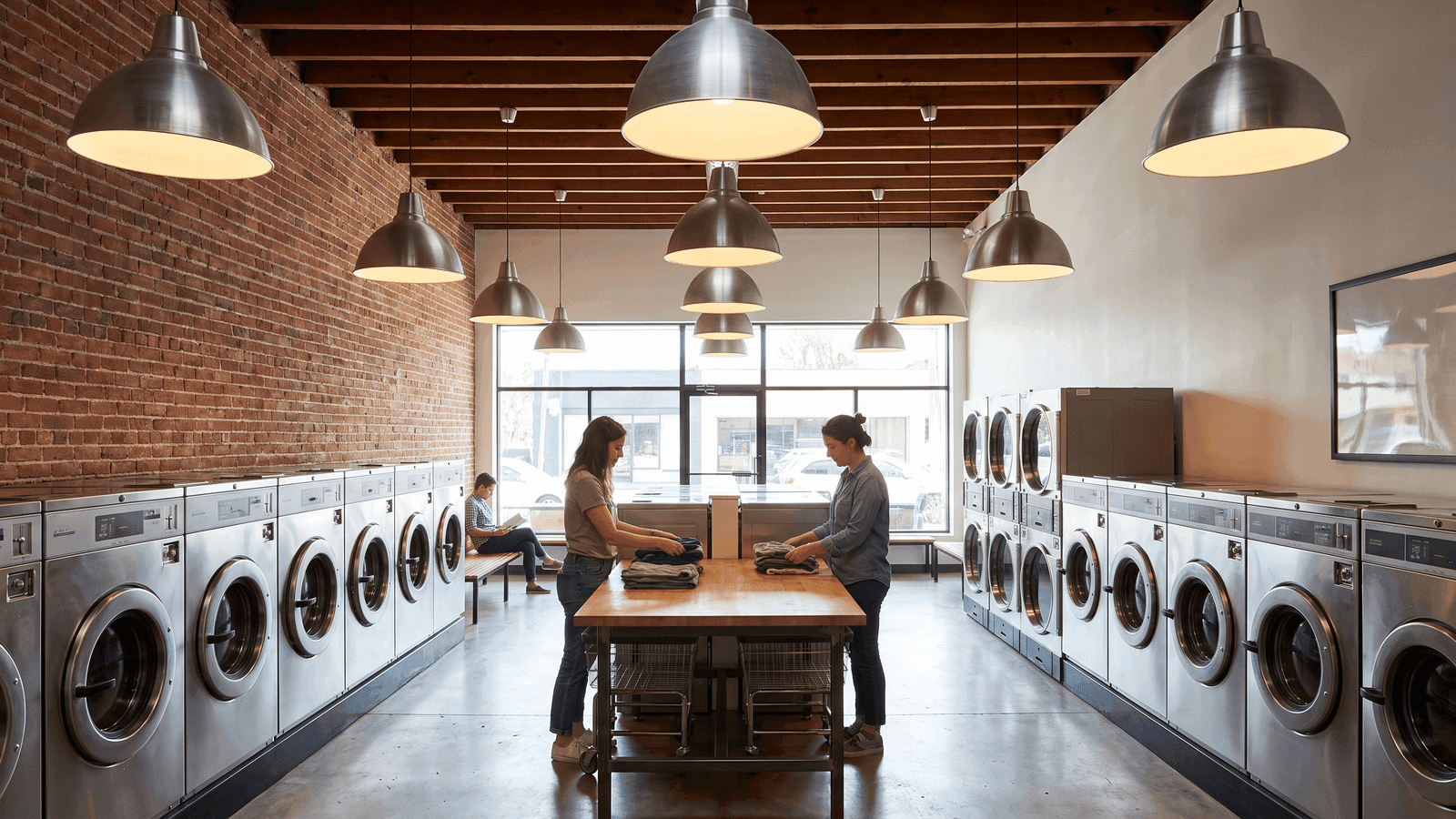
Michigan offers steady, weather-driven demand for laundry across a mix of dense urban neighborhoods, college towns, and older housing stock with limited in-unit hookups. The main opportunities cluster around Detroit and its surrounding metro, Grand Rapids on the west side, and Ann Arbor with its large student and renter base. The key trade-offs are the same ones buyers weigh everywhere: rent and lease terms, the age and efficiency of the equipment, utility exposure (especially water heating through cold winters), and how much of the reported income you can actually verify.
Contents
- The Michigan market
- Where the demand is
- What to check in Michigan
- Financing and costs
- Michigan permits and rules
- A worked example
- Where to look
The Michigan market
Michigan combines a large renter population, an older housing stock in many cities, and real seasonality. Cold winters push more customers toward warm, reliable laundromats, and they also raise the stakes on utility costs because heating water is one of the biggest line items in this business. That mix can support healthy, stable stores, but it rewards operators who watch their gas and water bills closely.
Like most states, Michigan laundromat values track cash flow rather than square footage or machine count alone. A store in a busy rental corridor with modern, efficient equipment and a fair lease will command a stronger multiple than a tired store on a short lease, even if the second one looks bigger. Before you fall for a headline revenue number, learn how the numbers actually work in our guide on how to value a laundromat.
Where the demand is
The strongest laundromat demand tends to follow renters, density, and limited in-unit laundry. In Michigan that points to a few clear areas:
- Detroit and metro Detroit. The state's largest population center, with dense neighborhoods, a big renter base, and plenty of older multi-family housing where in-unit laundry is scarce.
- Grand Rapids. West Michigan's hub, with a growing population and a healthy mix of working households and renters.
- Ann Arbor. A university town with a large, transient student and renter population that leans heavily on laundromats and wash-and-fold.
Beyond these metros, smaller cities and college towns across the state can support solid neighborhood stores. What matters most is the immediate trade area: renter density, parking, visibility, and nearby competition. Our guide on what makes a great laundromat location walks through how to read a trade area before you commit.
What to check in Michigan
Due diligence in Michigan looks like due diligence anywhere, with a few local emphases. Work through a full due diligence checklist for laundromat buyers, and pay special attention to:
- Verifiable income. Ask for utility bills, bank deposits, and any machine or card-system data. Reconcile claimed revenue against water and gas usage, which are hard numbers to fake.
- Utility exposure. Michigan winters mean serious water-heating costs. Confirm the age and efficiency of the water heater and boiler, and review a full year of gas and water bills to capture the cold months.
- Equipment age and condition. Get the make, model, and age of every washer and dryer. Older machines use more water and gas and are closer to replacement.
- The lease. Confirm the remaining term, renewal options, rent escalators, and who is responsible for major repairs and the HVAC. A short or unfavorable lease can sink an otherwise good store. Read our guide on reviewing a laundromat lease before you sign anything.
- Water and sewer. Confirm current water and sewer costs and whether any local rate changes are pending, since these bills drive your margins.
Financing and costs
Many laundromat purchases in Michigan are financed through SBA loans, which are common for cash-flowing service businesses with verifiable books. A clean set of records, a transferable lease, and reasonable equipment condition all make financing smoother.
Before you make an offer, model the deal from a few angles:
- Estimate a fair purchase price with our laundromat valuation calculator.
- Normalize the owner's earnings using the SDE calculator so you are valuing real cash flow.
- Pressure-test the whole deal, including debt service, with the deal analyzer.
- Estimate monthly payments with the SBA loan payment calculator.
- Sanity-check occupancy cost using the rent-to-revenue calculator.
For a broader view of your options, our financing overview explains how buyers typically structure these deals.
Michigan permits and rules
Rules vary by city and county, so confirm the specifics with local agencies rather than relying on general assumptions. As a buyer, plan to verify:
- Business licensing and registration. Confirm any required city or county business license and registration for the location.
- Plumbing and building permits. Any equipment changes, plumbing work, or build-out usually require local plumbing and building permits. Confirm requirements with the city or county building department.
- Wastewater and discharge rules. Some municipalities have wastewater or discharge requirements for commercial laundry. Check with the local water and sewer authority.
- Sales tax treatment. The tax treatment of self-service laundry versus wash-and-fold can differ. Confirm how Michigan sales tax applies to your services with a Michigan CPA.
This is a buyer's orientation, not legal or tax advice. Treat the confirmation steps above as part of your due diligence and lean on local professionals.
A worked example
Here is a simple, illustrative example using round numbers. Suppose a Michigan store reports seller's discretionary earnings (SDE) of $100,000 per year after you normalize the books.
Laundromats commonly trade in a range of roughly 3.0x to 4.5x SDE, depending on lease quality, equipment age, location, and how verifiable the income is. Applying that range:
- At 3.0x, the price is about $300,000.
- At 3.75x (a mid-range multiple), the price is about $375,000.
- At 4.5x, the price is about $450,000.
A store earns the higher end of that range when it has a long, transferable lease, newer efficient equipment, clean verifiable records, and a strong renter-heavy trade area. It falls toward the lower end when the lease is short, machines are near replacement, or the books are hard to confirm. These figures are purely illustrative; run your own numbers with the deal analyzer before making any offer.
Where to look
Good Michigan laundromats do not stay listed for long, so cast a wide net and move quickly when a clean deal appears. Browse current laundromat listings and set alerts so new stores in Detroit, Grand Rapids, Ann Arbor, and beyond reach you early. Talk to local brokers and keep an eye out for owners nearing retirement, who often sell off-market.
When you are ready to work a deal end to end, follow our buyer's roadmap and our guide on how to buy a laundromat to move from first look to closing with your eyes open.
Frequently asked questions
Where is laundromat demand strongest in Michigan?
Demand tends to follow renters and density, which points to metro Detroit, Grand Rapids, and the student-heavy Ann Arbor area. Smaller cities and college towns can also support solid neighborhood stores.
How much does a laundromat cost in Michigan?
Price tracks cash flow, not size. Stores commonly trade around 3.0x to 4.5x seller's discretionary earnings, with lease quality, equipment age, and verifiable income determining where a given store lands.
Why do utility costs matter so much in Michigan?
Cold winters raise water-heating costs, which are among the largest expenses in this business. Review a full year of gas and water bills so you capture the cold months before you value a store.
What permits do I need to run a laundromat in Michigan?
Requirements vary by city and county. Confirm business licensing, plumbing and building permits, and any wastewater rules with local agencies, and verify sales-tax treatment of laundry and wash-and-fold with a Michigan CPA.
How do I verify a Michigan laundromat's income?
Reconcile claimed revenue against utility bills, bank deposits, and machine or card-system data. Water and gas usage are hard to fake and give you a reliable cross-check on reported sales.