Buying a Laundromat in Nebraska
SudsList Editorial · Jul 27, 2026
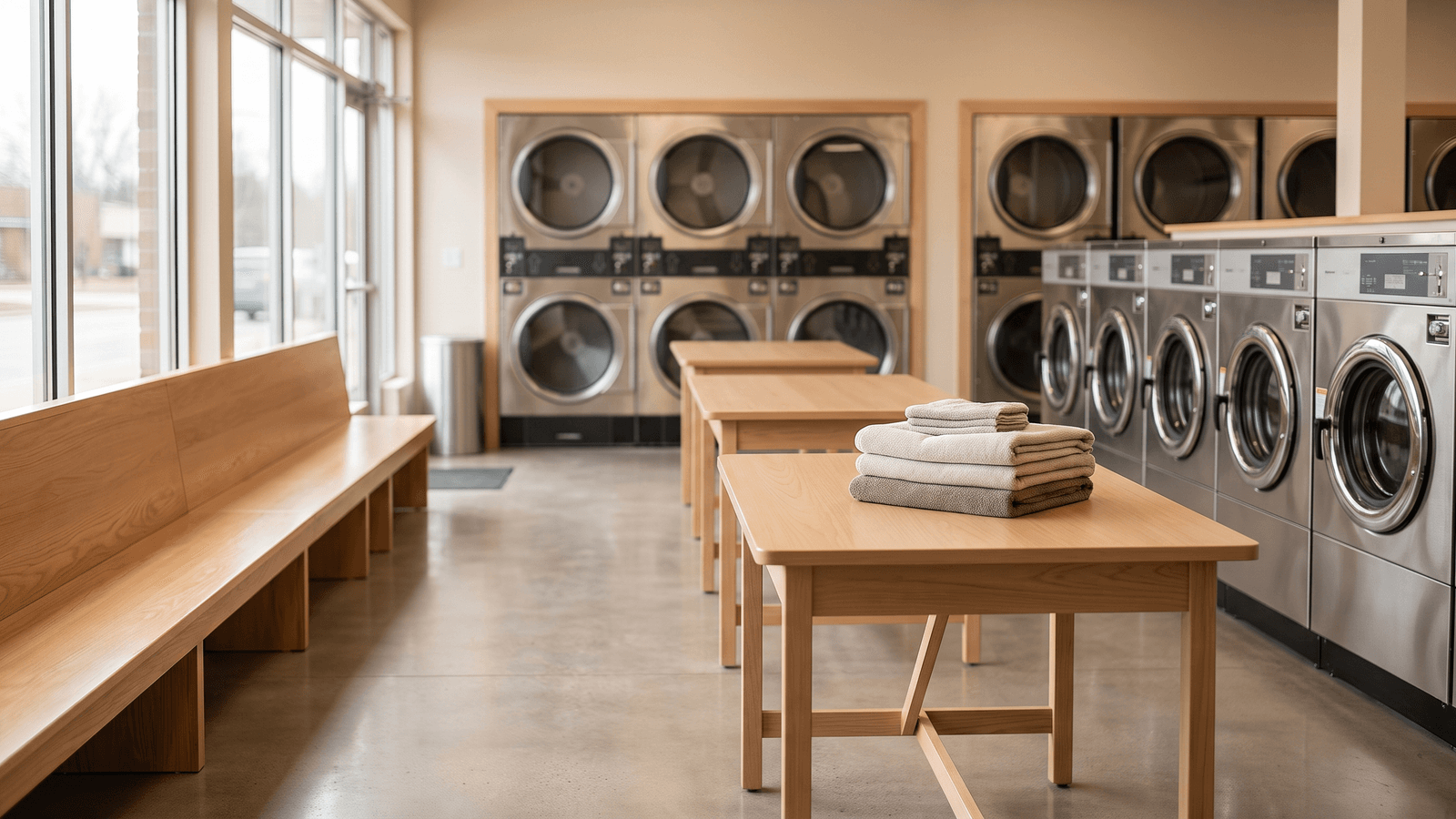
Buying a laundromat in Nebraska means pairing steady Midwestern demand with disciplined due diligence. The state offers low operating costs, a stable renter base, and anchor employers in finance, insurance, and higher education that keep foot traffic predictable. Most small stores trade on a multiple of seller's discretionary earnings (SDE), commonly 3.0x to 4.5x depending on lease terms, equipment age, and verified cash flow. Focus your search on Omaha and Lincoln for volume, then confirm real numbers with utility bills, tax returns, and a solid lease. Treat every figure as something to verify before you sign anything.
Contents - The Nebraska market - Where the demand is - What to check in Nebraska - Financing and costs - Nebraska permits and rules - A worked example - Where to look
The Nebraska market Nebraska rewards operators who value stability over hype. Population growth is modest but consistent, costs stay reasonable, and the largest metros carry deep renter populations who rely on shared laundry. That combination makes cash flow easier to forecast, which matters when you value a store and plan financing.
- Low-cost operating base. Utilities, rent, and labor tend to run lower than coastal markets, which can protect margins if you manage water and gas use carefully.
- Stable renter demand. Apartment-heavy neighborhoods in Omaha and Lincoln supply a reliable customer base that does not swing sharply with the economy.
- Employer anchors. Omaha's finance and insurance sector plus Lincoln's state government and university keep local spending steady year round.
- Value on real earnings. Learn how to value a laundromat and run the numbers through the laundromat valuation calculator before you make an offer.
Nebraska also tends to attract patient buyers rather than speculators, which can keep asking prices grounded. Sellers in smaller markets often price against real earnings because there is no crowd of out-of-state investors bidding stores up. That environment favors a buyer who does the homework, shows up with financing lined up, and negotiates from verified numbers rather than a rushed emotional decision.
Where the demand is Demand clusters where renters, workers, and students concentrate. The table below highlights metros worth prioritizing in a Nebraska search.
| Metro | Why it matters |
|---|---|
| Omaha | Largest market with a deep finance and insurance job base and dense apartment neighborhoods that drive steady volume. |
| Lincoln | State capital and University of Nebraska home, giving strong student and government-worker renter demand. |
| Bellevue | Growing suburb near Omaha with a stable population tied to nearby employment and military presence. |
| Grand Island | Regional hub in central Nebraska with a working renter base and less store competition than the big metros. |
Kearney, home to the University of Nebraska at Kearney, adds another university-town option with steady student turnover and a stable renter base. When you compare candidate stores, weigh visibility, parking, evening safety, and nearby housing density using what makes a great laundromat location. A store on a busy corner near dense apartments will almost always outperform a hidden strip-mall unit, even if the hidden store shows a lower asking price.
What to check in Nebraska Careful verification separates a good buy from an expensive lesson. Start with a full due diligence checklist for laundromat buyers, then dig into these items.
- Utilities and water. Pull 12 to 24 months of water, sewer, gas, and electric bills. These are your biggest variable costs, and Nebraska winters raise heating loads.
- Equipment age and condition. Ask the age, brand, and service history of every washer and dryer. Machines near end of life mean large near-term capital spending.
- The lease. A store is only as strong as its lease. Review term length, renewal options, and rent escalators using reviewing a laundromat lease.
- Real revenue verification. Match seller claims against tax returns, bank deposits, and if possible utility usage that implies machine turns. Do not rely on a spoken number.
- Competition and trade area. Map nearby laundromats and apartment density. A crowded corridor can cap pricing power even in a good metro.
- Seasonality and weather. Nebraska winters and occasional severe storms can affect foot traffic and utility loads, so ask how volume moves month to month across a full year.
Financing and costs Many Nebraska laundromat purchases fit SBA 7(a) financing, which is common for cash-flowing small businesses with verifiable earnings. Expect a down payment, personal guarantee, and lender scrutiny of the lease and books.
- Estimate the payment. Model different loan amounts and rates with the SBA loan payment calculator before you commit.
- Understand your options. Review structures and lender expectations on the financing page so you know what documentation to prepare.
- Watch rent as a percent of revenue. Use the rent-to-revenue calculator to confirm occupancy cost stays sustainable, ideally well under a fifth of gross.
- Budget for reserves. Plan for repairs, a rate increase in year one, and working capital so a slow month does not squeeze you.
- Price against earnings. Keep the purchase multiple tied to verified SDE, not gross sales or the seller's optimism.
Remember that the purchase price is only part of the picture. A store that needs new machines, a refreshed interior, or a card-payment upgrade will demand capital soon after closing, and that spending changes your true cost basis. Fold those improvements into your model so the deal still works after year-one investment. Before you make an offer, stress-test the deal with the deal analyzer and confirm your earnings figure with the SDE calculator.
Nebraska permits and rules Requirements vary by city and county, so confirm specifics with local agencies and the Nebraska Department of Revenue before closing. The items below are common areas to research, not a complete list.
- Business licensing. Register your business entity and check whether the city or county requires a local business license or occupation tax filing.
- Plumbing and building permits. Any equipment swap, plumbing change, or buildout typically needs permits and inspections from the local building department.
- Wastewater and water rules. Confirm sewer capacity, discharge standards, and any local water restrictions with the municipal utility.
- Zoning, signage, and health. Verify the site is properly zoned, that signage meets code, and that any attached services meet local health standards.
None of this is legal or tax advice. Confirm every requirement with a licensed CPA, an attorney, and the relevant Nebraska agencies.
A worked example Picture a Lincoln store with verified SDE of $75,000 to $90,000 per year. At a 3.0x multiple, an $80,000 SDE points to roughly a $240,000 price. At 4.5x, the same earnings support about $360,000. That spread reflects real differences: a long secure lease, newer machines, and clean books push a store toward the high end, while a short lease or aging equipment pulls it toward the low end.
Run your own figures through the valuation calculator, confirm the earnings base with the SDE calculator, and check that the resulting loan works using the SBA loan payment calculator. These numbers are illustrative only, so replace them with verified store data before you decide.
Where to look A steady process beats chasing every listing that appears.
- Browse active inventory. Start with laundromat listings and filter for Nebraska stores in Omaha, Lincoln, and regional hubs.
- Set alerts. Save your search criteria so new Nebraska listings reach you early, before wider competition.
- Follow a process. Work the buyers roadmap alongside how to buy a laundromat so each deal moves through the same disciplined steps.
Nebraska's mix of low costs and dependable renter demand makes it a sensible market for a first or second laundromat. Verify the numbers, protect the lease, and let the calculators, not the seller's pitch, guide your offer.
Frequently asked questions
Where is laundromat demand strongest in Nebraska?
Omaha and Lincoln lead the state. Omaha offers the largest market with a deep finance and insurance job base and dense apartment neighborhoods, while Lincoln adds strong student and government-worker renter demand as the state capital and home of the University of Nebraska. Regional hubs like Bellevue and Grand Island can also work with less competition.
How are Nebraska laundromats valued?
Most small stores are priced on a multiple of seller's discretionary earnings (SDE), commonly 3.0x to 4.5x. Stores with long secure leases, newer equipment, and clean verifiable books earn the higher multiples. Always confirm the earnings base against tax returns, bank deposits, and utility bills before agreeing on a price.
Can I use an SBA loan to buy a laundromat in Nebraska?
Yes. SBA 7(a) loans are commonly used for cash-flowing small businesses with verifiable earnings, and many Nebraska laundromats qualify. Expect a down payment, a personal guarantee, and lender review of the lease and financials. Model the payment against your projected cash flow before committing.
What permits and rules apply to Nebraska laundromats?
Requirements vary by city and county. Common areas include business licensing or occupation tax, plumbing and building permits for equipment or buildout work, wastewater and water rules from the local utility, and zoning, signage, and health standards. Confirm the specifics with local agencies before closing.
How is sales tax treated for Nebraska laundromats?
Tax treatment of self-service laundry and related services can differ by activity and locality, so it is not one-size-fits-all. Register with the Nebraska Department of Revenue and confirm what applies to your specific store. This is general information, not tax advice, so verify everything with a licensed CPA.