Buying a Laundromat in Nevada
SudsList Editorial · Jul 27, 2026
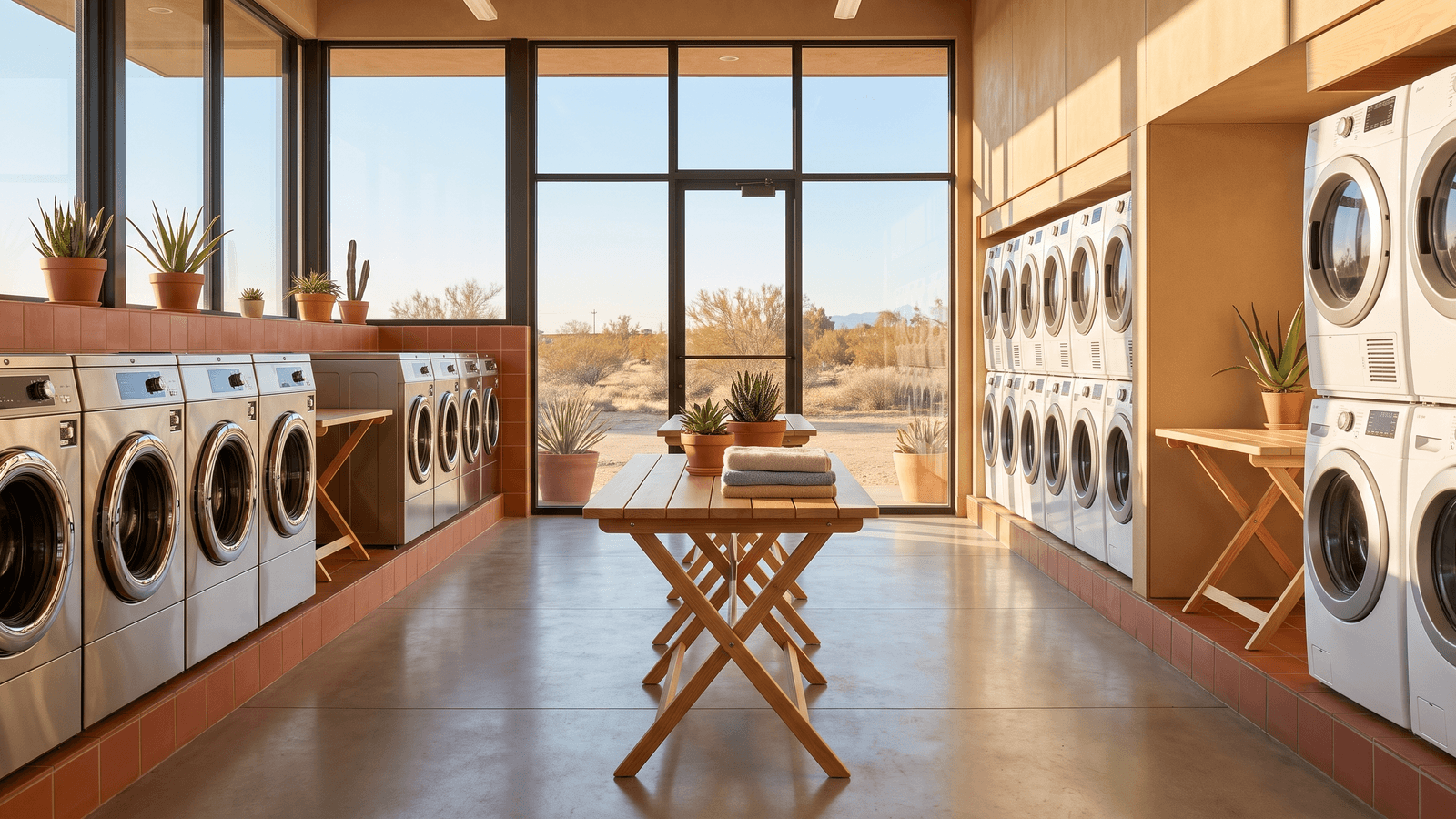
Buying a laundromat in Nevada means stepping into one of the fastest-growing states in the country, where a large renter base and a busy hospitality workforce keep demand for self-service laundry steady. Most Nevada deals price between roughly 3.0x and 4.5x seller's discretionary earnings (SDE), with the multiple driven by lease terms, equipment age, and verified revenue. The desert climate makes water and utility costs a central diligence item, and Nevada's lack of a state income tax is a real perk (though sales tax still applies). Confirm every number with a CPA and attorney before you buy.
Contents
- The Nevada market
- Where the demand is
- What to check in Nevada
- Financing and costs
- Nevada permits and rules
- A worked example
- Where to look
The Nevada market
Nevada combines rapid population growth with a housing mix that leans heavily toward renters, especially across the Las Vegas valley. That is a favorable backdrop for self-service laundry, but the desert setting means you have to underwrite water and utility costs more carefully than in many other states. Before you settle on a price, learn how to value a laundromat and run the figures through the laundromat valuation calculator.
- Fast growth supports demand. Nevada has been one of the fastest-growing states in recent years, and new residents settling into apartments and rentals feed steady foot traffic to neighborhood laundromats over time.
- Renter-heavy metros help. The Las Vegas valley has a large share of renters, many of them in units without in-home laundry hookups, and that group is the core customer base for a self-service mat.
- Water costs deserve scrutiny. In a desert climate, water and sewer rates plus conservation rules can materially affect your margins, so model utilities conservatively and revisit them if rates rise.
- Tourism shapes the workforce. A hospitality and service economy means many shift workers and irregular schedules, which can widen your usable operating window and support longer or even 24-hour hours in some locations.
Where the demand is
Nevada's population is concentrated in a handful of metros, and that is where most laundromat opportunities surface.
| Metro | Why it matters |
|---|---|
| Las Vegas | Largest population center with a deep renter base and around-the-clock service workforce. |
| Henderson | Fast-growing suburb of the valley with dense residential pockets and steady household demand. |
| North Las Vegas | Younger, growing community with many rental households and room for neighborhood mats. |
| Reno/Sparks | Northern Nevada hub with a diversifying economy and consistent year-round demand. |
Wherever you focus, weigh what makes a great laundromat location against local rents and competition before committing.
What to check in Nevada
Diligence in Nevada follows the same discipline as anywhere else, so work through a due diligence checklist for laundromat buyers and verify each item with documents, not the seller's word.
- Water and utility costs. Pull 12 to 24 months of water, sewer, gas, and electric bills so you can see seasonal swings. Desert water rates and any conservation surcharges can move your margins meaningfully, so treat these as core numbers, not afterthoughts.
- Equipment age and condition. Note the make, age, and service history of every washer and dryer. Older machines mean higher water and energy use plus larger capital replacement bills that can arrive all at once.
- Lease terms. The lease is often the single most important document in the deal. Review it closely and read reviewing a laundromat lease so you understand term length, renewal options, rent escalators, and pass-through costs before you commit.
- Real revenue verification. Reconcile reported collections against utility usage, bank deposits, and any card-system or coin-counter reports. Cash-heavy businesses require extra proof, so do not accept a seller's summary at face value.
- Competition and trade area. Map nearby mats, apartment density, traffic patterns, and parking availability. A crowded corridor can cap your pricing power and slow the ramp on any improvements you make.
Financing and costs
Many Nevada laundromat purchases are a good fit for SBA-backed financing, which can offer longer terms and lower down payments than conventional loans. Estimate a monthly payment with the SBA loan payment calculator and review your options on the financing page.
- Down payment. Plan for a meaningful equity contribution, commonly in the range lenders expect for small business acquisitions, and have documentation ready to support it.
- Equipment reserve. Budget for machines nearing the end of their life so a wave of replacements does not blindside you in the first year or two of ownership.
- Rent as a share of revenue. Rent is a make-or-break line item for any laundromat. Check it with the rent-to-revenue calculator and be cautious when the ratio runs high relative to healthy benchmarks.
- Working capital. Keep a cushion for utilities, routine repairs, marketing, and the slower early months while you learn the location.
- Utility volatility. In a desert market, build in room for water and power cost swings so a rate increase does not erase your margin.
Pressure-test the whole deal with the deal analyzer and confirm your earnings figure with the SDE calculator before you sign anything.
Nevada permits and rules
Requirements vary by city and county across Nevada, so confirm specifics with local agencies (for example the relevant city business license office, county building department, and local water authority) before closing.
- Business licensing. Nevada businesses typically need a state business license plus a local city or county license. Confirm which jurisdictions apply to your specific address, since valley locations can sit in overlapping city and county areas.
- Plumbing and building permits. Any equipment changes, plumbing work, or interior buildout usually require permits and inspections from the local building department, and unpermitted prior work can become your problem.
- Wastewater and water rules. Water and sewer authorities may impose discharge, metering, or conservation requirements that affect how you operate and what you pay, which matters more in a desert market.
- Zoning, signage, and health. Verify that zoning allows the use, that your signage meets local code, and that any attached services such as wash-and-fold meet applicable health rules.
None of this is legal advice, so confirm your obligations with a Nevada attorney, a CPA, and the local agencies that govern your location.
A worked example
Here is an illustrative example only, not a promise of results. Suppose a Nevada laundromat shows SDE somewhere between $85,000 and $100,000 per year after you have verified the numbers. At a 3.0x multiple, an $85,000 SDE points to roughly $255,000, while a $100,000 SDE at 4.5x points to roughly $450,000. That wide spread reflects real differences in quality: a long, favorable lease, newer water-efficient equipment, and clean verifiable revenue push a deal toward the high end, while a short lease, aging machines, or shaky books pull it toward the low end.
Run your own figures through the valuation calculator, confirm the earnings with the SDE calculator, and size the financing with the SBA loan payment calculator. Treat these numbers as illustrative and replace them with your verified data.
Where to look
- Browse laundromat listings and filter for Nevada metros like Las Vegas, Henderson, and Reno.
- Set alerts so new Nevada deals reach you early, before they attract a crowd of competing buyers.
- Follow a repeatable process using the buyers roadmap and the guide on how to buy a laundromat.
Nevada's growth and renter-heavy metros make it an attractive place to own a laundromat, provided you underwrite water costs and the lease with care. Do the diligence, confirm every figure with your own advisors, and let the numbers, not the hype, decide the deal.
Frequently asked questions
Where is laundromat demand strongest in Nevada?
Demand is heaviest in the Las Vegas valley, including Las Vegas, Henderson, and North Las Vegas, where a large renter base and a service-heavy workforce keep self-service laundry busy. Reno and Sparks anchor northern Nevada with steady year-round demand. Population growth across the state continues to support neighborhood mats.
How are Nevada laundromats valued?
Most Nevada laundromats are priced as a multiple of seller's discretionary earnings (SDE), commonly in the range of 3.0x to 4.5x. Lease quality, equipment age, and verified revenue drive where a specific deal lands. Run your own numbers through a valuation calculator and confirm the SDE figure before making an offer.
Can I use an SBA loan to buy a laundromat in Nevada?
Yes, many Nevada laundromat purchases are a good fit for SBA-backed financing, which can offer longer terms and lower down payments than conventional loans. You will still need a meaningful down payment and working capital reserve. Use an SBA payment calculator to estimate monthly costs and speak with a lender about your specific deal.
What permits and rules apply to a Nevada laundromat?
Requirements vary by city and county, but you typically need a state business license plus a local license, and any plumbing or buildout work usually requires permits and inspections. Water and sewer authorities may impose discharge or conservation rules that matter in a desert climate. Confirm zoning, signage, and health obligations with local agencies before closing.
How does Nevada sales tax affect a laundromat?
Nevada has no state income tax, which many owners view as a benefit, but that is income tax and not sales tax. Sales tax still applies in Nevada and may affect certain purchases or services connected to your business. Confirm exactly how sales and use tax treat your operation with a CPA before you buy.