Buying a Laundromat in New Jersey
SudsList Editorial · Jul 26, 2026
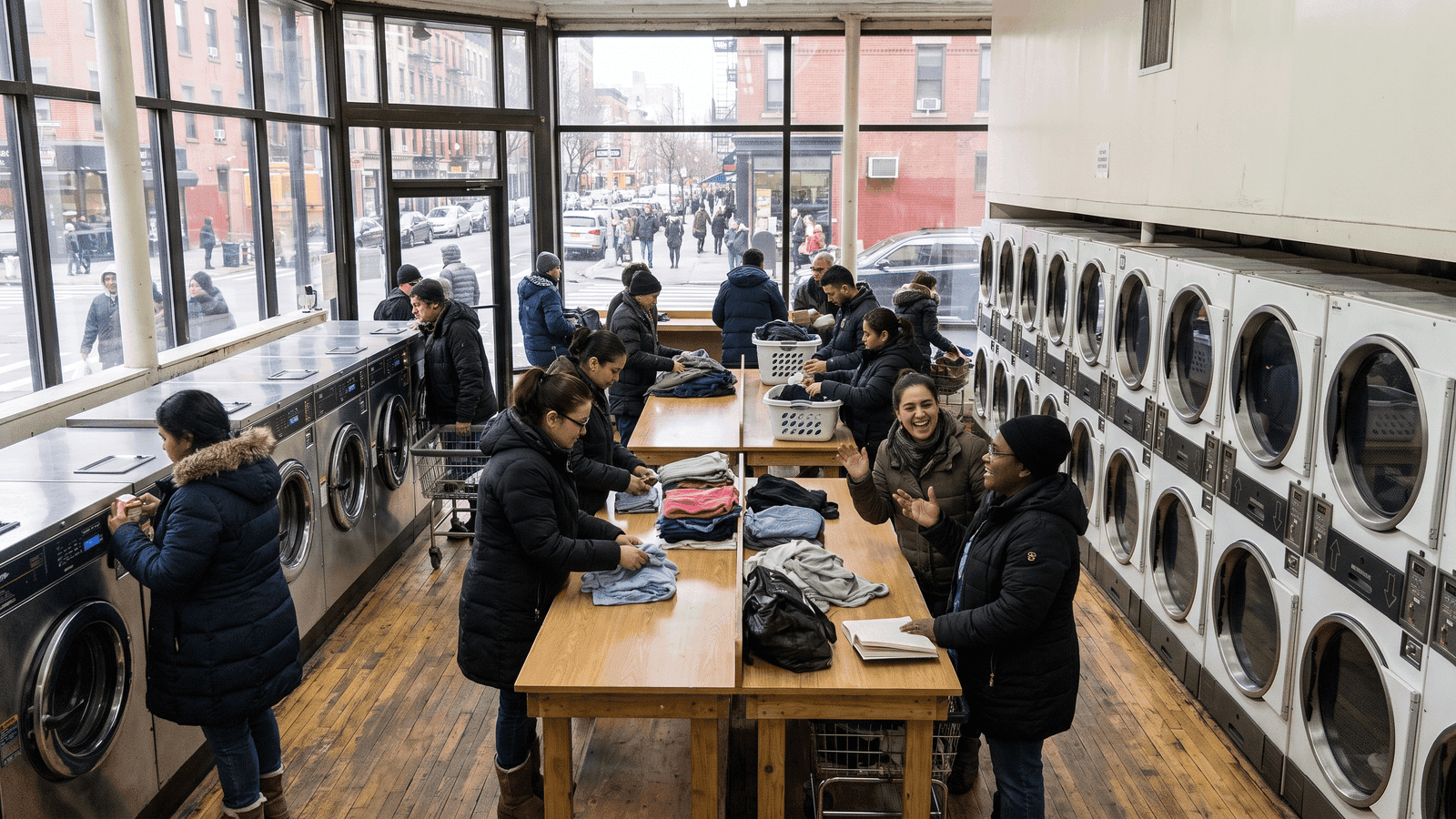
New Jersey is one of the densest, most renter-heavy laundromat markets in the country, wedged between the New York City and Philadelphia commuter zones and packed with apartment dwellers who do not have in-unit machines. Demand clusters in older urban cores like Newark, Jersey City, and Paterson, where walkable blocks and high renter populations keep machines busy. The trade-off is cost: retail rents and real estate prices run high, so the deals that work best are the ones where the lease terms and utility setup leave real margin after expenses.
Contents
- The New Jersey market
- Where the demand is
- What to check in New Jersey
- Financing and costs
- New Jersey permits and rules
- A worked example
- Where to look
The New Jersey market
New Jersey combines two things laundromat buyers like: high population density and a large share of renters. Much of the state sits inside the greater New York and Philadelphia metro areas, and many neighborhoods are dominated by multi-family housing where in-unit laundry is the exception rather than the rule. That mix supports steady walk-in demand and a strong base of repeat customers.
The catch is that the same density that drives demand also drives up commercial rents and acquisition prices. A busy store in a great location can still be a poor investment if the lease eats the margin. Because New Jersey has a mature laundromat scene, you will find a healthy supply of existing stores for sale, which is generally easier and less risky than building from scratch. Your job as a buyer is to separate stores that are genuinely profitable from stores that just look busy.
Where the demand is
The strongest fundamentals tend to show up in the dense urban cores and their inner-ring suburbs:
- Newark is the state's largest city, with a big renter base and dense residential neighborhoods that support high foot traffic.
- Jersey City has grown quickly and mixes long-time renter neighborhoods with newer apartment development, both of which lean on outside laundry.
- Paterson is one of the most densely populated cities in the country, with a heavily renter-occupied housing stock that fits the classic laundromat customer profile.
Beyond these three, look at working-class suburbs and transit-adjacent towns across northern and central New Jersey where apartment living is common. As a rule, the best signals are a high percentage of renters, older housing without in-unit hookups, easy parking or heavy pedestrian traffic, and a stable daytime and evening population. Our guide on what makes a great laundromat location walks through how to weigh these factors.
What to check in New Jersey
Verified numbers matter more than a good-looking storefront. Focus your due diligence here:
- Real, documented revenue. Ask for utility bills, coin or card processor reports, and any bank deposits. Cross-check claimed collections against water and sewer usage, which is hard to fake.
- The lease. In a high-rent state, the lease is often the deciding factor. Check remaining term, renewal options, rent escalations, and who pays for repairs. Read our walkthrough on reviewing a laundromat lease before you sign anything.
- Equipment age and condition. Note the make, age, and water efficiency of washers and dryers. Older, thirsty machines raise utility costs in a state where water and sewer are not cheap.
- Utility structure. Confirm how water, sewer, gas, and electric are metered and billed, and whether the store is on a single meter or shared with other tenants.
Work through a full due diligence checklist for laundromat buyers so nothing slips through. Because tax treatment varies, confirm the sales-tax treatment of self-service laundry and wash-and-fold with a New Jersey CPA rather than assuming.
Financing and costs
Most laundromat purchases are financed with some mix of buyer cash, seller financing, and small-business loans. SBA-backed loans are common for this asset class because laundromats have predictable cash flow and real equipment as partial collateral. Sellers who want a clean exit will sometimes carry a note for part of the price, which can bridge a financing gap and signals confidence in the numbers.
Before you make an offer, model the payment against the store's actual cash flow. Our SBA loan payment calculator and deal analyzer help you see whether the debt service leaves room to breathe. Because New Jersey rents run high, pay special attention to the rent-to-revenue ratio: a store carrying too much rent relative to sales is fragile even if it is currently profitable. For a broader view of options, see the financing overview.
New Jersey permits and rules
Laundromats sit at the intersection of retail, plumbing, and (for gas dryers) mechanical systems, so expect several layers of local oversight. Rather than rely on the seller's word, confirm the following directly with the relevant agencies:
- Business licensing and registration with the city or town where the store operates, plus state business registration.
- Plumbing, building, and mechanical permits for any equipment, venting, or water-line work, confirmed with the local building department.
- Wastewater and sewer requirements, since high-volume water use can trigger local utility authority rules. Confirm these with the municipal or county utility authority.
- Sales-tax treatment of self-service laundry versus wash-and-fold and other services, confirmed with a New Jersey CPA.
Treat this section as a buyer's orientation, not legal or tax advice. Requirements differ from town to town, and the safest path is to call the local building department, health or licensing office, and utility authority before closing.
A worked example
Here is a simple, illustrative example using round numbers, not a quote for any specific store. Suppose a New Jersey store shows seller's discretionary earnings (SDE) of $120,000 per year after you have verified the collections and normalized the owner's add-backs.
Laundromats commonly trade in a range of about 3.0x to 4.5x SDE, depending on lease quality, equipment age, and how strong the location is. Apply that range:
- At 3.0x, the price is about $360,000.
- At 4.5x, the price is about $540,000.
A store with a long, stable lease, newer efficient machines, and a dense renter base earns a multiple toward the top of that range. A store with a short lease, aging equipment, or shaky books belongs at the bottom, or should be passed on entirely. Use the laundromat valuation calculator and the SDE calculator to run your own version of these numbers before you make an offer.
Where to look
Good New Jersey stores move quickly, so build a repeatable search habit rather than checking once. Browse current listings and set alerts so new stores in your target metros reach you early. When something looks promising, run it through the how to value a laundromat framework and follow the full how to buy a laundromat process. If you are just getting oriented, the buyer's roadmap lays out each step from first search to closing.
Frequently asked questions
Is New Jersey a good state to buy a laundromat?
It can be. New Jersey is dense and renter-heavy near New York City and Philadelphia, which supports steady demand. The main trade-off is high commercial rent, so lease terms and margins matter a lot.
Which New Jersey cities have the strongest laundromat demand?
Dense urban cores tend to perform best, including Newark, Jersey City, and Paterson, along with working-class and transit-adjacent suburbs with many renters and older housing without in-unit laundry.
What should I check before buying a New Jersey laundromat?
Verify real revenue against utility bills and processor reports, review the lease closely, note equipment age and water efficiency, and confirm how utilities are metered and billed.
What permits and rules apply to New Jersey laundromats?
Expect local business licensing, plumbing and building permits, and possible wastewater rules. Confirm these with the city, county, and utility authority, and confirm sales-tax treatment with a New Jersey CPA.
How are New Jersey laundromats typically valued?
They commonly trade around 3.0x to 4.5x seller's discretionary earnings, with lease quality, equipment condition, and location driving where a store lands in that range.