Buying a Laundromat in North Dakota
SudsList Editorial · Jul 27, 2026
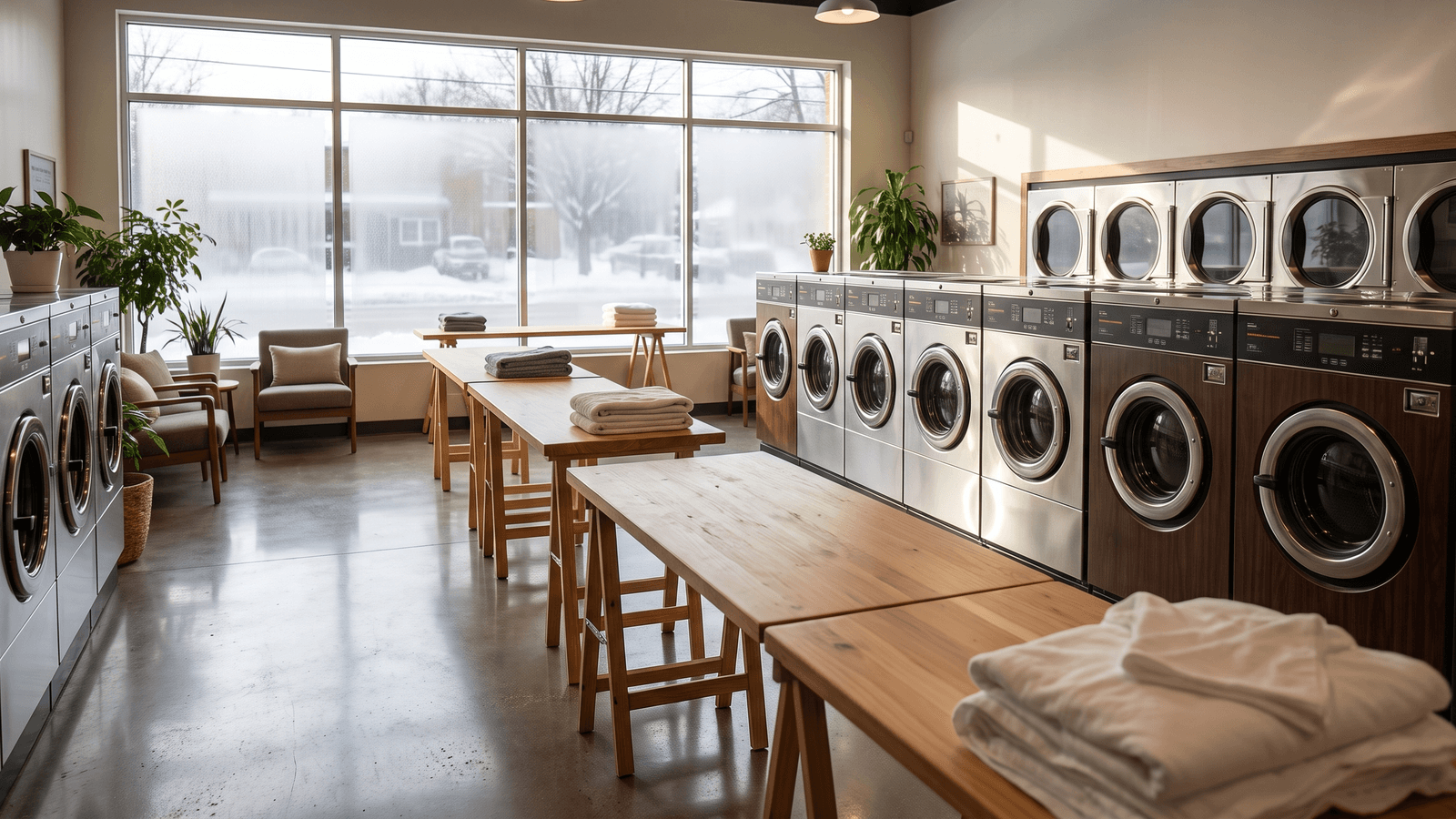
Buying a laundromat in North Dakota means underwriting a small but stable market where cold winters push laundry indoors and the Bakken energy region drives real, if cyclical, demand in the west. Most independent stores trade on a multiple of seller's discretionary earnings (SDE), commonly 3.0x to 4.5x depending on lease terms, equipment age, and how well the books hold up. Expect strong utility and heating costs, thinner buyer competition than in big coastal metros, and steadier fundamentals in university and government towns. Verify collections, confirm local permits, and model the numbers before you sign anything.
Contents
- The North Dakota market
- Where the demand is
- What to check in North Dakota
- Financing and costs
- North Dakota permits and rules
- A worked example
- Where to look
The North Dakota market
North Dakota is a low-population state with a resilient economy, low unemployment, and a laundromat base concentrated in a handful of cities. That means fewer listings than you would see in a large metro, but also less buyer competition and often more room to negotiate. Understanding how earnings convert into price is step one, so start with how to value a laundromat and run scenarios in the laundromat valuation calculator.
- Energy demand tilts west. The Bakken oil region around Williston and the northwest brings a more transient workforce, apartment renters, and shift workers who rely on self-service laundry, though that demand rises and falls with the energy cycle.
- Winters help utilization. Long, cold North Dakota winters push more residents toward warm, reliable indoor laundry, supporting steadier year-round volume in dense neighborhoods.
- Small but stable. Government, agriculture, and healthcare anchor employment, so well-placed stores tend to hold customers rather than swing wildly with the economy.
- Costs run high. Heating a large water-and-air-intensive space through a North Dakota winter is a real line item, so utilities deserve close scrutiny before you buy.
Because the state has relatively few stores, comparable sales can be scarce, and a single motivated buyer or seller can move price more than in a crowded metro. That cuts both ways: you may find a fair deal with little competition, but you also carry more of the burden of proving value yourself. Lean on verified earnings and conservative assumptions rather than optimistic projections, and treat any story about future oil-driven growth as upside rather than something you pay for today.
Where the demand is
Demand clusters in the state's larger population centers and the energy corridor. The table below sketches why each area matters to a laundromat buyer.
| Metro | Why it matters |
|---|---|
| Fargo | Largest metro and densest rental base, the deepest and most competitive market in the state. |
| Bismarck | State capital with steady government and healthcare employment supporting stable demand. |
| Grand Forks | University of North Dakota drives a reliable renter and student customer base. |
| Williston | Bakken oil hub with a transient workforce and higher, though energy-cycle dependent, demand. |
Location quality inside these markets still decides the outcome, so weigh visibility, parking, and nearby rental density using what makes a great laundromat location.
What to check in North Dakota
Diligence protects you from paying for revenue that is not real, so work through a structured due diligence checklist for laundromat buyers and pay special attention to these North Dakota-specific points.
- Utilities and heating. Pull 12 to 24 months of gas, electric, water, and sewer bills, because North Dakota heating loads can materially change your margin.
- Equipment age and parts. Confirm the age and brand of washers and dryers, and factor that parts and qualified service techs can be harder to source in remote western towns.
- The lease. Review remaining term, renewal options, rent escalators, and who pays for major repairs using reviewing a laundromat lease; a weak lease can undo an otherwise good deal.
- Real revenue. Verify collections against bank deposits and utility-implied usage, and in the west test how dependent revenue is on the energy cycle and current rig activity.
- Competition and trade area. Map nearby stores and the renter density within a short drive, since a small city can be saturated fast.
- Seasonality and staffing. Ask how volume shifts between the deep-winter months and summer, and whether the store runs attended, unattended, or with a part-time attendant, because that shapes both labor cost and customer experience.
Financing and costs
Many North Dakota laundromat purchases fit the SBA 7(a) profile, which is designed for cash-flowing small businesses and typically funds with a modest down payment against verified earnings. Model your payment before you make an offer.
- Down payment. Plan for a meaningful equity injection, often in the range lenders expect for service businesses, and confirm specifics with your lender.
- Debt service. Estimate monthly payments with the SBA loan payment calculator and read up on options at financing.
- Rent burden. Keep occupancy cost sustainable by testing it in the rent-to-revenue calculator; a high rent-to-revenue ratio squeezes every other number.
- Reserves. Budget for a heating-heavy winter, equipment repairs, and slower months, especially in energy-driven western markets.
- Equipment replacement. Set aside for eventual machine replacement, since older washers and dryers in a remote store can fail without a nearby service tech to keep them running.
Before committing, stress-test the full picture in the deal analyzer and confirm your earnings baseline with the SDE calculator.
North Dakota permits and rules
Requirements vary by city and county across North Dakota, so confirm every item with the local city hall, county office, and state agencies before closing. The bullets below are a starting framework, not a definitive list.
- Business licensing. Check state and local registration or licensing requirements for operating the business under your entity.
- Plumbing and building permits. Any equipment changes, plumbing work, or buildout typically require permits and inspections from the local building department.
- Wastewater and water rules. High-volume water use and discharge may trigger municipal water and sewer requirements worth confirming with the local utility.
- Zoning, signage, and health. Verify the property's zoning allows the use, and check signage and any applicable health or safety rules.
None of this is legal advice, so confirm your specific obligations with a licensed CPA, an attorney, and the relevant local and state agencies.
A worked example
Illustrative numbers help show how price forms. Suppose a North Dakota store shows SDE in the range of $78,000 to $92,000 per year after you verify the books. At a 3.0x multiple, that implies roughly $234,000 to $276,000. At a 4.5x multiple, it implies roughly $351,000 to $414,000. The spread reflects risk: a long, favorable lease, newer equipment, and clean, verifiable collections push toward the high end, while a short lease, aging machines, or energy-cycle dependence pull toward the low end.
These figures are illustrative only. Confirm the real earnings with the SDE calculator, pressure-test price against multiples in the valuation calculator, and check whether the resulting debt service works using the SBA loan payment calculator.
Where to look
- Browse current laundromat listings and filter for North Dakota to see what is on the market in Fargo, Bismarck, Grand Forks, and the western energy corridor.
- Set alerts so new North Dakota listings reach you early, since inventory in a small market is thin and good stores move quickly.
- Follow a disciplined process with the buyers roadmap and how to buy a laundromat so you move from browsing to a closed deal without skipping diligence.
North Dakota rewards patient, numbers-driven buyers who verify collections, respect winter utility costs, and understand how energy-driven demand behaves in the west. Do the homework, and a small market can deliver a stable, cash-flowing business.
Frequently asked questions
Where is laundromat demand strongest in North Dakota?
Demand concentrates in Fargo, the state's largest and densest rental market, along with Bismarck and Grand Forks, where government and university employment support steady customers. The western Bakken corridor around Williston sees higher demand from a transient energy workforce, though it rises and falls with the oil cycle.
How are North Dakota laundromats valued?
Most independent stores are priced on a multiple of seller's discretionary earnings (SDE), commonly 3.0x to 4.5x. Lease strength, equipment age, and how well collections verify determine where a specific store lands in that range. Always confirm the earnings baseline before applying any multiple.
Can I use an SBA loan to buy a laundromat in North Dakota?
Yes, many purchases fit the SBA 7(a) profile, which is built for cash-flowing small businesses and typically funds with a modest down payment against verified earnings. Model the monthly payment and keep rent-to-revenue sustainable before making an offer. Confirm terms with your lender.
What permits and rules apply to a North Dakota laundromat?
Requirements vary by city and county and can include business licensing, plumbing and building permits, water and wastewater rules, and zoning or signage approvals. Confirm each item with the local city hall, county office, and state agencies. This is not legal advice, so check with a CPA and attorney.
How does sales tax treatment work for North Dakota laundromats?
Sales tax treatment of coin and card self-service laundry can differ from other retail, and local rules vary. Do not assume the seller has it right. Confirm your specific obligations with the North Dakota Office of State Tax Commissioner and a qualified CPA before closing.