Buying a Laundromat in Oklahoma
SudsList Editorial · Jul 27, 2026
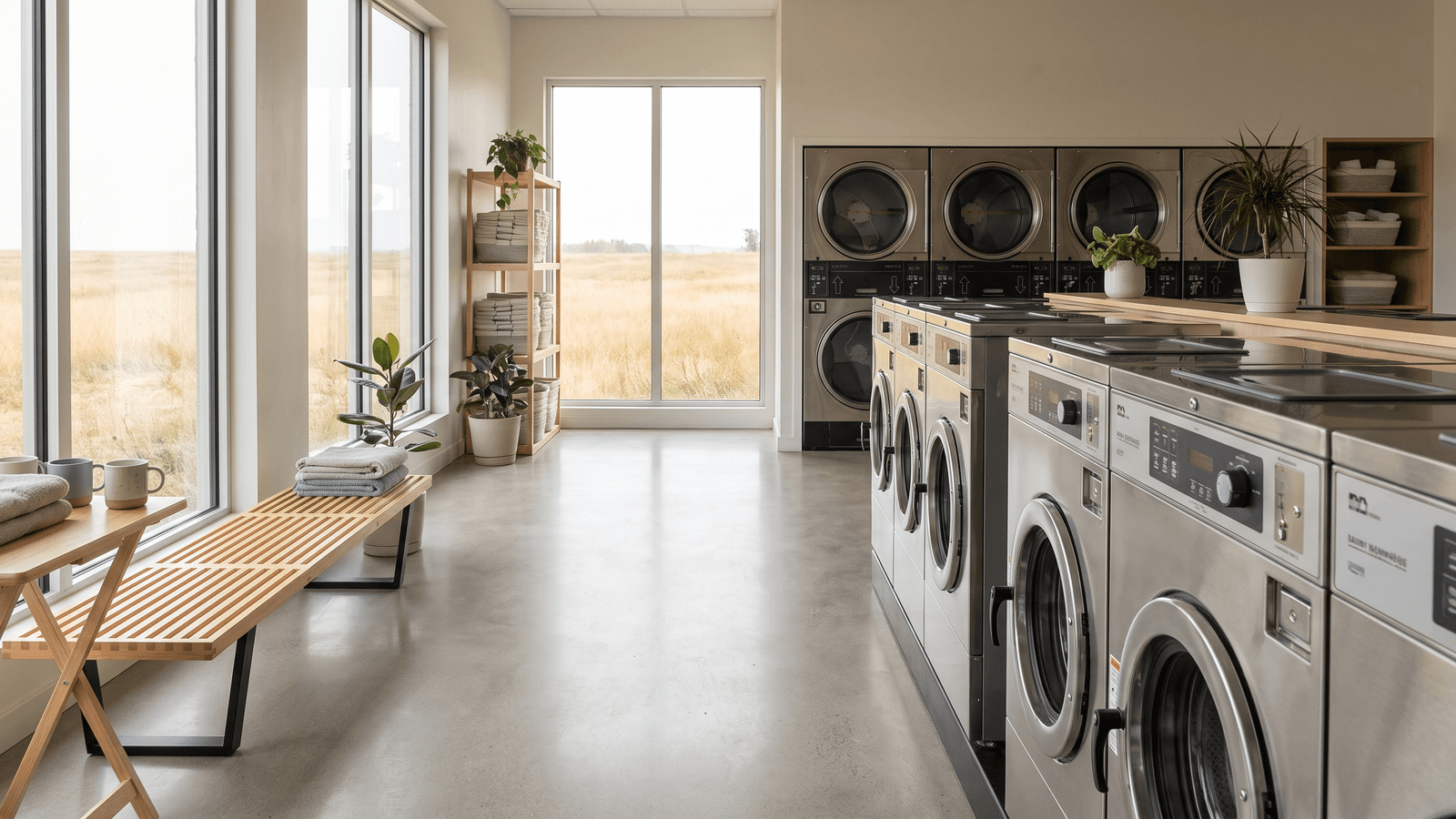
Buying a laundromat in Oklahoma means pairing low operating costs with a steady base of renters across Oklahoma City, Tulsa, and Norman. The state's affordable commercial rents and moderate utility rates help protect margins, while a diversified economy anchored by energy, aerospace, and higher education supports consistent foot traffic. Most Oklahoma laundromats trade in a common range of about 3.0x to 4.5x seller's discretionary earnings (SDE), with equipment condition, lease terms, and verified revenue driving the final number. Do careful due diligence, confirm every utility and permit detail locally, and lean on a CPA and attorney before you sign.
Contents
- The Oklahoma market
- Where the demand is
- What to check in Oklahoma
- Financing and costs
- Oklahoma permits and rules
- A worked example
- Where to look
The Oklahoma market
Oklahoma is a practical place to own a laundromat because costs stay low while demand holds steady. Commercial rents and utility rates run below the national average in most markets, which leaves more room in the monthly budget for reinvestment and profit. The state's economy leans on energy production, aerospace and defense, agriculture, and healthcare, and that mix keeps household demand for basic services like laundry from swinging too hard when any single industry cools. For a first-time owner, that stability can make cash flow easier to forecast. Understanding how price relates to earnings is the first step, so review how to value a laundromat and run scenarios in the laundromat valuation calculator.
- Low operating costs. Affordable rents and moderate water, gas, and electric rates help Oklahoma stores hold healthier margins than many coastal markets.
- Diversified economy. Energy, aerospace, agriculture, healthcare, and higher education spread risk so a downturn in one sector rarely empties the machines.
- Solid renter base. Oklahoma City and Tulsa carry large populations of apartment dwellers who rely on self-service laundry every week.
- Room to modernize. Many older stores run dated equipment, giving buyers a clear path to add value through efficient machines and card or app payment systems.
Where the demand is
Demand concentrates where renters cluster and where local economies stay busy year round. Apartment density, wage levels, and the presence of large employers all shape how many loads a store sees each week. The metros below anchor most of the state's laundromat activity.
| Metro | Why it matters |
|---|---|
| Oklahoma City | Largest metro and job hub with a deep, stable renter population across many neighborhoods. |
| Tulsa | Strong second market with energy and aerospace employers and dense rental districts. |
| Norman | University of Oklahoma drives reliable student and renter demand plus summer turnover. |
| Broken Arrow / Lawton | Growing suburban and military-adjacent markets with steady household laundry needs. |
Choosing the right block matters as much as choosing the right city, so study what makes a great laundromat location before you commit to a specific store.
What to check in Oklahoma
Careful diligence protects you from surprises after closing. Work through a full due diligence checklist for laundromat buyers, then dig into the details that matter most in Oklahoma.
- Utilities and water. Pull twelve or more months of water, sewer, gas, and electric bills. Water and sewer are the biggest variable costs, so confirm rates and check for leaks or running machines.
- Equipment age and condition. Note the make, age, and service history of every washer and dryer. Aging equipment can mean large near-term replacement costs.
- Lease terms. The lease is often the single most important document. Confirm remaining term, renewal options, rent escalators, and who handles major repairs, and read reviewing a laundromat lease before signing.
- Real revenue verification. Ask for bank deposits, coin and card processor statements, and tax returns. Verify income independently rather than trusting a stated figure.
- Competition and trade area. Map nearby stores, drive times, and rental density to gauge how much of the surrounding demand your location can realistically capture.
- Weather and insurance. Oklahoma sits in tornado country, so treat storm and wind coverage as a routine part of the budget. Review the current policy, confirm replacement-cost terms for the equipment, and price coverage before you close so there are no surprises later.
Financing and costs
Many Oklahoma laundromat purchases fit well with SBA 7(a) financing, which is designed for small-business acquisitions and often allows modest down payments with longer terms. Because Oklahoma's operating costs are relatively low, a well-run store can carry its debt comfortably when the price is reasonable and the rent is in line. Model the monthly payment early using the SBA loan payment calculator so the debt service fits the cash flow.
- Down payment. SBA deals commonly require roughly 10 to 20 percent down, though your bank sets the final terms based on the deal and your profile.
- Rent-to-revenue ratio. Keep occupancy costs in a healthy band. Test the store's rent against sales with the rent-to-revenue calculator.
- Reserve capital. Budget for repairs, a possible re-equip, and a few months of operating expenses beyond the purchase price.
- Financing options. Compare lender types and structures on the financing page to find the fit for your budget and timeline.
Before you make an offer, stress-test the numbers in the deal analyzer and confirm the earnings figure with the SDE calculator.
Oklahoma permits and rules
Requirements vary by city and county, so confirm the specifics with local agencies before you close. The list below is a starting point, not a complete or final checklist for your location.
- Business licensing. Register your business and obtain any local operating or occupancy permits your city requires, plus a state sales tax permit.
- Plumbing and building permits. Any equipment swap, plumbing change, or buildout typically needs permits and inspections from the local building department.
- Wastewater and water rules. Coin laundries are heavy water users, so check with the local utility and wastewater authority for any discharge or metering requirements.
- Zoning, signage, and health. Verify zoning allows the use and confirm signage and any applicable health or safety rules with the municipality.
None of this is legal or tax advice, so confirm your obligations with a CPA, an attorney, and the relevant Oklahoma city, county, and state agencies.
A worked example
Consider an illustrative Oklahoma store with SDE of $75,000 to $90,000 per year. At a 3.0x multiple, the $75,000 figure implies a price near $225,000, while at 4.5x the $90,000 figure implies about $405,000. The spread between those numbers reflects real differences in equipment age, lease quality, verified revenue, and growth potential. A store with newer machines, a long secure lease, and clean books earns the higher multiple, while dated equipment or a short lease pushes toward the lower end. The same idea applies in reverse: if a seller asks for a top-of-range price, the store should show the quality that justifies it. When it does not, that gap is your opening to negotiate or to plan for the repairs and upgrades the price should already reflect.
These figures are illustrative only. Build your own version with the valuation calculator, confirm the earnings base using the SDE calculator, and check that the debt fits with the SBA loan payment calculator.
Where to look
- Browse current laundromat listings and filter for Oklahoma markets like Oklahoma City, Tulsa, and Norman.
- Set alerts so new Oklahoma stores reach you early, since well-priced deals move quickly.
- Follow a repeatable process with the buyers roadmap and how to buy a laundromat so each opportunity gets the same disciplined review.
Oklahoma rewards patient buyers who verify the numbers and pick the right location. Take the time to confirm utilities, lease, and revenue, run the deal through the calculators, and lean on local professionals before you sign. With low costs and steady demand across its major metros, the state offers a workable path to owning a durable, cash-generating business.
Frequently asked questions
Where is laundromat demand strongest in Oklahoma?
Demand concentrates in Oklahoma City and Tulsa, the two largest metros, where dense renter populations rely on self-service laundry. Norman adds steady demand from the University of Oklahoma, and growing suburban and military-adjacent markets like Broken Arrow and Lawton round out the picture.
How are Oklahoma laundromats valued?
Most laundromats are valued as a multiple of seller's discretionary earnings (SDE), commonly in the range of about 3.0x to 4.5x. Equipment age, lease quality, and verified revenue push the multiple up or down. Always confirm the earnings figure with independent records before agreeing on a price.
Can I use an SBA loan to buy a laundromat in Oklahoma?
Yes, SBA 7(a) loans are commonly used for laundromat acquisitions and often allow modest down payments with longer repayment terms. Down payments typically fall around 10 to 20 percent, though your lender sets the final terms. Model the payment early to be sure the debt service fits the store's cash flow.
What permits and rules apply to Oklahoma laundromats?
Requirements vary by city and county and generally include business and sales tax registration, building and plumbing permits for any changes, and wastewater or water rules from the local utility. Zoning, signage, and health rules also apply locally. Confirm the specifics with the relevant Oklahoma city, county, and state agencies.
How is sales tax treated for Oklahoma laundromats?
Sales tax treatment depends on the services and products you sell, and self-service coin laundry may be treated differently than retail goods like detergent or vending items. You will generally need a state sales tax permit and should collect and remit tax on taxable sales. Confirm your exact obligations with a CPA and the Oklahoma Tax Commission.