Buying a Laundromat in Oregon
SudsList Editorial · Jul 27, 2026
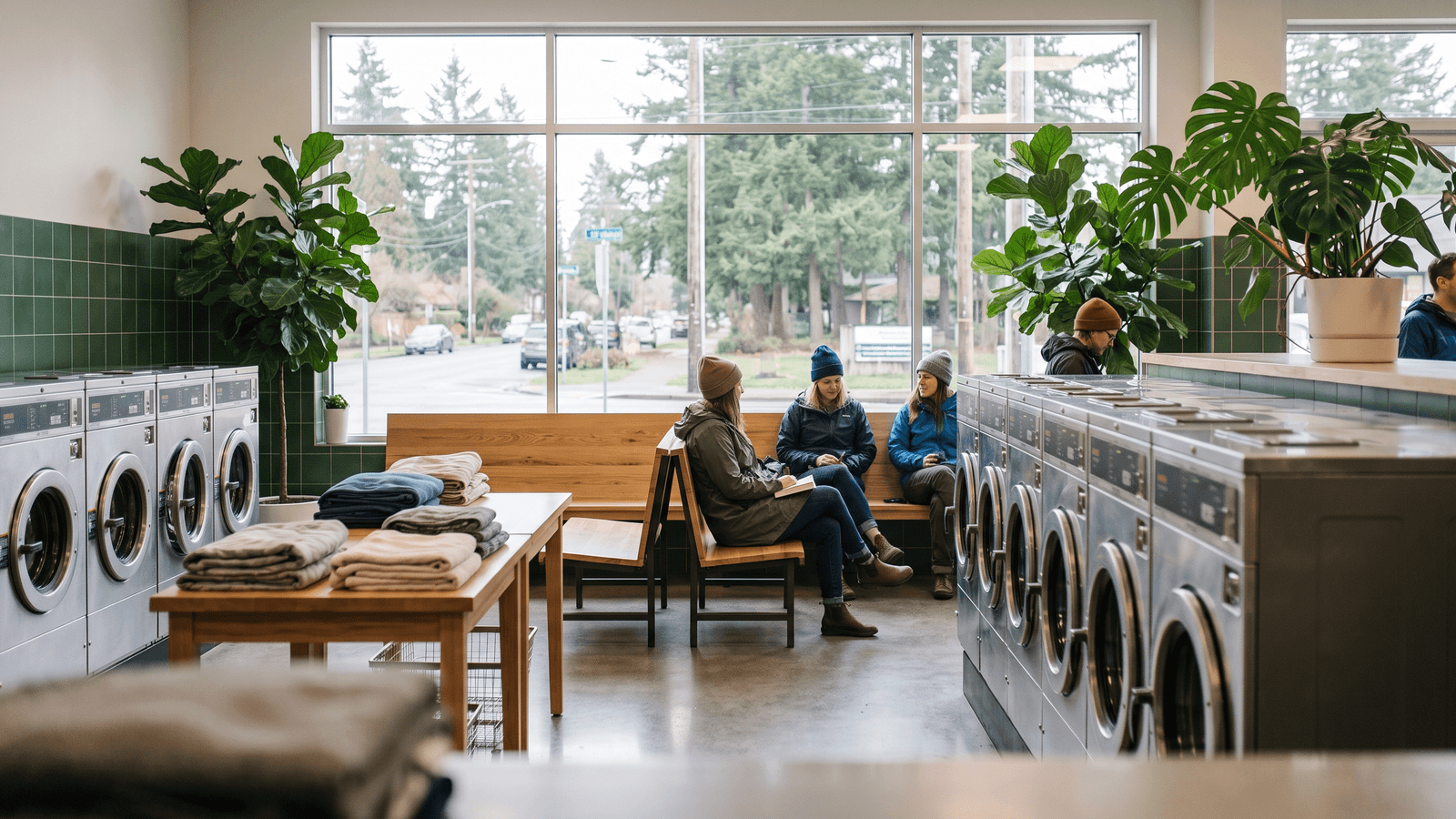
Buying a laundromat in Oregon can be a smart way to own a cash-flowing, recession-resistant business, especially in dense renter markets like Portland and fast-growing Bend. Expect most healthy stores to trade in a common range of roughly 3.0x to 4.5x seller's discretionary earnings (SDE), with price driven by real, verifiable revenue, lease terms, and equipment condition. Oregon has no statewide general sales tax, which simplifies some retail math, but business-level taxes (like the Corporate Activity Tax) still apply, so confirm treatment with a CPA before you model any deal.
Contents
- The Oregon market
- Where the demand is
- What to check in Oregon
- Financing and costs
- Oregon permits and rules
- A worked example
- Where to look
The Oregon market
Oregon pairs a strong urban renter base with rapidly growing secondary cities, which supports steady demand for self-service and drop-off laundry. The state also spans a wide mix of markets, from dense Portland neighborhoods to college towns and high-growth cities, so no single playbook fits every store. The key is separating a store's asking price from its actual earning power, so ground your analysis in verified numbers rather than the seller's story. Learn the basics in how to value a laundromat and run scenarios with the laundromat valuation calculator.
- Renter density drives volume. Portland and its inner suburbs have large apartment populations without in-unit laundry, which keeps machines busy across the week and on weekends.
- Growth markets add upside. Bend and parts of the Willamette Valley are growing fast, which can lift customer counts over time as new households arrive faster than new in-unit laundry is built.
- No general sales tax simplifies pricing. Vend prices are what customers pay, with no added retail tax at the machine, though business taxes still apply, so confirm treatment with a CPA.
- Utility costs matter here. Water, sewer, and energy rates vary widely by city and shape your margins, so treat them as core diligence rather than an afterthought.
Where the demand is
Demand concentrates where renters are dense, incomes are mixed, and off-street parking exists. Here is how Oregon's major metros stack up for a laundromat buyer.
| Metro | Why it matters |
|---|---|
| Portland | Largest metro, dense renter base, but high commercial rents in core neighborhoods. |
| Salem | State capital with steady population and more affordable rents than Portland. |
| Eugene | University of Oregon drives a large, turnover-heavy student and renter market. |
| Bend | Fast-growing city with rising demand, though newer buildings may have in-unit laundry. |
Match any specific store to the fundamentals in what makes a great laundromat location before you fall for a metro's headline growth.
What to check in Oregon
Diligence is where deals are won or lost, so work through a structured process like the due diligence checklist for laundromat buyers and pressure-test every claim.
- Utilities and water. Pull 12 to 24 months of water, sewer, gas, and electric bills. Oregon rates vary by city, and high water costs can quietly erase margin if you do not budget for them accurately.
- Equipment age and condition. Note the make, age, and remaining life of washers, dryers, and the water heater, since major replacements are expensive and can arrive all at once in an aging store.
- Lease terms. Portland-metro rents can be high, so review the base rent, remaining term, renewal options, escalations, and CAM charges. A short lease with no renewal is a serious risk. See reviewing a laundromat lease.
- Real revenue verification. Reconcile coin and card income against utility usage, bank deposits, and tax filings. Water and power consumption are hard to fake, so they are a strong cross-check. Never buy on unverified cash claims.
- Competition and trade area. Map nearby laundromats and apartment density within a short drive to gauge realistic demand, and note whether newer competitors have newer machines.
Financing and costs
Many laundromat purchases are a good fit for SBA financing, which can offer longer terms and modest down payments for qualified buyers. Lenders will want to see verified financials, a reasonable lease, and equipment with useful life remaining. Before you commit, model the monthly payment and confirm the rent load is sustainable across a full range of revenue scenarios.
- SBA loans. Estimate payments with the SBA loan payment calculator and review options on the financing page before you approach a lender.
- Down payment and reserves. Plan for a down payment plus working capital for repairs, deposits, and slow months, so an early surprise does not sink the business.
- Rent as a share of revenue. In higher-rent Portland submarkets, watch this ratio closely using the rent-to-revenue calculator, because rent that is too high relative to sales leaves little room for profit.
- Utility and energy budgeting. Build realistic water and energy costs into every projection, since these are recurring, location-specific, and often larger than new buyers expect.
Before making an offer, stress-test the full deal with the deal analyzer and confirm true earnings with the SDE calculator.
Oregon permits and rules
Requirements vary by city and county, so confirm specifics with your local jurisdiction and the relevant state agencies before closing. The categories below are common starting points, not a complete checklist.
- Business licensing. Many Oregon cities (including Portland) require a local business license or registration in addition to state registration, and renewal rules differ by jurisdiction.
- Plumbing and building permits. Adding or moving machines, water heaters, or drains typically triggers plumbing and building permits and inspections, so factor permitting time into any renovation plan.
- Wastewater and water rules. Local water and sewer authorities may have discharge, backflow, or metering requirements for high-volume laundry use, which can affect both cost and compliance.
- Zoning, signage, and health. Confirm the site is zoned for laundry use and check any signage, parking, or facility standards with the city before you assume the location can operate as-is.
None of this is legal advice, so verify every requirement with a licensed attorney, a CPA, and your local agencies.
A worked example
Here is an illustrative example only, using round numbers. Suppose a store shows SDE somewhere between $85,000 and $100,000 per year after you verify the books, add back the owner's salary, and normalize one-time expenses. At a 3.0x multiple, an SDE of $85,000 implies a price near $255,000, while at 4.5x an SDE of $100,000 implies a price near $450,000. That is a large gap for two stores that might look similar from the street.
That wide spread reflects real differences in quality. Newer equipment, a long and favorable lease, strong verified revenue, and a growing trade area push toward the higher multiple. Older machines, a short lease, or unverifiable cash push toward the lower end. Confirm the earnings base with the SDE calculator, test pricing with the valuation calculator, and size financing with the SBA loan payment calculator. Treat these numbers as illustrative, not a quote.
Where to look
Start your search where sellers actually list, then build a repeatable process so good deals do not slip past you.
- Browse active listings. Review laundromat listings and filter for Oregon markets like Portland, Salem, Eugene, Gresham, Medford, and Bend to see what is realistically available.
- Set alerts. Save searches so new Oregon stores reach you early, before they attract multiple offers, and check listings regularly since good stores move quickly.
- Follow a process. Work through the buyers roadmap and the fundamentals in how to buy a laundromat so each opportunity gets the same disciplined review.
Oregon rewards buyers who pair patient searching with disciplined diligence. Verify the numbers, respect local rules, and lean on qualified advisors, and a well-located Oregon laundromat can become a durable, cash-flowing asset.
Frequently asked questions
Where is laundromat demand strongest in Oregon?
Demand is strongest where renters are dense and lack in-unit laundry. Portland leads on sheer volume, Eugene benefits from the University of Oregon renter base, and Bend is a fast-growing market. Salem offers steadier demand with more affordable rents than Portland.
How are Oregon laundromats valued?
Most stores are valued as a multiple of seller's discretionary earnings (SDE), commonly in the range of 3.0x to 4.5x. Newer equipment, a strong lease, and verified revenue push toward the higher end. Always confirm the earnings base before applying any multiple.
Can I use an SBA loan to buy a laundromat in Oregon?
Many laundromat purchases are a good fit for SBA financing, which can offer longer terms and modest down payments for qualified buyers. You will still need a down payment plus working capital reserves. Model the monthly payment and confirm the rent load is sustainable before committing.
What permits and rules apply to Oregon laundromats?
Requirements vary by city and county and often include a local business license, plumbing and building permits for equipment work, and water or wastewater rules. Zoning, signage, and facility standards also apply. Confirm the specifics with your local jurisdiction and licensed advisors.
Does Oregon charge sales tax on laundromat services?
Oregon has no statewide general sales tax, so vend prices are what customers pay without added retail tax. However, business-level taxes such as the Corporate Activity Tax can still apply. Confirm your specific tax treatment with a CPA before modeling a deal.