Buying a Laundromat in Pennsylvania
SudsList Editorial · Jul 26, 2026
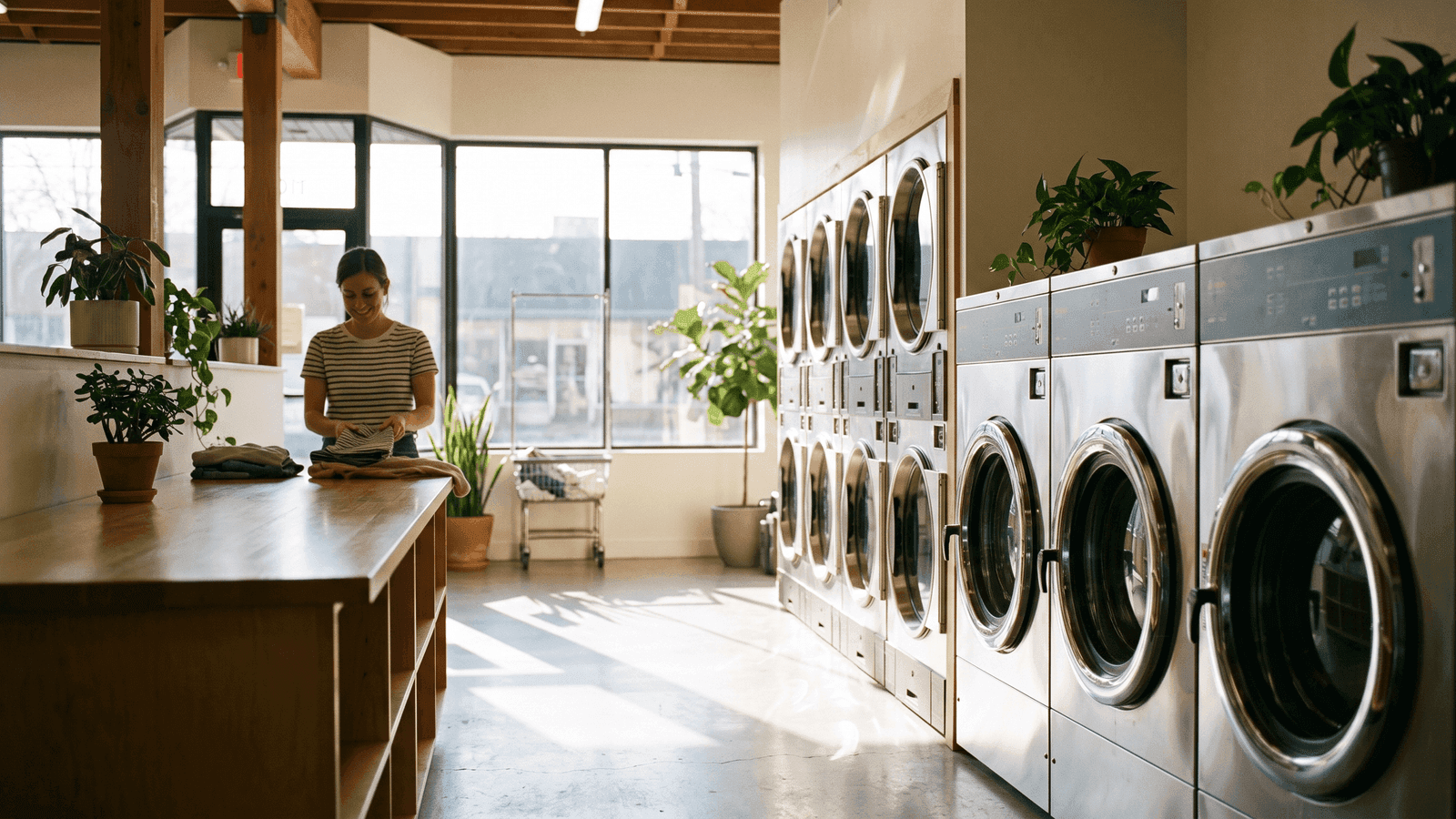
Pennsylvania offers a deep, steady laundromat market anchored by dense, renter-heavy neighborhoods across its major metros. Demand is strongest in and around Philadelphia, Pittsburgh, and Allentown, where older housing stock, apartment living, and mixed-income blocks keep self-service and wash-and-fold busy year round. The trade-offs are familiar for buyers: attractive urban foot traffic often comes with higher rents, aging equipment, and lease complexity, while smaller-city and suburban stores can be cheaper to buy but need sharper attention to population density and competition.
Contents
- The Pennsylvania market
- Where the demand is
- What to check in Pennsylvania
- Financing and costs
- Pennsylvania permits and rules
- A worked example
- Where to look
The Pennsylvania market
Pennsylvania is a large, mature state with a mix of major metros, mid-size cities, and rural counties, which means laundromat opportunities vary widely by block. The self-service laundry business here tends to follow renters: neighborhoods with a high share of apartments and multi-family homes, older housing without in-unit hookups, and a steady base of working households support the most reliable volume.
Because much of the state's housing is older, in-unit laundry is far from universal in dense urban cores, which keeps demand durable. At the same time, Pennsylvania has plenty of suburban and small-town areas where homes have their own washers and dryers, so location quality matters more than the state average. A strong store in the right neighborhood can perform very differently from a similar-sized store a few miles away.
- Renter density is the single biggest demand driver, so study it block by block.
- Older housing stock in urban cores often lacks in-unit laundry, which helps.
- Seasonality is modest but real, with utility costs shifting between summer and winter.
Before you fall for any single store, ground yourself in the fundamentals with our how to buy a laundromat guide and the step-by-step buyer's roadmap.
Where the demand is
The most active laundromat markets in Pennsylvania cluster around its population centers, but each has its own character.
- Philadelphia is the state's largest market, with dense, renter-heavy neighborhoods, extensive row-home housing, and strong wash-and-fold demand. Competition is real, so differentiation and store condition matter.
- Pittsburgh combines hilly, distinct neighborhoods with a mix of students, renters, and working households. Pockets of high density can support well-run stores, though foot traffic varies sharply block to block.
- Allentown and the broader Lehigh Valley offer a growing population and a more affordable entry point than the two big metros, with solid renter demand in the urban core.
Beyond these, mid-size cities and their surrounding boroughs can hold hidden value, especially where apartments cluster near employers, transit, or campuses. Wherever you look, evaluate the trade area on its own merits using our checklist for what makes a great laundromat location.
What to check in Pennsylvania
Diligence in Pennsylvania looks like diligence anywhere, with a few local emphases. Work through a full due diligence checklist for laundromat buyers and pay particular attention to these items.
- Verify the income. Ask for utility bills, coin or card-system reports, and any bank deposits. Reconcile claimed revenue against water and gas usage, which are hard to fake.
- Inspect the equipment. Note the age, brand, and condition of washers and dryers, and budget for replacements. Older machines can mean higher water and repair costs.
- Read the lease carefully. Urban Pennsylvania leases can carry escalators, pass-through costs, and shorter remaining terms. Our guide on reviewing a laundromat lease walks through the traps.
- Study the trade area. Confirm renter density, parking or walkability, and nearby competitors within a realistic travel radius.
- Check utilities. Water and sewer, gas, and electric costs are a major expense line, so confirm recent bills and any planned rate changes.
Financing and costs
Most laundromat purchases combine a buyer's cash with a loan. SBA-backed financing is common for stores with clean books and a defensible lease, while seller financing can bridge gaps and signal the seller's confidence. Whatever the structure, base your offer on verified cash flow rather than the asking price.
- Confirm your likely payment before you make an offer with the SBA loan payment calculator.
- Pressure-test the whole deal, including rent, utilities, and reinvestment, using the deal analyzer.
- Sanity-check occupancy cost with the rent-to-revenue calculator, since a heavy lease can sink an otherwise healthy store.
For a broader view of loan types and lender expectations, see our financing overview. Confirm the sales-tax treatment of self-service laundry and wash-and-fold with a Pennsylvania CPA, because how those lines are taxed can affect your true margins.
Pennsylvania permits and rules
Requirements vary by city and county, so treat this as an orientation rather than a legal checklist. This is not legal or tax advice, and you should confirm the specifics with the local agencies that have jurisdiction over the store.
- Business licensing. Confirm state and local business registration and any city-specific commercial licenses with the relevant municipal office (Philadelphia and Pittsburgh, for example, have their own rules).
- Plumbing and building permits. Any equipment changes, plumbing work, or buildout typically require permits and inspections from the local building department.
- Wastewater and water use. Some municipalities have discharge, backflow, or water-use rules for high-volume laundry. Confirm these with the local water and sewer authority.
- Sales tax. Confirm how Pennsylvania treats self-service laundry versus wash-and-fold with a licensed CPA before you rely on any margin assumptions.
Getting written confirmation from each agency protects you from surprises after closing.
A worked example
Numbers here are round and purely illustrative, not a quote for any specific store. Use them to see how the pieces fit, then run your own figures.
Suppose a Pennsylvania store shows verified seller's discretionary earnings (SDE) of $120,000 a year after you have normalized the owner's add-backs. In this asset class, buyers commonly apply a multiple of roughly 3.0x to 4.5x, depending on equipment age, lease strength, and location quality.
- At 3.0x, the store is worth about $360,000.
- At 4.5x, it is worth about $540,000.
If the equipment is newer and the lease is long and stable, the higher end can be justified. If machines are aging or the lease is short, lean toward the lower end or negotiate a credit. Rebuild the SDE yourself with the SDE calculator, then translate it into a defensible price range with the laundromat valuation calculator. For the full method behind these multiples, read how to value a laundromat.
Where to look
Good Pennsylvania stores sell quietly, so make browsing a habit rather than a one-time search. Watch active listings across Philadelphia, Pittsburgh, Allentown, and the mid-size markets in between, and compare asking prices against the cash flow they can actually prove.
- Browse current listings and filter by location and price to build a feel for the market.
- Set alerts so new Pennsylvania stores reach you early, before they get bid up.
- Track a few comparable stores over time to learn what realistic multiples and rents look like in each metro.
The buyers who win in Pennsylvania are usually the ones who have looked at many stores, know their numbers cold, and are ready to move when the right neighborhood, lease, and cash flow line up.
Frequently asked questions
Where is laundromat demand strongest in Pennsylvania?
Demand tends to be strongest in dense, renter-heavy neighborhoods across Philadelphia, Pittsburgh, and Allentown, where older housing often lacks in-unit laundry. Evaluate each trade area block by block rather than by the state average.
How are laundromats valued in Pennsylvania?
Most buyers apply a multiple of roughly 3.0x to 4.5x verified seller's discretionary earnings, adjusted for equipment age, lease strength, and location quality. Rebuild the SDE yourself and confirm the range with a valuation tool before making an offer.
What permits do I need to run a laundromat in Pennsylvania?
Requirements vary by city and county. Confirm business licensing, plumbing and building permits, and any wastewater or water-use rules with the local municipal, building, and water authorities that have jurisdiction over the store.
Is laundry service taxable in Pennsylvania?
The sales-tax treatment of self-service laundry versus wash-and-fold can differ, so confirm how each is taxed with a licensed Pennsylvania CPA before relying on any margin assumptions. This guide is an orientation, not tax advice.
How can I finance a Pennsylvania laundromat purchase?
Buyers commonly combine cash with an SBA-backed loan, and seller financing can bridge gaps. Base your offer on verified cash flow, and confirm your likely payment and occupancy cost with financing and rent-to-revenue tools first.