Buying a Laundromat in West Virginia
SudsList Editorial · Jul 27, 2026
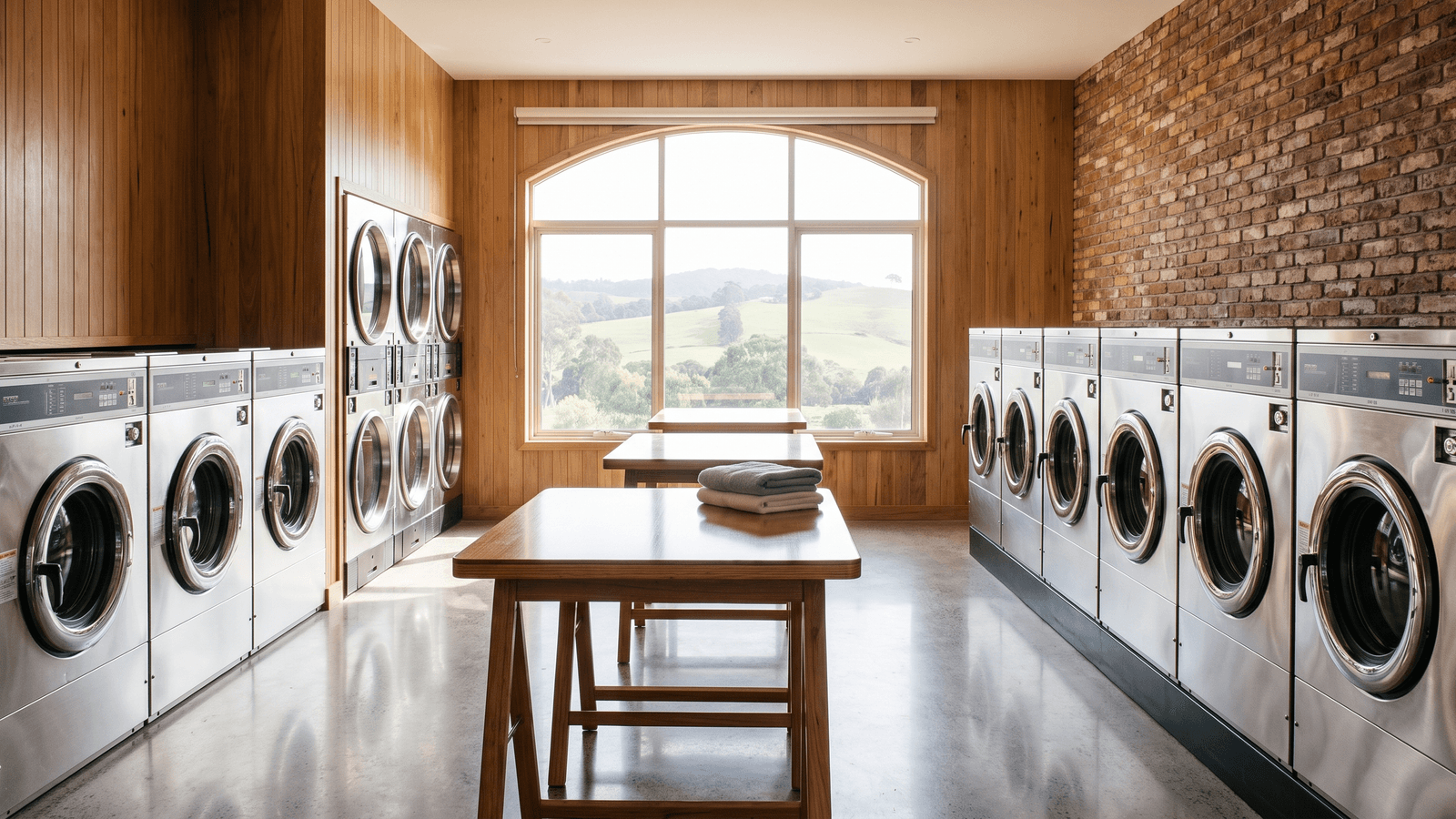
Buying a laundromat in West Virginia can be a practical way to own a cash-flowing local business, thanks to some of the lowest operating costs and rents in the country. The strongest opportunities cluster around renter-heavy university towns like Morgantown and Huntington, plus urban centers such as Charleston, Parkersburg, and Wheeling. An aging population and older housing stock mean steady demand for off-premise laundry. Expect valuations commonly in the 3.0x to 4.5x SDE range, verify utilities and equipment carefully, and confirm every local rule with a CPA, attorney, and the relevant agencies before you sign anything.
Contents - The West Virginia market - Where the demand is - What to check in West Virginia - Financing and costs - West Virginia permits and rules - A worked example - Where to look
The West Virginia market West Virginia is a low-cost operating environment, which shapes how laundromats pencil out. Rents and labor tend to run below national averages, and the state's older housing stock and energy-history economy support a durable base of renters and multi-family households who rely on shared laundry. That mix can make even modest stores cash-flow reliably if the fundamentals are sound. Because the state's population skews older and many homes date back decades, a meaningful share of residents either lack in-unit machines or prefer the speed of a commercial store, which keeps neighborhood laundromats relevant even in smaller towns.
The flip side of a low-cost market is that top-line revenue per store is often modest too, so margins and expense control matter more than raw sales. A buyer who understands the local water rates, equipment condition, and lease terms can turn a sleepy store into a dependable earner. That is why disciplined diligence, rather than optimism about growth, tends to separate good West Virginia deals from disappointing ones.
- Costs run lean. Commercial rents and payroll are often lower than in coastal metros, which can widen margins when a store is well run.
- Renter base is real. University towns and older neighborhoods keep off-premise laundry demand steady, especially where apartments lack in-unit machines.
- Valuations follow cash flow. Most laundromats trade on a multiple of seller's discretionary earnings, commonly 3.0x to 4.5x SDE, so learn how to value a laundromat before making an offer.
- Run your own numbers. Plug the store's earnings into the laundromat valuation calculator to sanity-check any asking price.
Where the demand is Demand concentrates where renters, students, and older residents overlap with limited in-unit laundry.
| Metro | Why it matters |
|---|---|
| Morgantown | West Virginia University anchors a large, transient renter population with seasonal turnover. |
| Huntington | Marshall University plus older housing stock create steady student and renter demand. |
| Charleston | The state capital and largest urban market supports diverse residential and commercial trade areas. |
| Parkersburg / Wheeling | Established river-city economies with older neighborhoods and multi-family renters. |
Morgantown and Huntington deserve special attention because their student populations create both opportunity and volatility. A store near campus apartments can run strong during the academic year and then soften over summer break, so the annual average matters more than any single busy month. Charleston, as the state's largest urban market, offers steadier year-round demand across a wider mix of residents, while the river cities of Parkersburg and Wheeling combine older neighborhoods with established working-class renter bases.
When you evaluate a specific address, study the trade area carefully and review what makes a great laundromat location to judge foot traffic, parking, visibility, and nearby rental density. A location with dense apartments, easy parking, and limited competition within a short drive is worth paying up for.
What to check in West Virginia Before you commit, work through a full due diligence checklist for laundromat buyers and pay attention to the items that matter most in this state.
- Utilities and water. Water, sewer, and gas costs drive the P&L. Pull at least 12 months of bills and confirm meter arrangements, since laundromats are water-intensive.
- Equipment age and condition. Older washers and dryers can mean higher repair bills and looming replacement. Note make, model, age, and any deferred maintenance.
- The lease. In a low-rent market the lease still makes or breaks the deal. Study reviewing a laundromat lease and confirm remaining term, renewal options, and who pays for repairs.
- Real revenue verification. Ask for collection logs, bank deposits, and utility usage to triangulate true income. In Morgantown and Huntington, factor university seasonality, since summer volume can dip when students leave.
- Competition and trade area. Map nearby laundromats, apartment density, and drive times so you understand how defensible the location really is.
Financing and costs Laundromats are a common fit for SBA financing because they generate steady cash flow and include tangible equipment. Many West Virginia deals fall in a size range that SBA 7(a) lenders are comfortable with, though terms depend on your profile and the store's books.
- Model the payment. Use the SBA loan payment calculator to estimate monthly debt service across different prices and down payments.
- Understand your options. Review financing to compare SBA loans, seller financing, and conventional paths.
- Watch rent-to-revenue. A low rent helps, but always test it with the rent-to-revenue calculator; a ratio that creeps too high signals trouble.
- Budget beyond the price. Reserve for near-term equipment replacement, working capital, and any modernization like card systems.
- Match the loan to the cash flow. A store's earnings need to cover debt service comfortably with room to spare, not just break even, so stress-test the payment against a slow season before you commit.
Once you have the numbers, run the deal through the deal analyzer and confirm earnings with the SDE calculator before you sign.
West Virginia permits and rules Requirements vary by city and county, so confirm specifics with local agencies and the West Virginia authorities that apply to your location. Treat the list below as a starting point for your own diligence.
- Business licensing. Register your business and obtain any state business registration certificate and local licenses required to operate.
- Plumbing and building permits. Any buildout, plumbing changes, or equipment swaps typically trigger permits and inspections through the local building department.
- Wastewater and water rules. Laundromats discharge significant wastewater, so confirm sewer, backflow, and any utility requirements with the local water and sanitary authorities.
- Zoning, signage, and health. Verify zoning allows the use and that signage and any attendant or vending elements meet local codes.
None of this is legal advice, so confirm your obligations with a qualified attorney, a CPA, and the relevant West Virginia and local agencies before closing.
A worked example Imagine a Charleston-area store with seller's discretionary earnings between $70,000 and $88,000 per year. At a 3.0x multiple, a store earning $70,000 SDE would be priced near $210,000, while a stronger store earning $88,000 SDE at a 4.5x multiple could reach about $396,000. The spread reflects equipment condition, lease quality, and revenue reliability. A newer, well-leased store with verifiable income earns the higher multiple, while an older store on a short lease sits at the lower end.
These numbers are illustrative only. Test your own figures with the valuation calculator, confirm earnings using the SDE calculator, and size the financing with the SBA loan payment calculator.
Where to look Finding the right store takes a repeatable process, not luck.
- Browse active inventory. Start with laundromat listings filtered for West Virginia to see what is available in Charleston, Huntington, Morgantown, and beyond.
- Set alerts. Save searches so new West Virginia stores reach you early, since good deals move quickly.
- Follow a process. Work the buyers roadmap and read how to buy a laundromat to move from search to closing with confidence.
West Virginia rewards buyers who pair its low operating costs with disciplined diligence. Verify the numbers, respect the lease, and lean on the calculators and guides above to make an offer you can stand behind.
Frequently asked questions
Where is laundromat demand strongest in West Virginia?
Demand concentrates in renter-heavy university towns like Morgantown (West Virginia University) and Huntington (Marshall University). Charleston, Parkersburg, and Wheeling also support steady demand thanks to older housing stock and multi-family renters. Areas where apartments lack in-unit laundry tend to perform best.
How are laundromats valued in West Virginia?
Most laundromats are valued on a multiple of seller's discretionary earnings (SDE), commonly in the 3.0x to 4.5x range. Newer equipment, a strong lease, and verifiable revenue push the multiple higher. Always confirm the earnings figure with real bank deposits and utility usage before relying on any asking price.
Can I use an SBA loan to buy a West Virginia laundromat?
Yes. Laundromats are a common fit for SBA 7(a) financing because they produce steady cash flow and include tangible equipment. Terms depend on your financial profile and the store's books. Model different prices and down payments with an SBA loan payment calculator, and compare SBA loans against seller financing.
What permits and rules apply to laundromats in West Virginia?
Requirements vary by city and county. Expect to handle business registration and licensing, plumbing and building permits for any buildout, wastewater and water utility rules, and local zoning and signage codes. Confirm the specifics with local agencies and a qualified attorney before closing.
How is sales tax treated for laundromats in West Virginia?
Sales tax treatment for laundry and related services can vary, and rules change over time. Do not assume a coin-operated store is automatically exempt or taxable. Confirm your exact obligations with a West Virginia CPA and the state Tax Division before you close and set up your accounting.