Buying a Laundromat in Wisconsin
SudsList Editorial · Jul 27, 2026
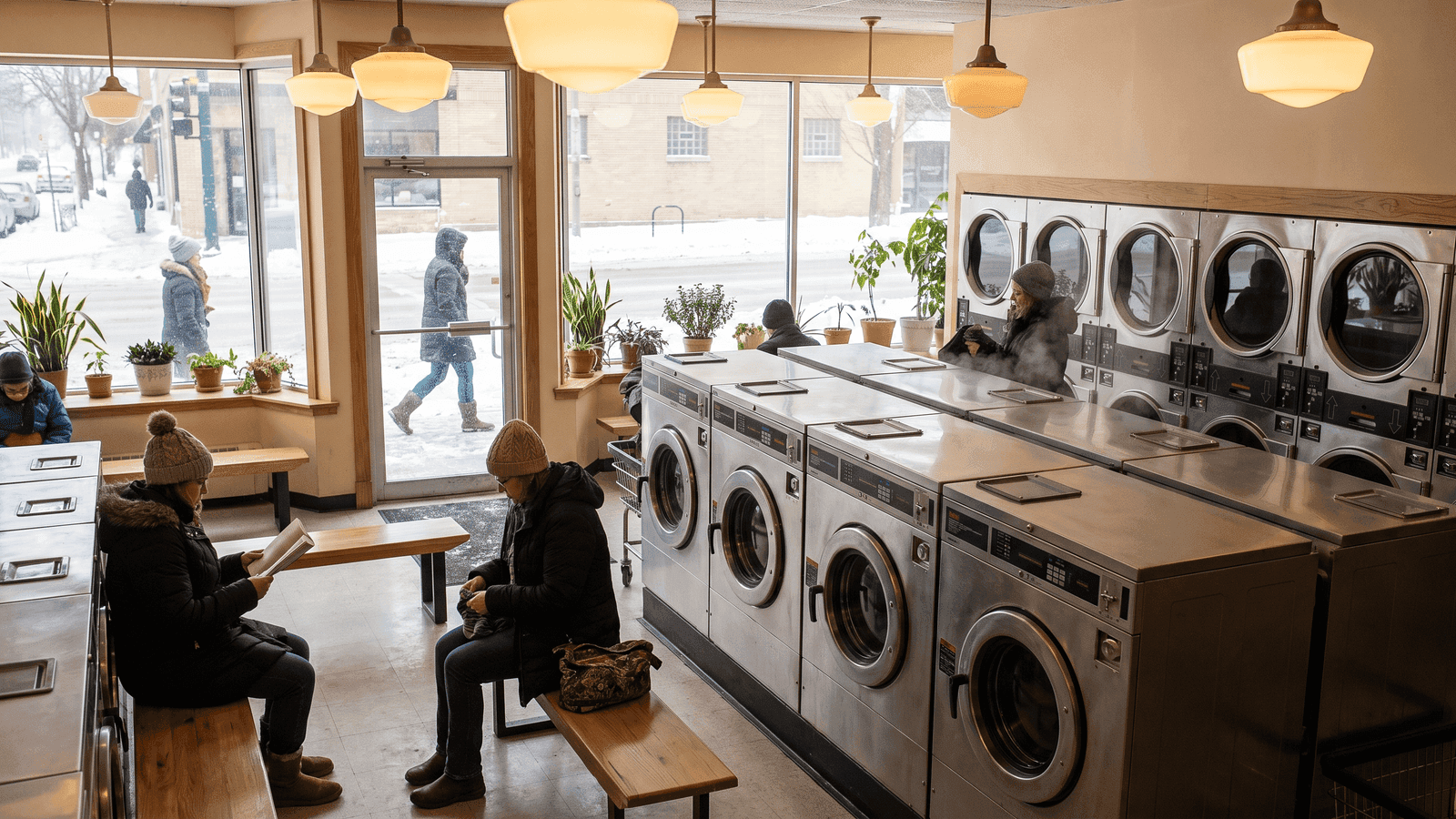
Wisconsin offers steady, unflashy laundromat demand built on cold winters, a large base of renters, and dense working neighborhoods that keep machines busy year round. The strongest activity sits in and around Milwaukee, Madison, and Green Bay, where apartments, students, and shift workers create reliable turns. The trade-offs are real: hard water and heavy winter use put stress on equipment, older buildings can carry deferred plumbing and heating issues, and margins depend heavily on utility costs and lease terms. If you buy on verified water and sewer bills, a fair rent, and honest cash flow, Wisconsin can be a durable, cash-generating business rather than a gamble.
Contents
- The Wisconsin market
- Where the demand is
- What to check in Wisconsin
- Financing and costs
- Wisconsin permits and rules
- A worked example
- Where to look
The Wisconsin market
Wisconsin laundromats serve a practical, weather-driven customer base. Long, cold winters mean people run larger, heavier loads and rely on stores for bulky bedding and cold-weather gear, which supports year-round volume rather than a summer-only spike.
- Renter demand is the engine. Apartment-heavy neighborhoods, student housing, and multi-family blocks drive the customers who cannot install their own machines.
- Winter is an asset and a cost. Cold months lift usage but raise heating and hot-water expense, so utilities can swing more than in warmer states.
- Older building stock is common. Many Wisconsin storefronts are decades old, which means plumbing, electrical, and heating systems deserve close inspection.
- Add-on revenue matters. Wash-and-fold, commercial contracts, and vending can lift a plain coin store, especially near dense housing.
Because outcomes vary widely by store, treat every asking price as a starting point and confirm the numbers with real bills and meter data. Use our how to value a laundromat guide to frame what the business is actually worth.
Where the demand is
You do not need every metro, but knowing where turns cluster helps you target searches.
- Milwaukee. The largest population center, with dense renter neighborhoods, a broad working-class base, and the most listing volume in the state.
- Madison. A university and government town where students and young renters support steady demand, though good locations can be competitive and rents higher.
- Green Bay. A smaller but stable market with solid working households and less saturation, often at more approachable price points.
- Smaller cities and college towns. Places like Kenosha, Racine, Appleton, Oshkosh, and Eau Claire can offer strong renter density with less competition.
Location quality still decides the deal. Parking, visibility, foot traffic, and nearby apartments matter more than the metro name. See what makes a great laundromat location before you commit to any storefront.
What to check in Wisconsin
Due diligence is where a Wisconsin deal is won or lost. Focus on the items most likely to surprise a new owner.
- Water and sewer bills. Pull at least 12 to 24 months of actual utility statements. Water and wastewater are among the largest costs, and hard water is common in parts of the state.
- Gas and electric. Winter heating and hot-water demand can push utility spend high, so review full-year data, not a summer snapshot.
- Equipment age and condition. Note the make, age, and service history of washers and dryers. Hard water accelerates wear, so budget for repairs or staged replacement.
- The lease. Confirm remaining term, renewal options, rent escalations, and who handles plumbing, HVAC, and structural repairs. Walk through reviewing a laundromat lease carefully.
- Real, verifiable income. Coin and card systems should reconcile to deposits. Be skeptical of cash-only claims you cannot trace.
Work the full due diligence checklist for laundromat buyers so nothing important slips through.
Financing and costs
Most buyers combine a down payment with a loan, and laundromats are common candidates for SBA-backed financing because of their steady cash flow.
- SBA loans. Frequently used for laundromat acquisitions. Estimate a monthly payment with our SBA loan payment calculator.
- Seller financing. Some Wisconsin sellers will carry part of the price, which can bridge a gap and signal confidence in the numbers.
- Reserves for winter. Set aside cash for cold-season utility bills and for equipment repairs that hard water and heavy use make more likely.
- Rent discipline. Test the rent against revenue using our rent-to-revenue calculator so occupancy cost does not eat your margin.
Confirm the deal structure end to end with the deal analyzer, and review options on our financing page before you make an offer.
Wisconsin permits and rules
Rules vary by municipality, so verify the specifics for your city or county rather than relying on general summaries.
- Business and local licensing. Confirm what registrations or licenses your city or county requires with the local clerk or licensing office.
- Plumbing and building permits. Any equipment swaps, plumbing changes, or buildout may need permits and inspections. Confirm requirements with your local building and plumbing authority.
- Wastewater and water rules. Discharge, backflow prevention, and water-use standards can apply. Confirm these with your local water utility and wastewater authority.
- Sales tax treatment. How Wisconsin treats coin laundry versus wash-and-fold or other services is a tax question, not a guess. Confirm the sales-tax treatment of laundry and wash-and-fold with a Wisconsin CPA.
This is buyer orientation, not legal or tax advice. Always confirm licenses, permits, and tax rules with the relevant local agencies and a qualified professional.
A worked example
Here is an illustrative, rounded example only. Your real figures will differ, so plug your own numbers into the calculators.
- Suppose a store shows roughly $60,000 in seller's discretionary earnings (SDE) after you verify utilities, rent, and income.
- Laundromats often trade around 3.0x to 4.5x SDE, depending on lease quality, equipment condition, and location.
- That range implies a price of roughly $180,000 to $270,000.
- A newer store on a long, clean lease with strong renter density leans toward the higher end. An older store with aging machines, a short lease, or heavy hard-water wear leans lower.
Rebuild the SDE yourself with the SDE calculator, then pressure-test the price with the laundromat valuation calculator. Treat any seller multiple as a claim to verify, not a fact to accept.
Where to look
Deals move quickly, so combine active searching with a system that alerts you to new stores.
- Browse current listings. Start with our listings and filter for Wisconsin metros and nearby college towns.
- Set up alerts. Turn on alerts so new Wisconsin laundromats reach you before the market fills up.
- Follow a repeatable process. Use the buyers roadmap and our how to buy a laundromat guide to move from search to close without skipping steps.
Wisconsin rewards patient buyers who verify utilities, respect winter costs, and hold out for a fair lease. Do that, and a well-located store in Milwaukee, Madison, Green Bay, or a strong smaller market can be a steady business for years.
Frequently asked questions
Where is laundromat demand strongest in Wisconsin?
The most activity is in and around Milwaukee, Madison, and Green Bay, plus smaller renter-dense cities and college towns like Kenosha, Racine, Appleton, Oshkosh, and Eau Claire. Location quality, parking, visibility, and nearby apartments matter more than the metro name.
What should I check most carefully in a Wisconsin laundromat deal?
Verify 12 to 24 months of actual water, sewer, gas, and electric bills, since winter heating and hot water can push utility costs high. Also inspect equipment age and condition, because hard water accelerates wear, and review the lease terms in detail.
How are Wisconsin laundromats typically priced?
Laundromats often trade at roughly 3.0x to 4.5x seller's discretionary earnings, depending on lease quality, equipment condition, and location. Rebuild the SDE yourself and treat any seller multiple as a claim to verify, not a fact to accept.
What permits and rules apply to a Wisconsin laundromat?
Requirements vary by municipality. Confirm business licensing with your local clerk, plumbing and building permits with your local building authority, and wastewater and water-use rules with your local utility. Confirm sales-tax treatment of laundry and wash-and-fold with a Wisconsin CPA.
How do buyers usually finance a Wisconsin laundromat?
Most combine a down payment with a loan, often SBA-backed because of steady cash flow, and some sellers carry part of the price. Keep reserves for winter utility bills and hard-water equipment repairs, and test rent against revenue before making an offer.