Adding Drop-Off Dry Cleaning to a Laundromat
SudsList Editorial · Jul 26, 2026
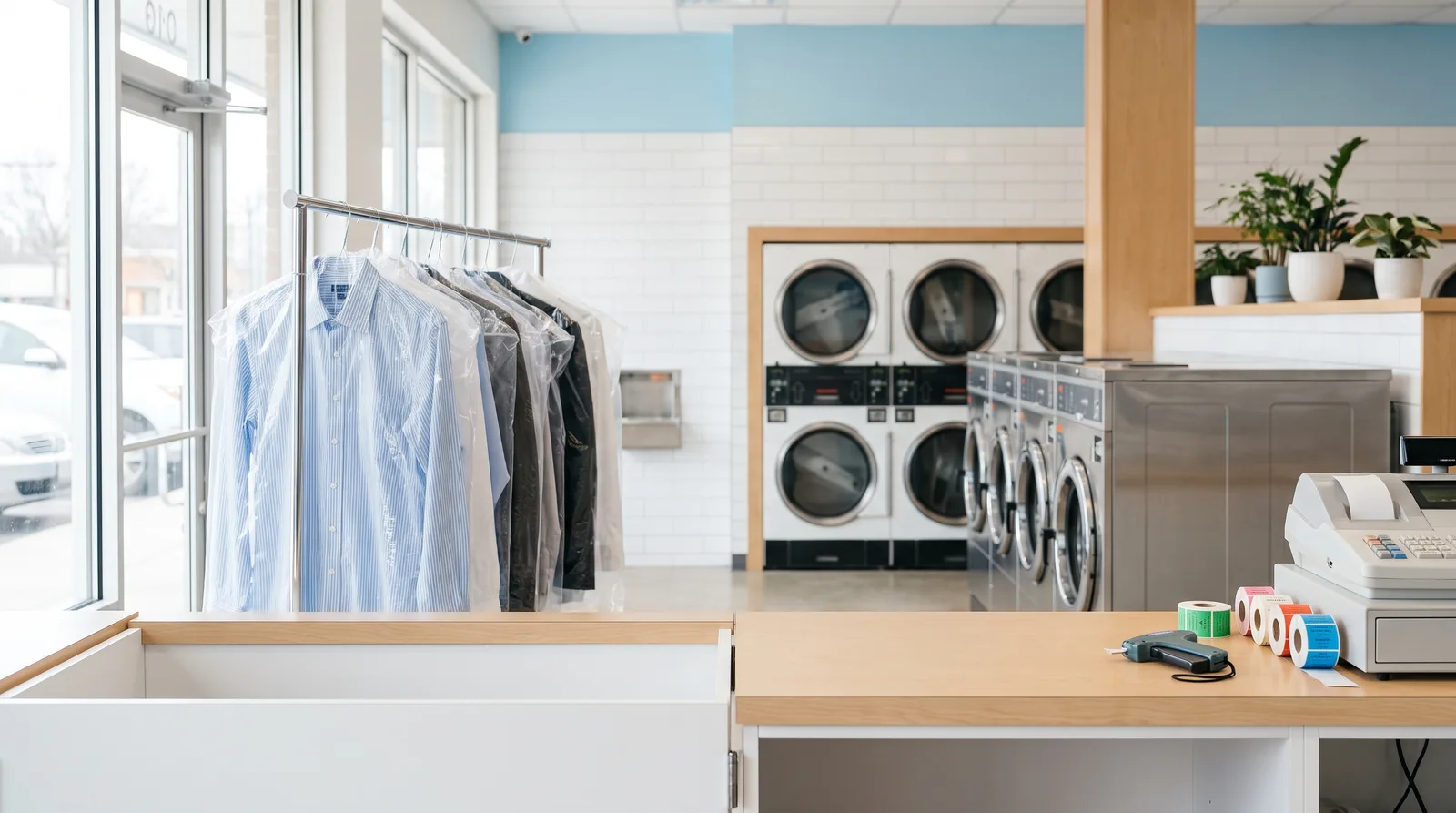
The practical way to add drop-off dry cleaning to a laundromat is to partner with a wholesale dry-cleaning plant rather than install your own equipment. You take garments in at the counter, tag them, and hand them to a plant that cleans and returns them, keeping a markup on each order. This avoids the solvent machines, permits, and environmental compliance of running an in-house plant, and it turns your existing counter and attendant into a new revenue stream. Margins are thinner than wash-and-fold, but the labor is light and it draws customers who might never use your self-serve machines.
Key takeaways
- Almost every laundromat that offers dry cleaning does it through a wholesale plant partner, not in-house equipment.
- The plant cleans and returns garments; you handle intake, tagging, pricing markup, and customer pickup.
- Drop-off dry cleaning has thinner margins than wash-and-fold but needs little space and almost no new equipment.
- It pairs naturally with wash-and-fold since both run through the same drop-off counter and attendant.
- In-house dry cleaning rarely makes sense for a laundromat because of equipment cost, permits, and environmental rules.
Contents
- Should you partner with a plant or clean in-house?
- How does the wholesale dry-cleaning workflow work?
- What are the margins on drop-off dry cleaning?
- How do you price dry-clean orders?
- How does it complement wash-and-fold?
- What do you need to get started?
- When is drop-off dry cleaning not worth it?
Should you partner with a plant or clean in-house?
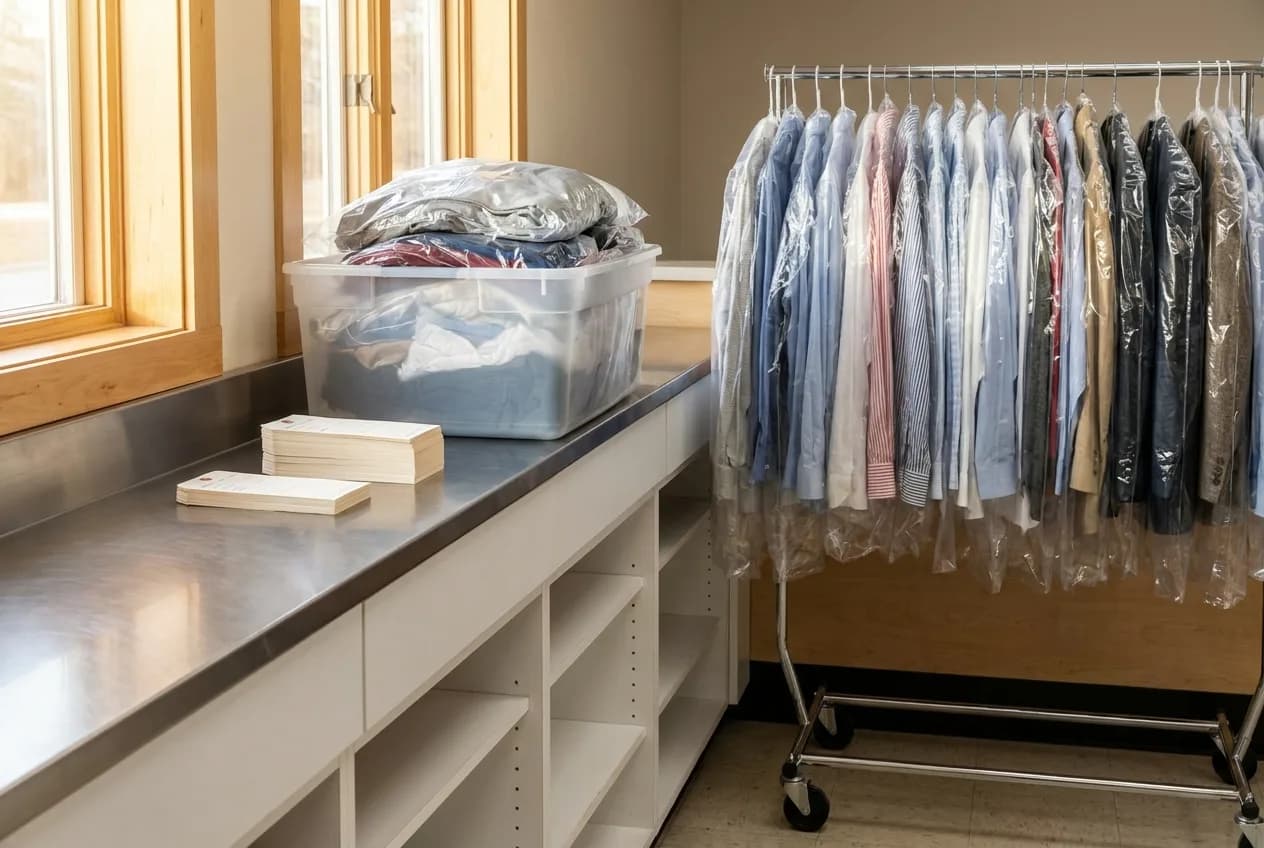
Partner with a wholesale plant in nearly every case, because in-house dry cleaning brings equipment cost, permits, and environmental compliance that a laundromat is not built for. A wholesale plant is a dry cleaner that processes garments for other retailers, letting you sell the service without owning the machines.
Running your own dry cleaning means buying and maintaining specialized machines, storing and handling solvents, and meeting air and hazardous-waste rules that vary by state. That is a different business with its own risk and regulation.
The partner model strips all of that out. You become the retail front and pickup point, the plant does the cleaning, and you keep a markup. For most operators this is the only version of dry cleaning that fits inside a laundromat.
How does the wholesale dry-cleaning workflow work?
The workflow is a simple loop: the customer drops off, you tag and log the order, the plant picks up on a route, cleans, and returns finished garments, then the customer picks up and pays. Your role is intake and handoff, not cleaning.
A typical cycle looks like this:
- A customer brings garments to your counter; you inspect and tag each piece.
- You log the order with the customer's name, contact, and pickup date.
- The plant's route driver collects garments, often daily or several times a week.
- The plant cleans, presses, bags, and returns the finished order.
- You store the cleaned garments and notify the customer for pickup.
Turnaround is commonly a couple of days, set by the plant's route schedule. Clear tagging and a reliable log are what keep orders from getting lost, so treat the tracking system as the core of the operation.
What are the margins on drop-off dry cleaning?
Margins on drop-off dry cleaning are moderate, since the plant keeps a share of every order, but the low labor and space cost make it worthwhile. You mark up the plant's wholesale price to a retail price, and the spread is your gross margin before your own light handling cost.
The economics are attractive precisely because your fixed costs are already covered. The counter, the lights, and often the attendant are paid for by your self-serve and wash-and-fold business, so the dry-cleaning markup lands with little added expense.
| Factor | Wholesale plant partner | In-house dry cleaning |
|---|---|---|
| Upfront cost | Low (counter, tags, rack) | High (machines, buildout, permits) |
| Ongoing compliance | Handled by the plant | Solvent, air, and waste rules on you |
| Margin per order | Moderate (plant takes a cut) | Higher gross, high overhead |
| Labor to run | Light (intake and pickup) | Skilled operator required |
| Fit for a laundromat | Strong | Rarely practical |
Model the added cash from a dry-clean program alongside your other revenue in the laundromat cash flow calculator.
How do you price dry-clean orders?
Price each item by taking the plant's wholesale charge and adding a markup that covers your handling and leaves a clear margin, while staying in line with local dry cleaners. Customers compare against nearby shops, so your retail price needs to be competitive, not just profitable.
A few pricing principles:
- Use per-item pricing (shirts, pants, coats, dresses) matching how the plant bills you.
- Set the markup high enough to cover intake labor, storage, and shrink, then check it against local prices.
- Consider a small rush fee for expedited turnaround if the plant supports it.
- Bundle dry cleaning with wash-and-fold on the same ticket to lift the average order.
Display pricing clearly at the counter so customers know the cost before they leave garments. Confirm whether dry-cleaning services are taxable in your state, since rules on cleaning services vary; the IRS covers federal treatment while your state handles sales tax.
How does it complement wash-and-fold?
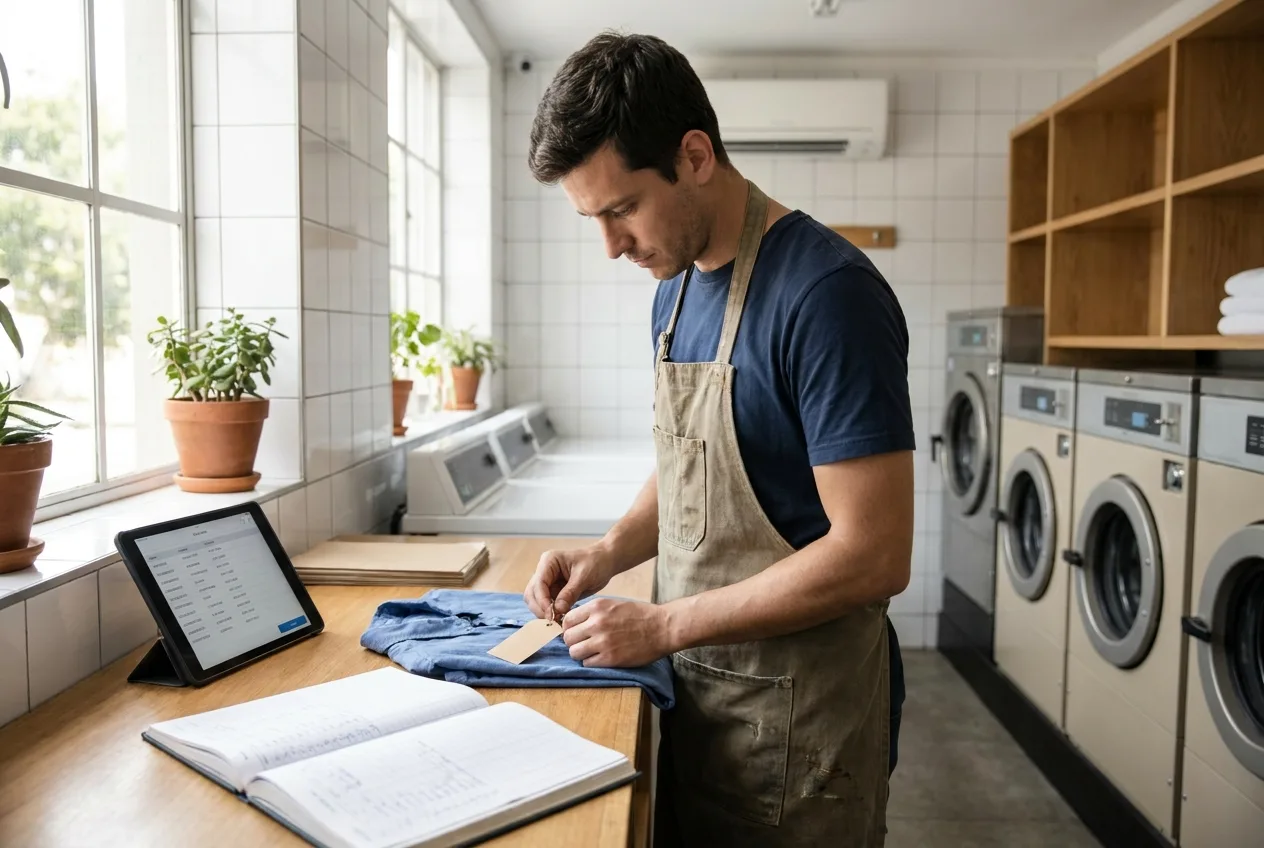
Drop-off dry cleaning complements wash-and-fold because both run through the same counter, the same attendant, and the same order-tracking system. A customer dropping off wash-and-fold can hand over dry cleaning in the same visit, raising the value of every drop-off.
The two services share a customer: someone who pays for laundry convenience is a natural buyer of dry-cleaning convenience. Offering both makes your store a one-stop clothing-care stop instead of just a self-serve floor.
If you have not launched the labor side yet, wash-and-fold usually comes first since it is your own service with fuller margins. See how to add wash-and-fold to your laundromat and the broader menu in profitable laundromat add-on services.
What do you need to get started?
To start, you need a reliable wholesale plant partner, counter space, a tagging and tracking system, and a garment rack for finished orders. The setup cost is low, which is what makes this add-on accessible to almost any store.
The basics:
- A wholesale dry-cleaning plant with a route that reaches your store on a workable schedule.
- Counter space for intake and a rack or closet for cleaned, bagged garments.
- A tagging and logging system so no order is lost or mixed up.
- Attendant training on inspection, tagging, pricing, and the pickup process.
- Clear posted pricing and a simple claim policy for damage disputes.
Vet the plant on quality and reliability before committing, since their work carries your store's name in the customer's eyes. Industry resources from the Coin Laundry Association can help you find operators who already run this model.
When is drop-off dry cleaning not worth it?
Drop-off dry cleaning is not worth it when your customer base rarely wears dry-clean-only clothing or when no wholesale plant serves your area on a workable route. The service only pays if there is real local demand and a dependable plant to fulfill it.
Stores in neighborhoods where customers wear mostly casual, washable clothing may see too few orders to bother with. And without a plant offering a reliable pickup route, turnaround suffers and the service becomes a liability rather than a convenience.
Be honest about demand before you commit counter space. If dry cleaning would draw only a trickle of orders, that same space and attention may earn more as wash-and-fold or vending. For how the pieces fit together, see how to increase laundromat revenue.
Frequently asked questions
Do I need dry-cleaning machines to offer the service?
No. The standard model is to partner with a wholesale dry-cleaning plant that owns the machines and handles the solvents, permits, and environmental compliance. You take in garments, tag them, and hand them to the plant's route driver, keeping a markup on each order. This avoids nearly all the cost and regulation of running your own plant.
How much can I mark up dry-clean orders?
You mark up the plant's wholesale per-item price to a retail price, and the markup needs to cover your intake labor, storage, and any shrink while staying competitive with local cleaners. Because your counter and attendant are already paid for, most of that markup is margin. Check nearby dry-cleaner prices so you do not price yourself out of the market.
How long does drop-off dry cleaning take?
Turnaround is usually a couple of days, set by how often the plant's route reaches your store. A plant that picks up daily gives faster service than one that comes a few times a week. Post the expected turnaround at the counter so customers know when to return.
Is running dry cleaning in-house ever worth it for a laundromat?
Rarely. In-house dry cleaning means buying specialized machines, handling solvents, and meeting air and hazardous-waste rules that vary by state, which is a different business with its own risk. For almost every laundromat, the wholesale plant partnership captures the revenue without that overhead. Only large or specialized operators tend to bring it in-house.
Should I add dry cleaning before or after wash-and-fold?
Usually after wash-and-fold, since wash-and-fold is your own service with fuller margins and it establishes the drop-off counter and tracking system that dry cleaning also uses. Once the counter is running smoothly, adding dry cleaning is a small step. Many stores end up offering both on the same ticket.