Profitable Laundromat Add-On Services
SudsList Editorial · Jul 26, 2026
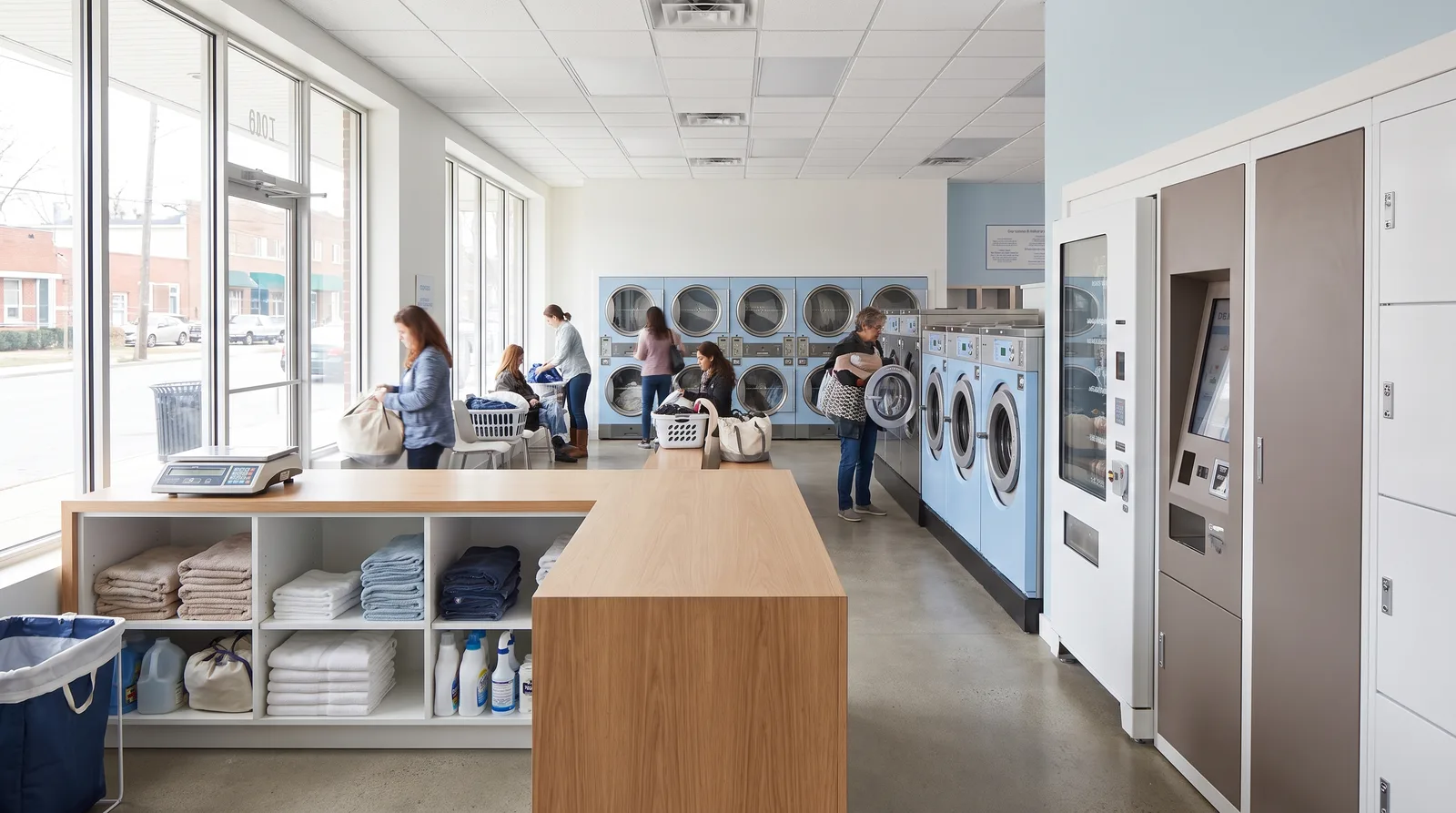
The most profitable laundromat add-on services are the ones that use space, staff, and foot traffic you already pay for: wash-and-fold, drop-off dry cleaning, and vending lead the list, with lockers, package pickup, alterations, and notary paying off in the right location. A good add-on service raises revenue per visit without adding much cost, since the rent, lights, and often the attendant are already covered. The test is simple: does it earn more than the space and labor it consumes, and does it fit the customers already walking in? Start with one add-on that matches your traffic, measure it, then expand.
Key takeaways
- The best add-ons use space and staff you already pay for, so most of the new revenue drops to the bottom line.
- Wash-and-fold and drop-off dry cleaning are usually the highest-value add-ons because they sell labor and convenience, not just machine time.
- Vending, lockers, and package pickup are low-effort add-ons that fit almost any store, while alterations and notary depend on your specific customers.
- Judge every add-on by revenue per square foot and per attendant hour, not by novelty.
- Launch one add-on at a time and measure it for a few months before adding another.
Contents
- Which add-on services actually make money?
- How do you decide which add-on fits your store?
- Is drop-off dry cleaning worth adding?
- What low-effort add-ons fit almost any store?
- Do alterations, lockers, and notary pay?
- How much can add-ons add to revenue?
- How do you launch a new add-on without hurting the core?
Which add-on services actually make money?
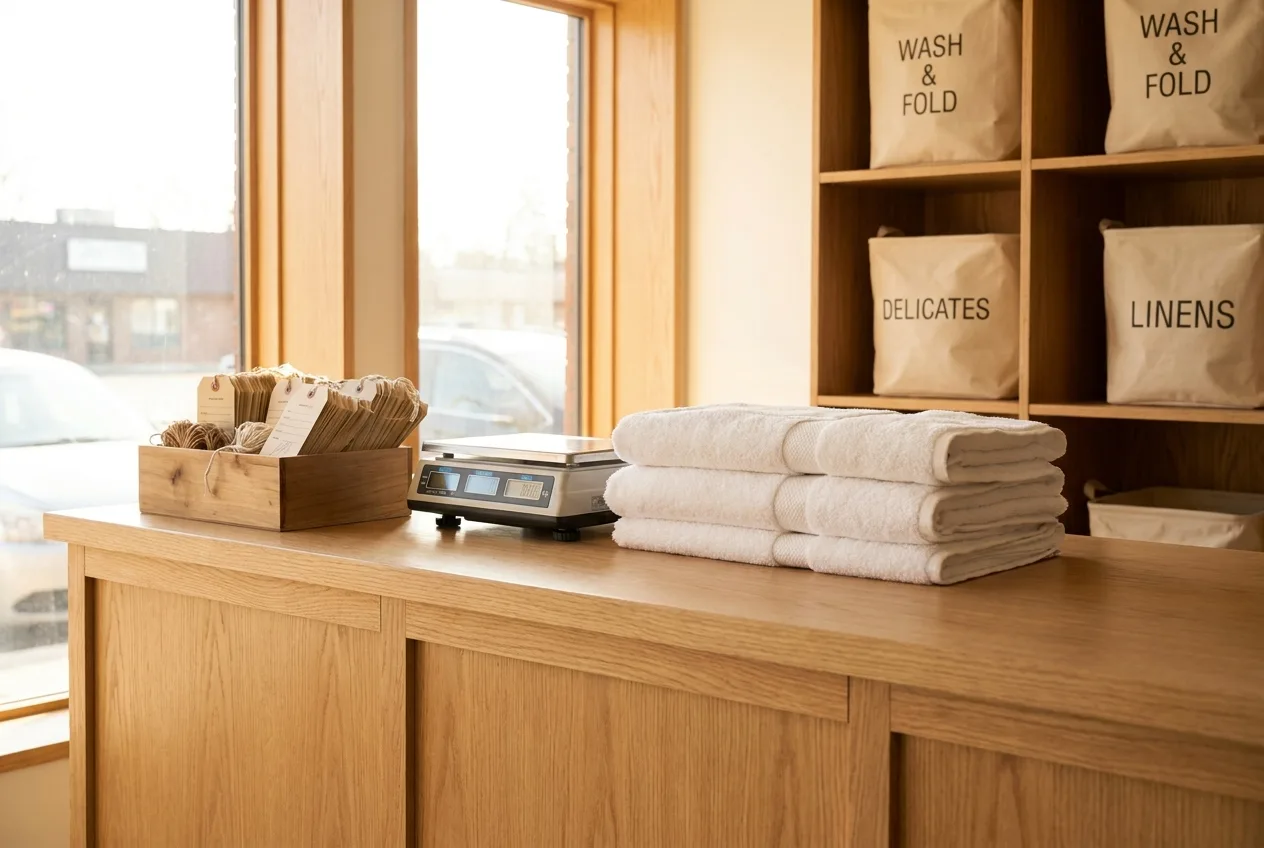
The add-ons that reliably make money are wash-and-fold, drop-off dry cleaning, vending, lockers, and package pickup, because each one earns from space and traffic the store already carries. An add-on service is any revenue stream layered onto a laundromat beyond self-serve wash and dry.
The reason they work is margin structure. Your rent, utilities baseline, insurance, and often your attendant are fixed costs you pay whether the add-on exists or not, so incremental revenue lands with little added expense. That is why a slow store with an attendant standing around is a prime candidate for a labor-based add-on.
The weaker add-ons are the ones that need dedicated space, specialized skill, or a second employee to run at all. If a service cannot cover its own labor and the square footage it occupies, it is a hobby, not a profit center.
How do you decide which add-on fits your store?
Decide by matching the add-on to two things you already have: your customers and your idle capacity. The right add-on solves a problem the people already walking in have, and it fills time or space that is currently sitting empty.
Work through a short checklist for each candidate:
- Do my current customers ask for it or clearly need it?
- Can I run it with existing staff and space, or does it need more?
- What does it earn per attendant hour and per square foot?
- How fast do I recover any equipment or setup cost?
- Does it distract from the core self-serve business at peak?
A store in a dense apartment neighborhood with busy renters is a natural fit for wash-and-fold and delivery, while a store near small offices and shops may do better with dry-clean drop-off and package pickup. Let the neighborhood pick the add-on.
Is drop-off dry cleaning worth adding?
Drop-off dry cleaning is often worth adding because you sell a service without owning the equipment or the environmental permits, by partnering with a wholesale cleaning plant. You take garments in, tag them, and hand them to a plant that cleans and returns them, keeping a markup on each order.
The appeal is low commitment. You need counter space, a tagging system, and a route pickup, not solvent machines or a hazardous-materials setup. Margins are thinner than wash-and-fold since the plant takes a cut, but the labor is light and it pulls in customers who might not otherwise use your store.
It pairs naturally with wash-and-fold, since both run through the same drop-off counter and attendant. For the full setup, see adding drop-off dry cleaning to a laundromat, and if you have not launched wash-and-fold yet, start with how to add wash-and-fold to your laundromat.
What low-effort add-ons fit almost any store?
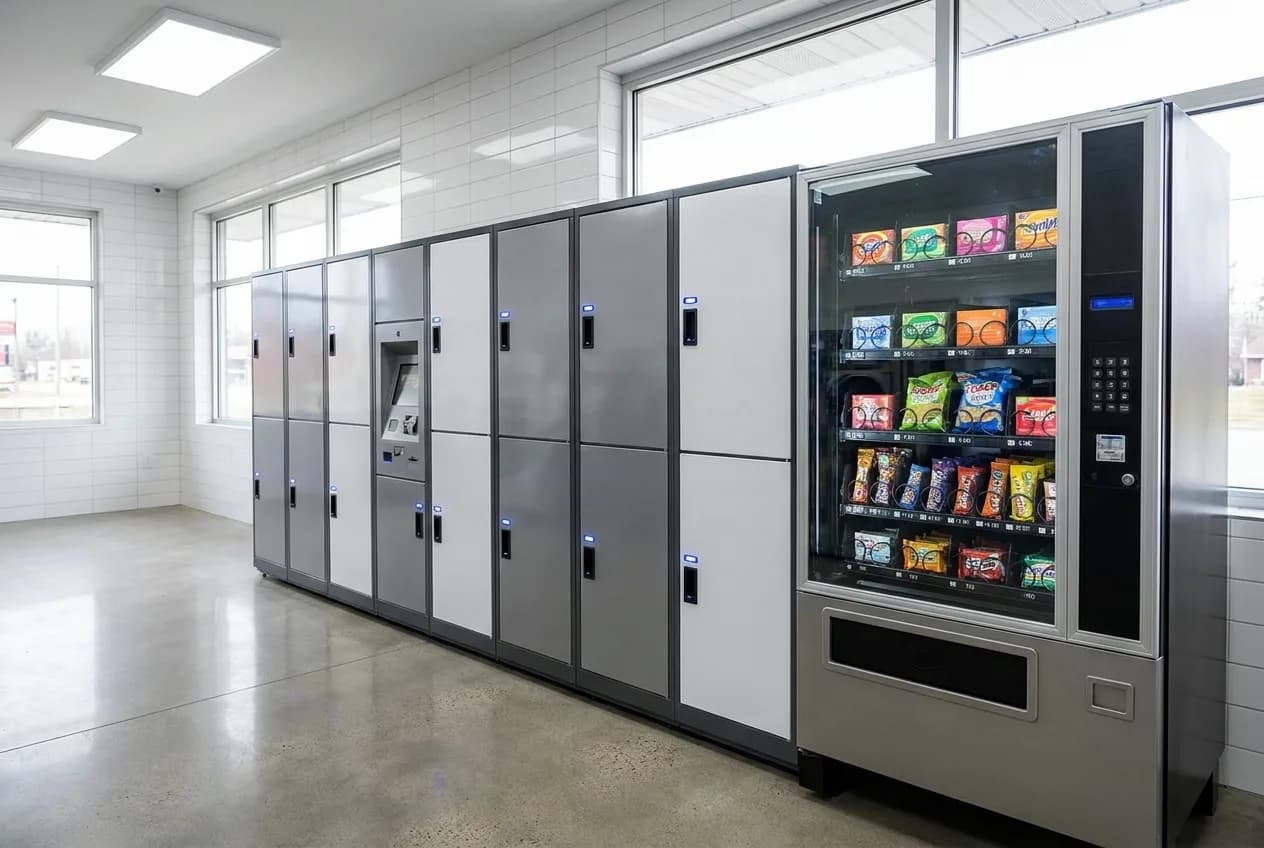
Vending, change machines, lockers, and package pickup fit almost any store because they run largely on their own and need little floor space. These are the add-ons to reach for when you want more revenue per visit without adding labor.
- Vending: detergent, snacks, and drinks sell to a captive audience with time to kill; margins are strong and restocking is quick.
- Lockers: pickup lockers let wash-and-fold and delivery customers retrieve orders after hours, extending your service window without extending staffed hours.
- Package pickup and shipping: acting as a parcel drop or pickup point draws steady foot traffic that also does laundry.
- ATM: a machine placed by a third party can pay a small monthly fee or surcharge share with no cost to you.
For the full menu of vending and passive revenue, see laundromat vending and add-on revenue. Model the incremental cash from any of these in the laundromat cash flow calculator.
Do alterations, lockers, and notary pay?
Alterations and notary pay only when your specific customer base wants them, which makes them situational rather than universal. Both need a person with a skill or credential, so they earn per transaction but do not run passively.
Alterations and simple tailoring can work if you already have a wash-and-fold attendant who sews, or a nearby tailor willing to use your counter as a drop point. Notary and other small services fit stores in commercial areas where people run errands, but they rarely justify hiring for them alone.
The honest read: treat these as bonus revenue that rides on staff or partnerships you already have, not as reasons to add headcount. If a service needs a dedicated employee to exist, the math almost never works in a laundromat.
How much can add-ons add to revenue?
Add-ons commonly lift a store's revenue by a meaningful share, though the range is wide and depends entirely on the mix and location. Labor-based services like wash-and-fold can become a large slice of revenue, while passive add-ons like vending are smaller but nearly pure margin.
| Add-on | Effort to run | Space needed | Margin profile |
|---|---|---|---|
| Wash-and-fold | High (attendant labor) | Counter and staging | High per order |
| Drop-off dry cleaning | Low to medium | Counter space | Moderate (plant takes a cut) |
| Vending and change | Very low | Wall footprint | High, passive |
| Lockers / package pickup | Low | Small footprint | Moderate, passive |
| Alterations / notary | Medium (skill needed) | Small | Per-transaction, situational |
A useful frame is a store doing a fixed self-serve base that adds a wash-and-fold and vending program. If the new services cover their labor and space and still leave a margin, they raise both cash flow and the store's eventual sale value. For the broader picture, see how to increase laundromat revenue and how add-ons feed into how to increase turns per day at a laundromat.
How do you launch a new add-on without hurting the core?
Launch one add-on at a time and protect the self-serve core, because a new service that clogs your counter or distracts your attendant at peak can cost you more than it earns. The self-serve floor is the foundation, so it comes first.
Practical rules for a clean launch:
- Pick one add-on, price it to cover labor and space, and give it a defined counter or corner.
- Train the attendant so add-on work never blocks self-serve customers during busy hours.
- Track its revenue and labor separately for a few months to see if it truly pays.
- Keep or cut it based on revenue per attendant hour, not on how interesting it is.
Check whether the service is taxable in your state before you start collecting, since rules on laundry and cleaning services vary; the IRS covers federal treatment and your state handles sales tax. Industry groups such as the Coin Laundry Association publish operating benchmarks that help you judge whether an add-on is pulling its weight. Add deliberately, measure honestly, and drop what does not earn.
Frequently asked questions
What is the single most profitable laundromat add-on?
For most stores it is wash-and-fold, because it sells labor and convenience at a strong markup while using space and staff you already pay for. Drop-off dry cleaning is a close second where the customer base supports it. Both run through the same counter, so many operators launch them together.
Do I need extra staff to add services?
Not always. Passive add-ons like vending, lockers, and package pickup run with little or no added labor. Labor-based services like wash-and-fold and alterations do need attendant time, so they pay best when you already have staff with idle hours during slow periods.
How do I add dry cleaning without buying equipment?
Partner with a wholesale dry-cleaning plant that picks up, cleans, and returns garments while you take orders at the counter and keep a markup. You avoid the solvent machines, permits, and environmental compliance of running your own plant. It is one of the lowest-commitment ways to add a higher-value service.
How do I know if an add-on is actually paying off?
Track its revenue and its labor and space cost separately for a few months, then judge it by revenue per attendant hour and per square foot. If it cannot cover the labor and floor space it uses, it is a distraction rather than a profit center. Cut the ones that do not clear that bar.
Should a slow store add services or fix traffic first?
Add-ons work best on top of a healthy core, so if the store is slow because of a weak location or poor condition, fix that first. That said, a store with an attendant standing idle is a good candidate for a labor-based add-on, since the labor is already paid for. Match the fix to the real problem.