Laundromat Loyalty Programs and Apps
SudsList Editorial · Jul 26, 2026
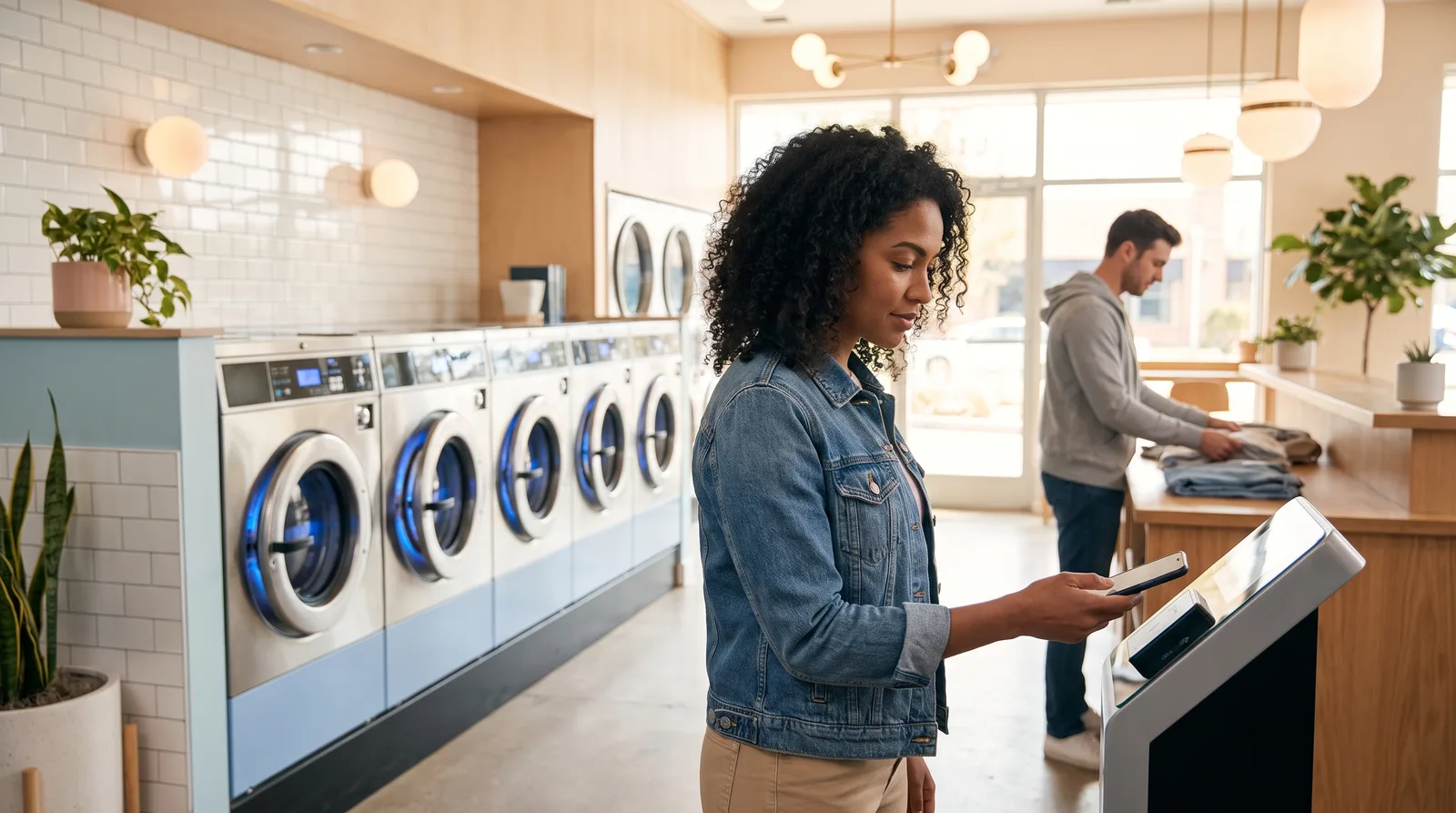
A laundromat loyalty program works best when it rewards repeat visits and larger loads without discounting the customers who would have come anyway. The strongest options are app-based rewards tied to your payment system and value-add cards that give a small bonus on reloads, both of which lift retention and average spend while keeping your margin intact. A loyalty program is a retention tool, not a discount, so design it to change behavior rather than to give away turns you already own.
Key takeaways
- Loyalty rewards should pull in extra visits or larger loads, not hand a discount to customers who already come regularly.
- App-based programs tied to a card or app payment system are the easiest to run and to measure, since they track spend automatically.
- Value-add reload bonuses, such as a small credit when a customer loads a set amount, lock in prepaid revenue and repeat visits.
- Fund rewards from incremental turns and wash-and-fold, and cap the give-back so the program never costs more than the behavior it drives.
- Measure retention and average spend before and after launch, and cut any reward that only shifts existing turns without adding new ones.
Contents
- Do loyalty programs work for laundromats?
- What types of loyalty programs fit a laundromat?
- How do apps change loyalty for laundromats?
- How do you design a reward that protects margin?
- How much does a loyalty program cost to run?
- How do you measure whether it is working?
- What mistakes cost operators money?
Do loyalty programs work for laundromats?
Loyalty programs work for laundromats when the local market has real competition and enough repeat customers to reward, and they underperform when the store is the only option for miles. Laundry is a habit purchase, so nudging a customer to come one extra time a month or to wash a larger load compounds quickly across a year.
The honest test is whether the reward changes behavior. If your regulars would visit at the same rate without any program, a loyalty scheme just donates margin. If a nearby competitor is one price cut away from taking those customers, a modest program can be what keeps them. For the wider retention picture, see how to increase laundromat revenue.
What types of loyalty programs fit a laundromat?
The main options are punch or points cards, app-based rewards, and value-add reload bonuses, and they differ mostly in how much they cost to run and how well you can measure them. Pick the one that matches your payment system and your appetite for tracking.
| Program type | How it works | Best fit |
|---|---|---|
| Punch or points card | Free wash after set visits or points | Coin stores, low tech, hard to measure |
| App rewards | Points and offers tracked in a payment app | Card or app stores wanting real data |
| Value-add reload | Bonus credit when a customer loads a set amount | Card systems, locking in prepaid revenue |
| Wash-and-fold perks | Loyalty pricing or free pickup after N orders | Stores growing the higher-margin side |
Value-add reloads are popular because they take payment up front and give the bonus only on future spend, which ties the customer to your store. If you are still choosing a payment platform, weigh the trade-offs in coin vs card vs app payment systems.
How do apps change loyalty for laundromats?
Apps make loyalty measurable and automatic, because every reward attaches to a tracked account instead of a paper card the customer forgets. That gives you the one thing a punch card cannot: data on who visits, how often, and what they spend.
With an app-based program you can:
- Award points automatically on every wash and wash-and-fold order.
- Send targeted offers to lapsed customers rather than blanket discounts.
- See average spend and visit frequency per customer.
- Test a reward, measure it, and turn it off if it does not pay.
The trade-off is that apps require a card or app payment system and a customer base willing to use one. In some neighborhoods a share of customers still prefer coin, so an app cannot be the only path to a reward. Converting your machines is a prerequisite worth costing out in coin-to-card conversion for laundromats.
How do you design a reward that protects margin?
Design the reward so it pays out only for behavior you want more of, such as an extra visit, a bigger load, or a wash-and-fold order, never for the baseline traffic you already have. The goal is incremental turns, so the reward should feel meaningful to the customer while costing you less than the added revenue it drives.
Principles that keep margin safe:
- Reward frequency or spend thresholds, not every single transaction.
- Tie bonuses to slow hours or to wash-and-fold, where added volume has room to grow.
- Cap the give-back as a fixed percentage of tracked spend.
- Make the reward a value-add credit rather than cash, so it comes back to your store.

Structured this way, a loyalty program behaves like a promotion that adds turns instead of shaving them. The same discipline applies to coupons and off-peak offers, covered in laundromat promotions that protect your margin.
How much does a loyalty program cost to run?
A loyalty program's cost is the reward give-back plus any software or transaction fees, and the give-back is the part operators most often underestimate. A paper punch card is nearly free to print but impossible to measure, while an app program carries a monthly fee and the payment-processing cost that comes with card and app spend.
Budget for:
- The reward value itself, ideally capped as a percentage of tracked spend.
- Monthly software or platform fees for an app-based program.
- Card and app transaction fees on the underlying payments.
- Staff time to promote and explain the program.
Because loyalty ties into how customers pay and how revenue is recorded, keep clean records and confirm how prepaid balances and promotions should be reported with the IRS. Run the full labor and reward line through the laundromat cash flow calculator before you launch.
How do you measure whether it is working?
Measure a loyalty program by comparing retention and average spend before and after launch, not by counting sign-ups. Enrollment numbers feel good but say nothing about whether the program added a single turn.
Track a few clear metrics:
- Visit frequency per active member versus non-members.
- Average spend per visit and per month.
- Reload or reward redemption rate.
- Turns during the hours or on the services you targeted.
If members spend more and visit more often than they did before, the program is earning its cost. If the numbers look flat, the reward is likely subsidizing behavior you already had, and it should be redesigned or cut.
What mistakes cost operators money?
The costliest mistake is rewarding loyalty you already own, giving a standing discount to regulars who never needed a reason to return. Close behind are rewards so generous they outrun the added revenue, and programs so complicated that customers ignore them.
Common traps to avoid:
- A blanket discount that lowers the price of every existing turn.
- Uncapped rewards that scale faster than incremental spend.
- Confusing rules that neither customers nor attendants can explain.
- Launching without a baseline, so you cannot tell if it worked.
The Coin Laundry Association offers operator resources on customer marketing worth reviewing; see the Coin Laundry Association. Keep the program simple, measurable, and aimed squarely at new turns.
Frequently asked questions
Do laundromat loyalty programs actually increase revenue?
They can, but only when they change behavior, such as pulling in an extra visit or a larger load rather than discounting turns you already have. In competitive markets with repeat customers, a modest program lifts retention and average spend. In a store with no nearby competition, a loyalty scheme often just gives away margin.
What is a value-add loyalty card?
A value-add card gives the customer a small bonus credit when they load a set amount onto their account, for example a few extra dollars on a larger reload. It takes payment up front and pays the bonus only on future spend, which locks in prepaid revenue and repeat visits. It works best on card or app payment systems.
Are app-based loyalty programs worth the fee?
They are worth it when you can measure the added turns they drive. Apps track spend and visits automatically, let you target lapsed customers, and let you turn off rewards that do not pay. The cost is a monthly fee plus card and app transaction fees, so compare that against the incremental revenue you can actually measure.
How do I keep a loyalty program from cutting my margin?
Reward frequency or spend thresholds instead of every transaction, tie bonuses to slow hours or wash-and-fold, and cap the give-back as a fixed percentage of tracked spend. Use value-add credit rather than cash so the reward returns to your store. Set a baseline before launch so you can confirm the program adds turns rather than shifting them.
How do I measure if my loyalty program works?
Compare visit frequency and average spend for members before and after launch, and against non-members, rather than counting sign-ups. Watch turns during the hours or services you targeted and the reward redemption rate. If members visit and spend more than they used to, the program is earning its cost; if the numbers are flat, redesign or cut it.