Laundromat Maintenance Checklist
SudsList Editorial · Aug 3, 2026
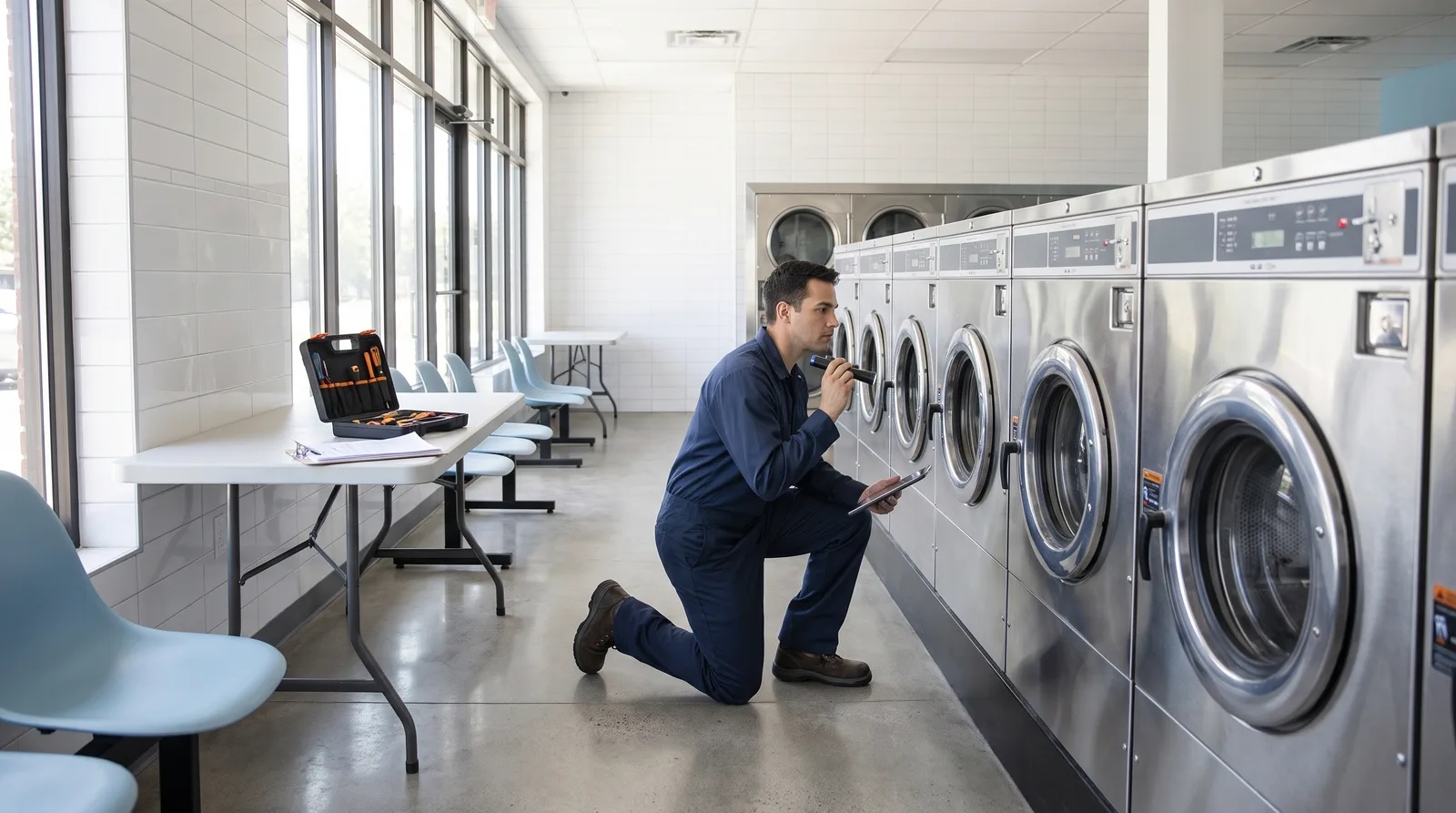
A laundromat maintenance checklist is a schedule of daily, weekly, monthly, and quarterly tasks that keep your washers and dryers running and hold down repair bills. The daily items are quick visual and lint checks, the weekly items clean and inspect the parts that clog or wear, and the monthly and quarterly items catch slow failures before they become breakdowns. Run the same list every time, log who did it, and most of your expensive surprises turn into cheap, scheduled work. In a self-service store this is the highest-return habit you have, because a machine that is down earns nothing.
Key takeaways
- A maintenance checklist splits the work into daily, weekly, monthly, and quarterly tasks so nothing important gets skipped.
- Daily tasks are fast: clear lint, wipe machines, check for leaks, and pull any out-of-order unit from service.
- The costly failures (bearings, motors, gas valves) are the ones preventive checks catch early, which is where the savings come from.
- Lint and vent cleaning is both a performance task and a fire-safety task, not optional housekeeping.
- Log every completed task, because a checklist no one signs off on quietly stops happening.
Contents
- What is a laundromat maintenance checklist?
- What are the daily maintenance tasks?
- What should you do weekly?
- What are the monthly maintenance tasks?
- What belongs on the quarterly and annual list?
- How does maintenance cut repair bills?
- Who should do the maintenance, you or a tech?
- How do you track that maintenance actually gets done?
What is a laundromat maintenance checklist?
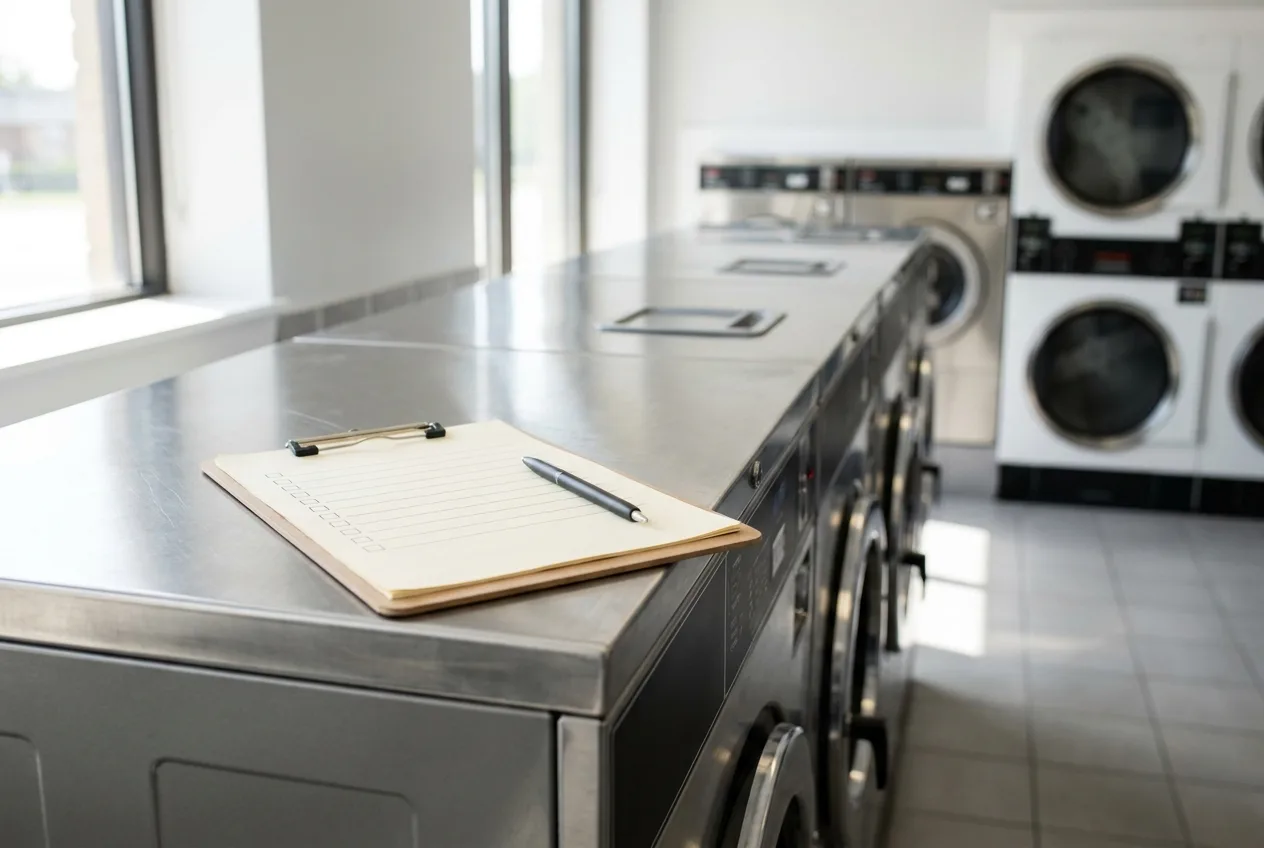
A laundromat maintenance checklist is a written, recurring schedule of upkeep tasks that keep machines mechanically sound. It is different from a cleaning checklist: cleaning is about how the store looks to customers, while maintenance is about whether the equipment keeps working and how long it lasts.
The value is in the schedule, not any single task. When lint, drains, belts, and gas connections are checked on a fixed rhythm, small problems surface while they are still cheap. For the deeper, mechanical version of this routine, pair it with preventive maintenance for commercial washers and dryers, and keep the store presentable with the laundromat cleaning checklist.
What are the daily maintenance tasks?
Daily maintenance is a five-minute walk of the floor that catches lint, leaks, and dead machines before customers do. These tasks are fast and forgiving to miss once, but they are the ones that prevent fires and lost turns, so they belong on every shift.
- Clear every dryer lint screen and check for lint on the floor behind units.
- Wipe washer door seals and glass, and look for water pooling under any machine.
- Listen for a machine running loud or off-balance and tag it if needed.
- Pull any confirmed out-of-order unit from service so no one loses money in it.
- Confirm change and soap dispensers are working.
In an attended or absentee store, this is the shift-open routine; write it into your opening procedure so it happens without a reminder.
What should you do weekly?
Weekly maintenance goes a layer deeper than the daily walk, cleaning and inspecting the parts that clog and wear. Set a fixed day so it never slides into "when I get to it."
- Clean lint from dryer housings and the area around vent connections.
- Inspect washer fill hoses and drain hoses for cracks, kinks, or seepage.
- Clean soap dispensers and detergent injectors so they do not gum up.
- Run a test cycle on a sample of machines and confirm they fill, heat, spin, and drain.
- Check that hot water is reaching the machines at the expected temperature.
Weekly checks are where you catch a hose about to fail or a dryer starting to run cold, both of which are cheap now and expensive later.
What are the monthly maintenance tasks?
Monthly maintenance targets the wear items that fail slowly: belts, bearings, drains, and gas or electrical connections. This is the level most operators skip and later pay for in emergency repairs.
- Inspect drive belts for glazing, cracks, or fraying and note tension.
- Listen and feel for bearing noise or drum play on washers and dryers.
- Clean lint and debris from behind and beneath dryers, a common ignition point.
- Visually inspect gas connections and dryer venting for buildup or damage.
- Clear floor drains and check that machine drains flow freely.
- Verify vend prices and payment systems are reading correctly.
What belongs on the quarterly and annual list?
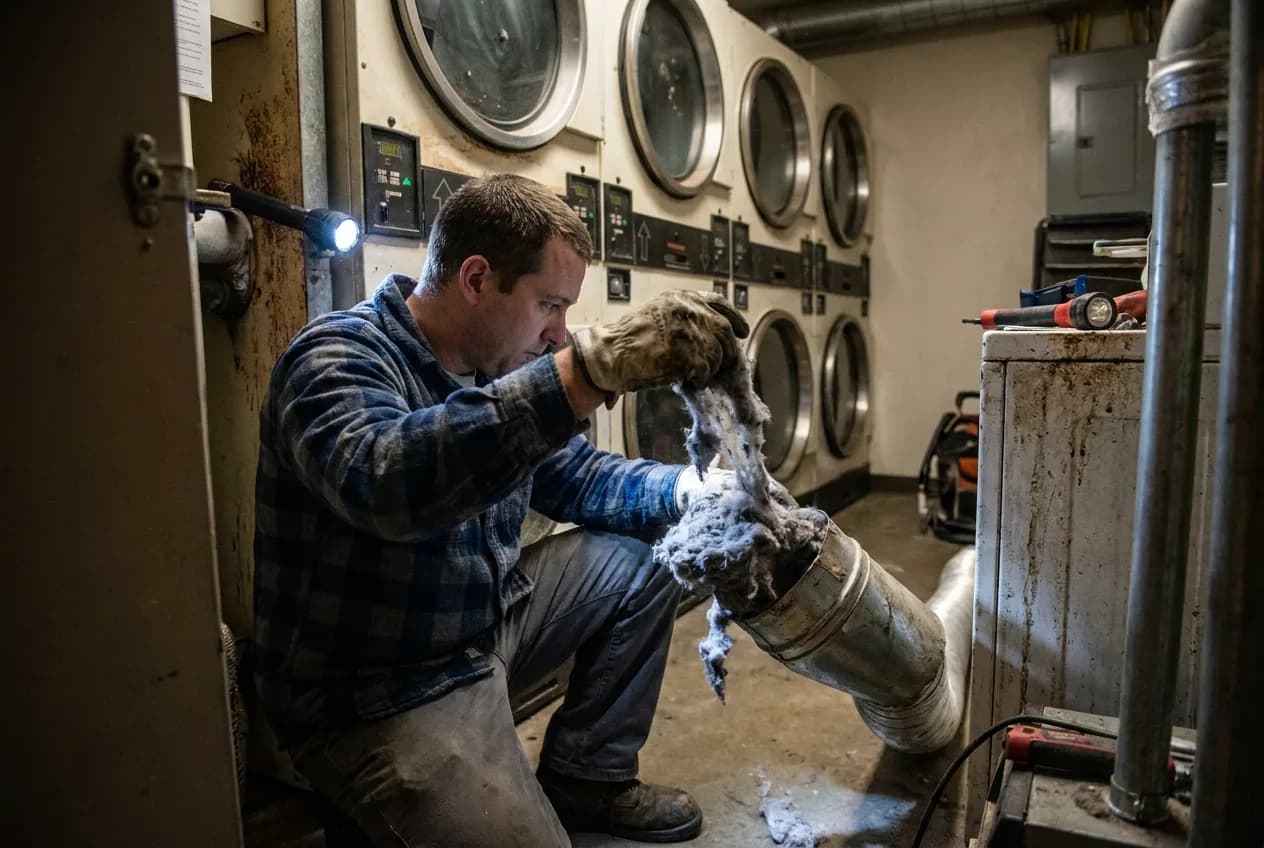
Quarterly and annual maintenance is the professional-grade work: full vent cleaning, water-heater service, and inspection of the components you should not open yourself. Some of these are worth handing to a technician, since gas, high-voltage, and sealed bearings are not DIY territory.
| Frequency | Core tasks |
|---|---|
| Daily | Lint screens, leak check, out-of-order units, dispensers |
| Weekly | Hoses, soap injectors, test cycles, water temperature |
| Monthly | Belts, bearings, behind-dryer lint, gas and drain checks |
| Quarterly / Annual | Full vent cleaning, water-heater service, motor and electrical inspection |
The U.S. Environmental Protection Agency's Energy Star program notes that clean venting and well-maintained equipment run more efficiently, which shows up directly in your gas bill. The Coin Laundry Association also publishes operating resources you can adapt into your own schedule.
How does maintenance cut repair bills?
Maintenance cuts repair bills by converting sudden failures into scheduled, minor work. A dryer with a clogged vent runs longer per load, burns more gas, overheats, and eventually trips or fails, while a five-minute weekly vent check prevents all of it.
Consider a simple scenario: a store with 20 dryers where vents are cleaned on schedule keeps drying times short and gas use predictable, while a neglected store sees longer cycles, more customer complaints, and a higher chance of a heat-related failure. The maintenance itself costs very little; the avoided breakdown, lost turns, and rushed service call cost far more. Consistent upkeep also stretches useful life, which is why it pairs with knowing how long commercial washers and dryers last and planning replacements with the equipment replacement cost calculator.
Who should do the maintenance, you or a tech?
Most daily, weekly, and monthly tasks are owner or attendant work, while quarterly gas, electrical, and bearing service is best left to a qualified technician. The dividing line is anything involving gas, high voltage, or sealed components, which carry real safety and warranty risk.
A practical split is simple: your team handles cleaning, inspection, and tagging, and a tech handles diagnosis and repair. For how to structure that relationship, including in-house versus service-contract options, see how to handle laundromat repairs.
How do you track that maintenance actually gets done?
Track maintenance with a signed log or app entry for each task, because a checklist without accountability quietly stops happening. The point of logging is not paperwork; it is knowing a task was done and by whom when a machine fails anyway.
- Use a posted daily and weekly sheet that the attendant initials.
- Keep monthly and quarterly records where your bookkeeper and any buyer can see them.
- Use cameras or remote monitoring to confirm work in an absentee store.
Documented maintenance also raises resale value, since a buyer pays more for equipment with a clear service history. Keep the records with your other operating documents so the store's condition is easy to prove.
Frequently asked questions
How often should laundromat dryer vents be cleaned?
Do a quick lint check daily and a fuller cleaning of vent connections weekly to monthly, with a complete professional vent cleaning at least quarterly or as your volume demands. Buildup raises drying times and gas use and is a genuine fire risk, so this is one task not to stretch. Busy stores with long dryer hours should clean more often.
Can an attendant do laundromat maintenance, or do I need a technician?
An attendant can handle the daily, weekly, and most monthly tasks, which are cleaning, inspection, and tagging out-of-order units. Leave gas, high-voltage, and sealed-bearing work to a qualified technician because of the safety and warranty risk. A good split is your team inspects and reports, and a tech diagnoses and repairs.
What laundromat maintenance task saves the most money?
Consistent lint and vent maintenance usually returns the most, because it cuts gas use, protects drying performance, and prevents heat-related failures and fires. Drain and hose checks come next, since a small leak caught early avoids water damage and downtime. The theme is that cheap, scheduled checks prevent expensive, unscheduled repairs.
Is a maintenance checklist different from a cleaning checklist?
Yes. A cleaning checklist keeps the store presentable for customers, covering floors, restrooms, and surfaces. A maintenance checklist keeps the equipment mechanically sound, covering lint, hoses, belts, bearings, and gas connections. You need both, and many stores run them as separate documents with different frequencies.
Does documented maintenance help when selling a laundromat?
It does. A clear service log shows a buyer the equipment was cared for, which supports a higher price and smoother due diligence. Machines with proven upkeep also carry less immediate replacement risk, so the buyer is paying for a known quantity. Keep the records with your other operating documents.