How to Handle Laundromat Repairs
SudsList Editorial · Aug 5, 2026
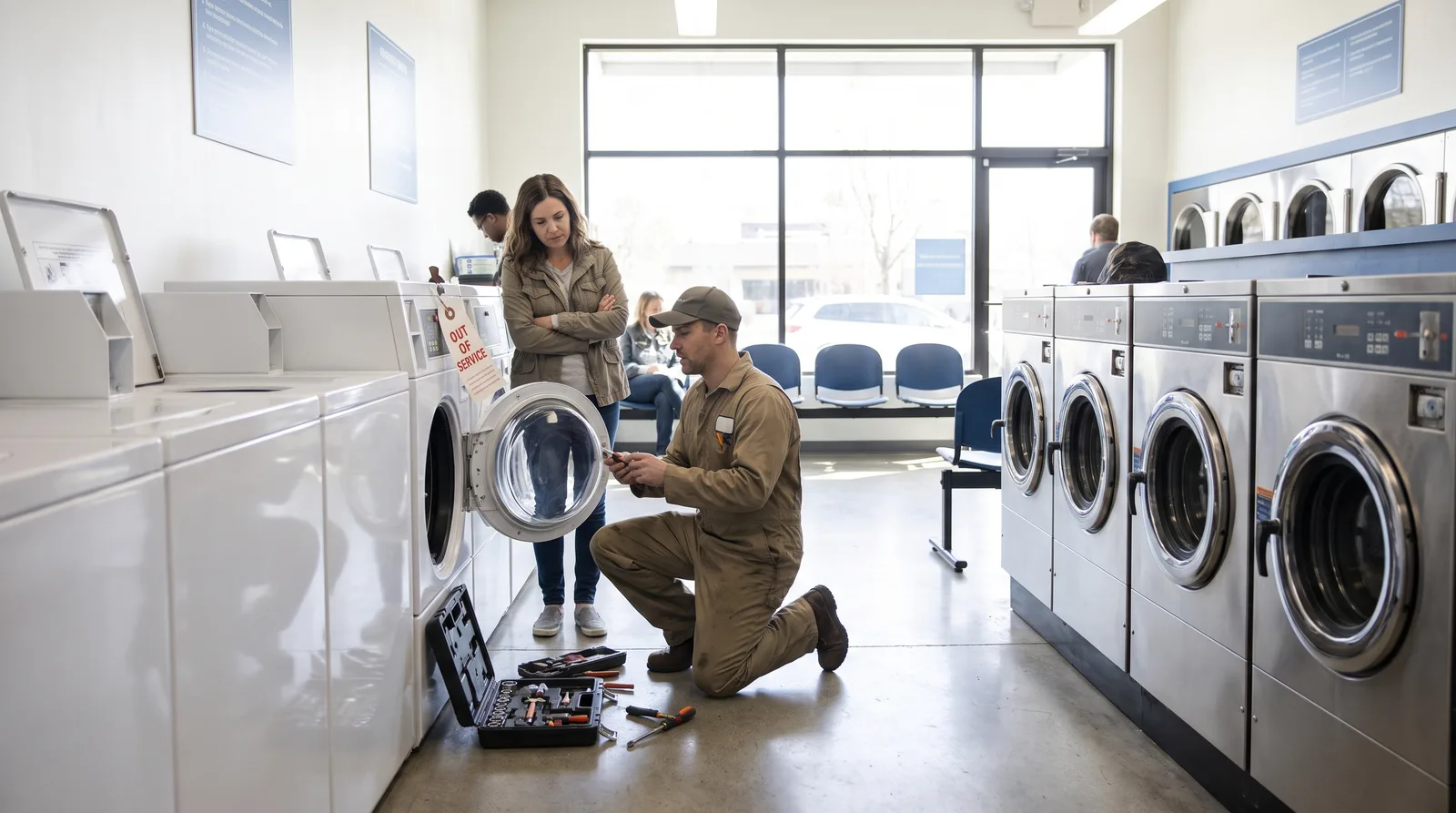
The three ways to handle laundromat repairs are in-house, a service contract, and calling your equipment distributor, and most stores use a mix based on how complex the fault is. Simple faults you fix yourself, routine breakdowns go to a trusted local tech or contract, and warranty or major failures go back to the distributor. The goal is to get a down machine earning again fast while keeping repair costs predictable. Since a machine out of service earns nothing, your repair plan is really an uptime plan.
Key takeaways
- Handle repairs with a tiered approach: DIY for simple faults, a local tech or contract for routine breakdowns, and the distributor for warranty or major work.
- The most common failures are lint-related dryer problems, drain and water issues, worn belts and bearings, and payment-system faults.
- Stocking a small set of fast-moving spare parts is often the cheapest way to cut downtime.
- Response time matters more than hourly rate, because lost turns usually cost more than the repair itself.
- Preventive maintenance is what shrinks your repair bill over time, so the two go together.
Contents
- How should you handle laundromat repairs?
- What breaks most often in a laundromat?
- Should you repair in-house or hire it out?
- In-house vs service contract vs distributor
- What spare parts should you keep on hand?
- What response time should you expect?
- How much do laundromat repairs cost?
- How do you cut your repair bill over time?
How should you handle laundromat repairs?
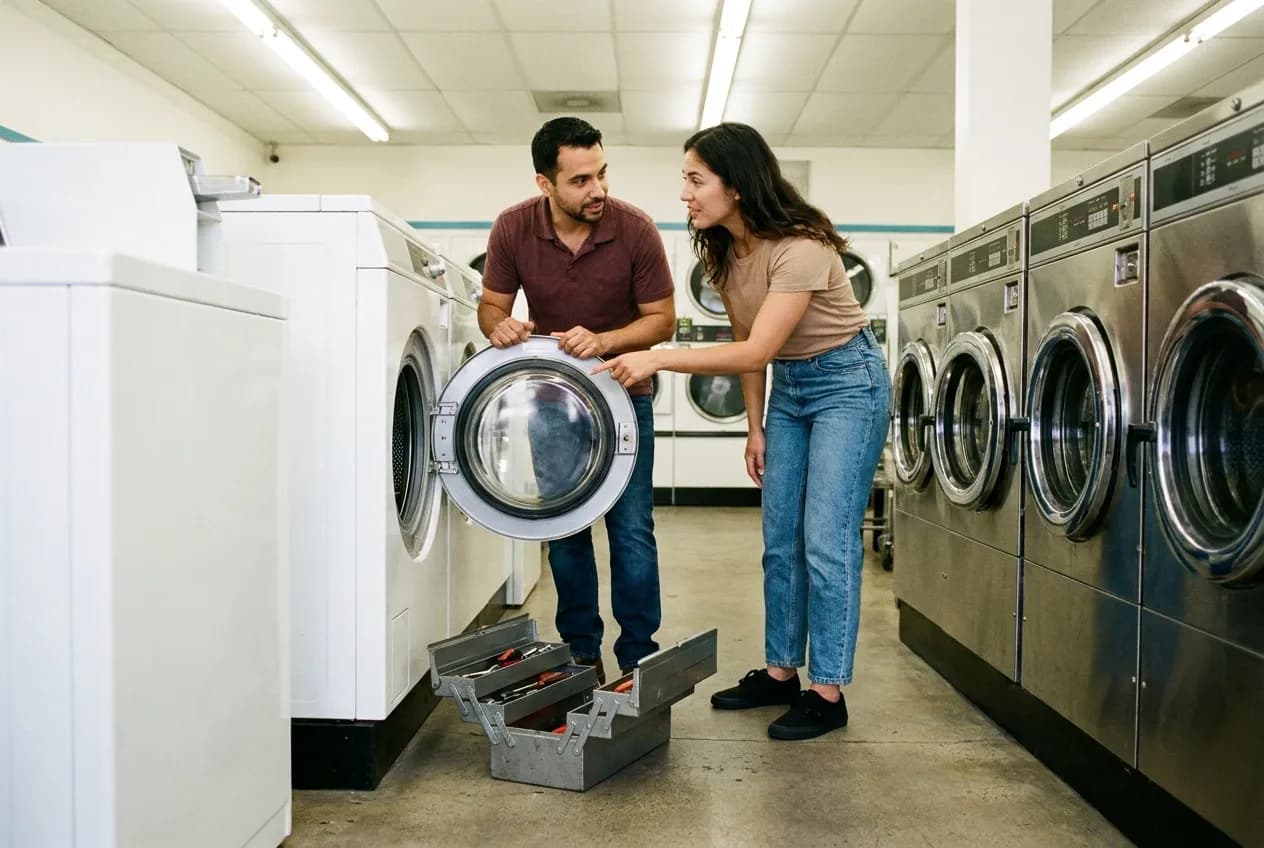
Handle repairs by matching the fix to the fault: solve simple problems on the spot, route routine breakdowns to a reliable tech, and send warranty or major failures to your distributor. This tiered approach keeps easy fixes cheap and reserves paid service calls for problems that truly need them.
The first move on any fault is triage. An attendant tags the machine out of order, logs the symptom, and issues any refund, so no customer loses money and you have a record of what failed. From there, the fault's complexity decides who fixes it. Build that triage step into your written procedures, as covered in laundromat standard operating procedures.
What breaks most often in a laundromat?
The most common repairs are dryer lint and airflow problems, washer drain and water faults, worn belts and bearings, and payment or coin-mechanism failures. Knowing the usual suspects tells you which parts to stock and which skills to build.
- Dryers: restricted airflow from lint, heating faults, and long drying times.
- Washers: drain clogs, leaking hoses or seals, and fill or water-level issues.
- Drivetrain: worn belts and, later, bearings that get noisy and fail.
- Payments: jammed coin mechanisms, card readers, and change machines.
Most of these trace back to wear or buildup, which is why a maintenance routine prevents a large share of them; see the laundromat maintenance checklist.
Should you repair in-house or hire it out?
Repair in-house when the fix is simple and safe, and hire out when it involves gas, high voltage, sealed components, or your warranty. The dividing line is skill and risk, not pride, and getting it wrong can void a warranty or cause injury.
A handy owner can reasonably handle coin jams, hose swaps, belt replacements, and clearing drains. Gas, ignition, electrical, and bearing work should go to a qualified technician. If you are not comfortable diagnosing a fault, the cheaper long-run choice is usually to call someone who can do it right the first time. For the preventive side that reduces how often you face this decision, see preventive maintenance for commercial washers and dryers.
In-house vs service contract vs distributor
Each repair channel trades cost against speed and capability, and most stores blend all three. The right mix depends on your machine count, your own skill, and how far you are from good service.
| Channel | Best for | Trade-off |
|---|---|---|
| In-house / DIY | Simple, frequent faults | Cheapest and fastest, but limited by your skill and safety |
| Local tech or service contract | Routine breakdowns and predictable coverage | Steady response, at an ongoing or per-call cost |
| Equipment distributor | Warranty work and major failures | Full expertise and parts, but slower and often pricier |
A service contract can be worth it for a larger store that cannot afford downtime, while a small store near a reliable independent tech may do better paying per call. Match the channel to how much a lost hour costs you.
What spare parts should you keep on hand?
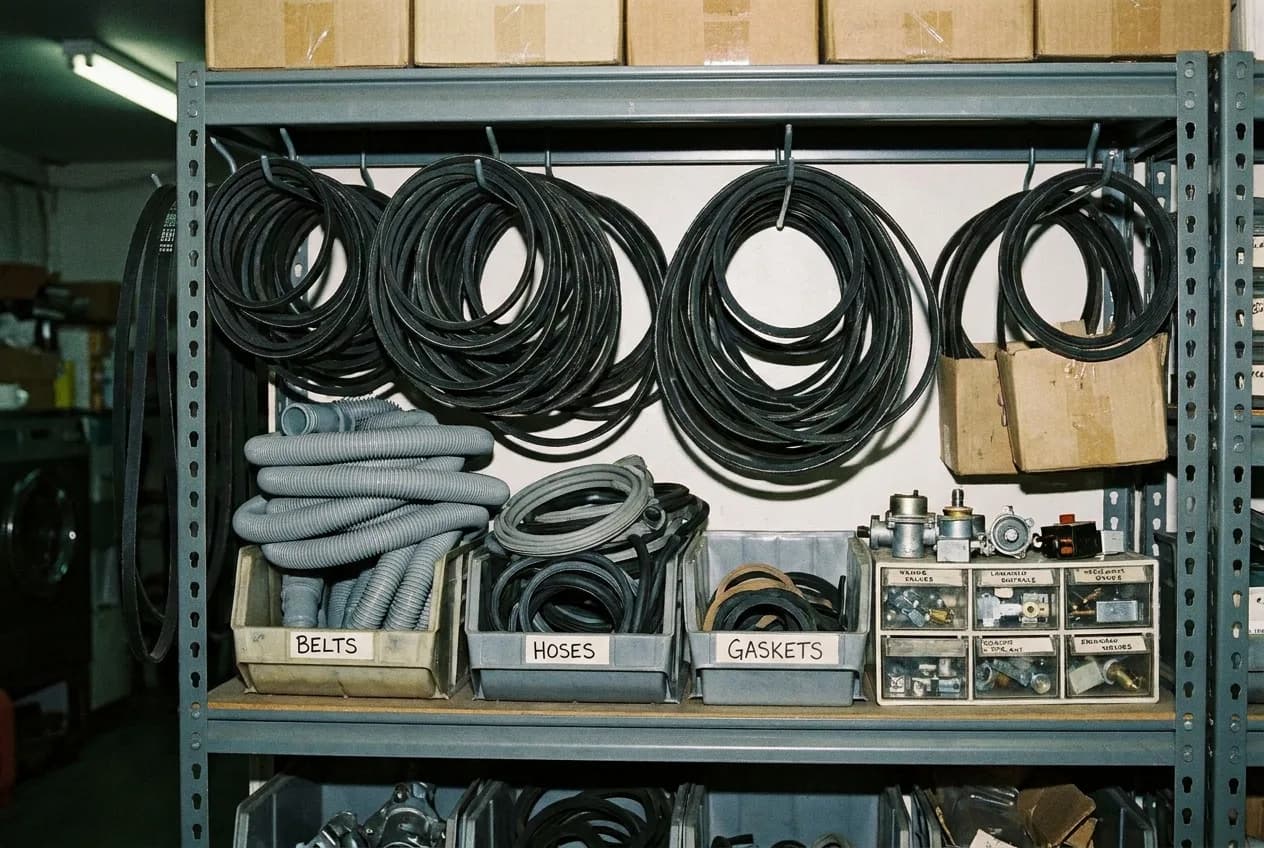
Keep a small stock of the parts that fail most and are quick to swap, because waiting on a common part is the most avoidable kind of downtime. You are not building a warehouse, just covering the fast movers.
- Drive belts for your most common machine models.
- Fill and drain hoses, and door seals or gaskets.
- Water inlet valves and common drain components.
- Coin-mechanism and payment-reader spares if faults are frequent.
Standardizing on fewer machine models makes this far cheaper, since one belt or valve fits more of your fleet. That is one practical argument for consistency when you buy, discussed in new vs used laundromat equipment.
What response time should you expect?
Expect same-day to a few-days response depending on your arrangement, and treat response time as more important than the hourly rate. A machine down over a busy weekend can lose more in turns than the repair costs, so speed usually wins.
- A service contract often promises a defined response window, which is much of its value.
- An independent tech's speed depends on their workload and your relationship.
- Distributor and warranty service can be slower, especially if parts must ship.
Ask any prospective tech or contract for a realistic response time in writing, and weigh it against what an idle machine costs you per day.
How much do laundromat repairs cost?
Repair costs vary widely by fault and region, so budget a monthly repair reserve rather than reacting to each bill. A small part you swap yourself is inexpensive, while a bearing replacement or a service call with parts is a meaningful hit.
Rather than chase precise figures, plan for repairs as a recurring line in your budget and size the reserve to your fleet's age and volume. Older machines and higher turns mean a larger reserve. Repair spending is generally a deductible business expense, though the line between a repair and a capital improvement affects how it is treated; the IRS is the authority on that distinction, and your accountant can apply it. When repairs on a unit start stacking up, compare them against replacement using the equipment replacement cost calculator.
How do you cut your repair bill over time?
You cut repairs over time with preventive maintenance, model standardization, and good records, not by finding a cheaper tech. Most repairs are preventable wear, so the biggest savings come before anything breaks.
- Run a preventive maintenance schedule so wear is caught early.
- Standardize machine models to simplify parts and training.
- Log every repair by machine, so you can spot a unit that is becoming a money pit.
- Track repair trends to time replacements before a machine fails for good.
A machine with a rising repair history is often telling you it is near the end of its life; knowing how long commercial washers and dryers last helps you decide when to stop repairing and start replacing. Industry groups such as the Coin Laundry Association also publish operating resources that can help you find qualified service and distributor contacts in your area.
Frequently asked questions
What breaks most often in a laundromat?
Dryer airflow problems from lint, washer drain and water faults, worn belts and bearings, and payment or coin-mechanism jams are the most common. Most trace back to wear or buildup, which is why a maintenance routine prevents a large share of them. Knowing the usual failures tells you which parts to stock and which skills to build in-house.
Should I get a laundromat service contract or pay per repair?
A service contract tends to pay off for larger stores that cannot absorb downtime, because it buys a defined response window. A smaller store near a reliable independent technician often does better paying per call. Compare the contract cost against what an idle machine actually costs you per day, since response speed is usually worth more than a lower hourly rate.
Which laundromat repairs can I safely do myself?
Simple, low-risk fixes like clearing coin jams, swapping hoses, replacing belts, and clearing drains are reasonable for a handy owner. Leave gas, ignition, electrical, and sealed-bearing work to a qualified technician because of the safety and warranty risk. If you are not confident diagnosing a fault, calling a pro is usually cheaper than a wrong fix.
What spare parts should a laundromat keep in stock?
Stock the fast-moving, quick-to-swap parts: drive belts, fill and drain hoses, door seals, water inlet valves, and common payment-mechanism spares. You are covering the frequent failures, not building a warehouse. Standardizing on fewer machine models makes this far cheaper, since one part fits more of your fleet.
How fast should a repair technician respond?
Aim for same-day to a few-days response and get the expected window in writing. Treat response time as more important than the hourly rate, because a machine down over a busy weekend can lose more in turns than the repair costs. A defined response window is much of what you pay for in a service contract.
How do I lower my laundromat repair costs?
Prevent breakdowns with a maintenance schedule, standardize machine models to simplify parts, and log every repair by machine so you can spot a unit that is becoming a money pit. Most repairs are preventable wear, so the largest savings come before anything fails. Tracking repair trends also tells you when replacing a machine beats repairing it again.